Game Summary
This first-person stealth survival game takes place on a mystical solstice night, where players explore dreamlike environments shaped by “Fractures” from a mythical creature. Each level blends stealth and emotional pacing, guiding players from confusion to mastery without using traditional UI.
Responsibilities
Designed 7 major levels heavily praised by players
Concepted, Whiteboxed, User Tested levels
Created over 15 Action Blockouts (Titanfall 2 Level Design Workflow)
Led Level Scripting, Layout Planning, Encounter Design, and pacing Structure
Created Game Design/Level Design Documents
Planned and Structured Project with SCRUM
Managed a 6-person team; balanced scope and systems
Created Feature and Asset Cards for Cross-Disciplinary Collaboration
Lit the level for several different lighting situations
Details
Team Size: 6 people
Genre: First-Person Action, Adventure
Setting: A mystical night during the Solstice event.
Level Duration: 20-25 minutes
Role: Lead Level Designer, Project Manager
Development Time: 10 Weeks
Engine: Unity Engine
Trailer
Showcase Level: The River (Level 4)
Some Level Impressions by Players
“The reveal at the top completely sold me on the level. Seeing the whole “arena” before committing made every move feel intentional and strategic.”
“The level was pretty simple, but it did not annoy me, since the previous level was pretty hardcore. Nice change of pace, simple but not boring.”
“I loved how the level teaches you to plan before acting. Dropping into the arena felt genuinely tense because there was no way back.”
“The vertical flow is excellent. Gaining and losing height constantly changed how safe or exposed I felt.”
“That moment where you descend after the vantage point is brutal, in a good way. It really commits you to your plan. I got really scared because I lost sight of the creature.”
“The level does a great job of making stealth feel readable instead of frustrating. I felt like those safety bushes are placed in a nice, coherent way.”
“Baiting the enemy to create the fracture was super satisfying, sad that the logic does not work 100% of the time. But it felt like using the world itself as a tool, not just sneaking past AI.”
If you’re short on time, basically for this project I…
Used the Action Blockout workflow used by Titanfall 2 developers
Created 7 final levels and 14 action blockouts for playtesting
Communicated and collaborated with the Art and Programming department to finalize the level
Received feedback from playtesters and other developers and implemented their feedback
Scripted and scattered events to make the level feel more alive instead of a static world
Balanced enemy and player values to make the game feel fair and not frustrating
Pre-Production
Main Ideas
Level Goals
Create a stealth-focused traversal level built around spatial contrast: tight confinement → expansive reveal → high-risk arena.
Leverage a Breath of the Wild–style reveal, rewarding the player with a powerful vantage point to read patrol routes, hiding spots, and objectives.
Emphasize player planning and agency: from the vantage point, the player can route-plan bush-to-bush movement and choose risk vs. safety.
Use verticality as progression and power shift: descending into enemy territory removes safety; ascending at the end restores control and relief.
Introduce environmental tension through sound-based hazards (water/noise) that punish careless movement but remain clearly readable.
Encourage mastery and exploration with optional secrets that require deviating from the optimal stealth path.
Short, dense experience: 3–7 minutes, focused on clarity, pacing, and decision-making.
Core Elements
Patrolling creature enemy (audio + vision driven)
Large-scale vertical terrain (cliffside, chasms, plateaus)
Strong vantage point overlooking the entire arena
Stealth cover: bushes, height breaks, occluders
Environmental hazards: noisy water spots that alert enemies
Traversal tools: ramps, stairs, descending platforms (one-way commitment)
Fracture mechanic: enemy-created terrain changes used for progression
Guidance elements: fire lights, moving creatures, sightlines
Optional collectibles / secret routes
Clear visual communication of danger, safety, and goals
Level Sequence
Level opens in an open funnel that quickly tightens into a cliffside chasm.
Player ascends through narrow ramps and platforms, building vertical momentum.
The space explodes open into a panoramic vantage point revealing:
Enemy patrol paths
Bush-to-bush routes
Water hazards
Optional secrets and collectibles
Player commits by descending into the arena (no return path).
Inside the arena:
Move between hiding spots
Avoid noisy water
Use height variations for safety and scouting
Take risks to access secrets
Final challenge requires intentional enemy baiting to create a fracture with an upward launch.
Level Beats
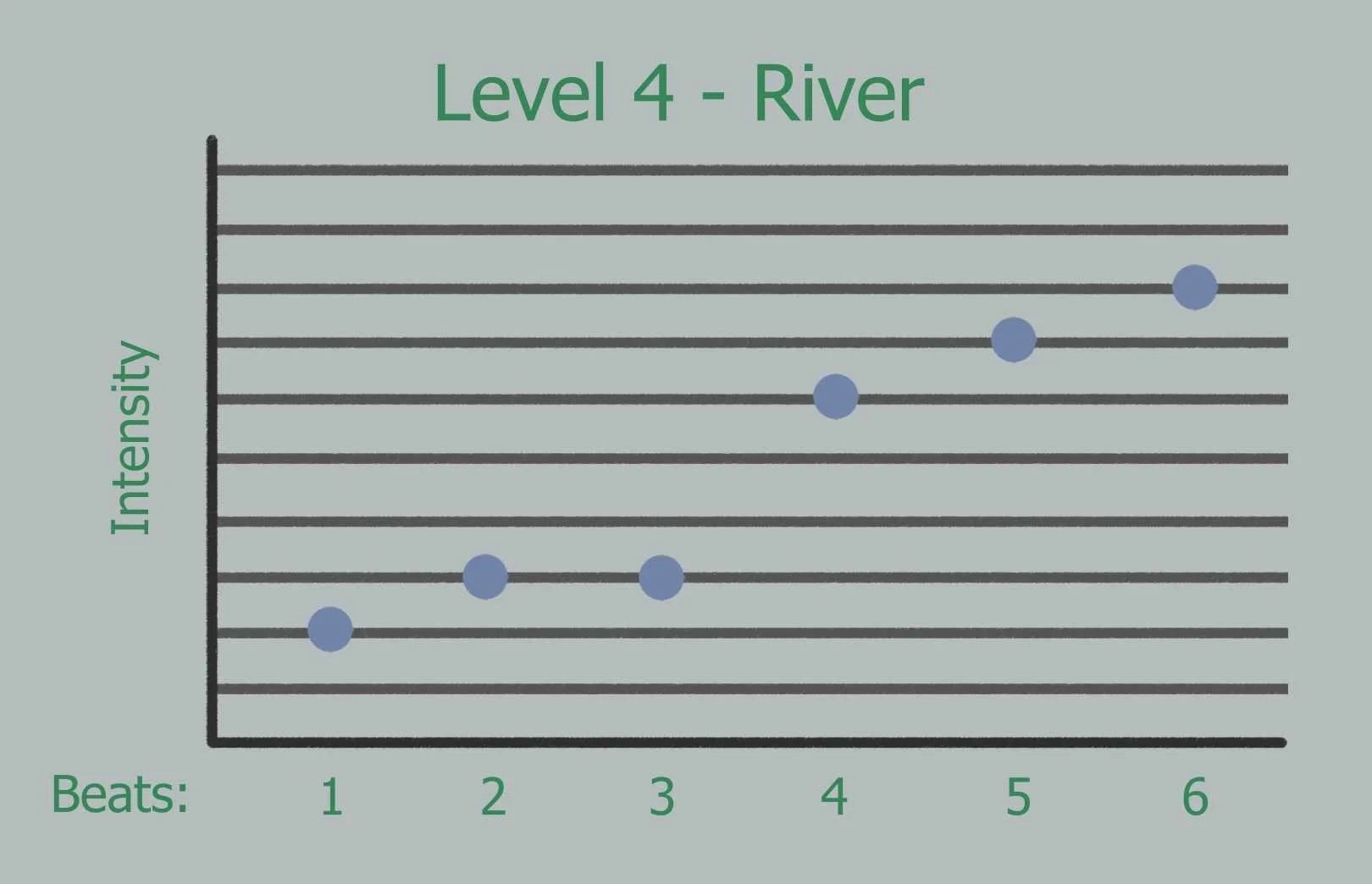
Funnel Entry
Tight cliffside entrance funnels the player inward, immediately limiting options and building anticipation.Vertical Ascent
Player climbs through a narrow chasm, increasing height while maintaining spatial tension.Big Reveal / Vantage Point
Sudden expansion onto a platform overlooking the entire enemy arena. Player reads patrol paths, hiding spots, hazards, and the exit.Point of No Return
One-way descent into the arena via platforms. Safety is removed; commitment is enforced.Stealth Core (High Tension)
Player navigates dense enemy territory, chaining cover, managing noise, and adapting when plans break down. No safe zones.Final Manipulation & Escape
Player baits the enemy to trigger a fracture at a precise location, using altered gravity to launch upward and escape the arena.
Concept
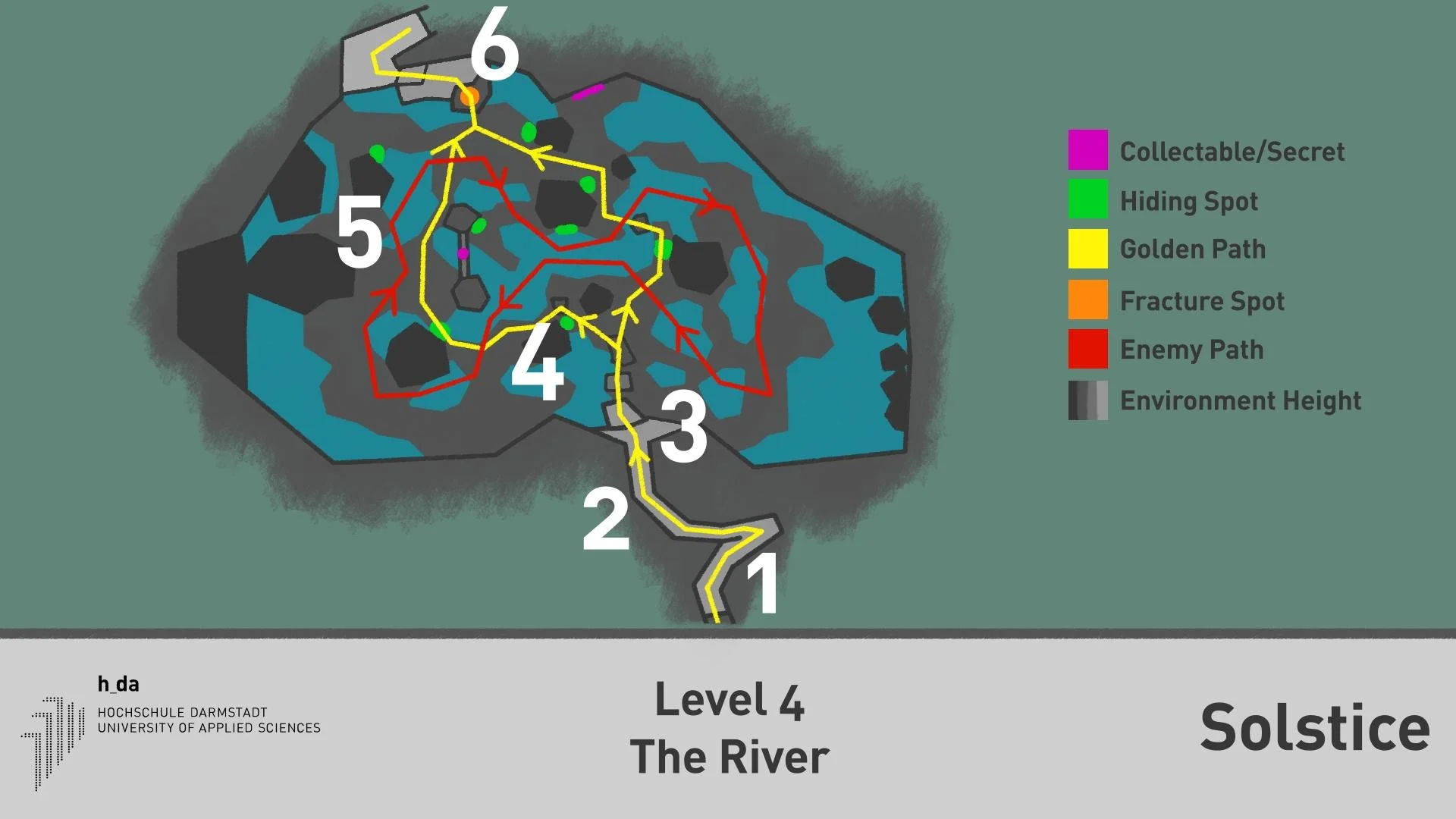
Funnel Entrance (Compression & Setup)
The player enters through a wide but deceptive funnel that quickly tightens into a cliffside chasm. Space compresses, movement is constrained, and the player is primed for a vertical journey forward.Vertical Climb (Anticipation Build-Up)
The player ascends through a narrow, layered canyon using ramps and platforms. Limited visibility and tight geometry build tension while subtly guiding the player upward toward a reveal.Vantage Point Reveal (Information Reward)
The space opens dramatically onto a high platform overlooking the entire enemy arena. From this safe vantage point, the player reads patrol routes, hiding spots, sound hazards, secrets, and the final goal—encouraging strategic planning before commitment.Point of No Return (Commitment to Risk)
The player descends via one-way platforms into the enemy territory. Vertical safety
is removed, reinforcing vulnerability and signaling the start of the stealth core.Stealth Arena (Peak Tension & Decision Making)
Deep inside the arena, the player chains bushes, manages verticality, avoids noisy water hazards, and adapts when plans break. Optional secrets reward risky detours, but there are no true safe zones.Fracture & Escape (Power Shift Resolution)
The player baits the enemy to create a fracture at a specific location, using the altered environment to launch upward. Regaining height restores control and ends the level with a decisive escape through the cliff plateau.
Blockout Stages
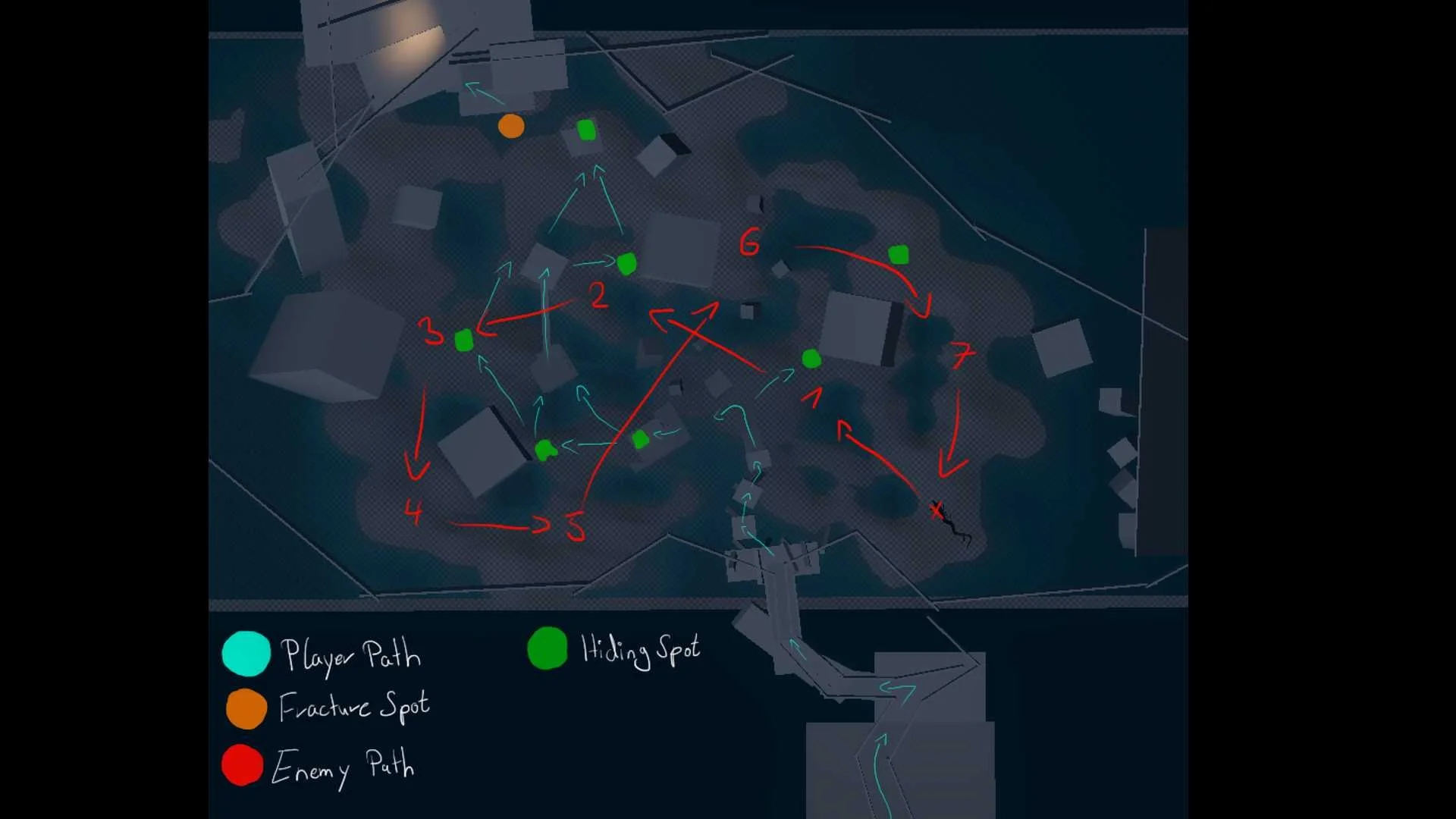
River: In-Engine Concept
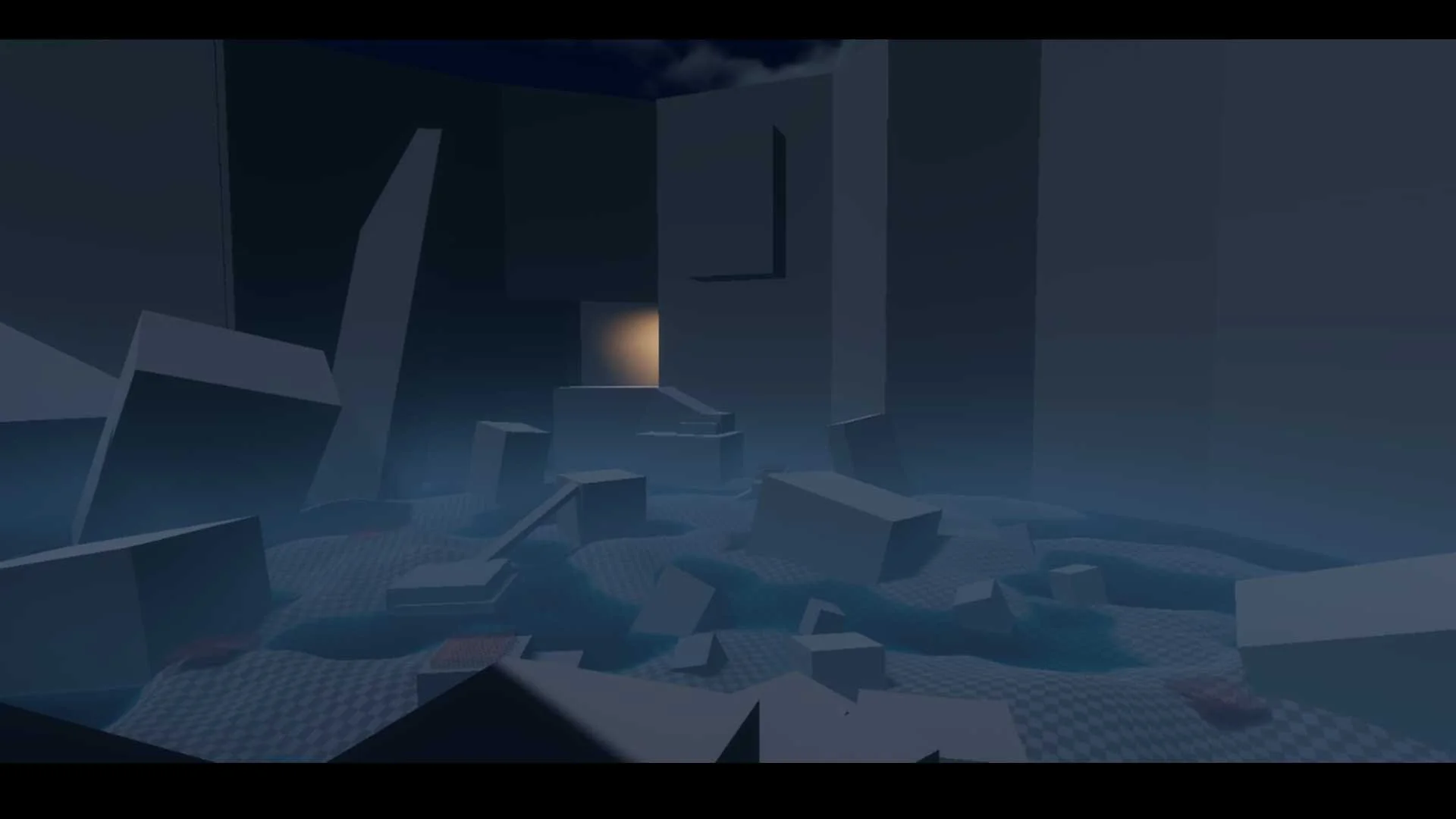
River: Vantage Point
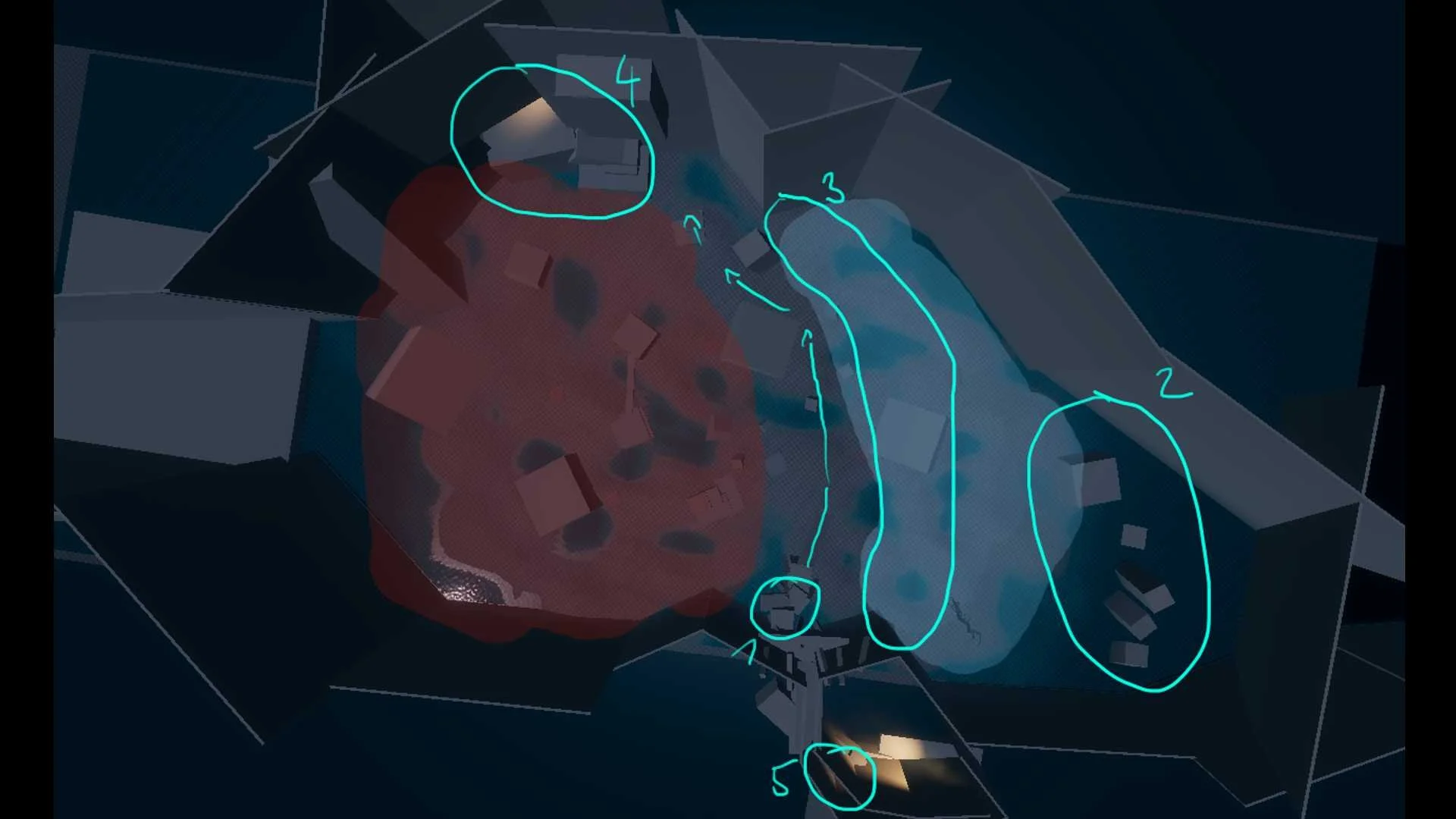
River: Playtest Feedback

River: Playtest Iteration
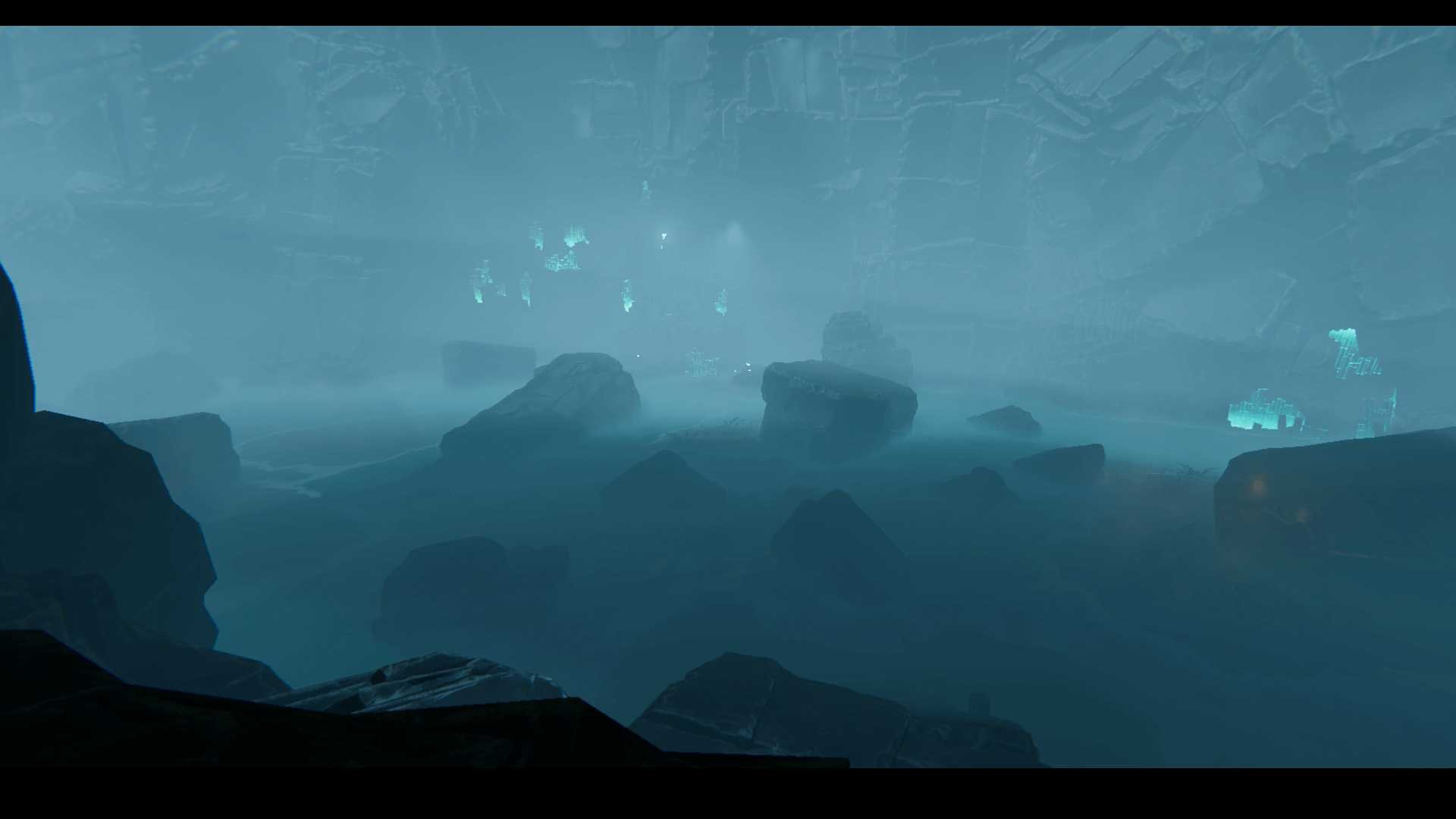
River: Post-Process
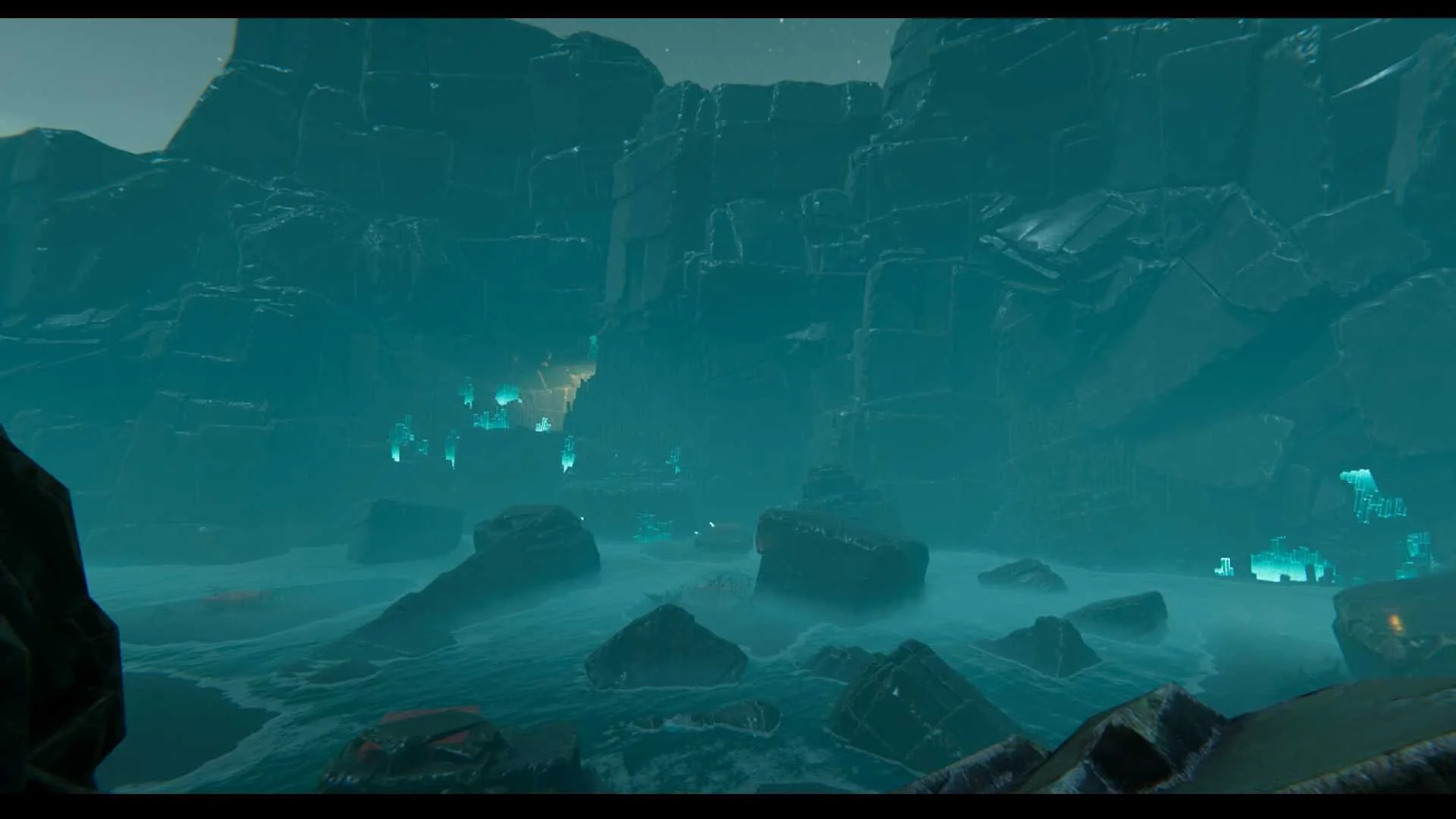
River: Final Level
Detailed Level Breakdown
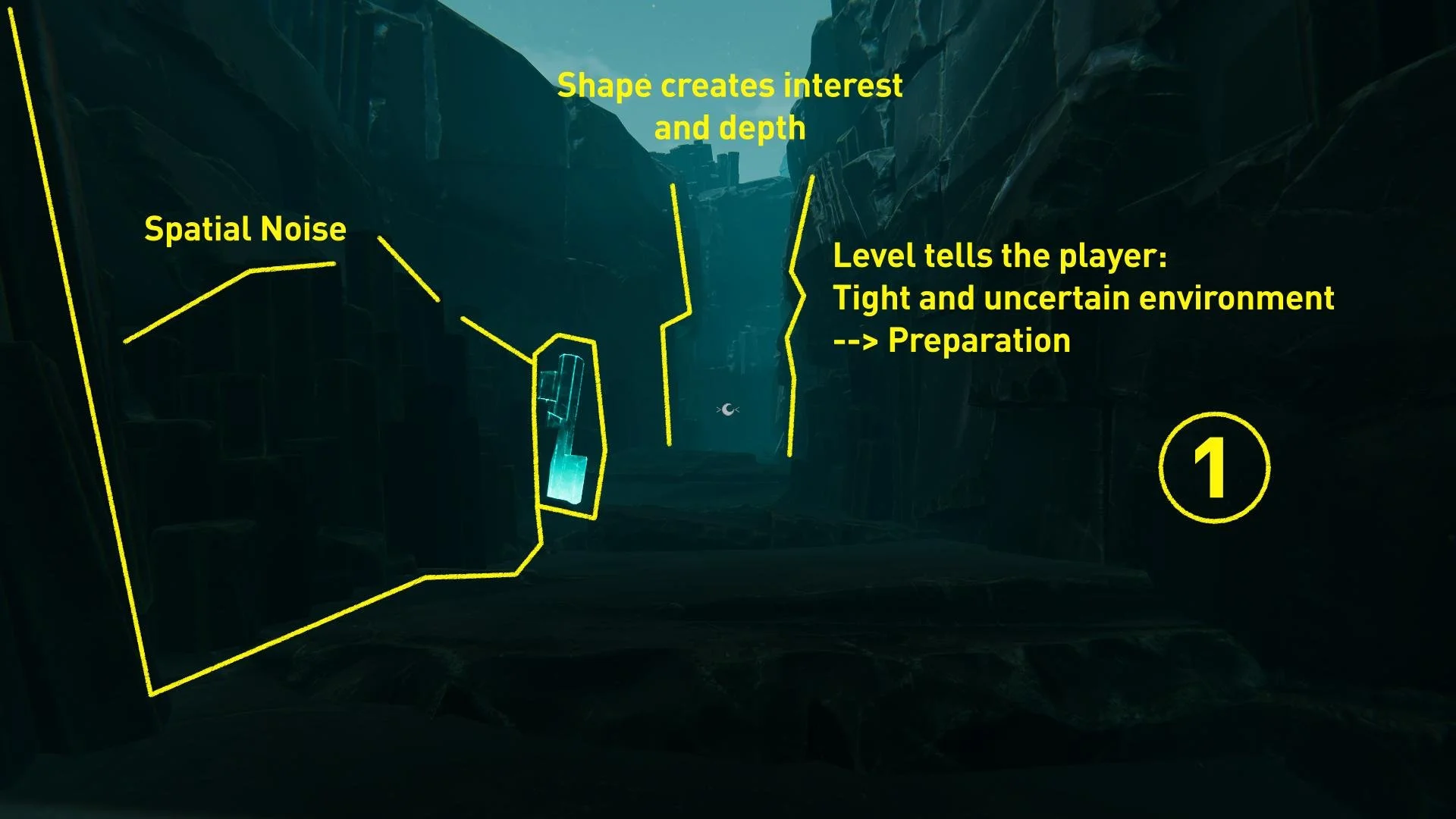
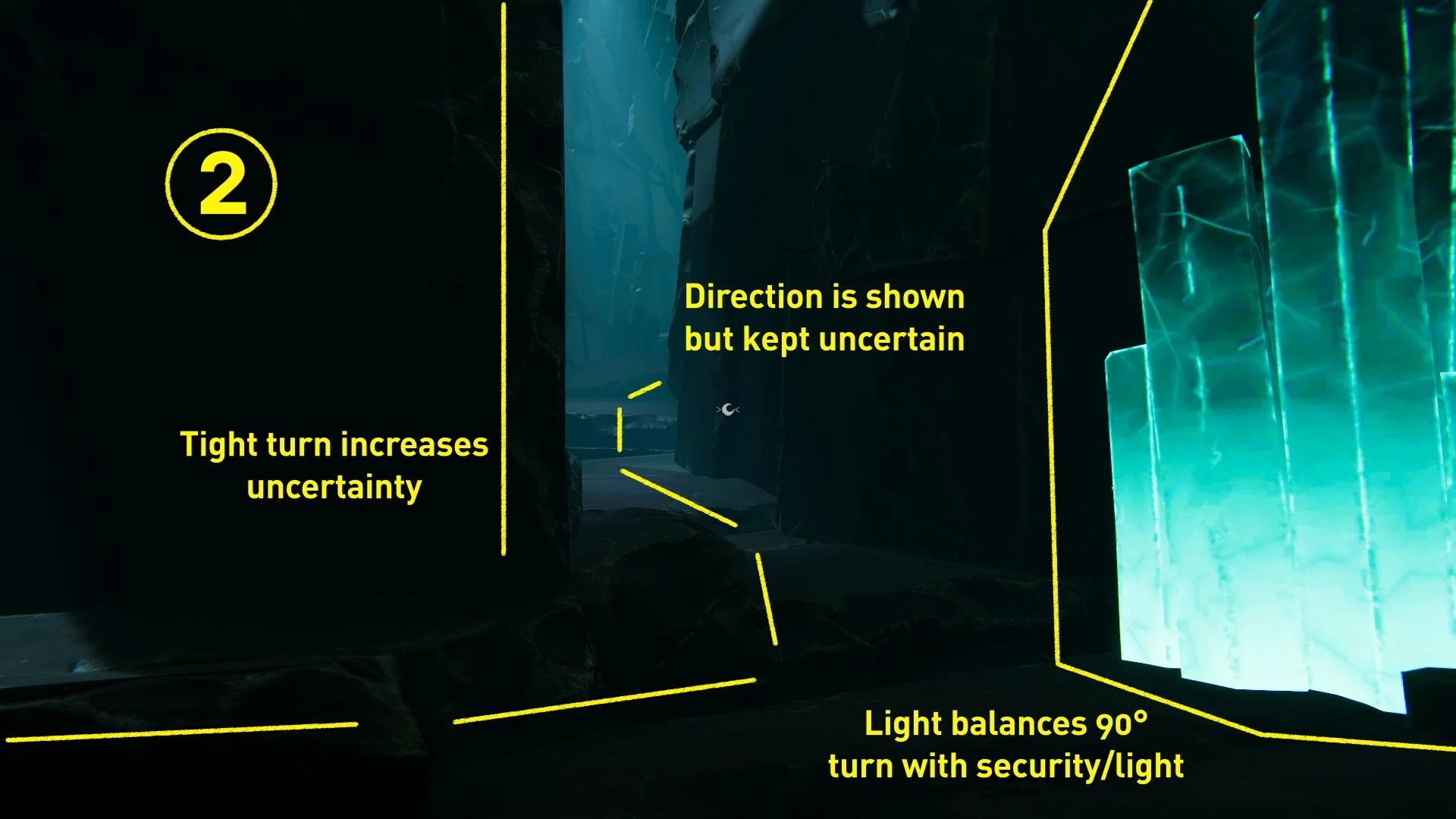
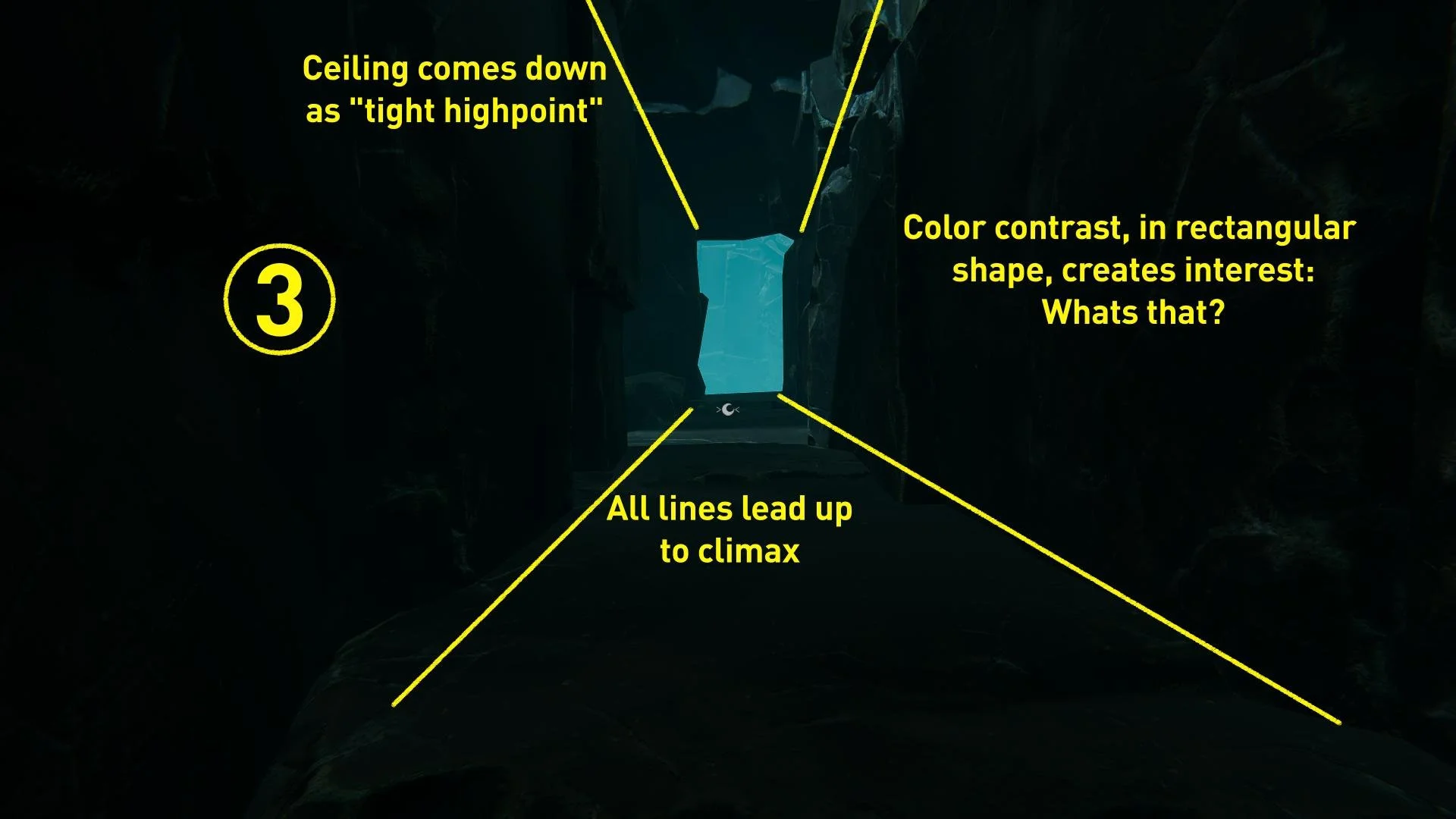
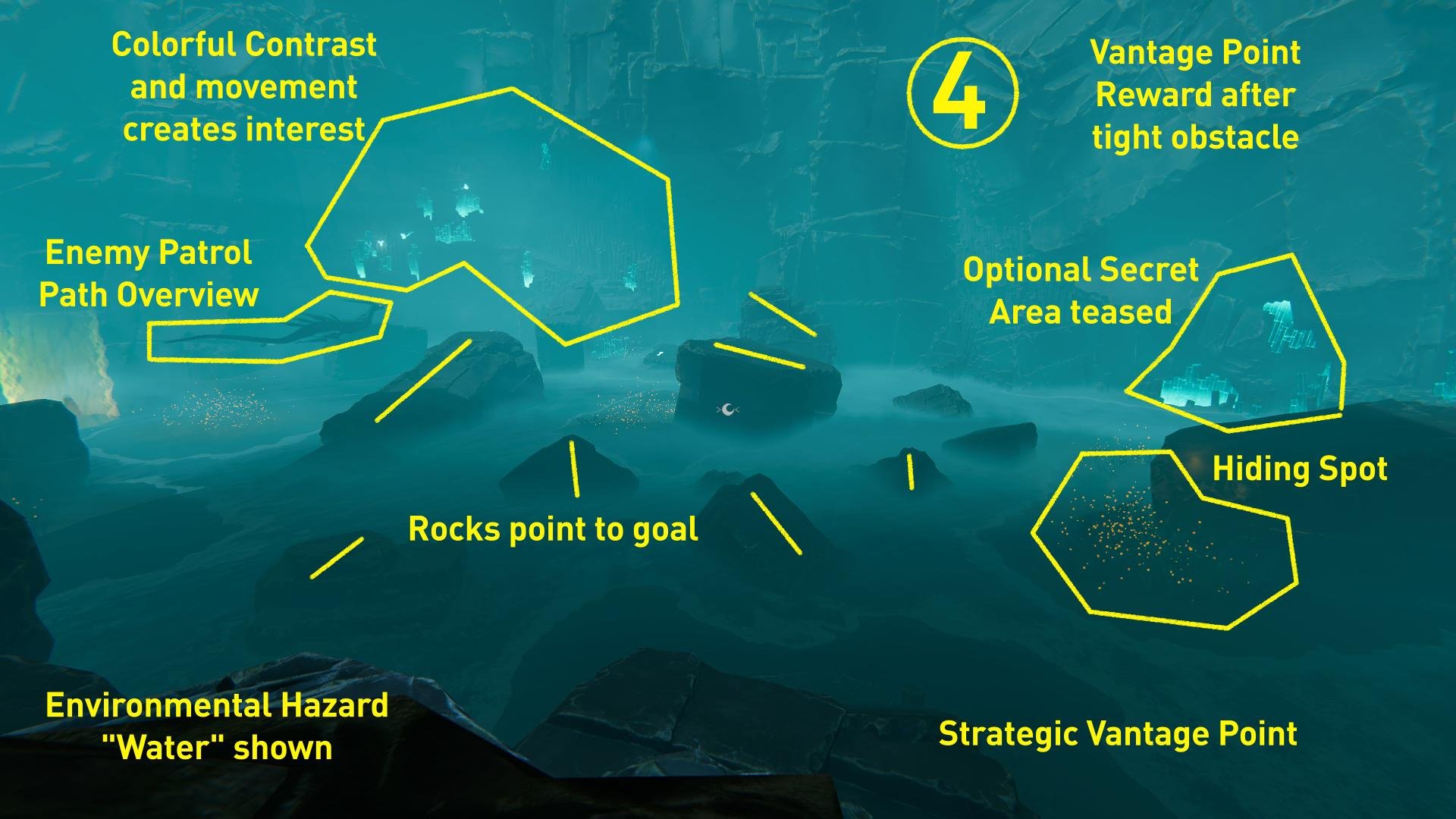
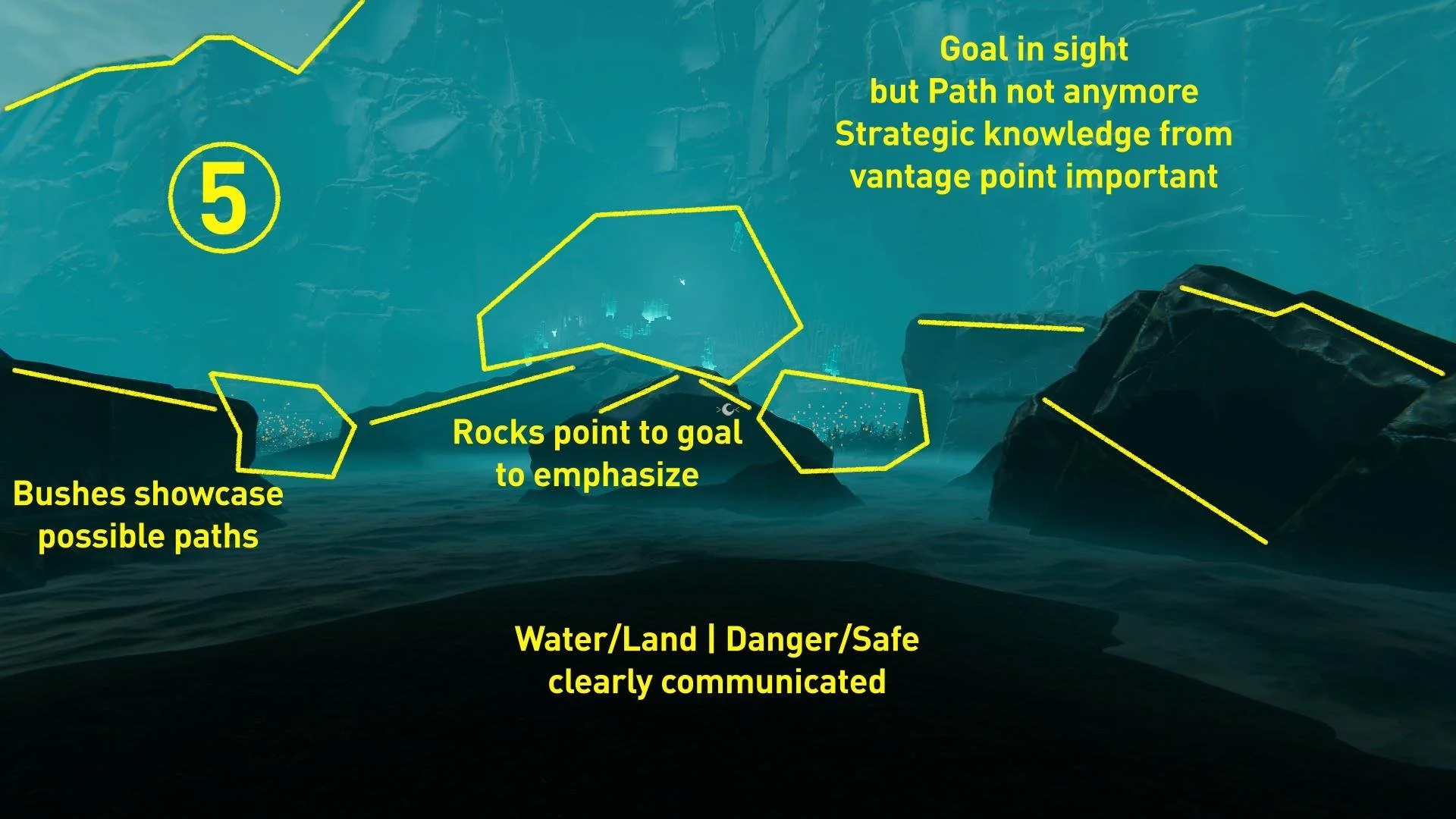
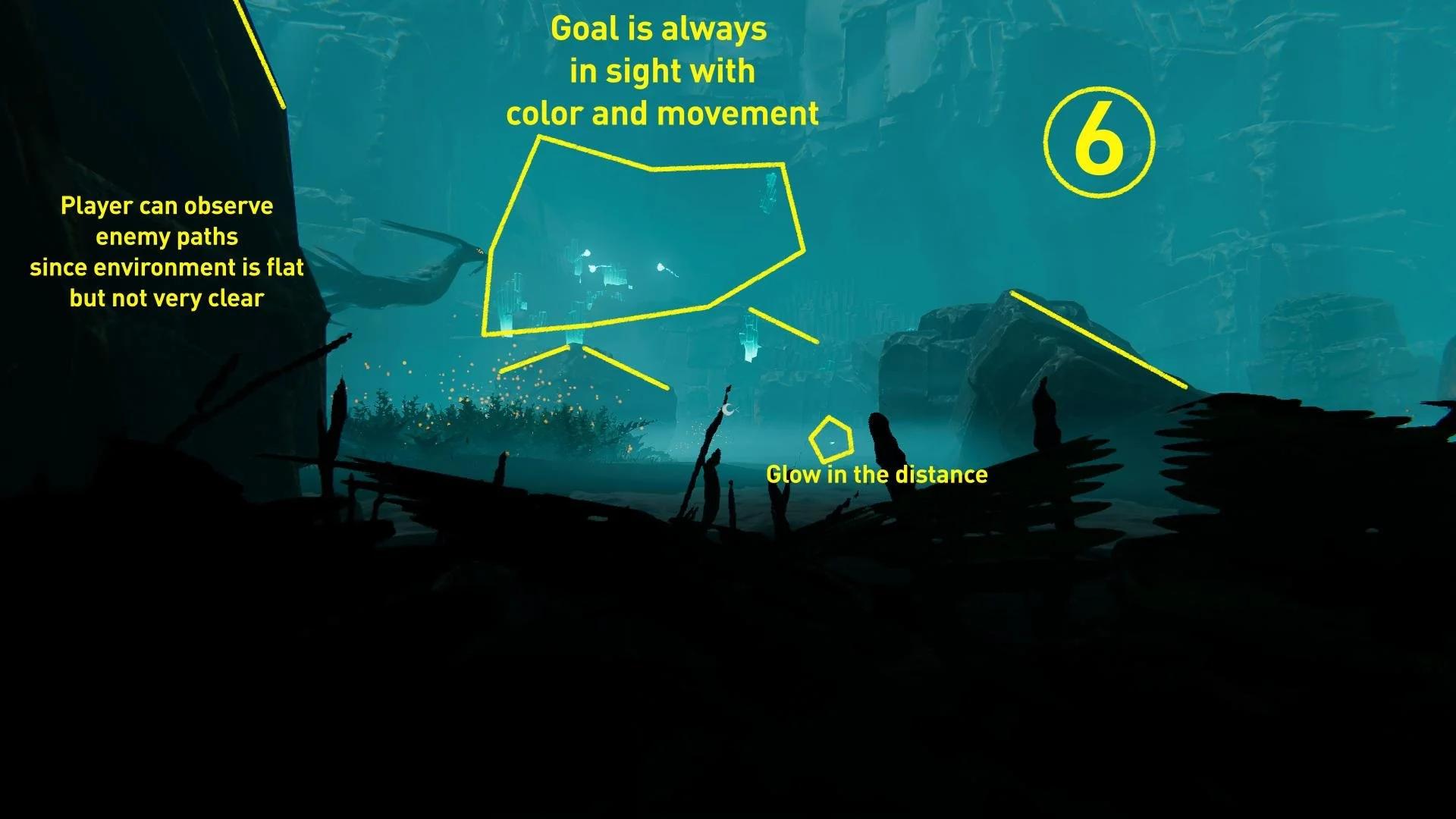
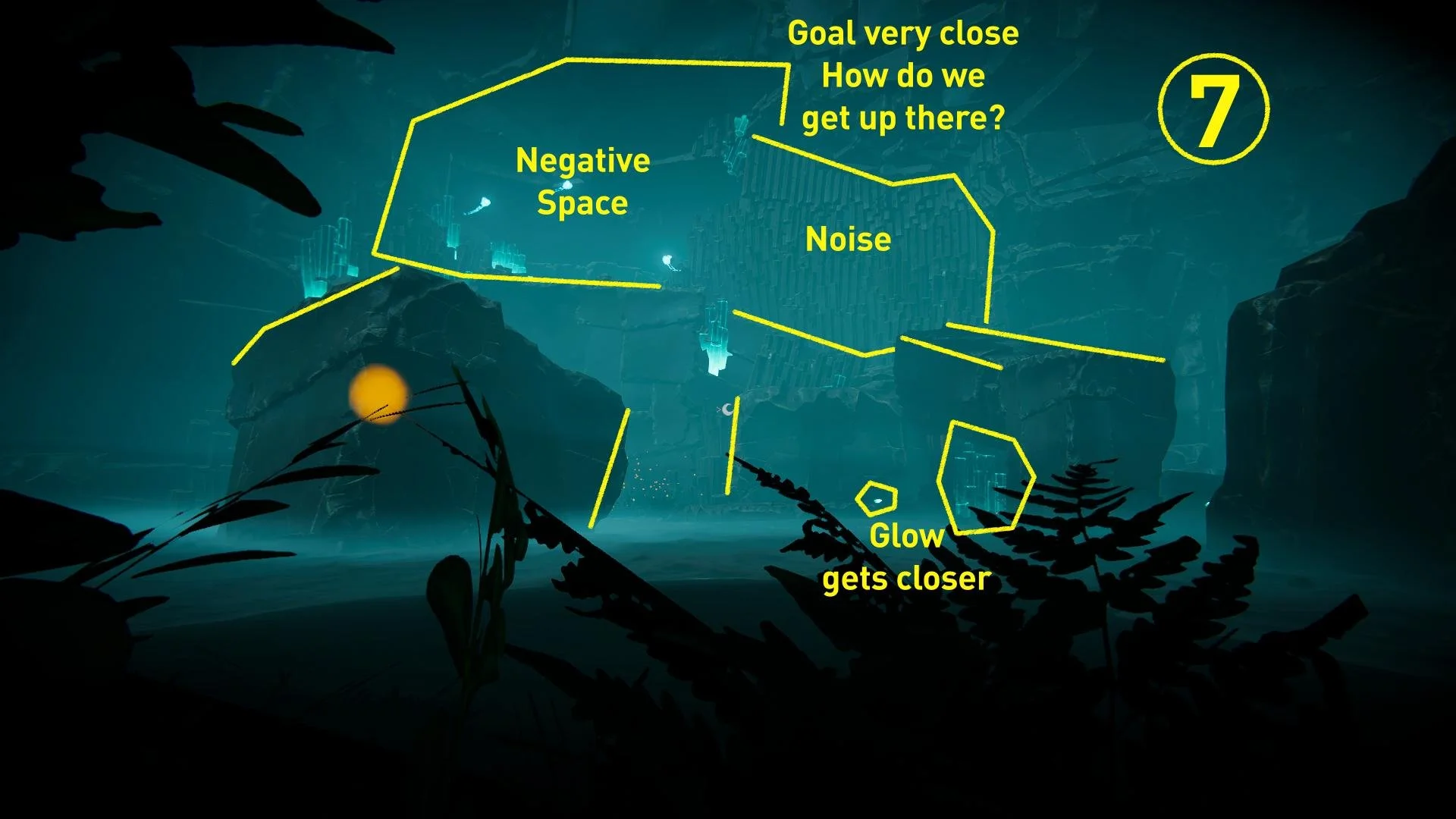
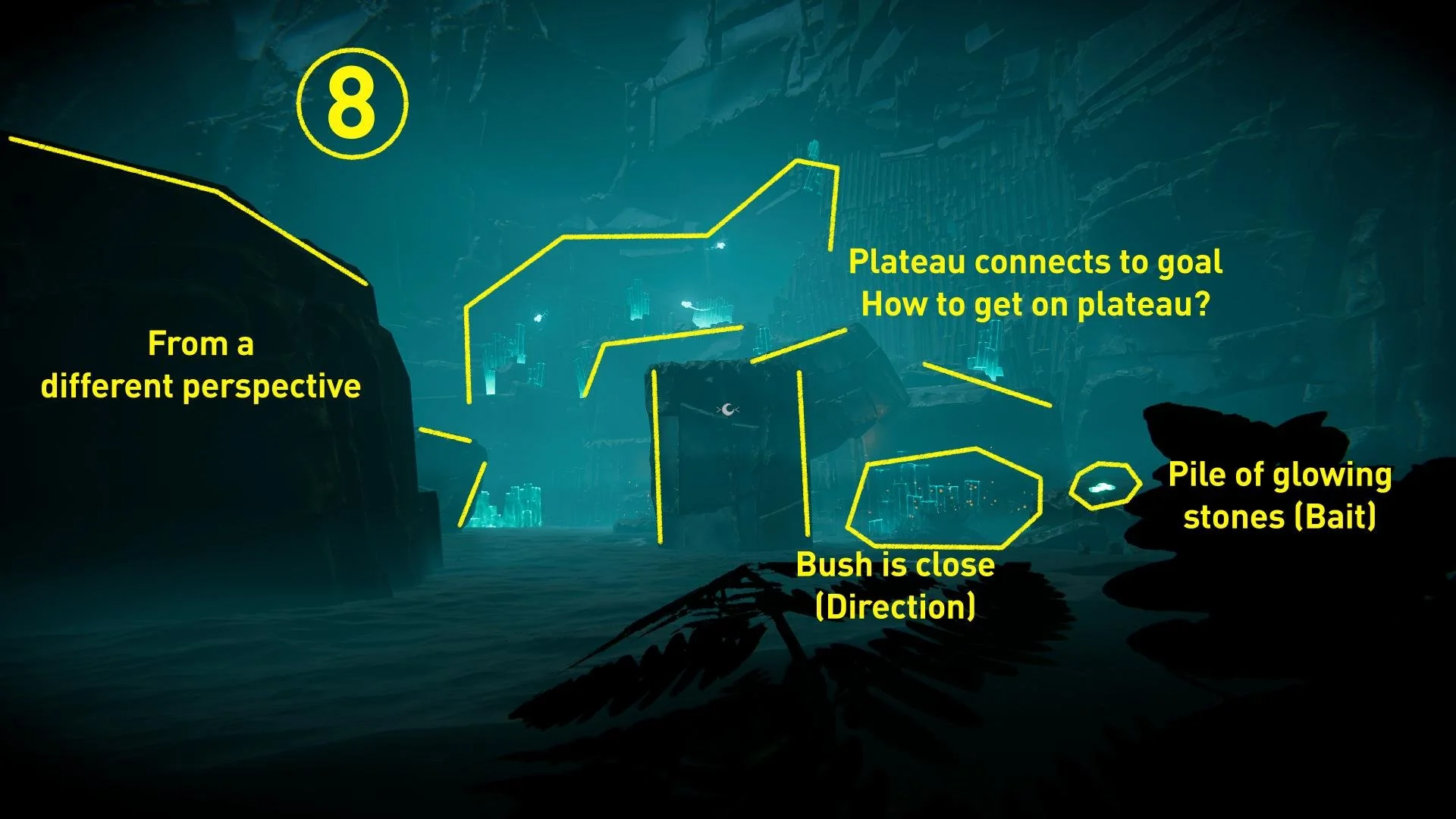
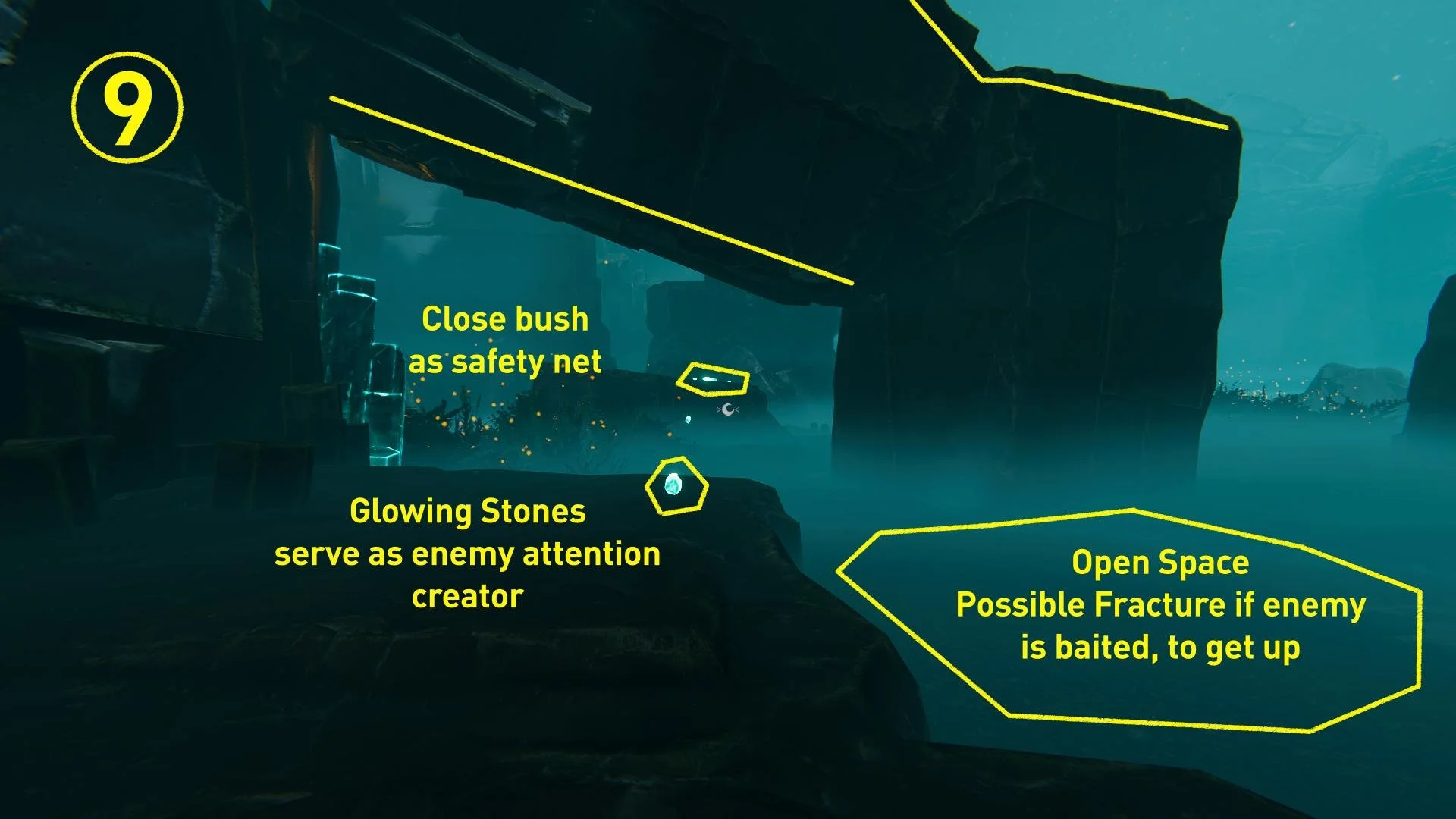
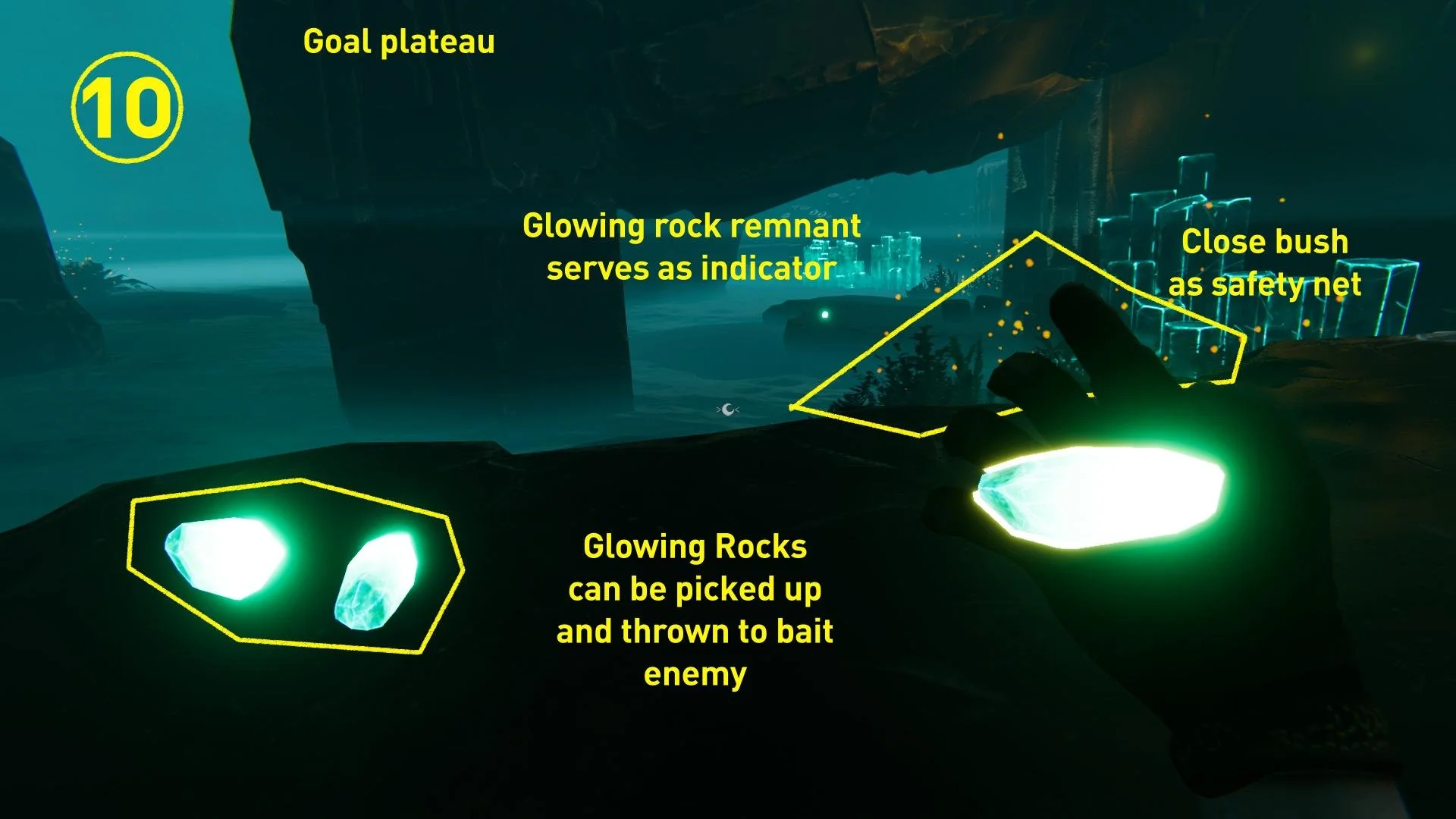
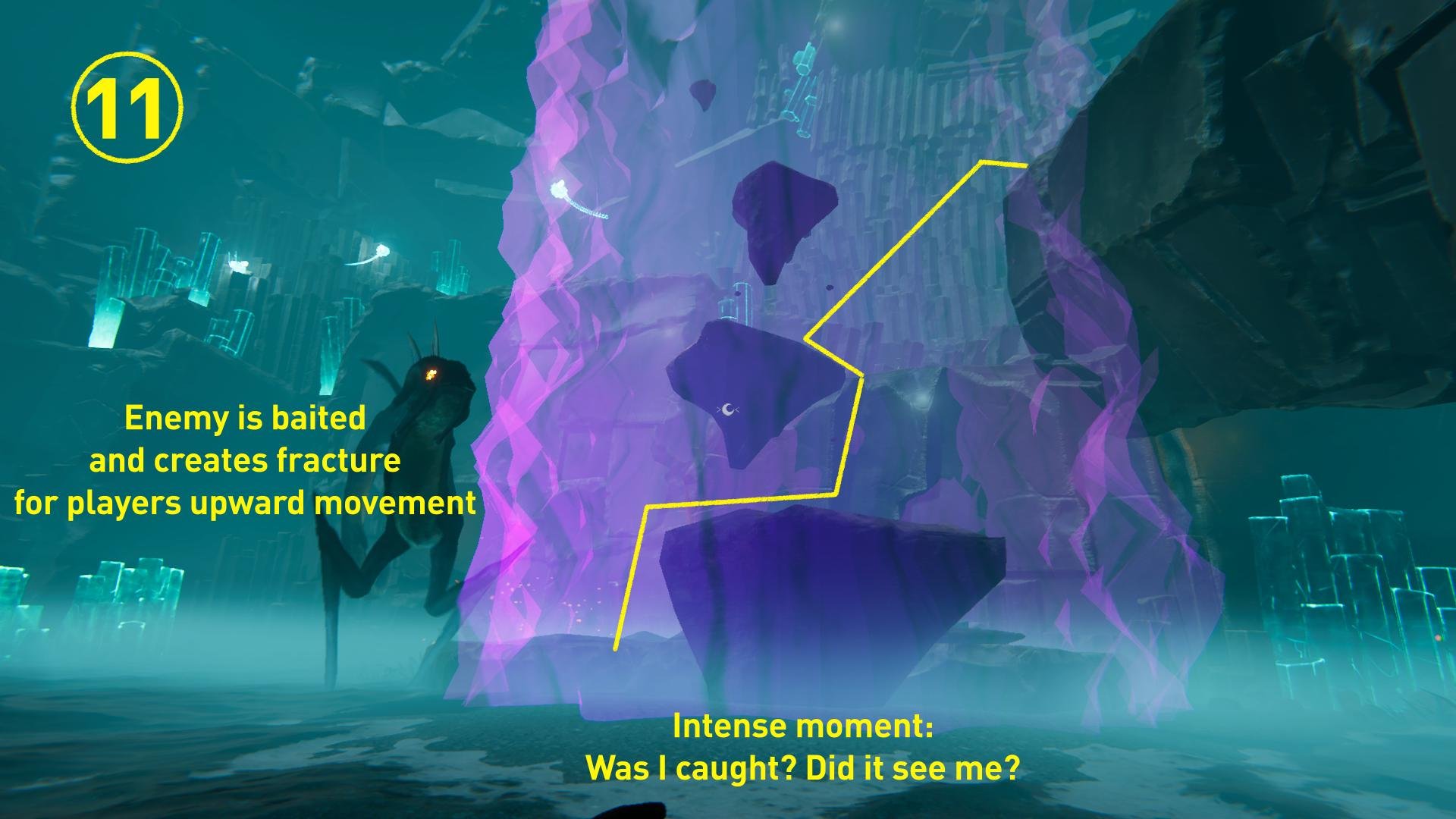
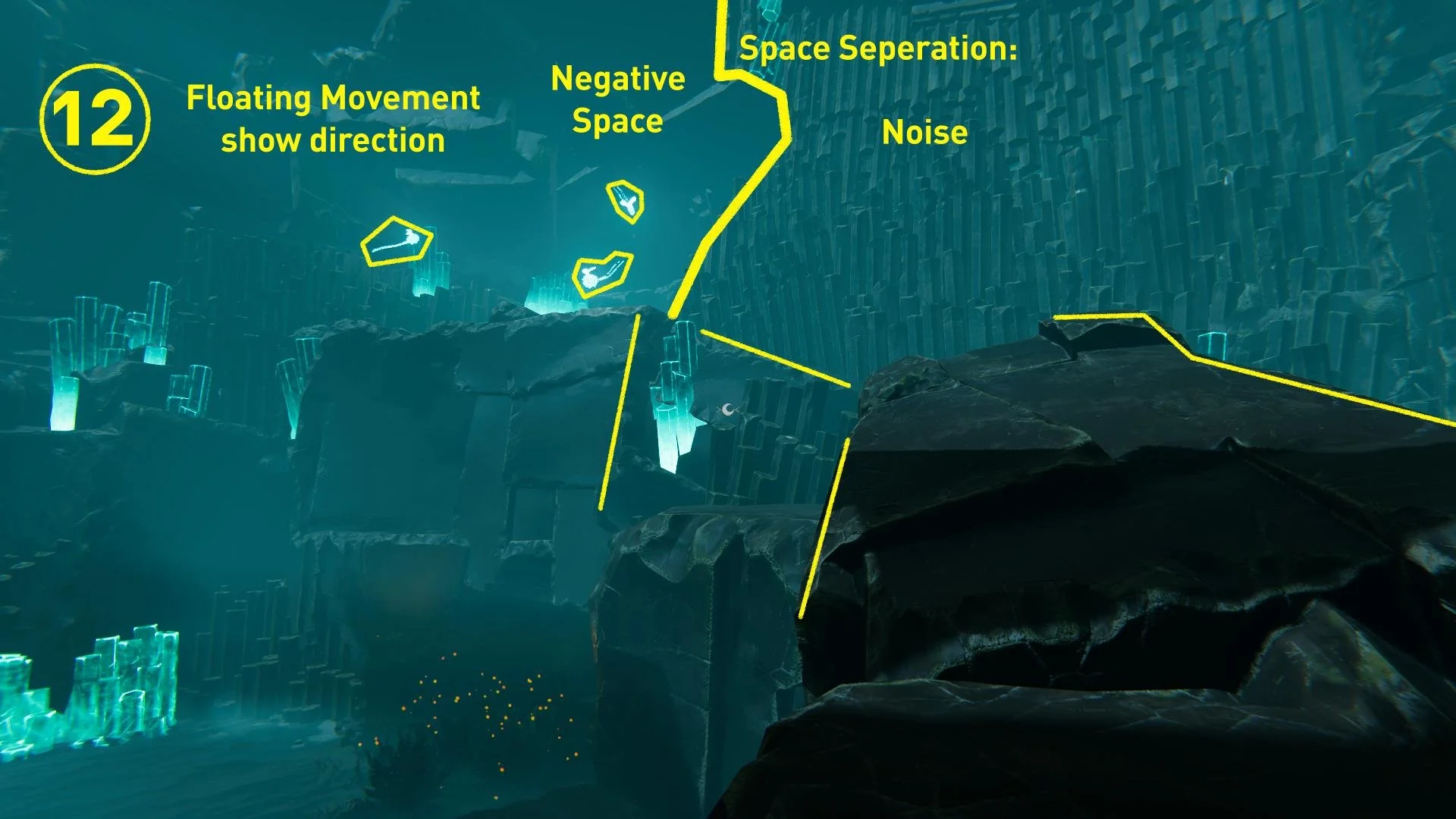
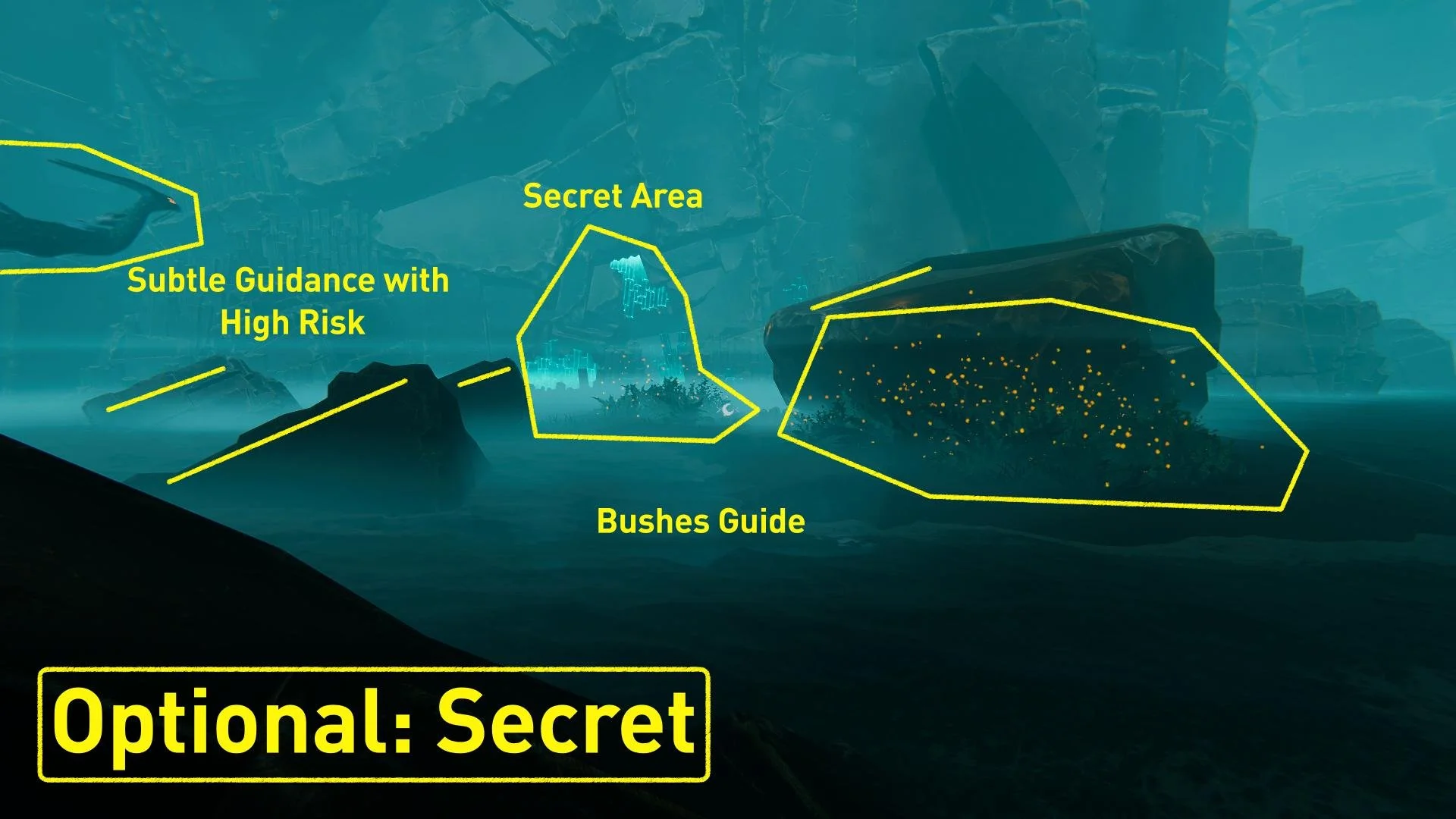
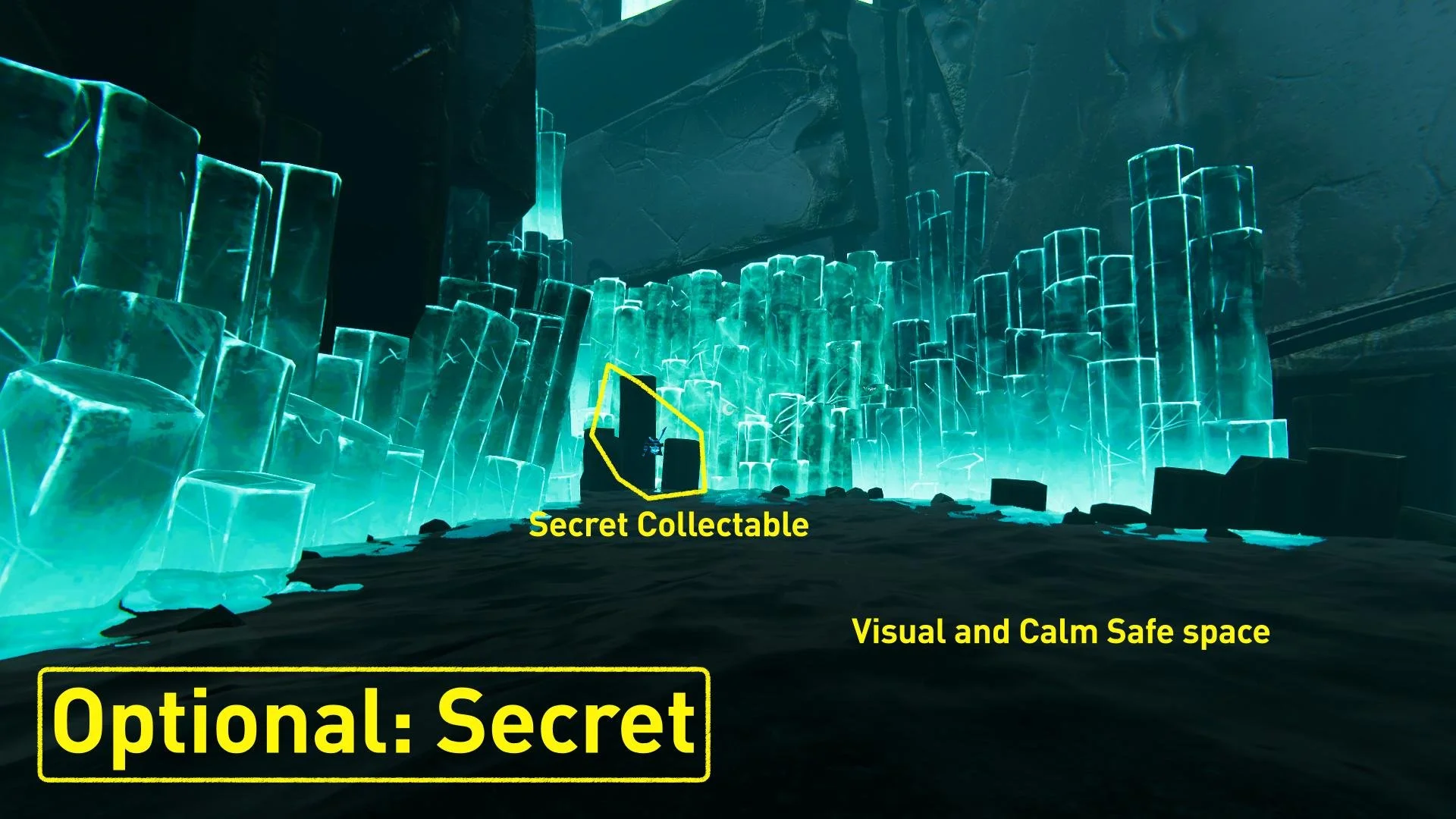
General Issues, Iterations and Learnings
Sample Issues
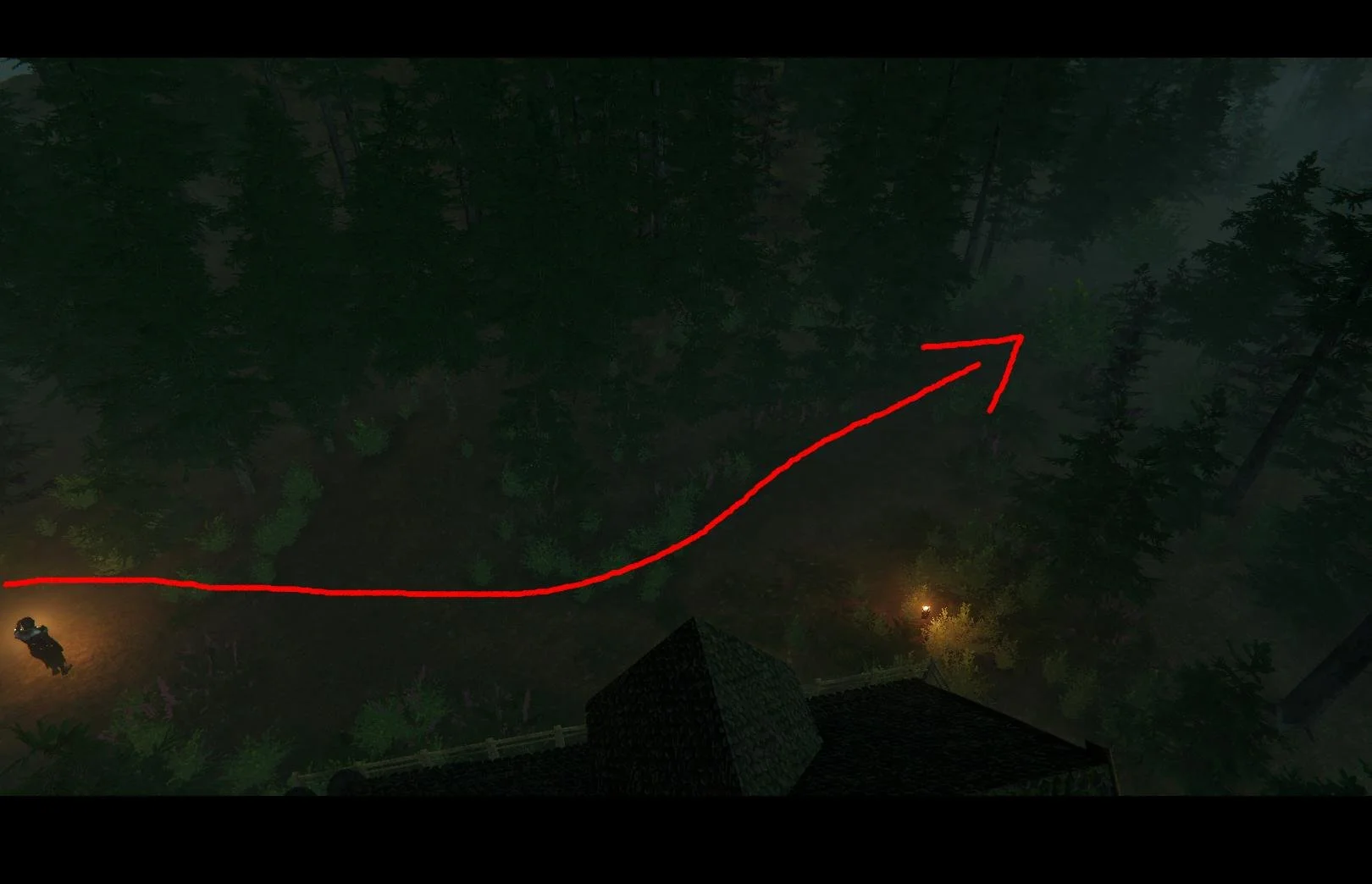
A trailing mission (following guardians) felt like a passive, boring escort.
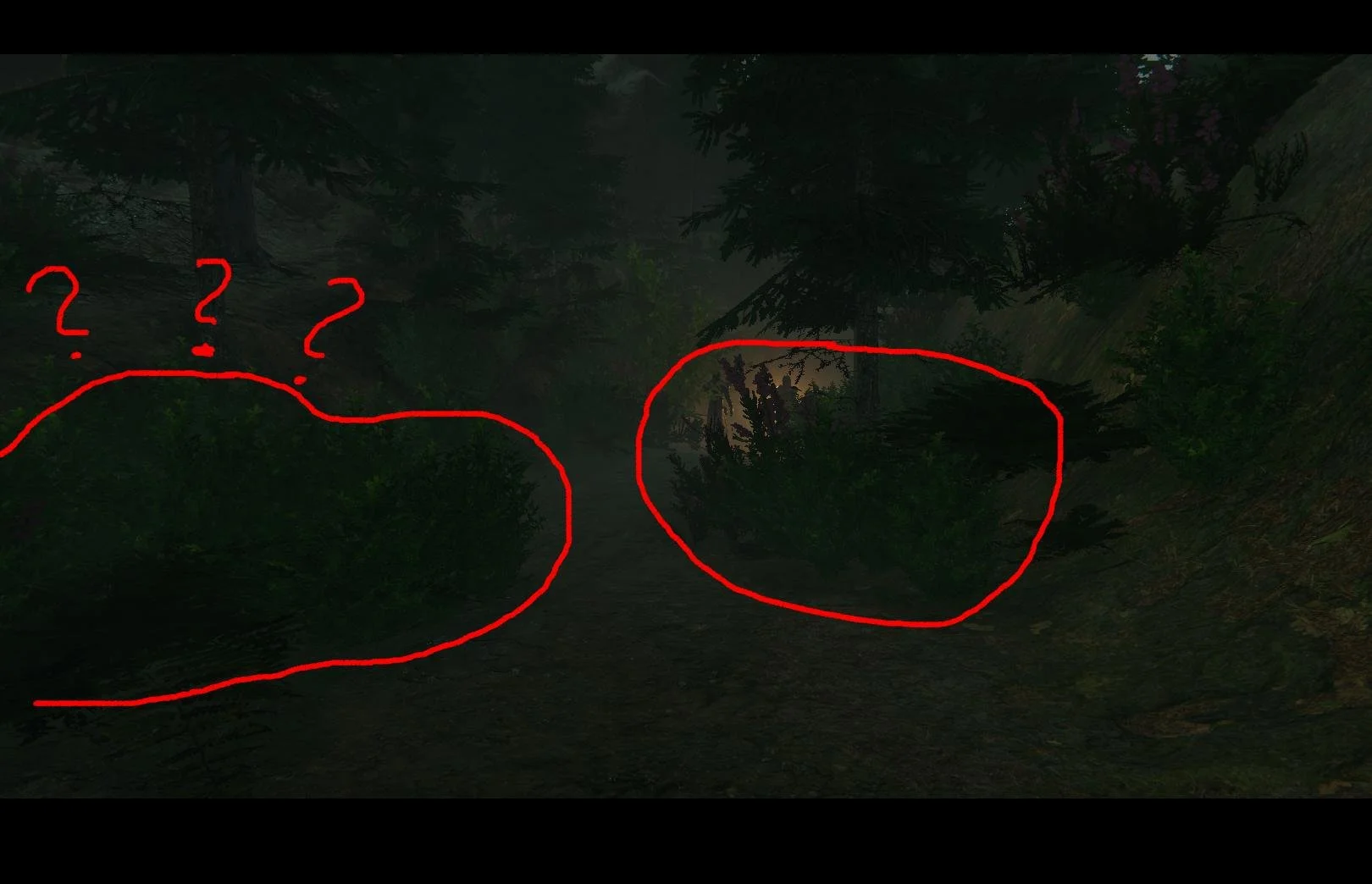
Stealth bushes were not immediately noticeable to players.
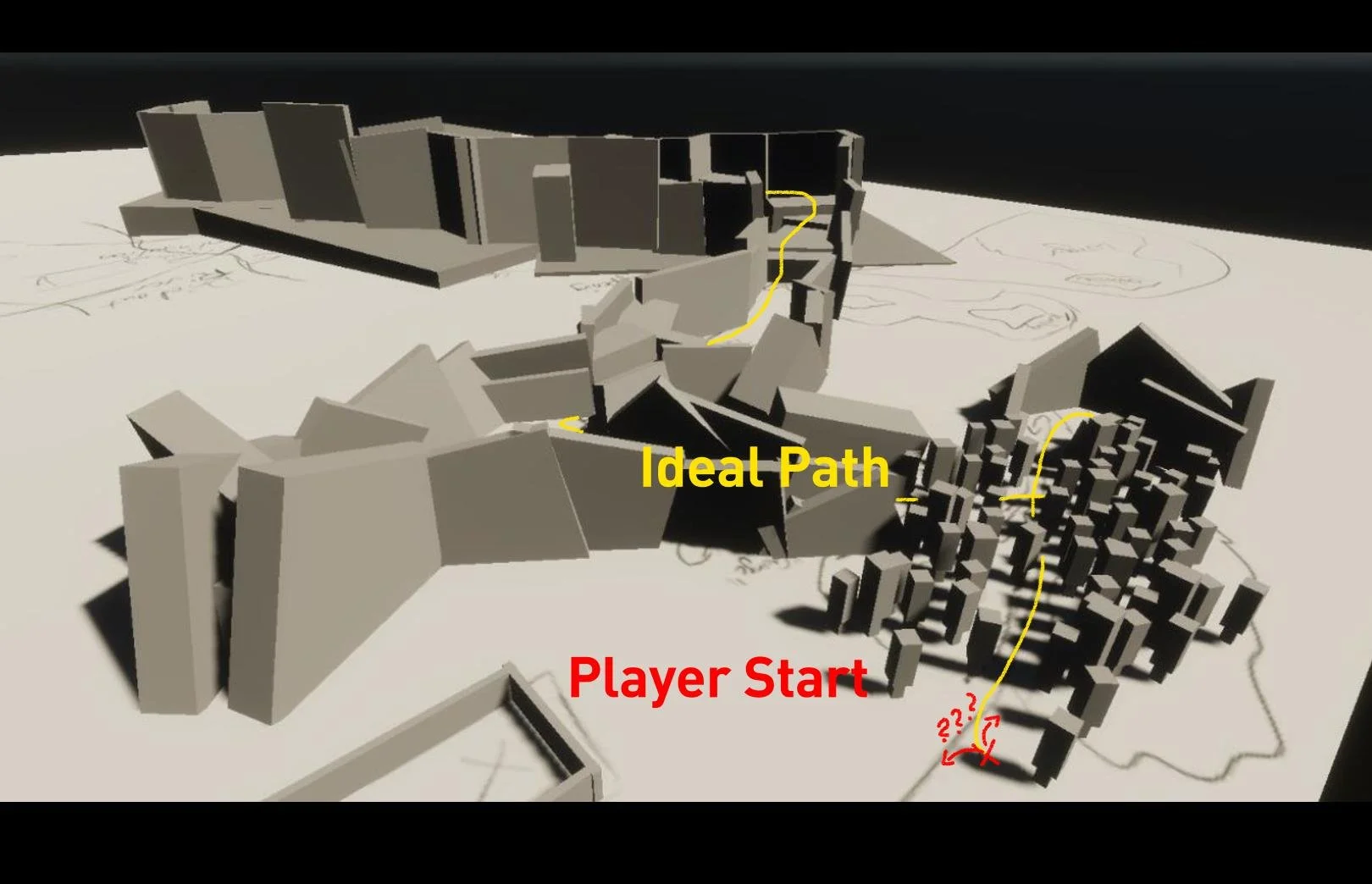
Early stage direction was unclear for first-time players.
Sample Solutions
Reworked guardian AI to create stealth tension (patrols that turn and force hiding rather than blind trailing).
Visually marked bushes with orange fireflies and added a vignette indicator to communicate hidden state.
Directed players with cinematics that establish direction and then release control, improving initial onboarding and entrance into the game.
General Learnings
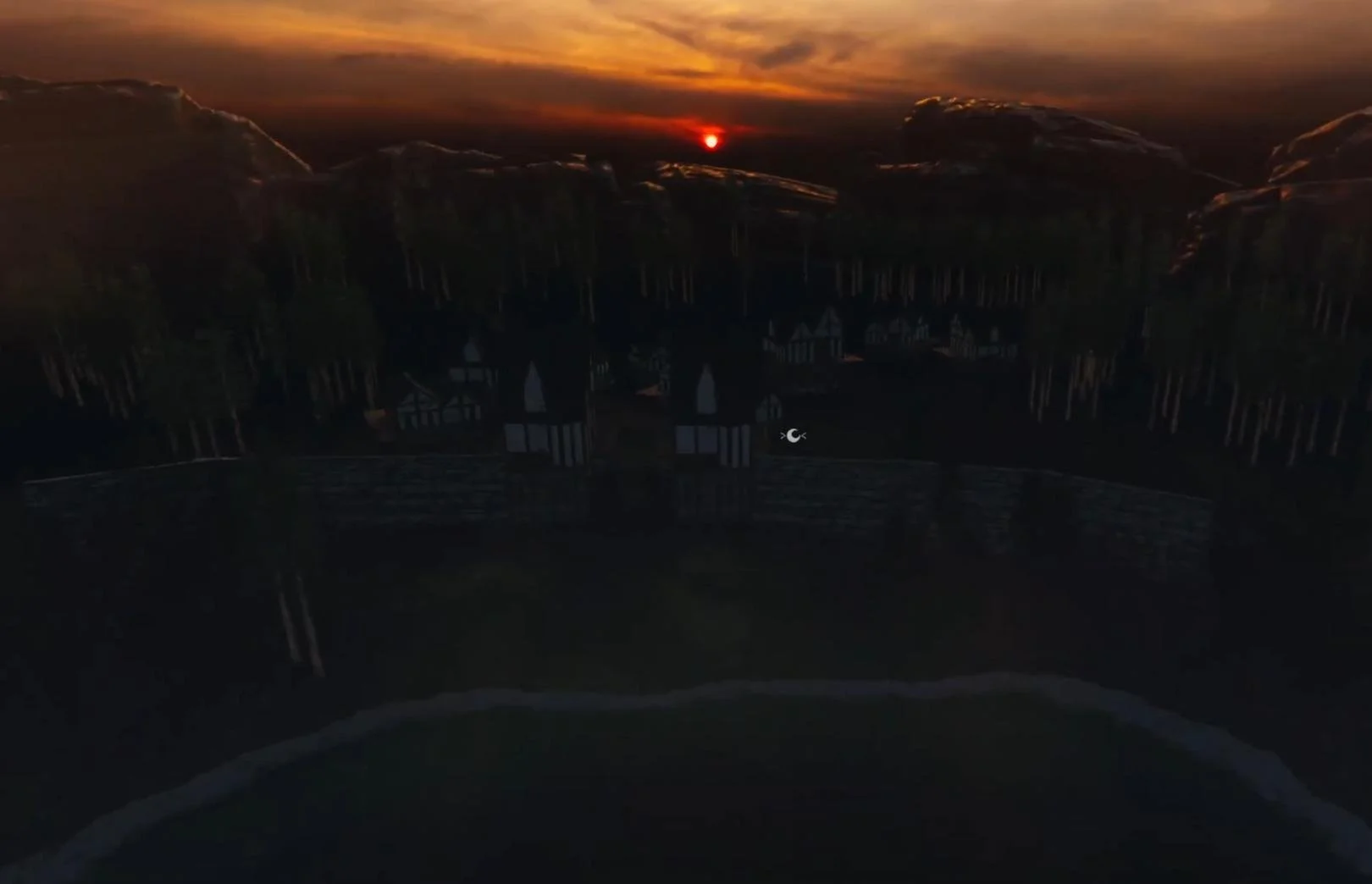
The Action Blockout workflow (inspired by Titanfall developers) enables fast, effective iteration, and worked really well.
Stealth mechanics need strong visual cues to be recognized and used correctly by players.
Cinematics can be powerful guidance tools, as long as they
return control naturally.Rapid iteration on themes and mechanics is essential to keep pace with project scope.
Enemy encounters must be balanced with pacing/mood and game mechanics.
General Design Principles
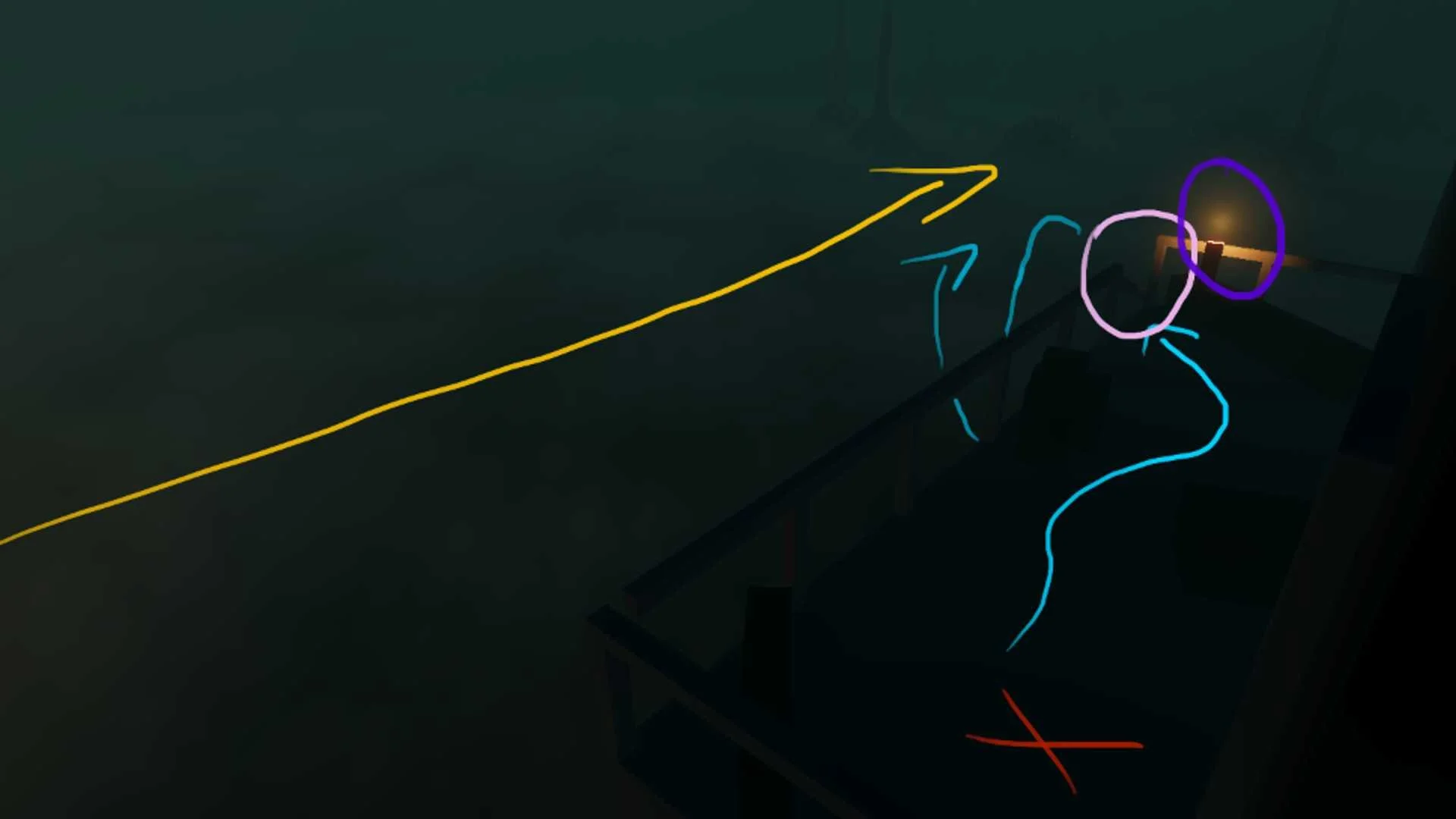
Cinematic Flow: Seamless cutscene-to-gameplay transitions, purposeful camera work.
Player Guidance: Light cues, environmental composition, moving landmarks.
Pacing Variation: Shifts between stealth, traversal, exploration, and chase to maintain engagement.
Progression of Mechanics: Introducing, reinforcing, and combining stealth, navigation, and dimension-based traversal.
Environmental Storytelling: Biome changes, lighting shifts, and layout alterations reflect narrative beats.
Cultural Flow Awareness: Left-to-right movement to align with Western visual scanning habits.
General Design Psychology
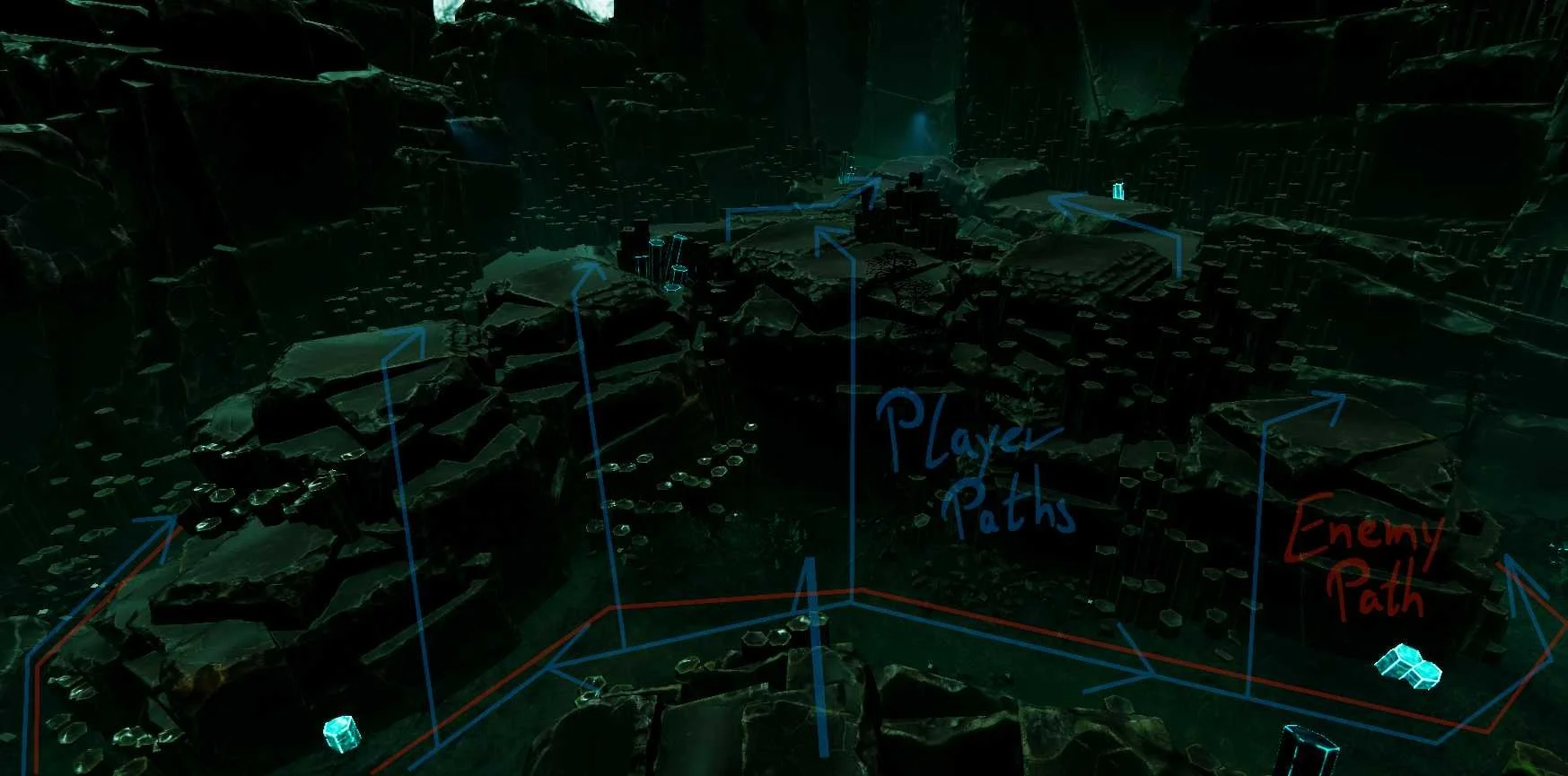
Emotion-Driven Flow: Levels structured with deliberate pacing, calm > tensions > mastery > release
Mechanic Gradients: Mechanics are introduced slowly through spatial design, escalating in challenge and creativity.
Narrative Through Play: Light, movement, and sound form the game’s storytelling language, no UI or plain text needed.
Failure as Learning: Fail states never break immersion, instead teaching mechanics organically through retry loops.
Environmental variety: 7 different levels offer unique experiences for the player in a narrative-driven story.
Complete Walkthrough
Trailer
Early Game Mechanic Prototypes
Other Level Documentation
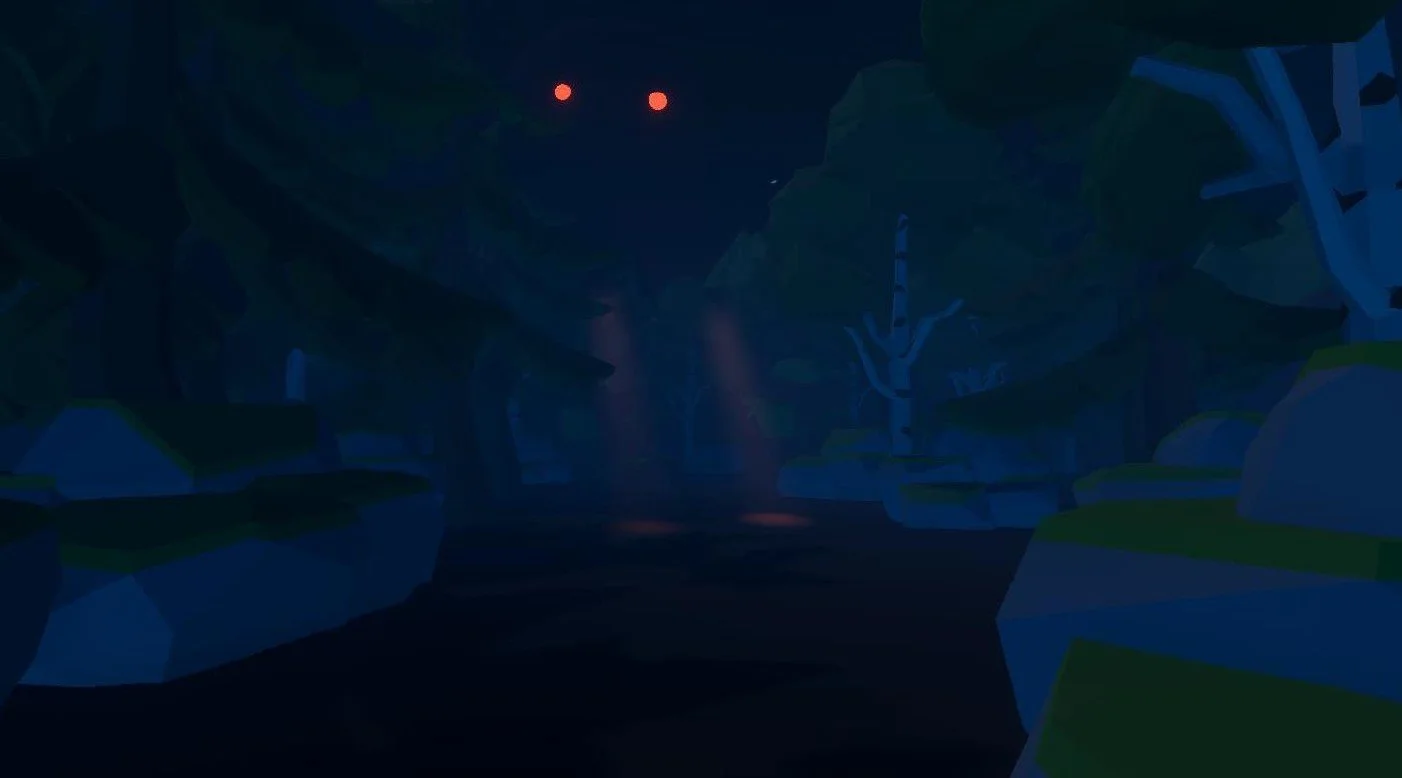
Proof of Concept
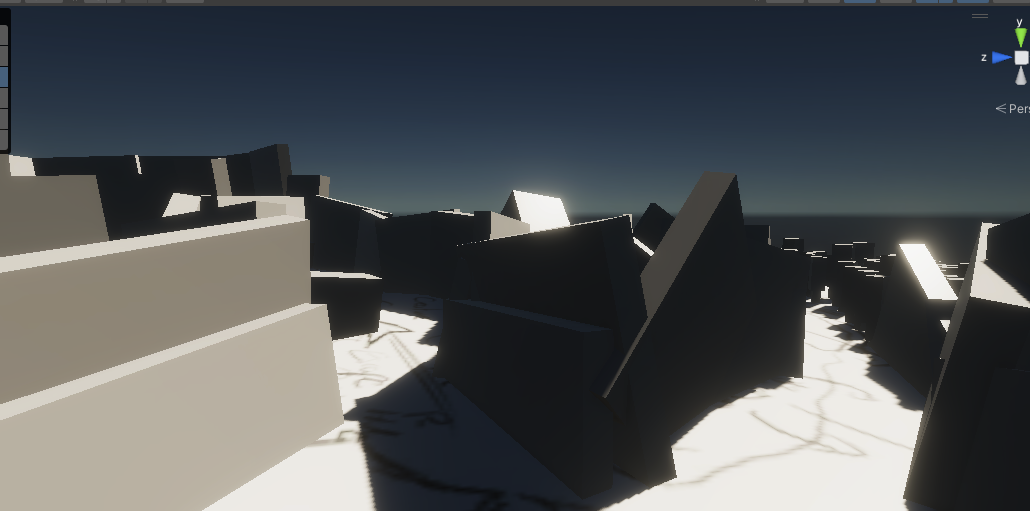
Early Level Prototype
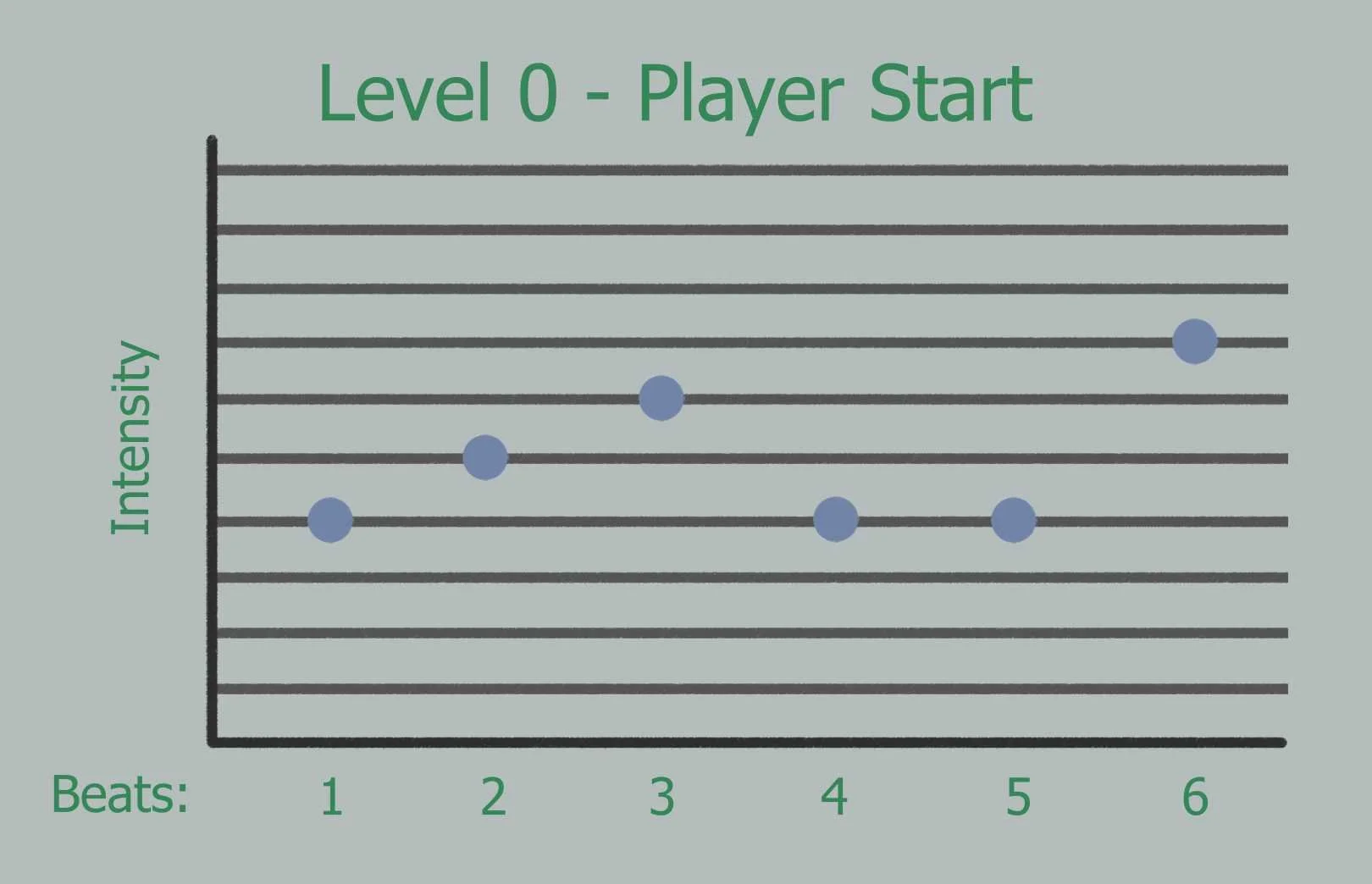
Level 0: Beatboard
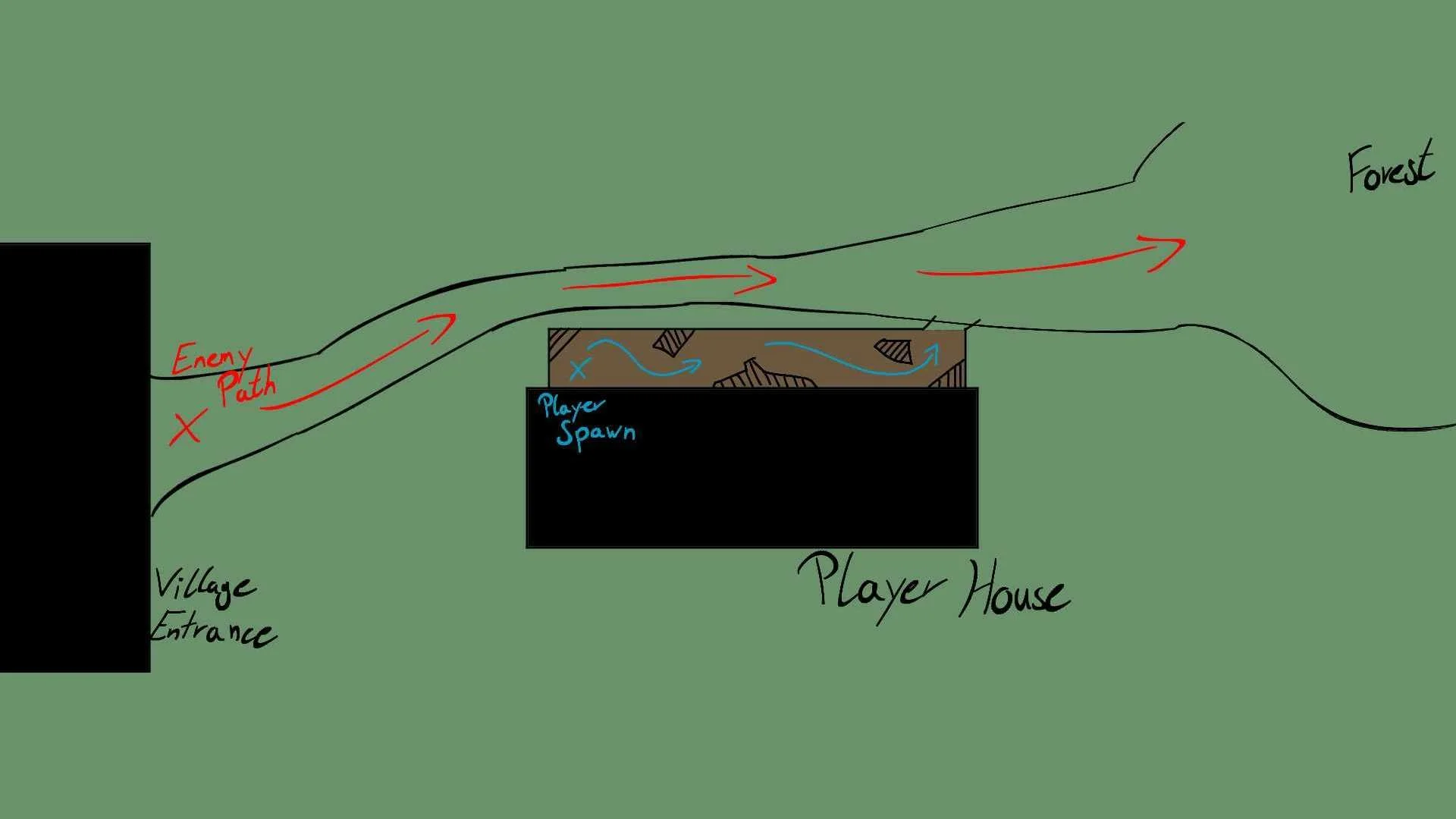
Level 1: Concept
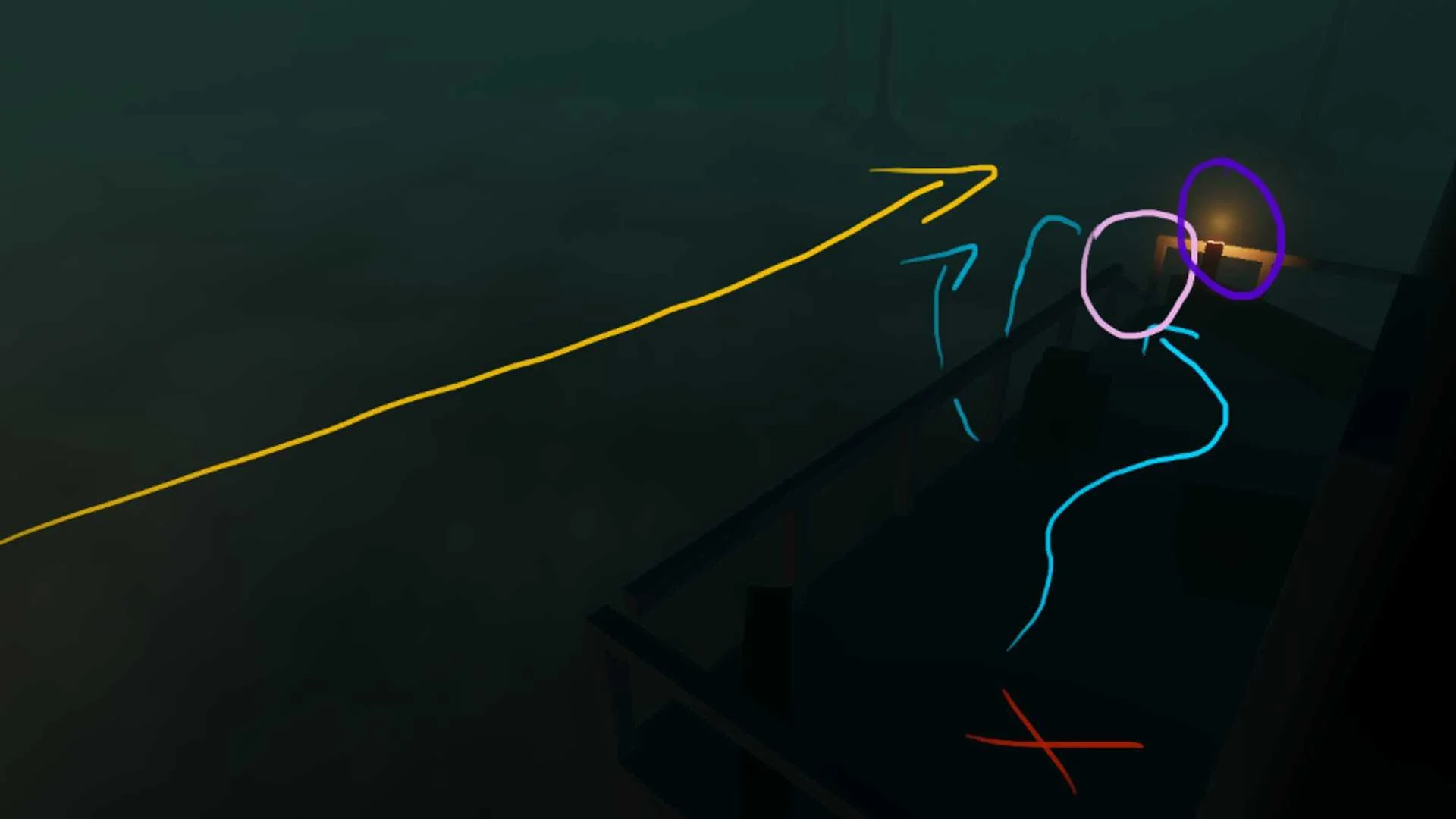
Level 1: Direction Blockout
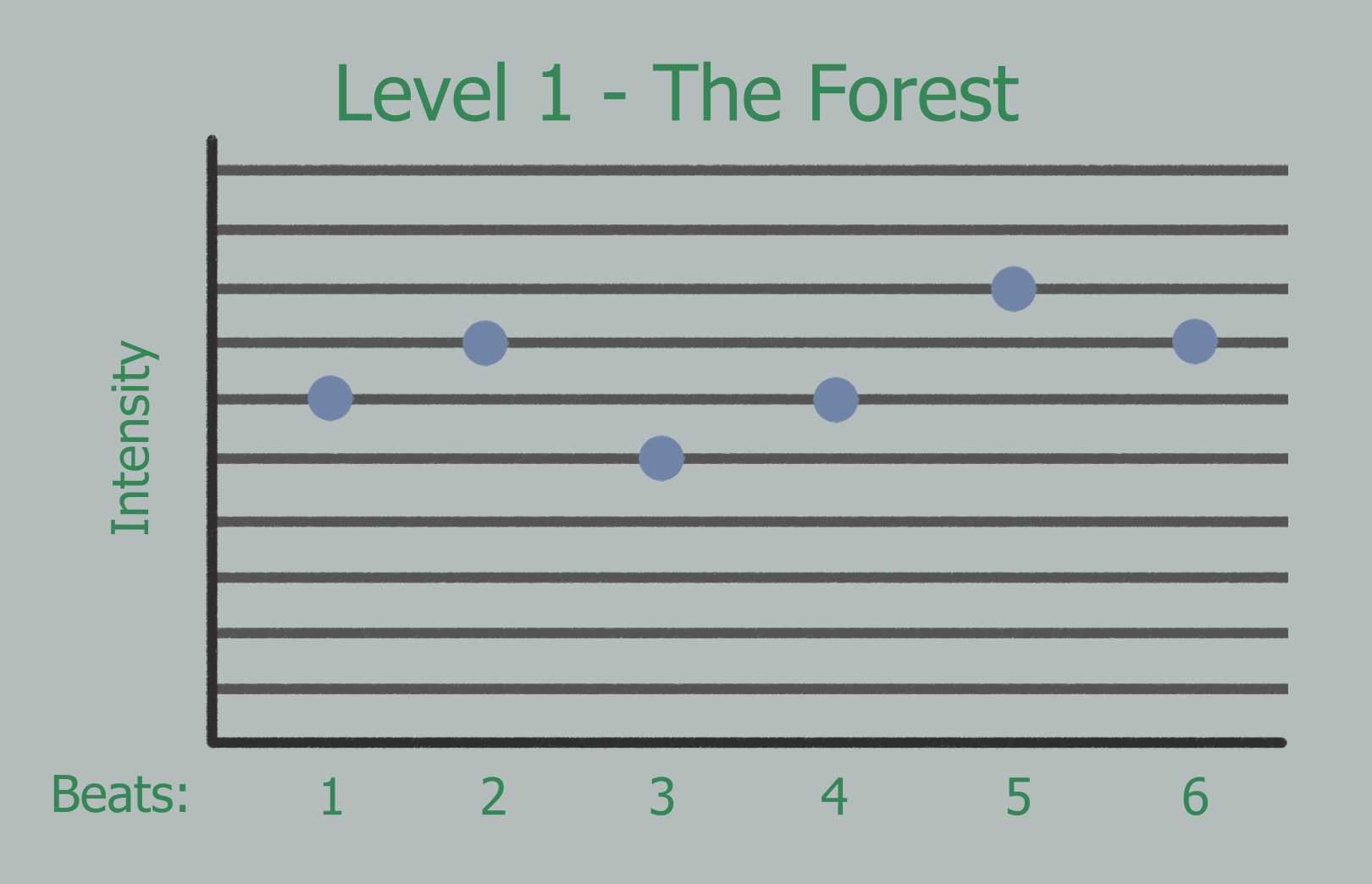
Level 1: Beatboard
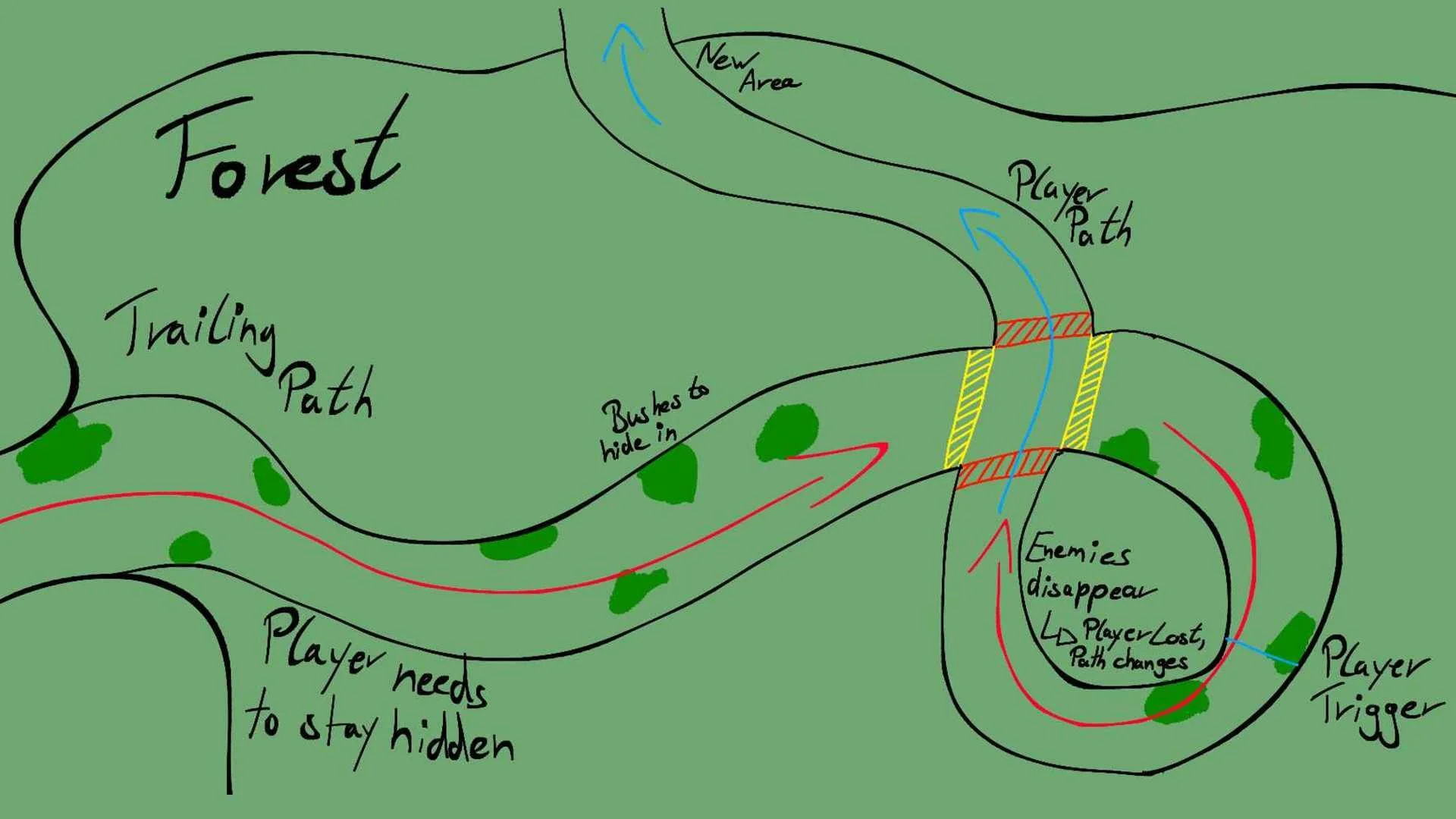
Level 2 Concept
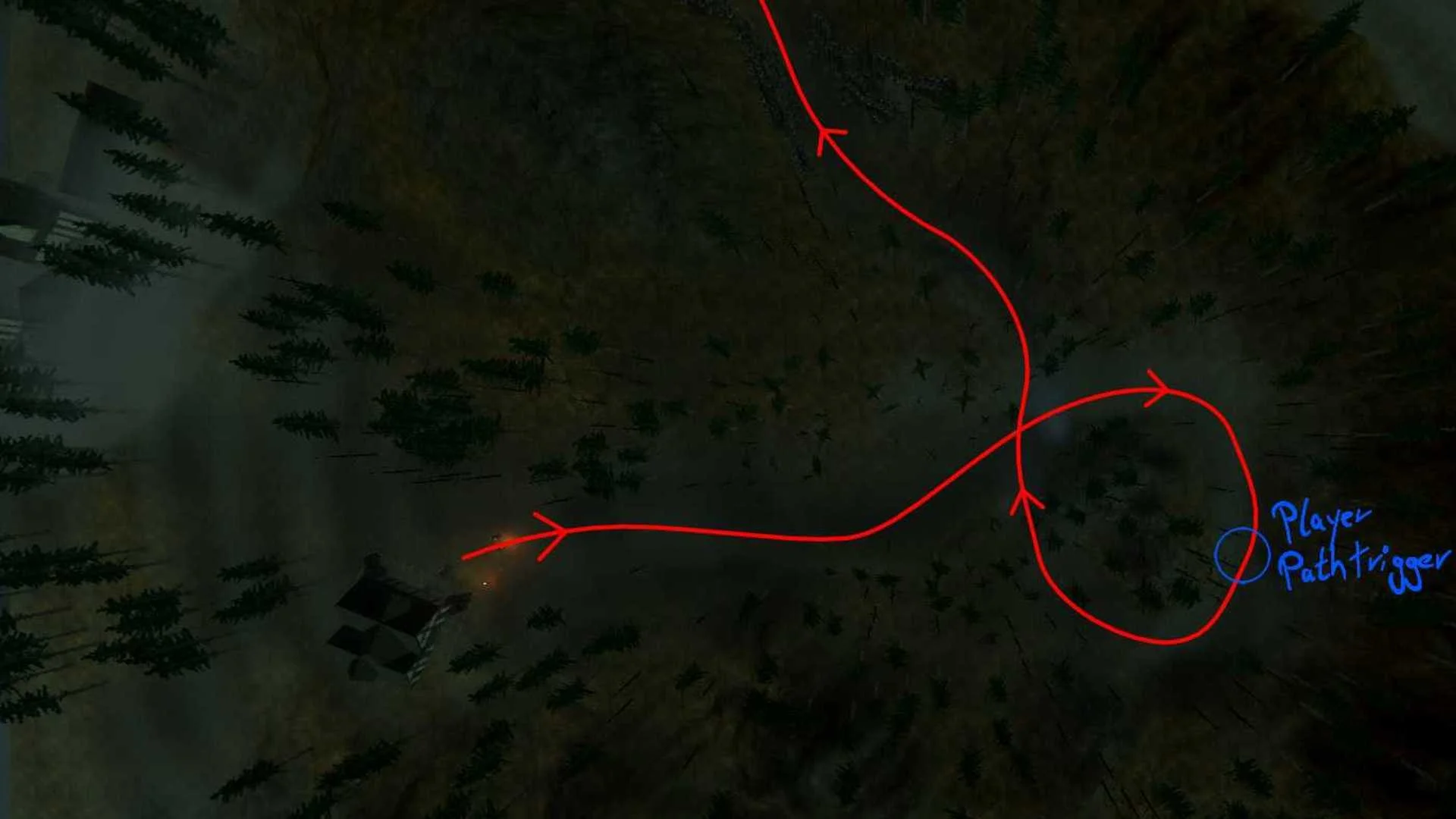
Level 1 and 2: Top down
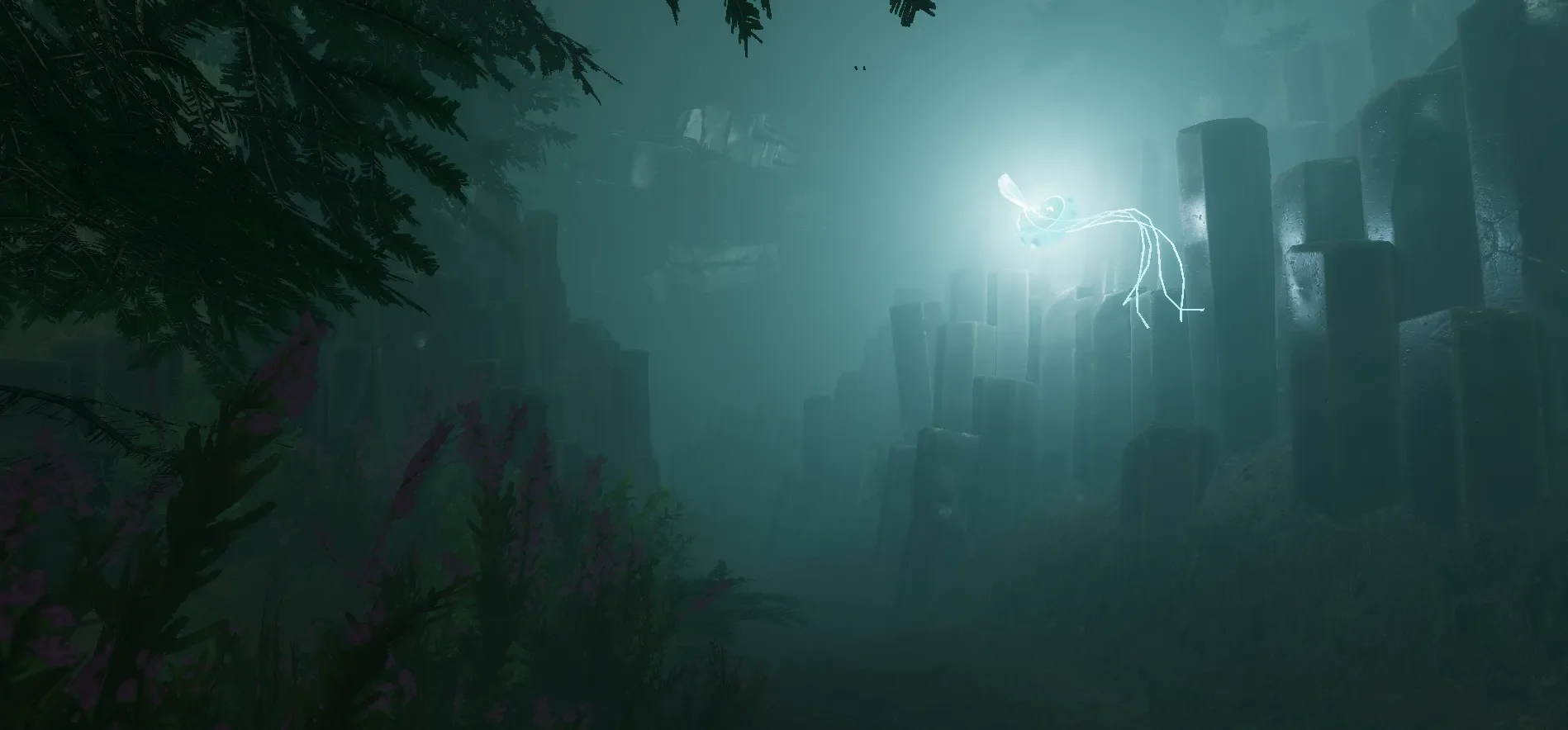
Level 1 to 2 Transition
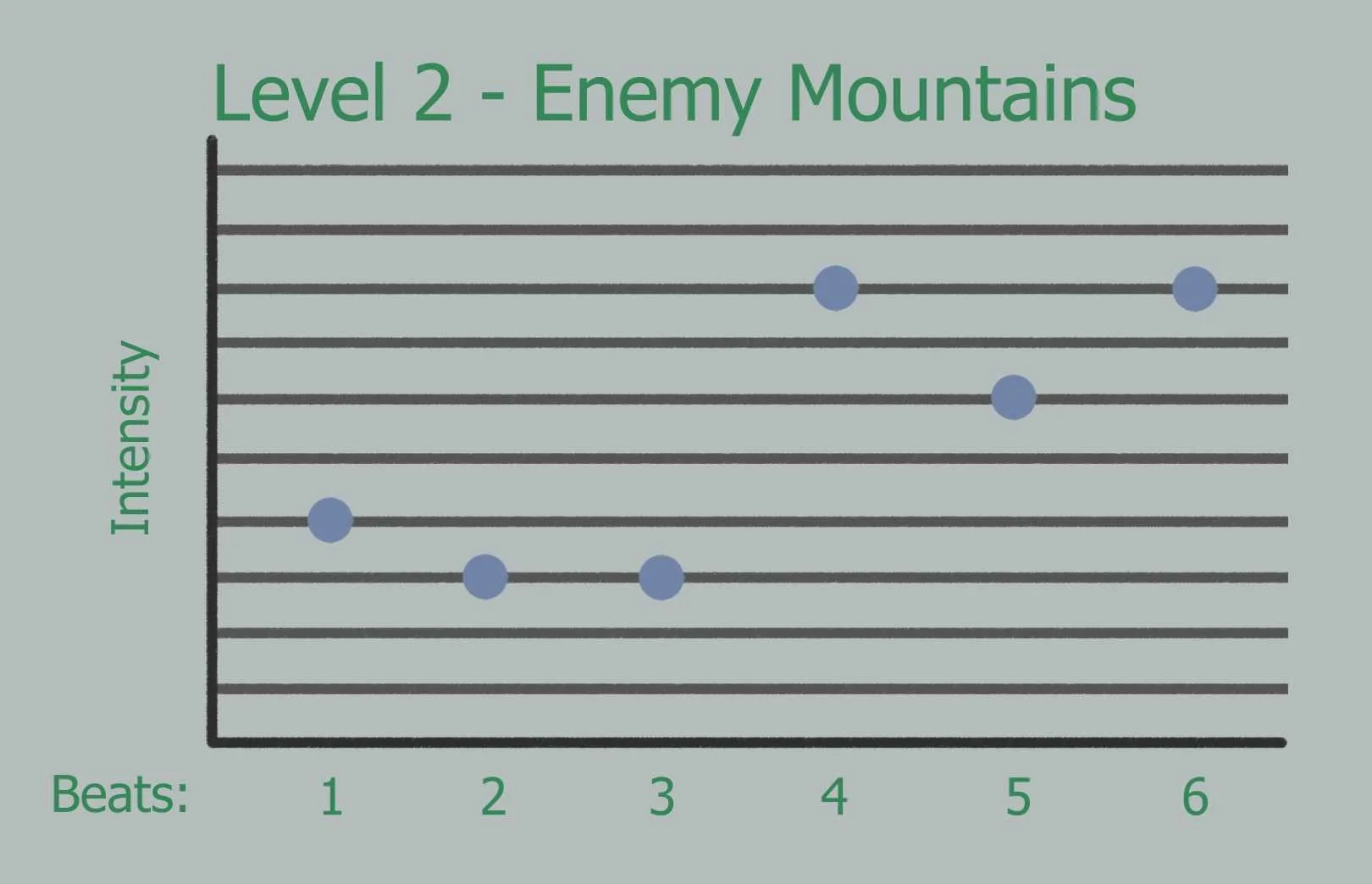
Level 2: Beatboard
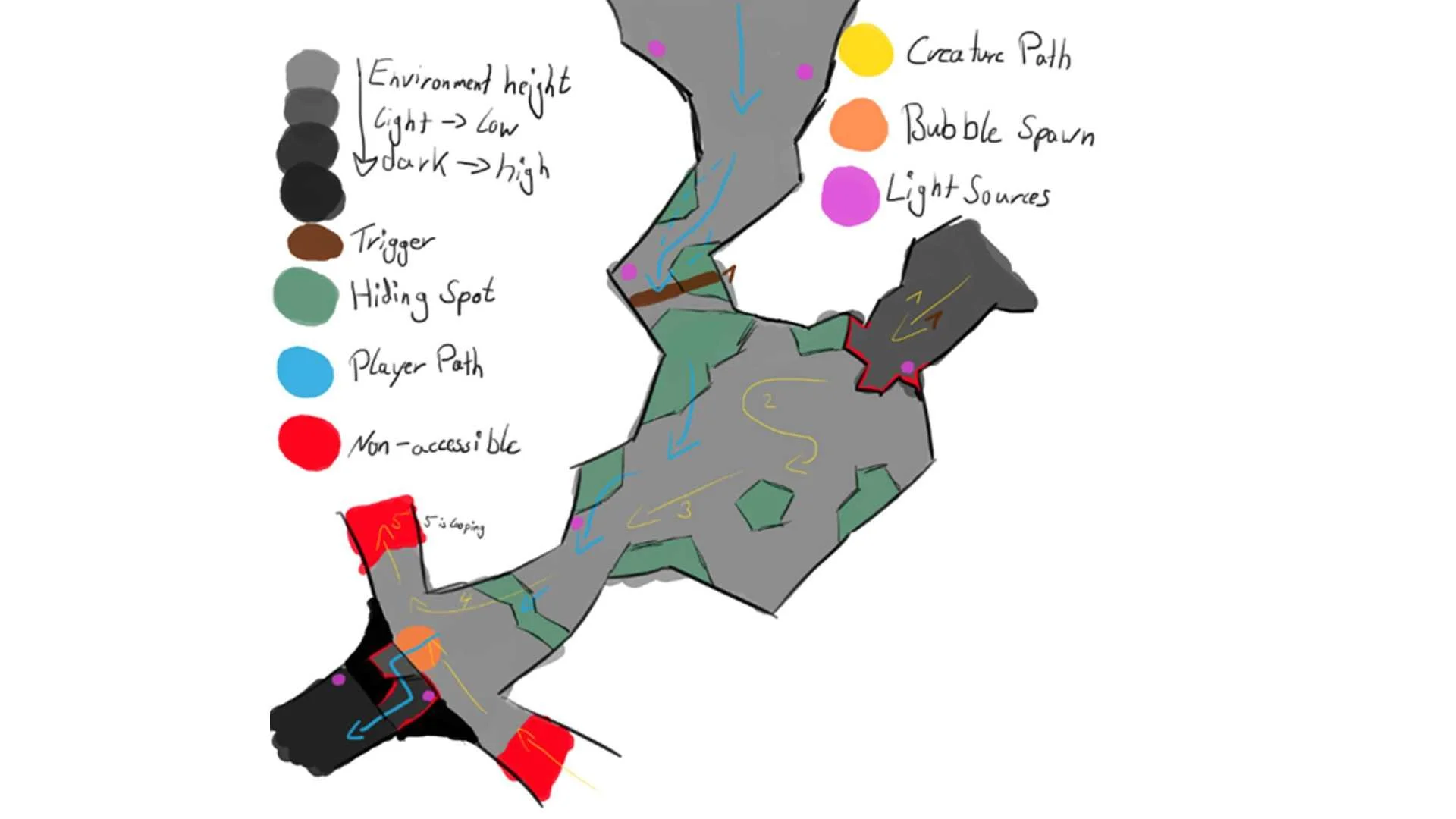
Level 3 Concept
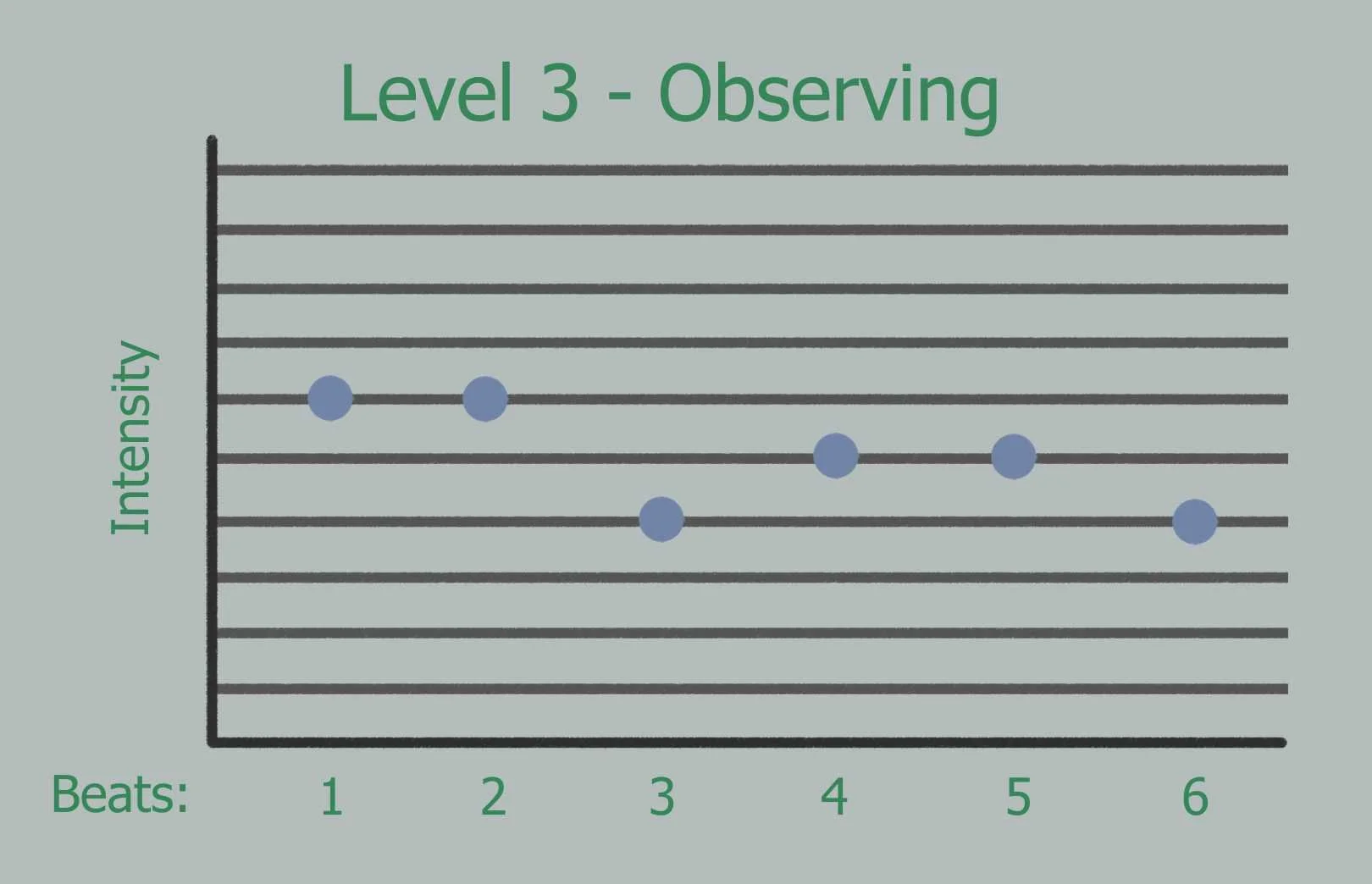
Level 3: Beatboard
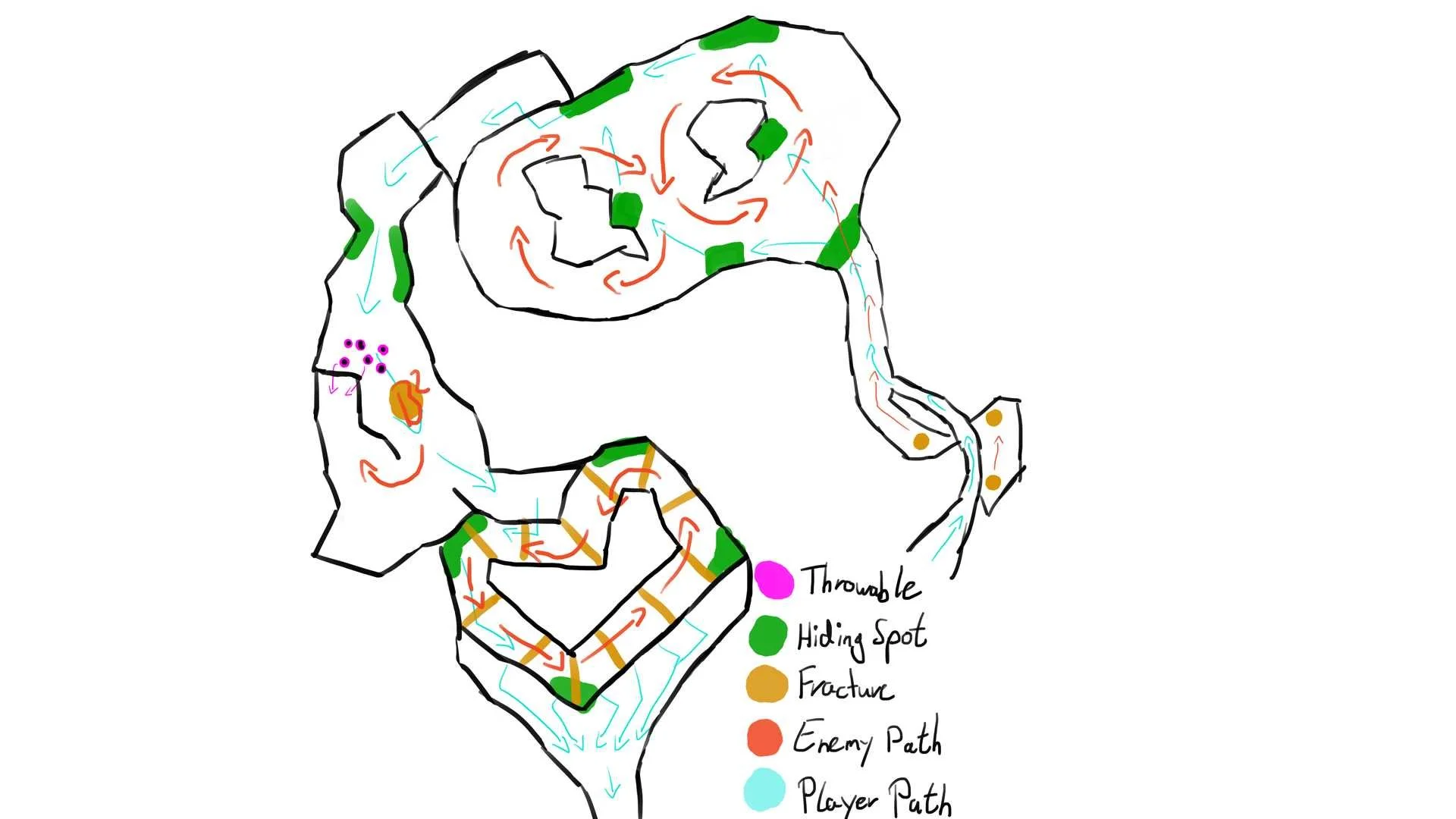
Level 4 Concept
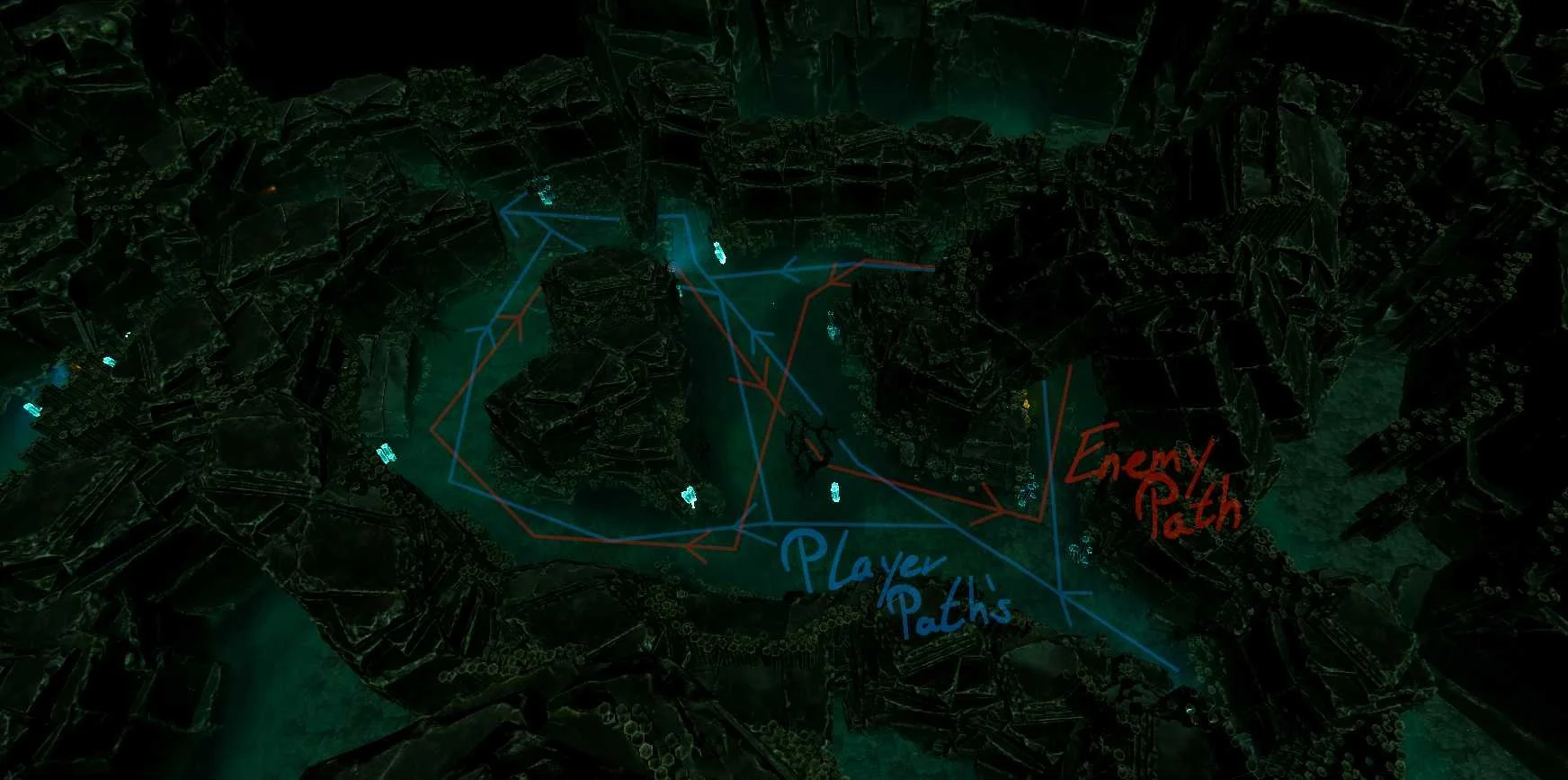
Level 3: Stealth
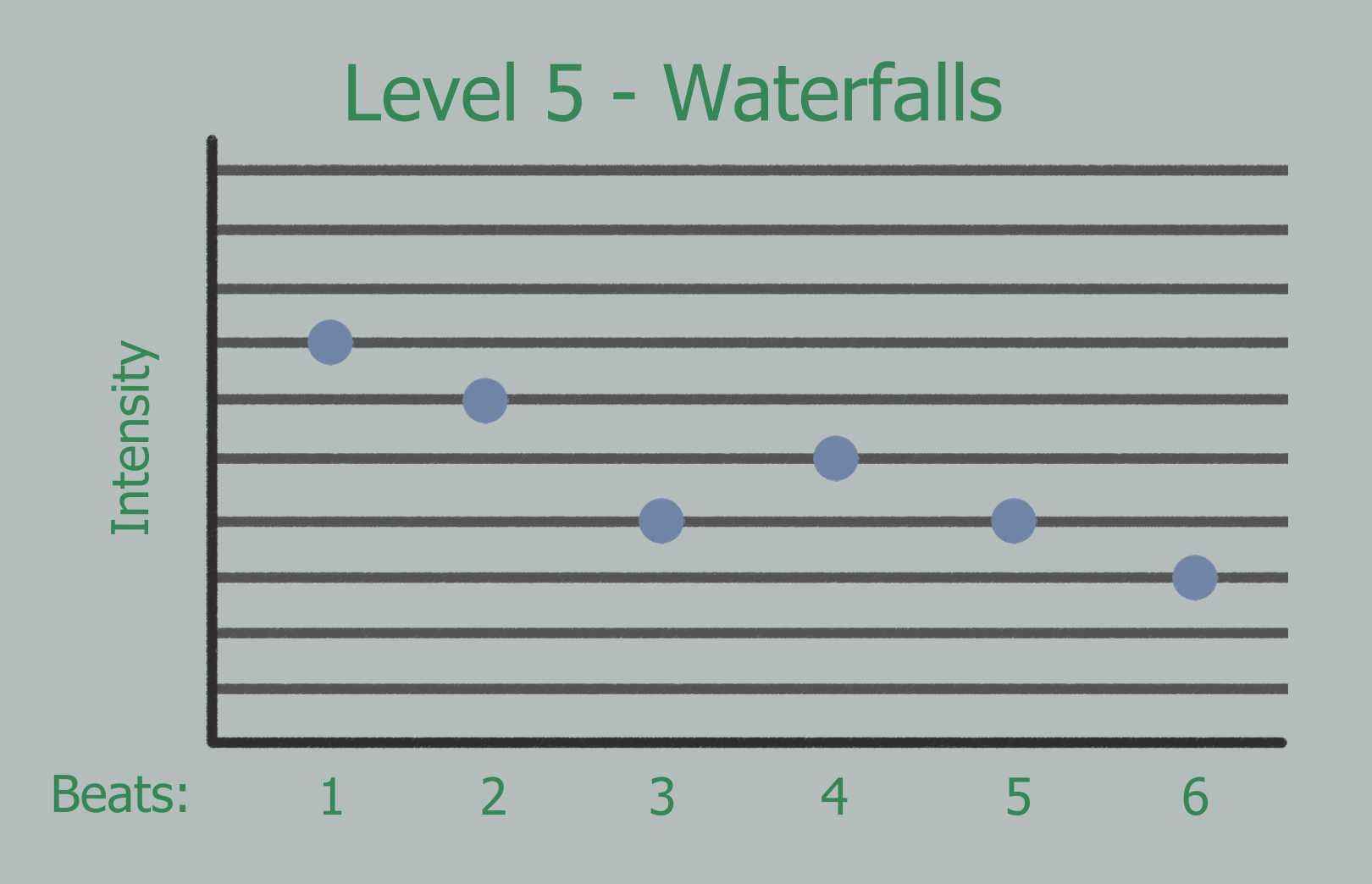
Level 5: Beatboard
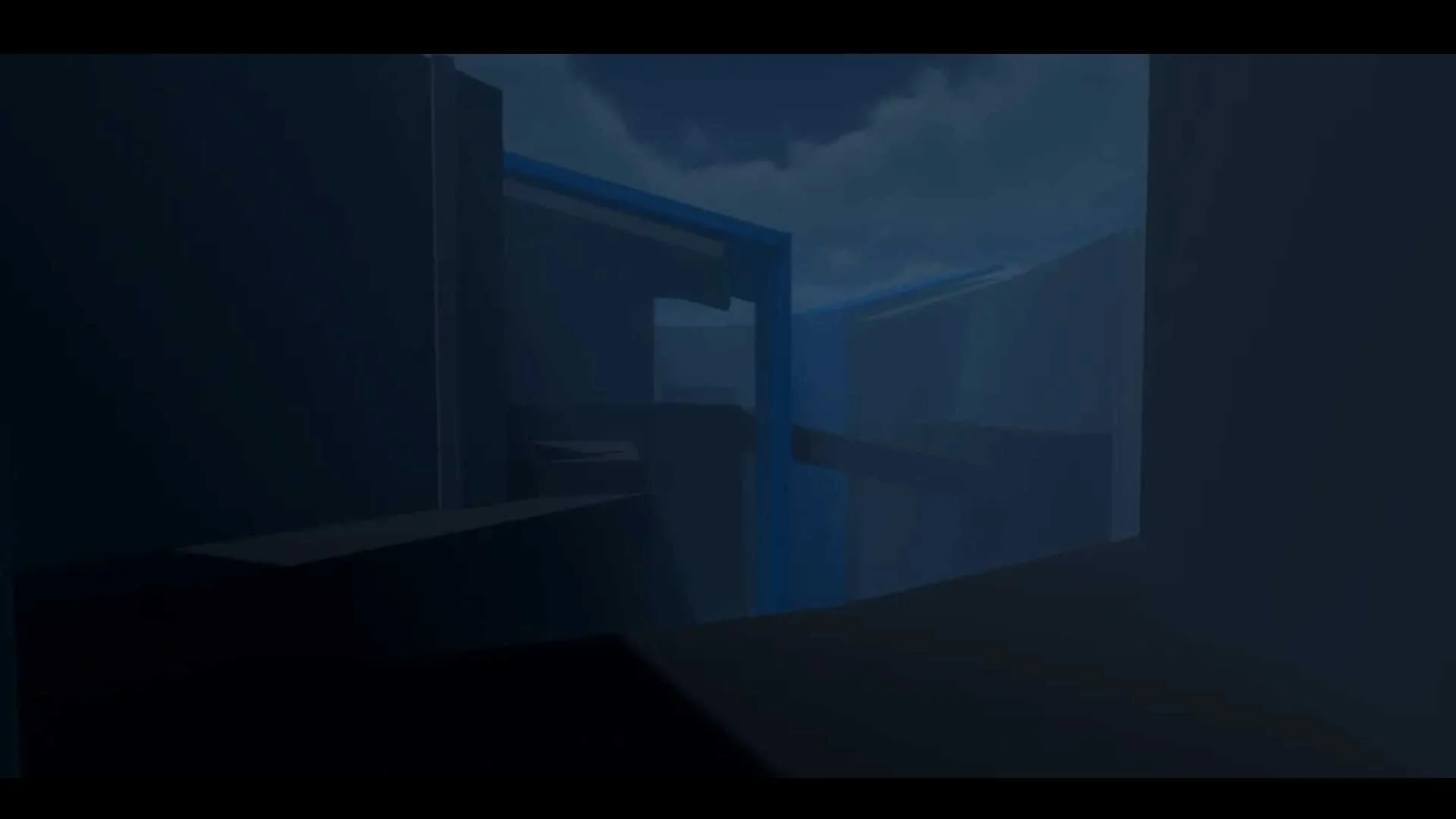
Level 5: Cliffside Waterfall Blockout
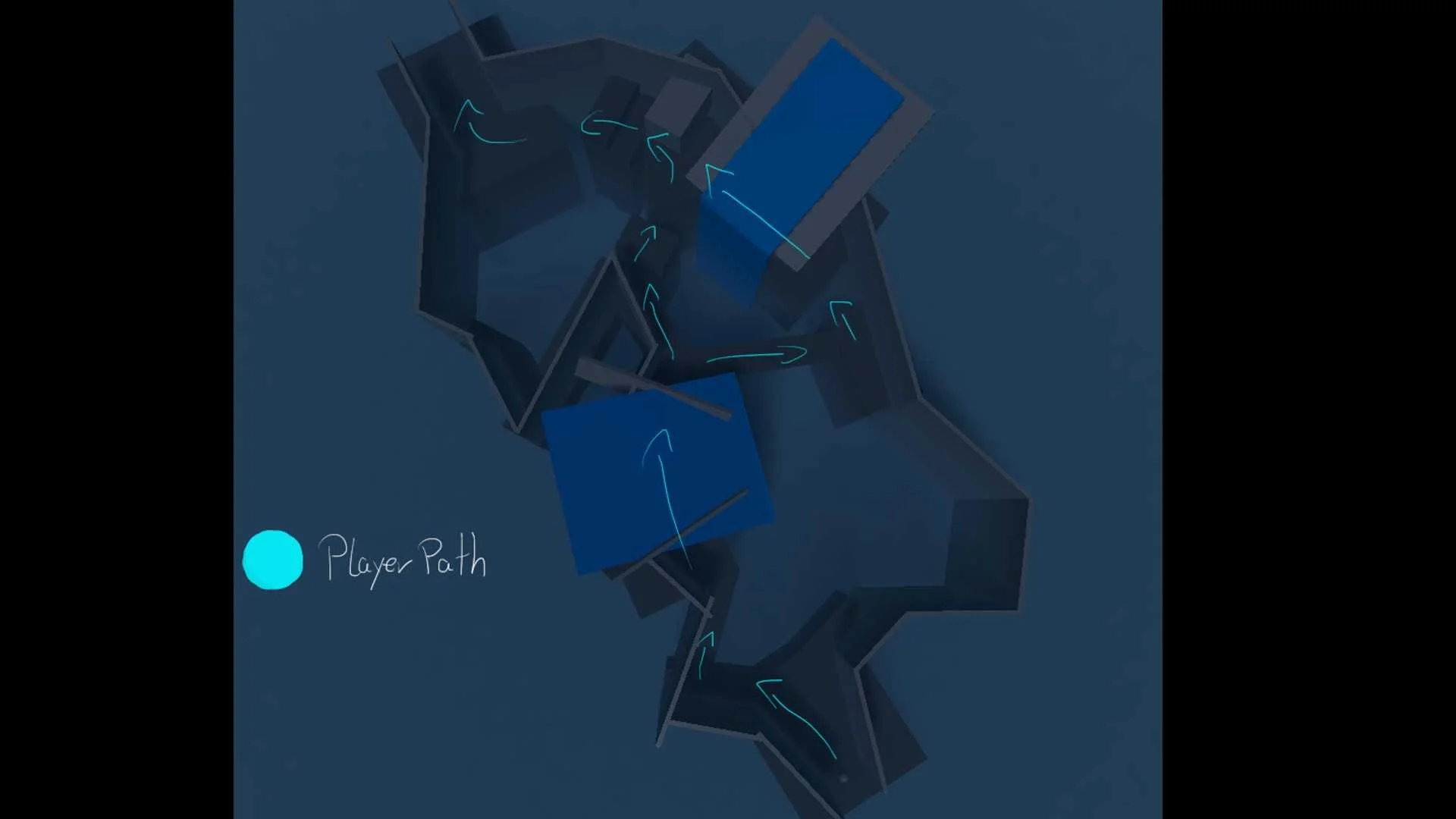
Level 5: Cliffside Waterfall Topdown
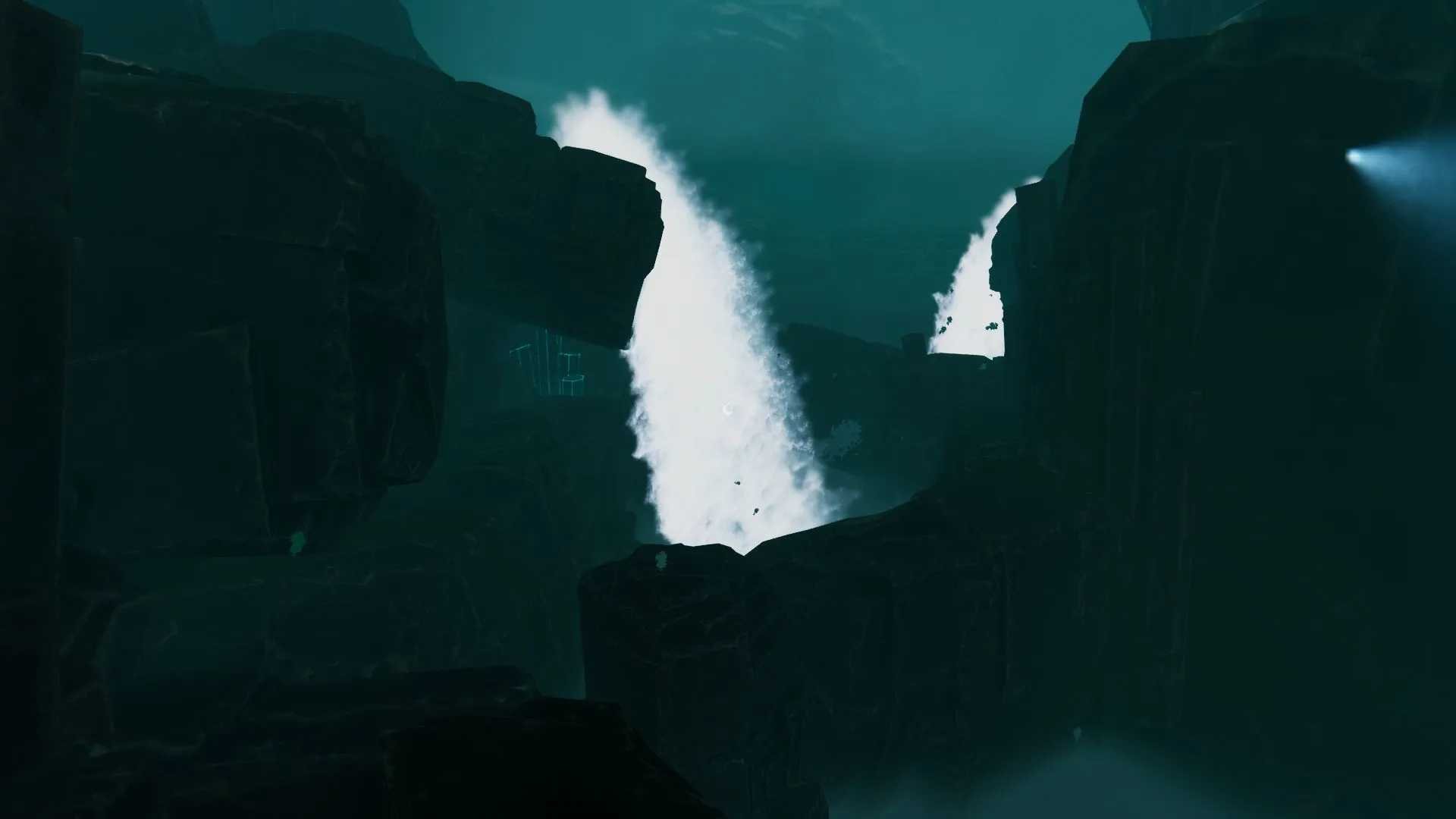
Level 5: Cliffside Waterfall Final
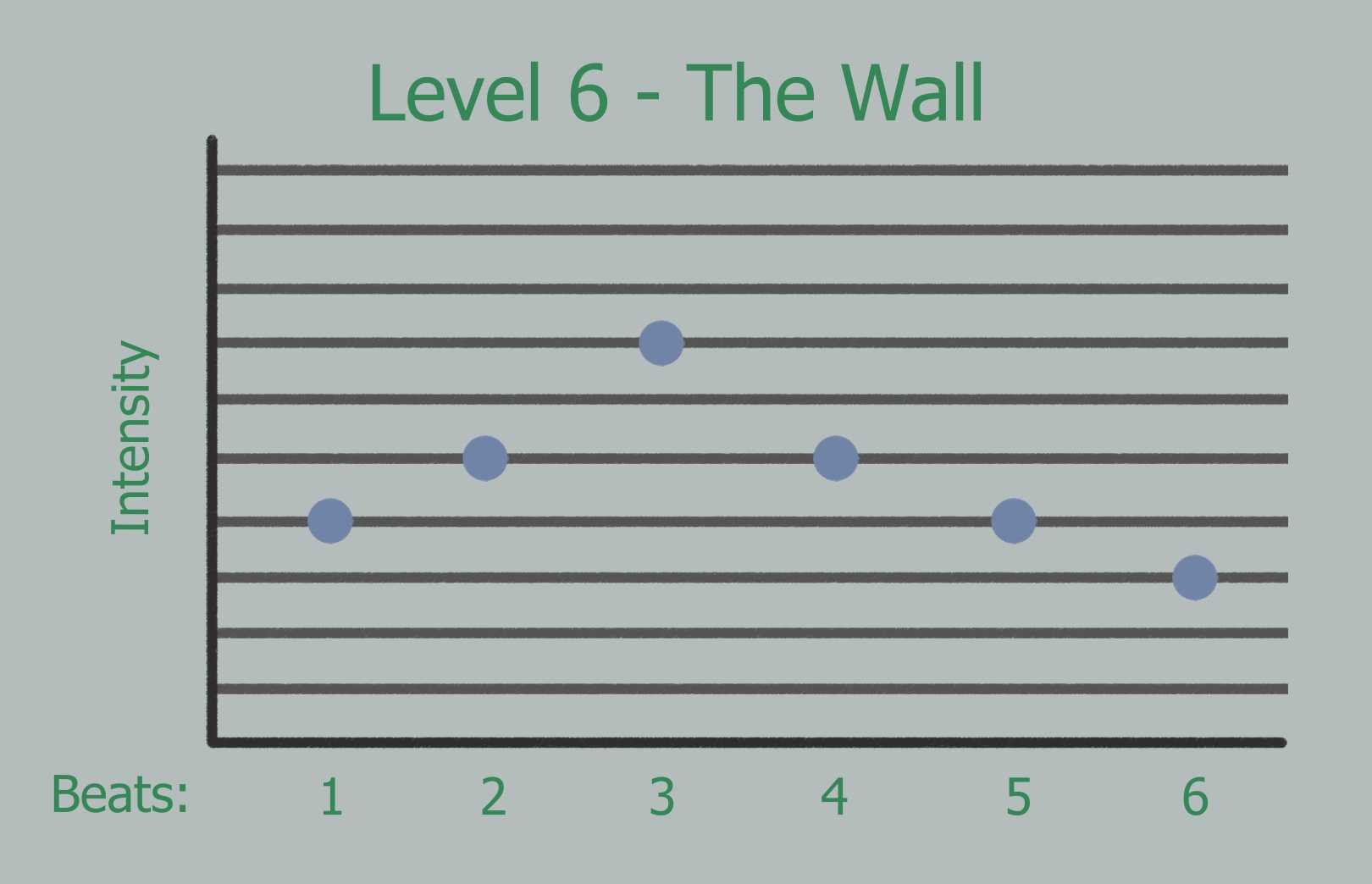
Level 6: Beatboard
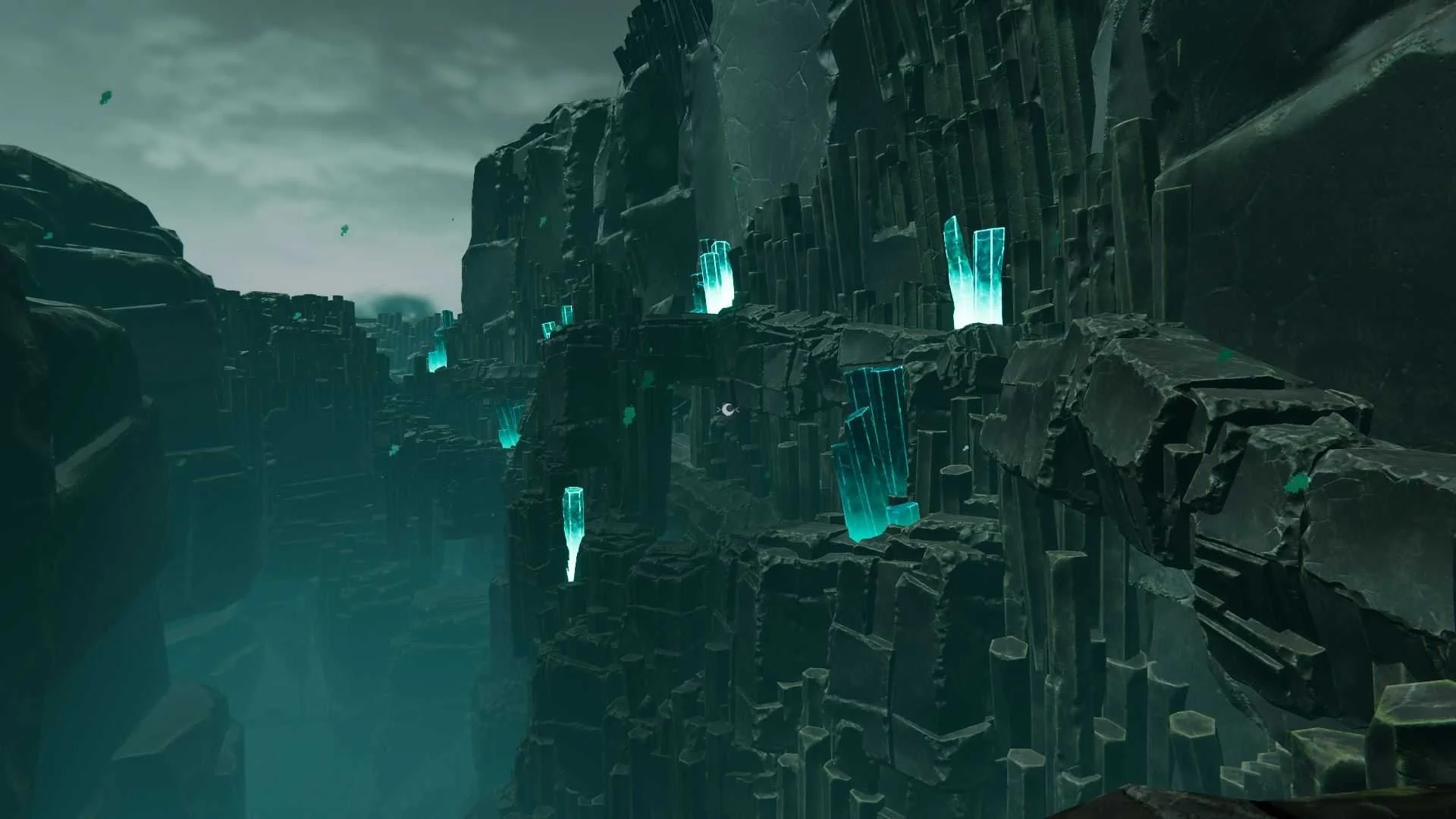
Level 6: The Wall
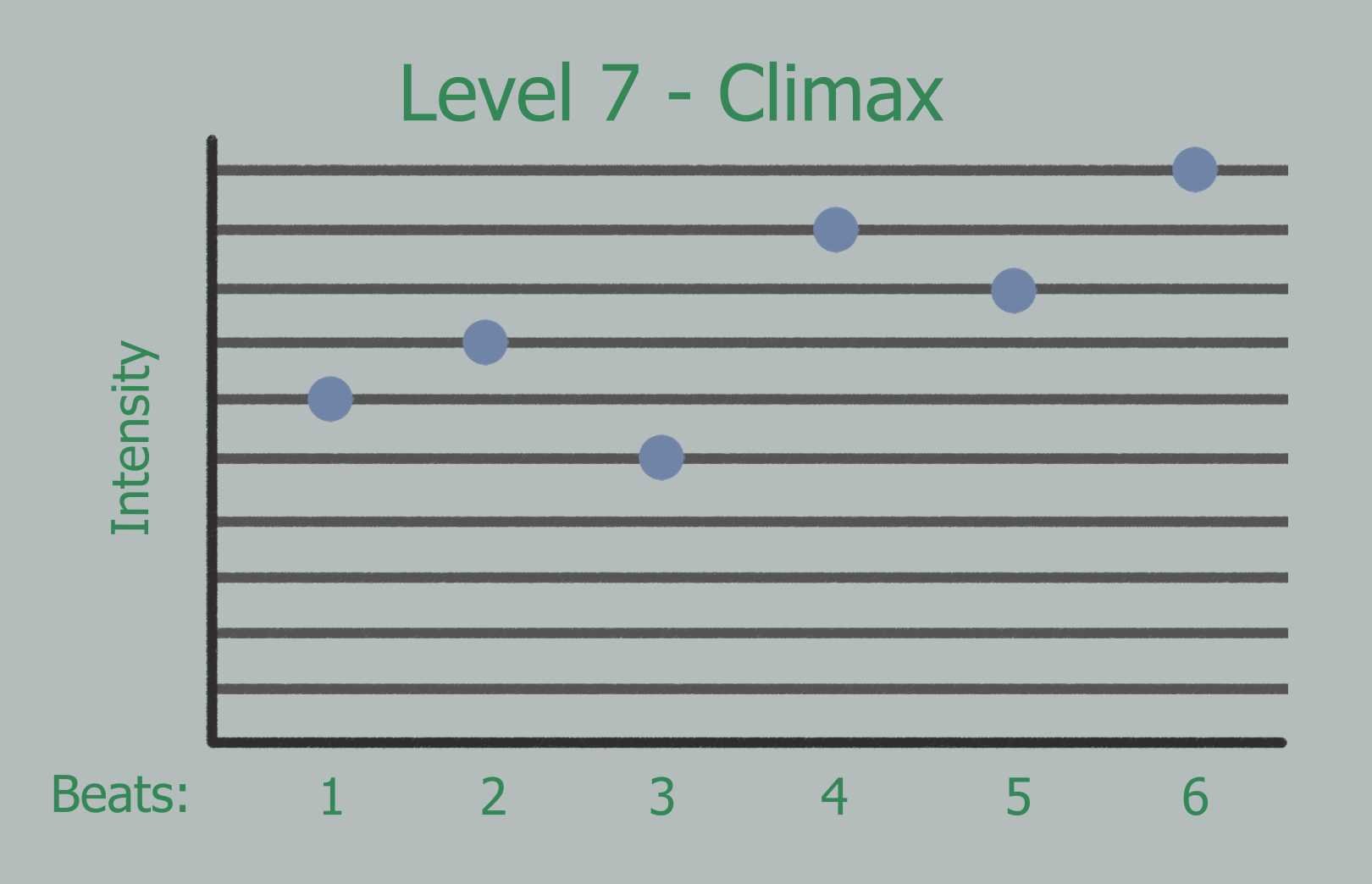
Level 7: Beatboard
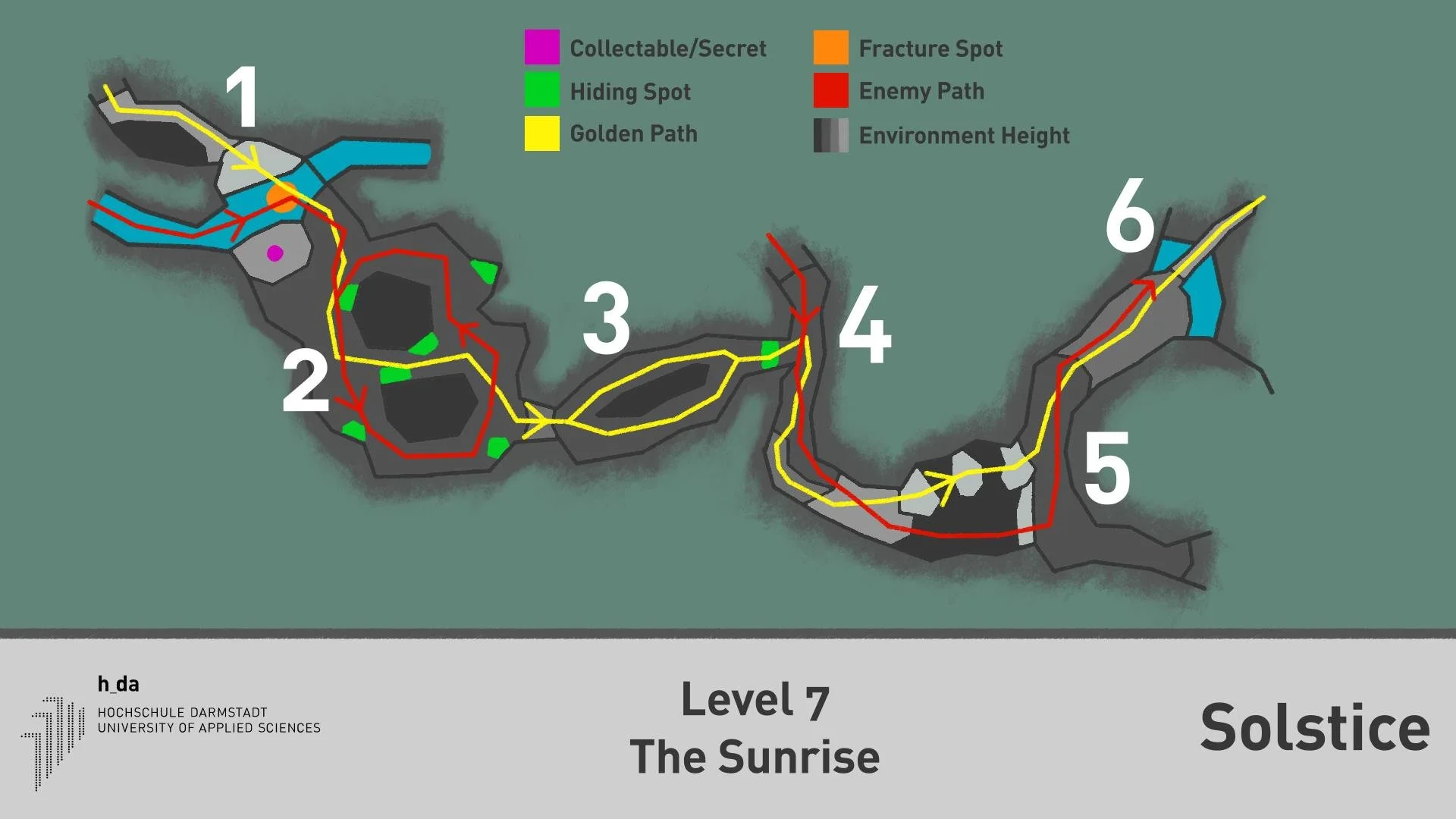
Final Level: The Sunrise Concept
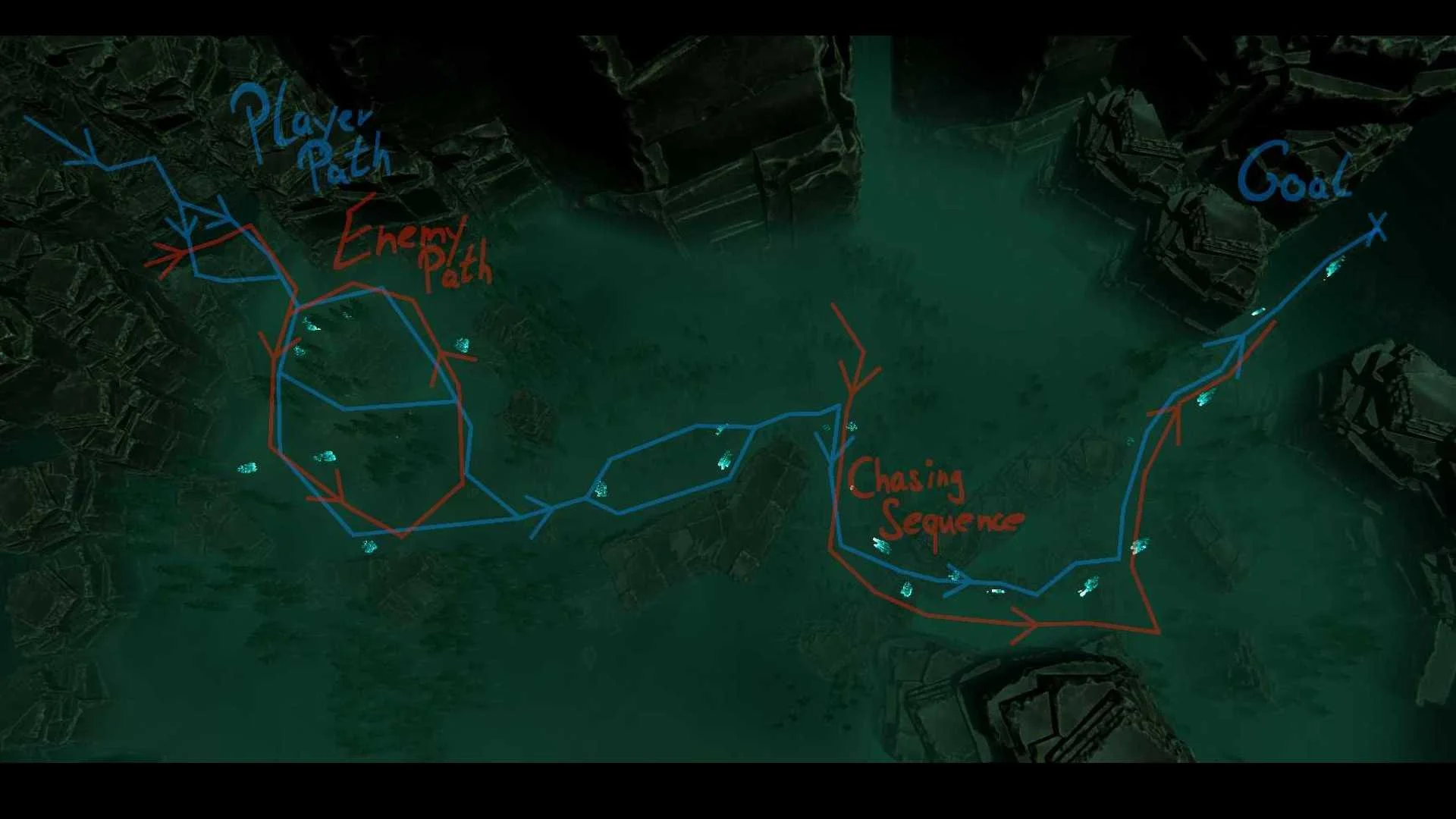
Level 7: Top Down
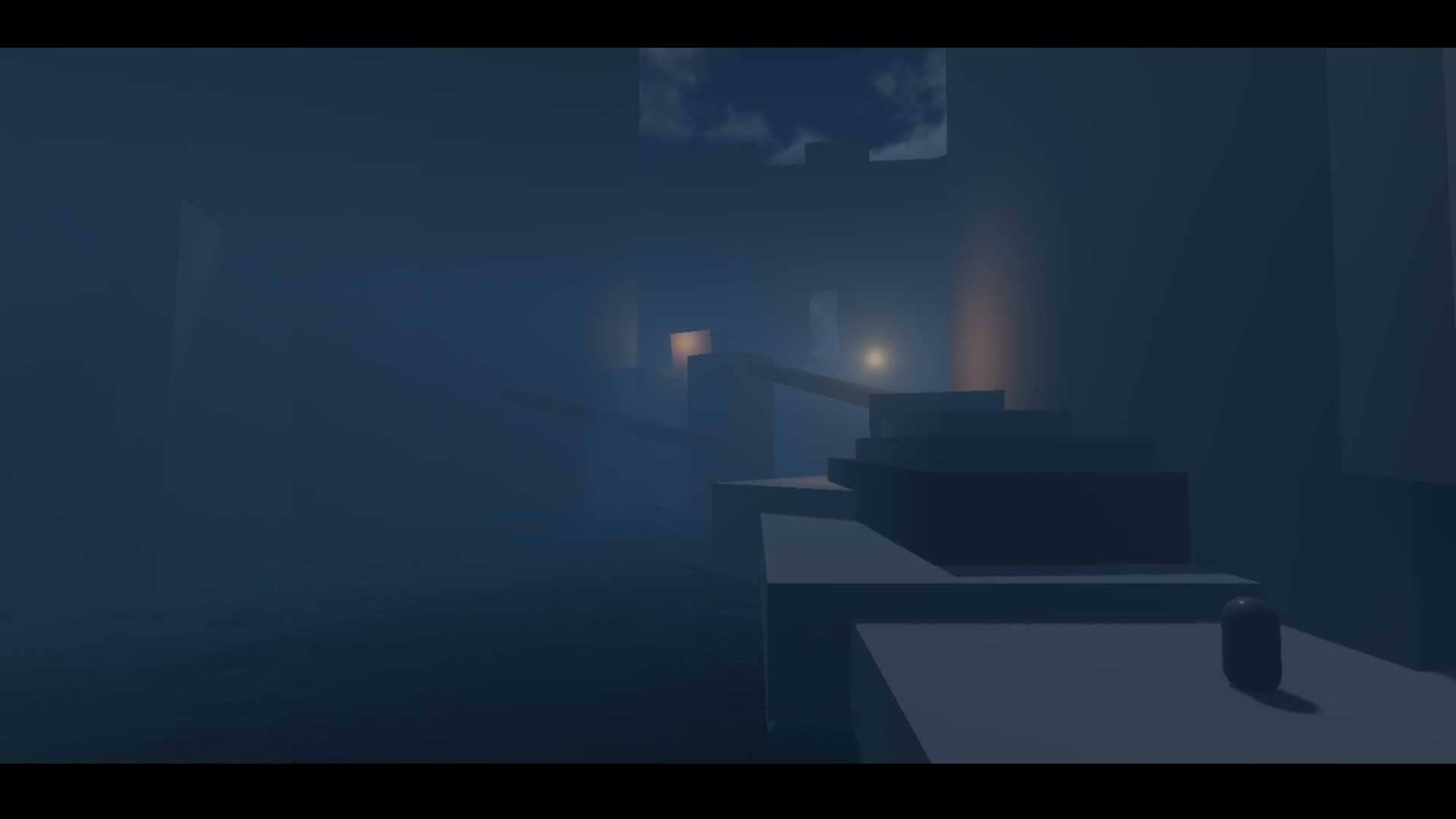
Removed Blockout: The Abyss
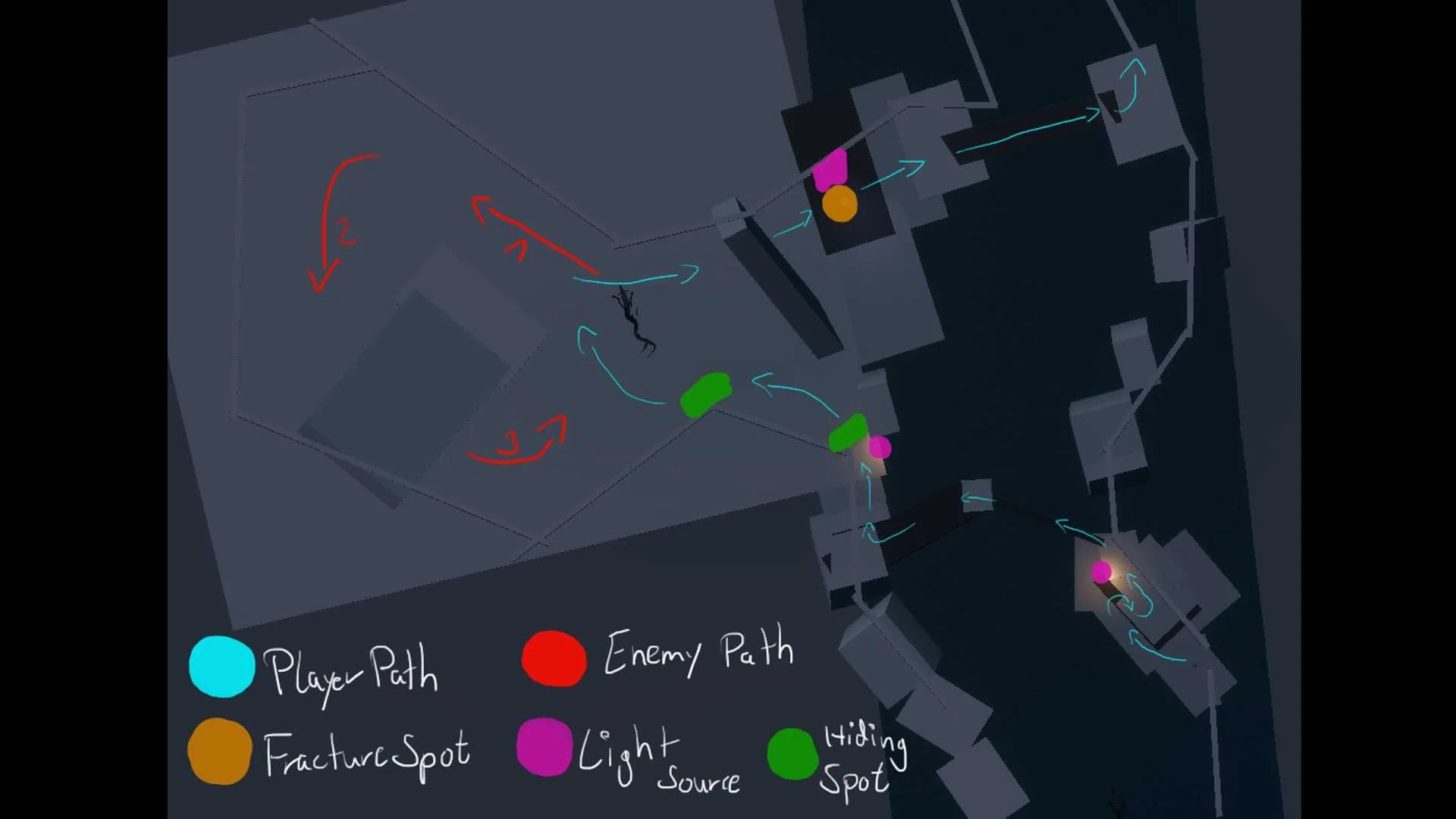
Removed Level: Abyss Top Down
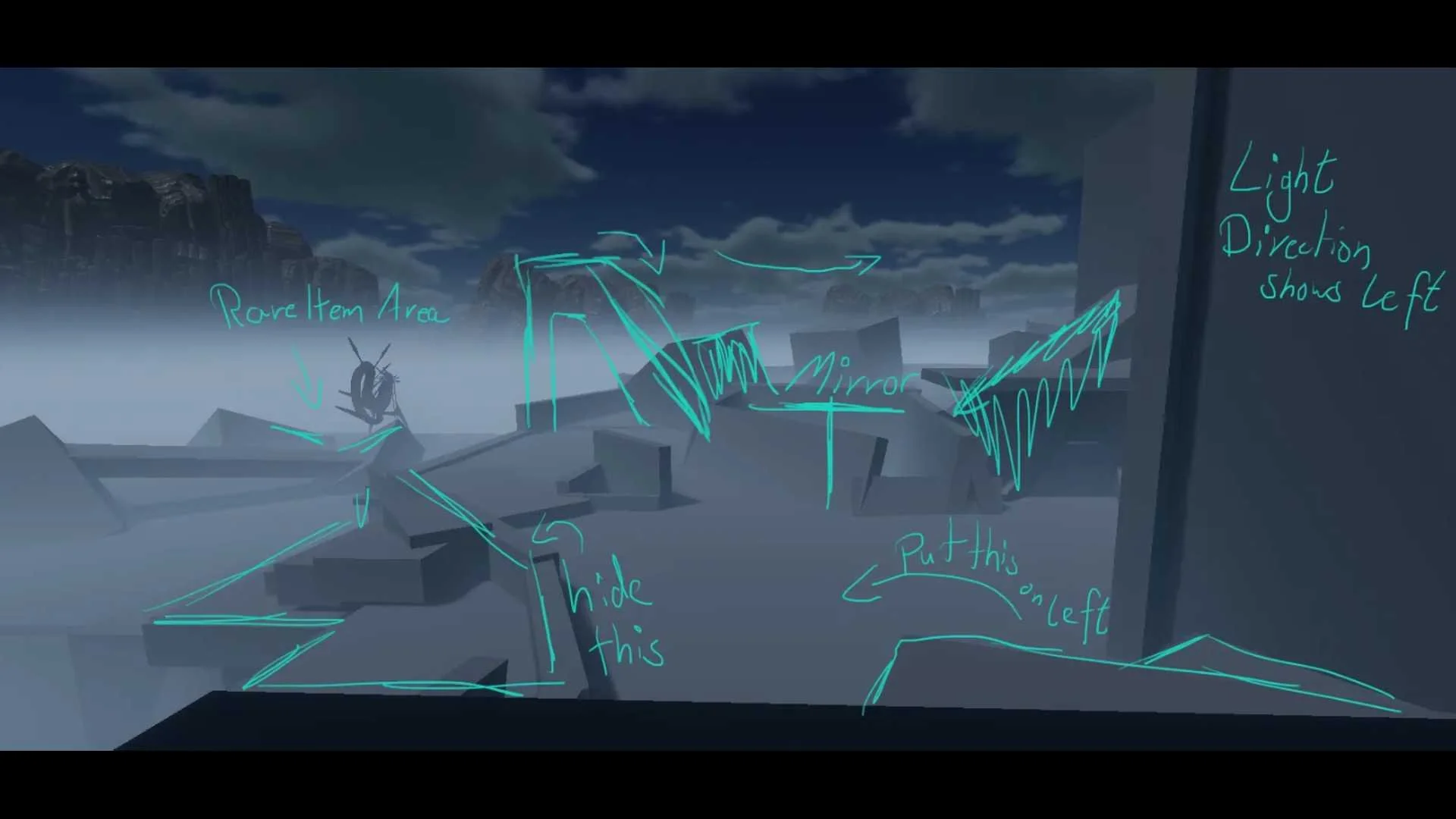
Removed Level: Plateau Playtest
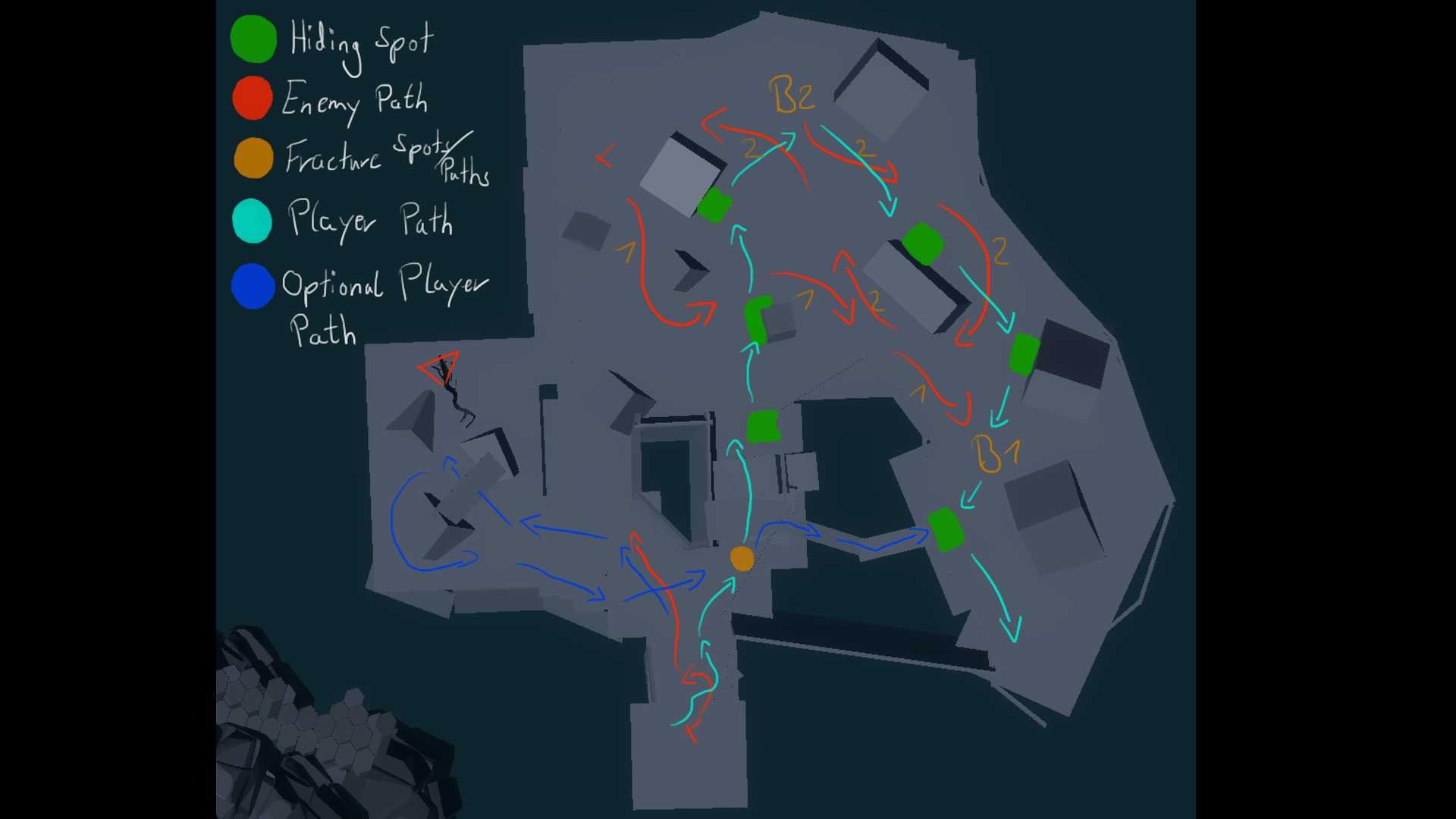
Removed Level: The Plateau Top Down