Blocktober 2025
Levels: 15-24
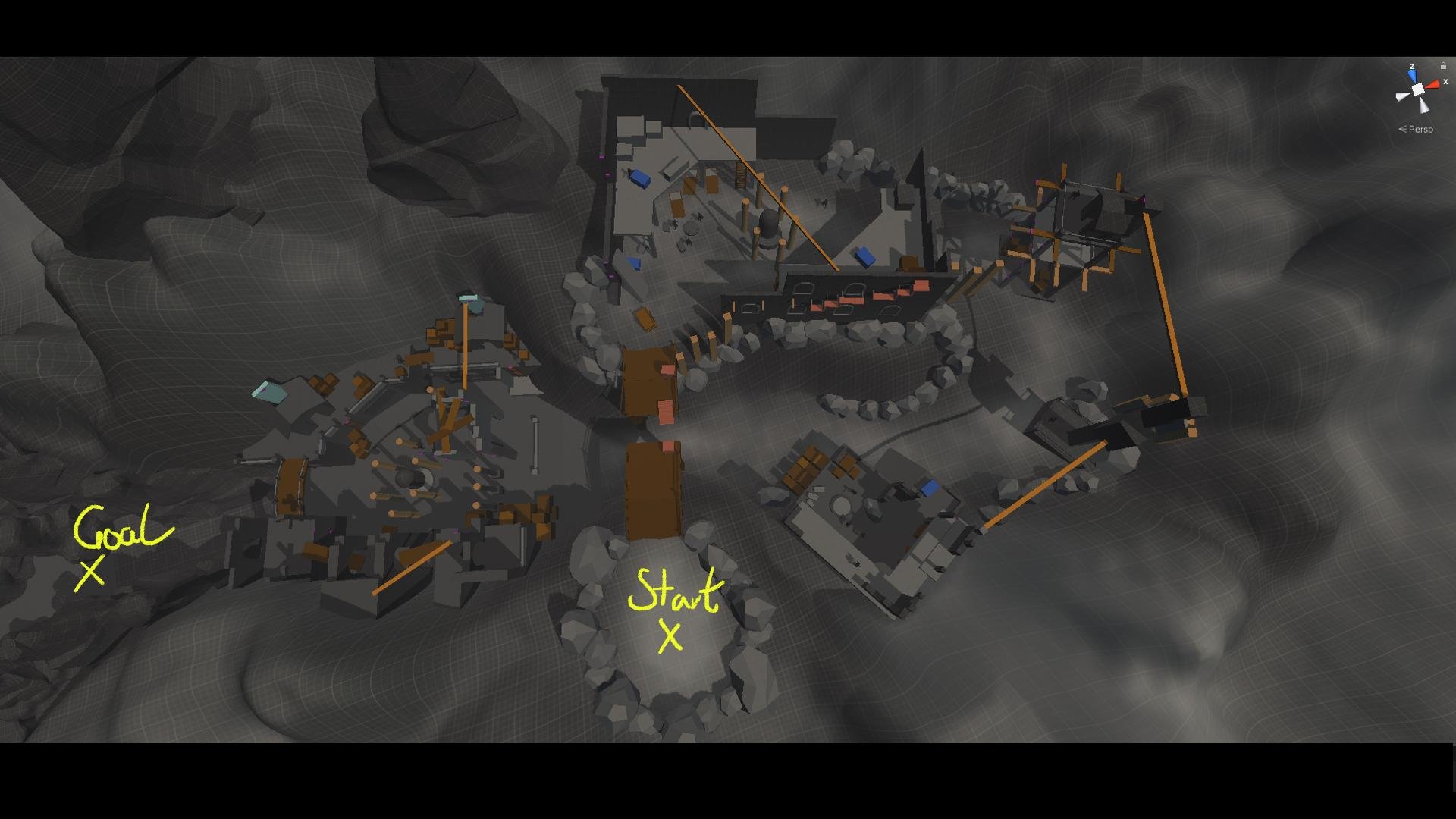
#15: Day 15: The Smoldering Path
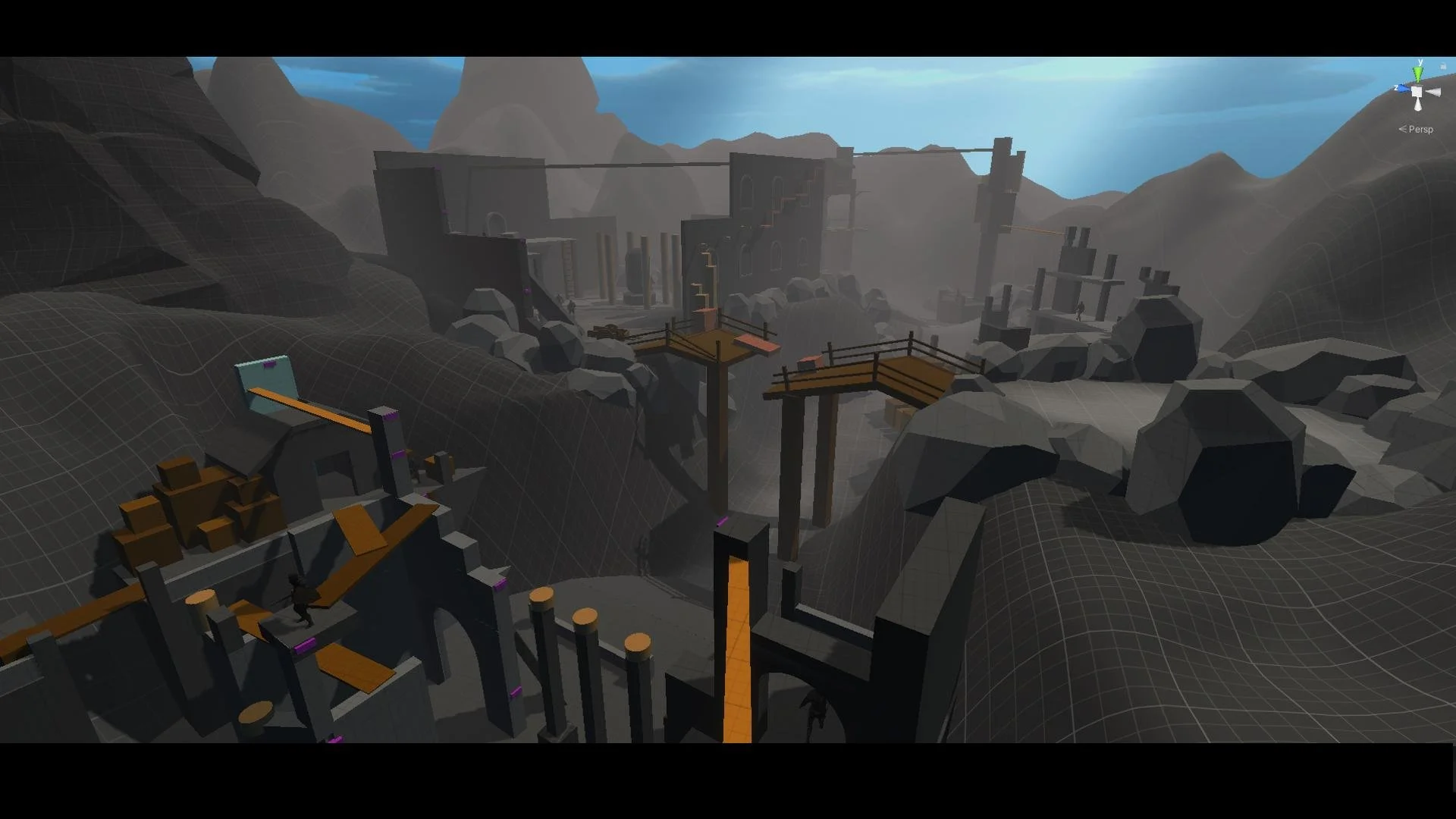
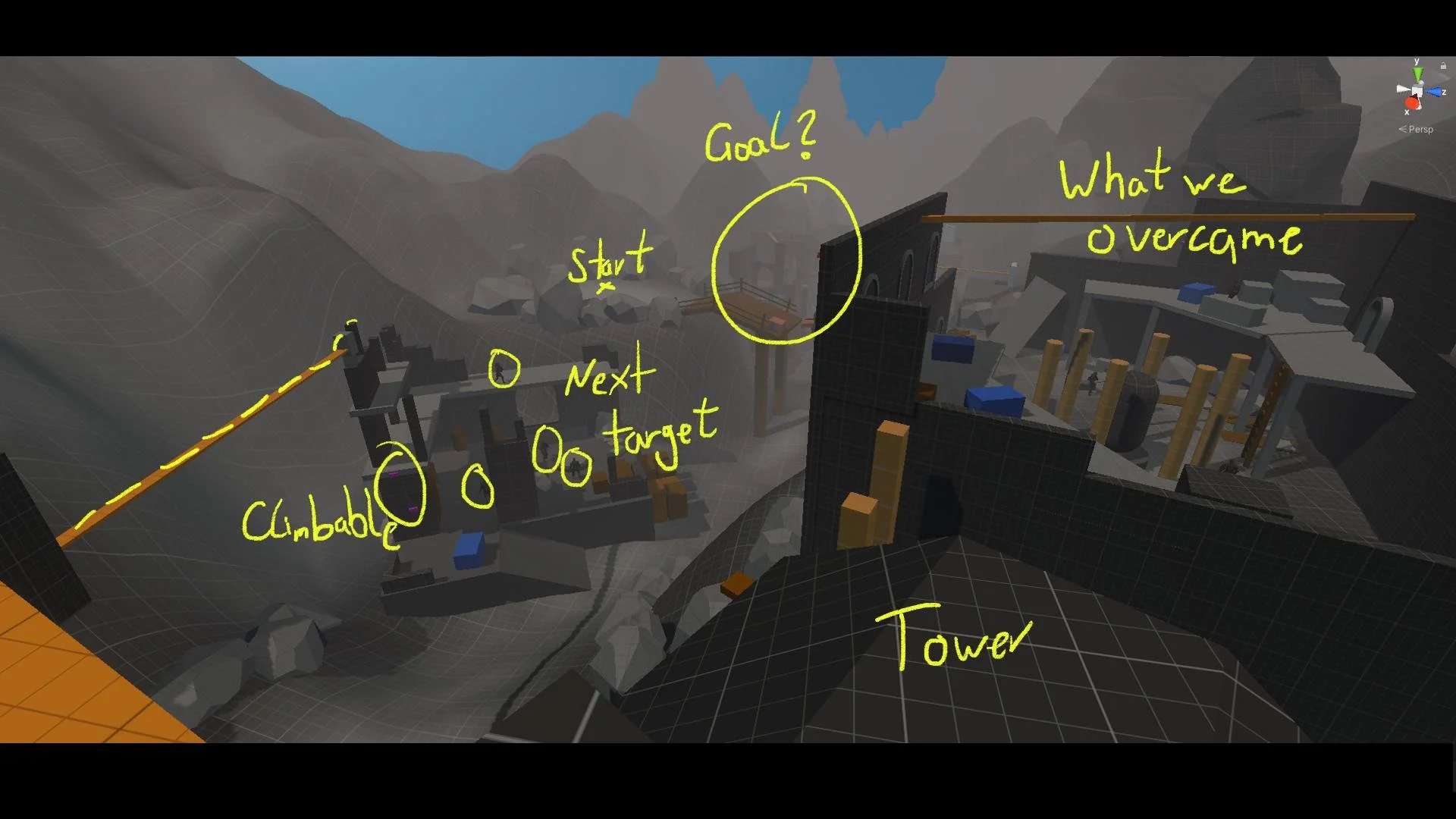
Designed a volcanic mountain region level, inspired by rugged terrain and moody atmosphere from Shadow of Mordor.
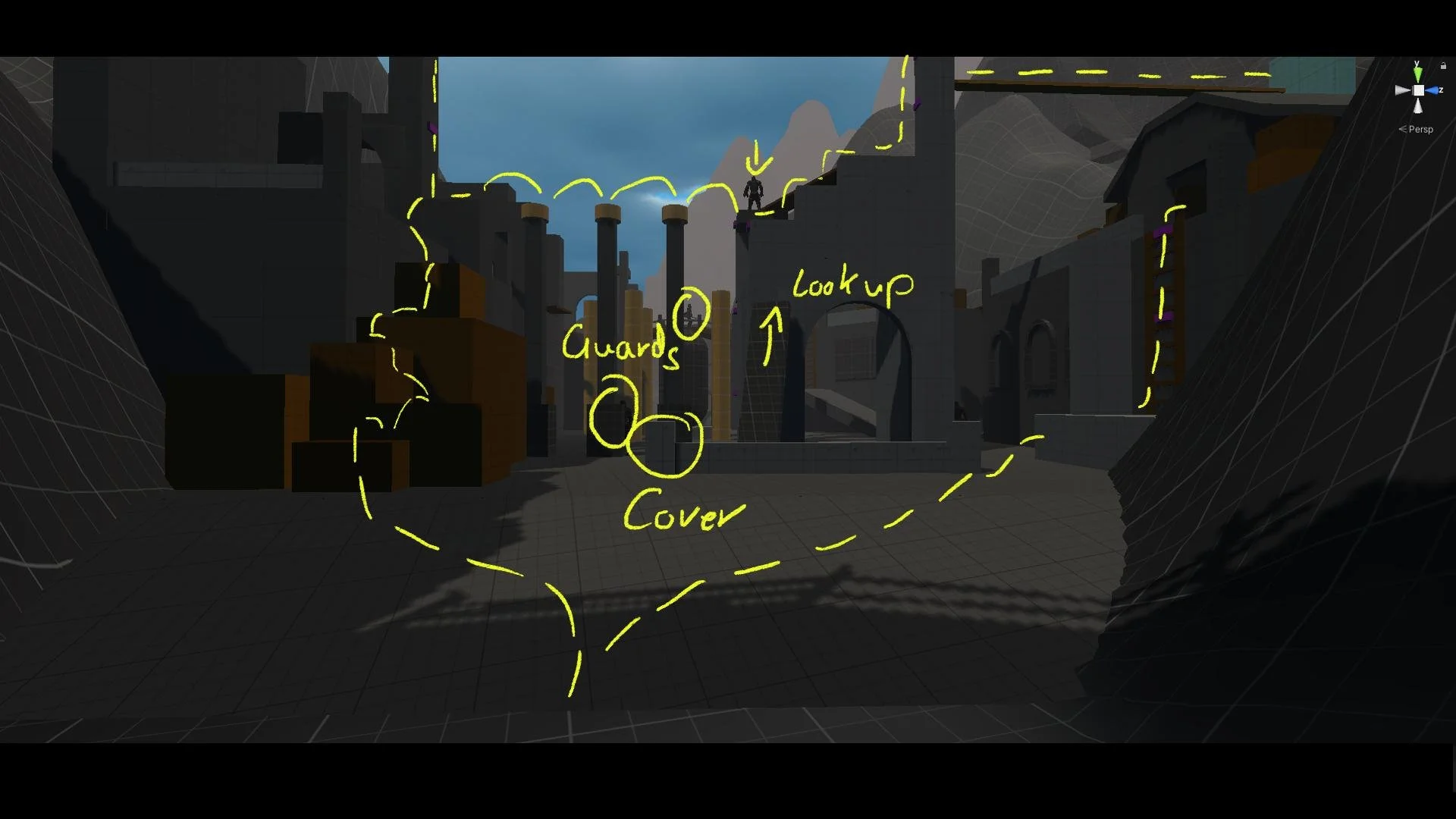
Focused on stealth gameplay, providing multiple tactical options for player engagement.
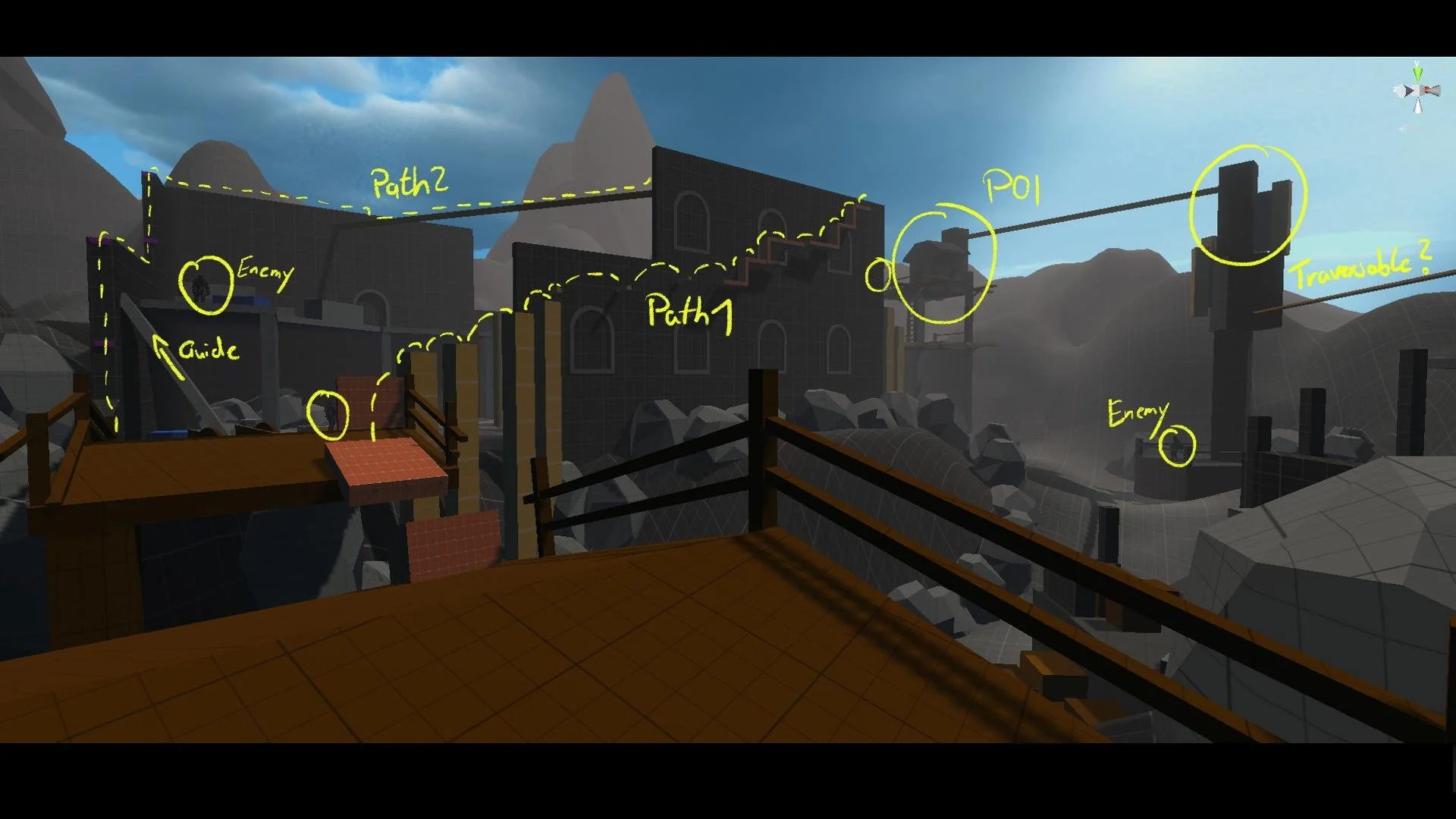
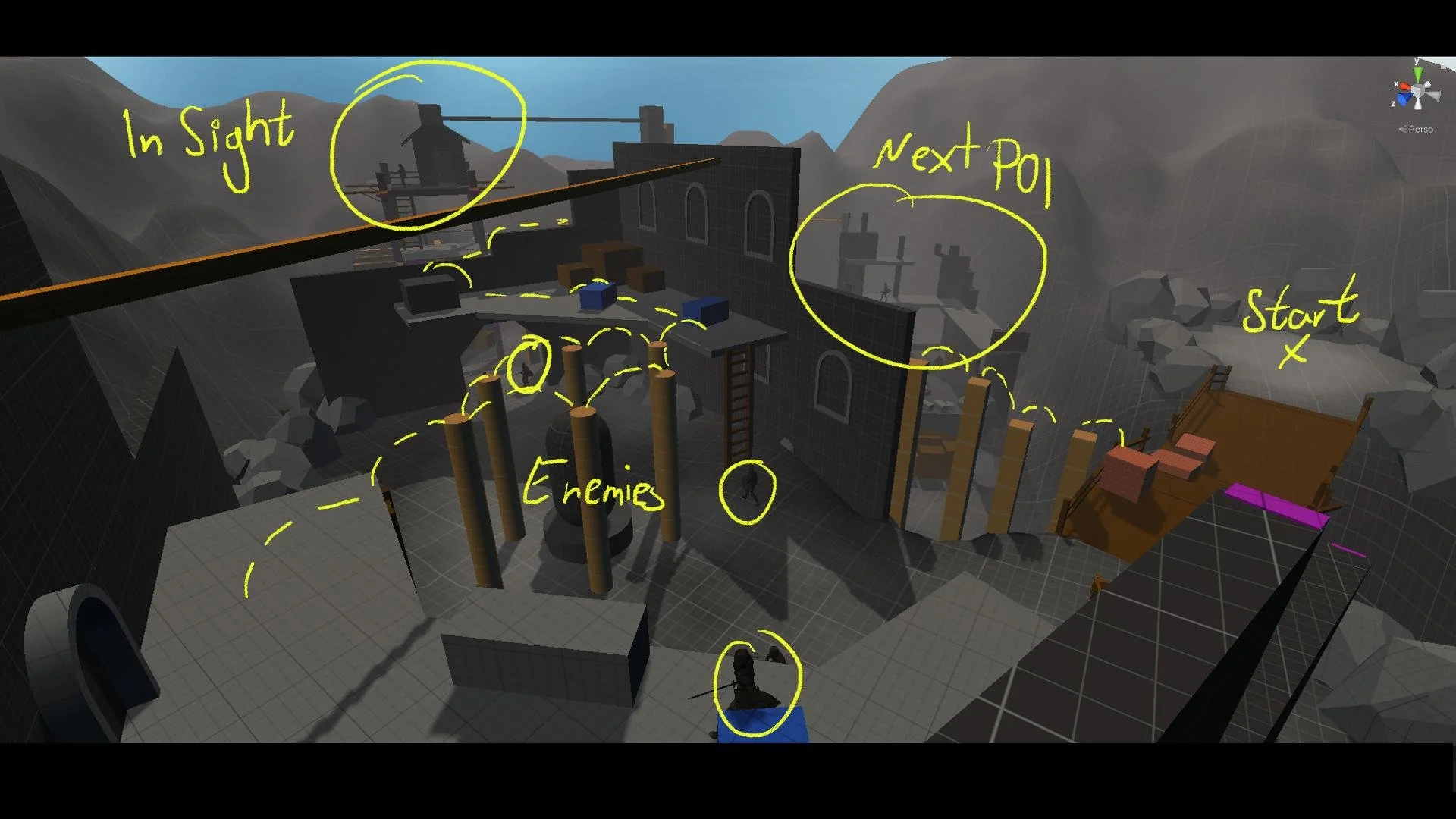
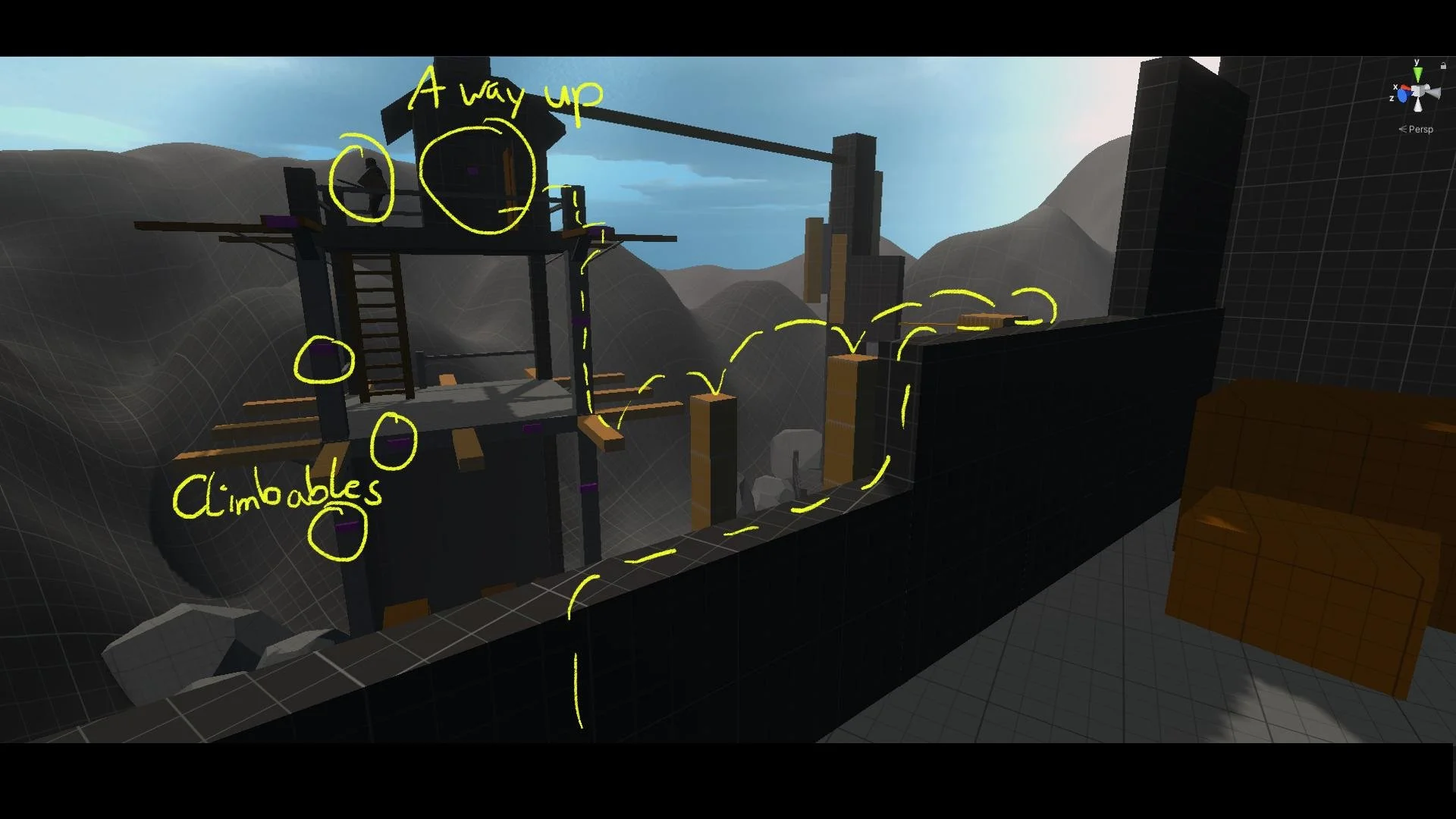
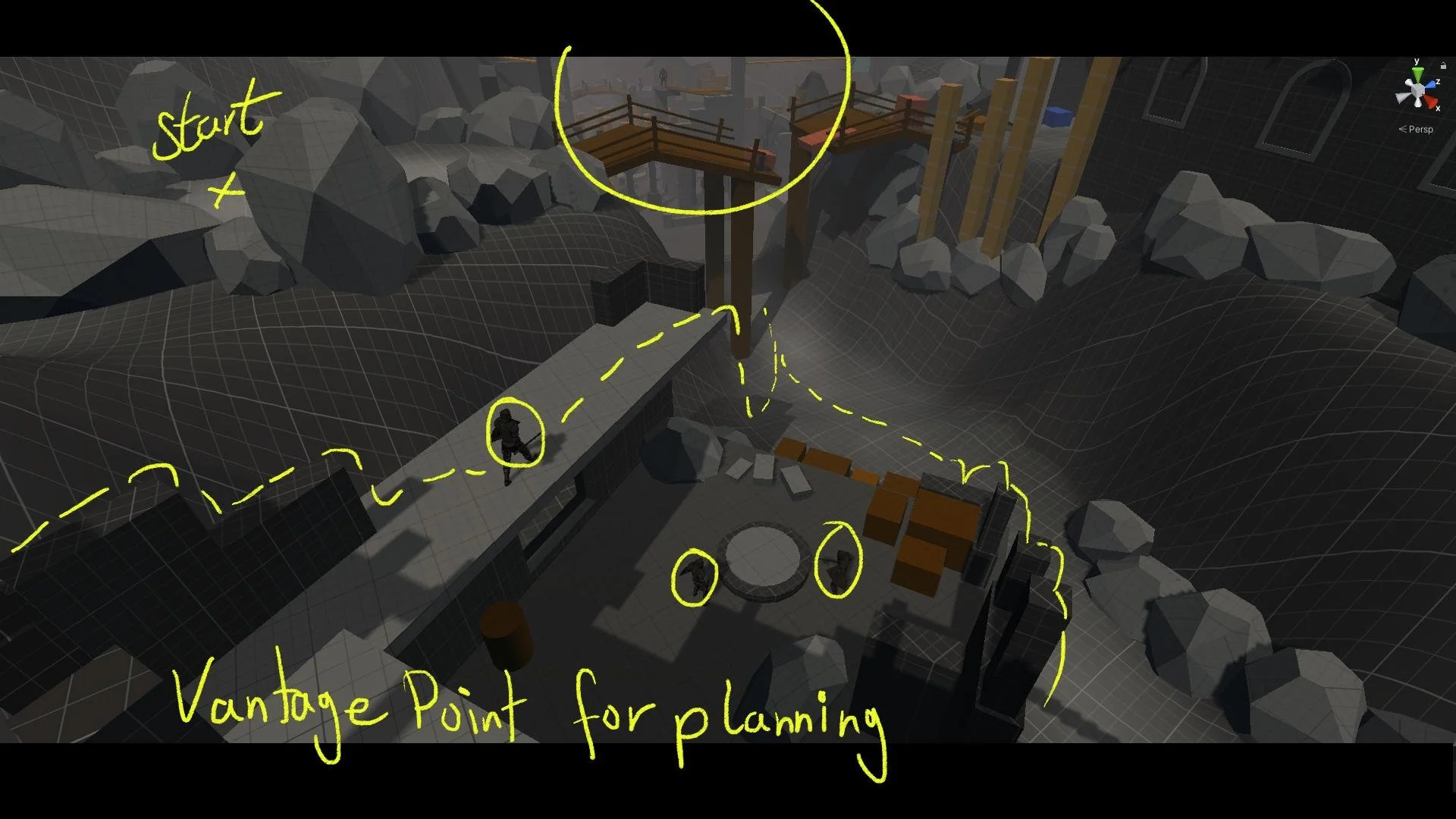
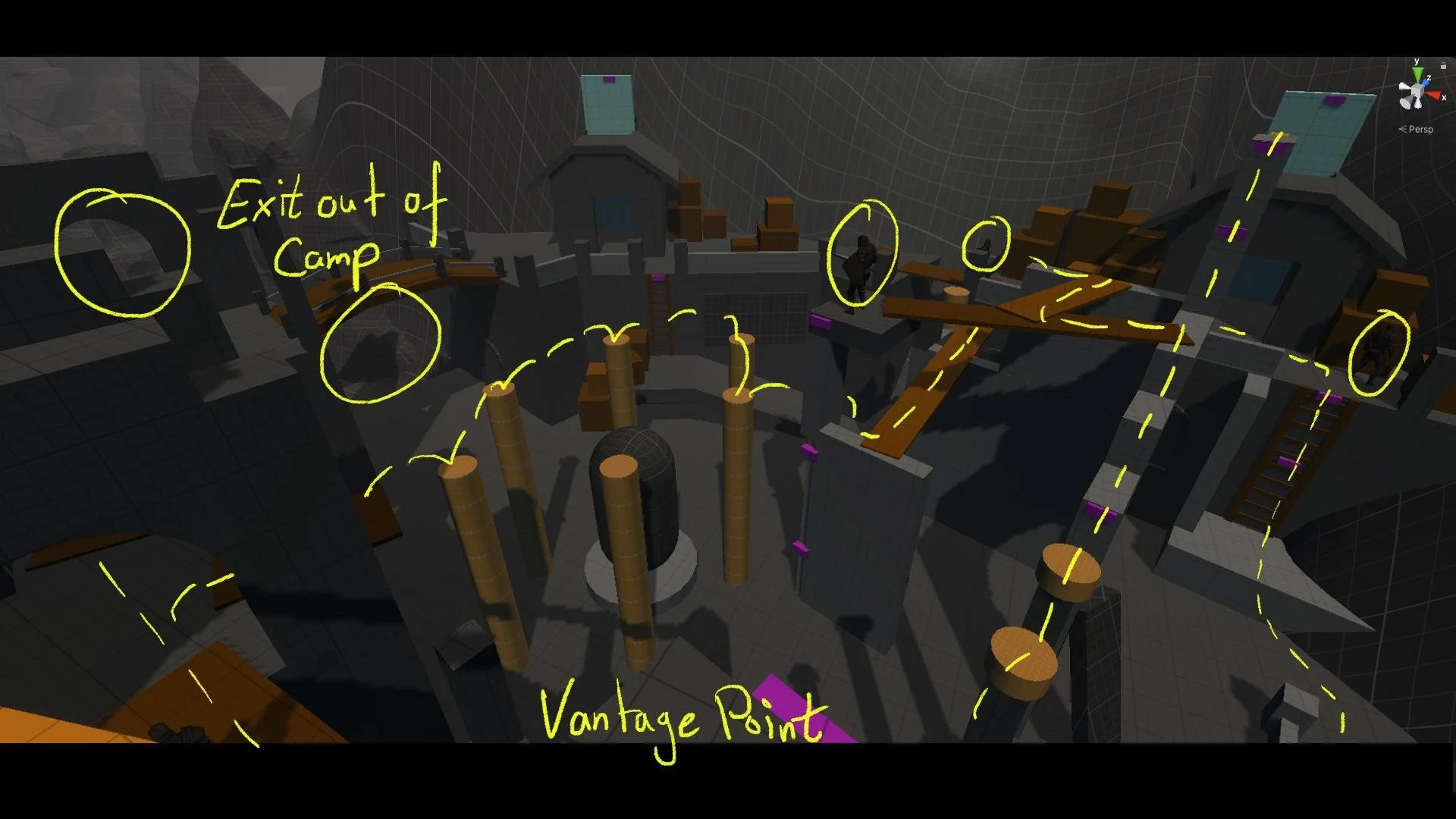
Created multiple infiltration routes, encouraging strategic decision-making and replayability.
Scattered enemy camps across cliffs, connected through paths, vertical routes, and integrated structures.
Incorporated vantage points and cover, allowing players to plan approaches and observe enemy behavior.
Balanced environmental design and navigation, combining verticality, sightlines, and player choice for immersive tactical encounters.
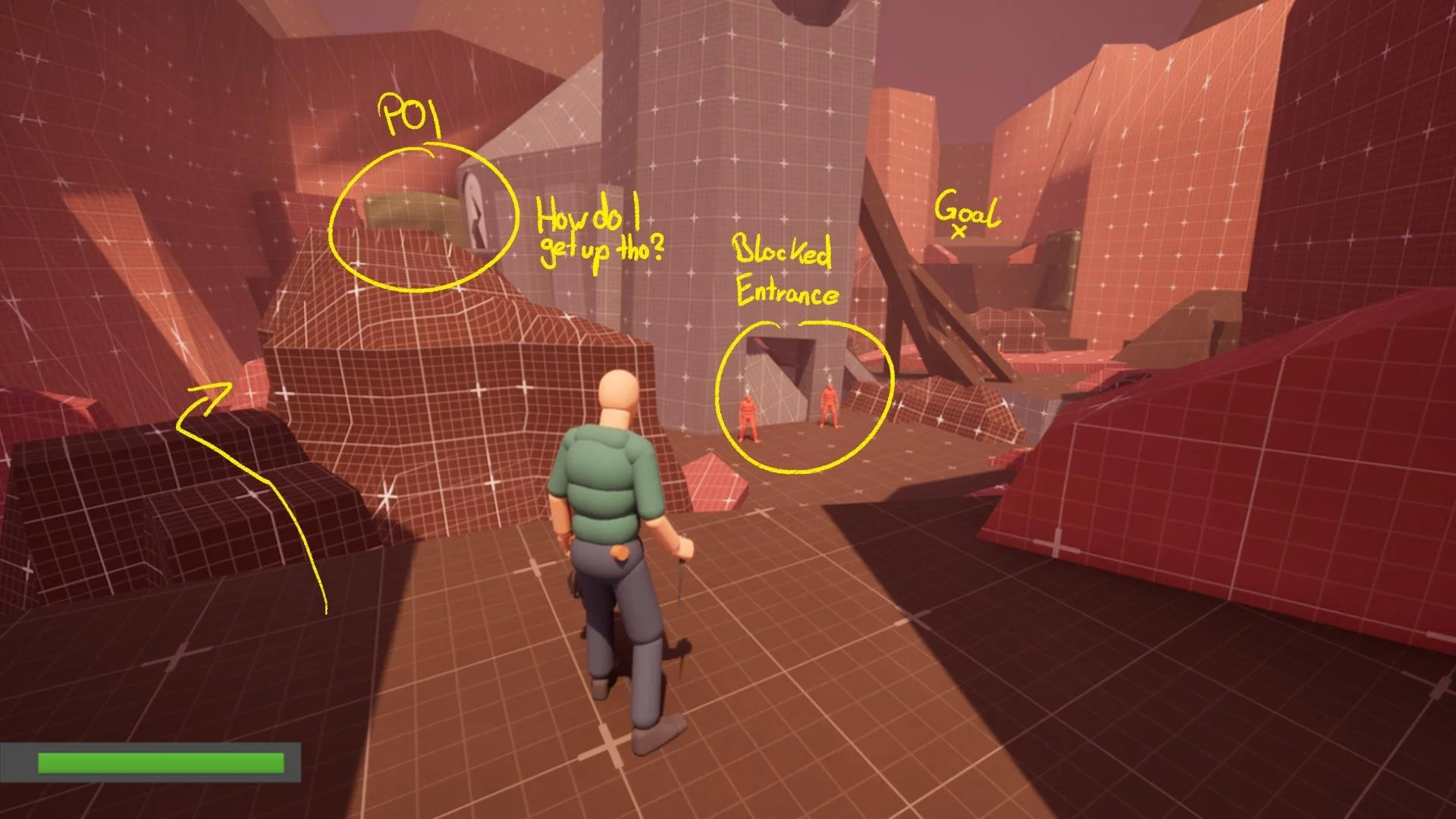
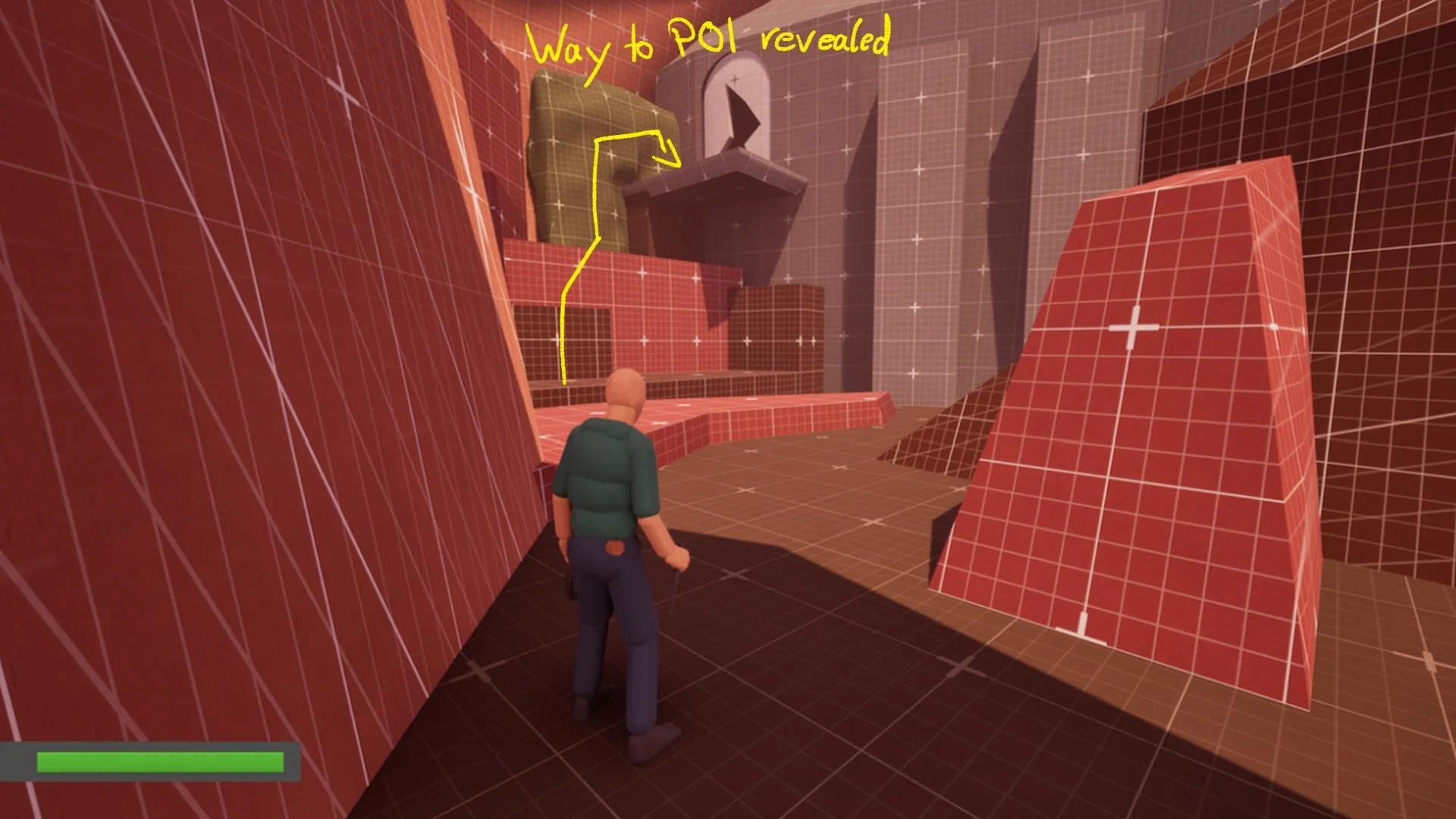
#16: Day 2: Crumbled Church
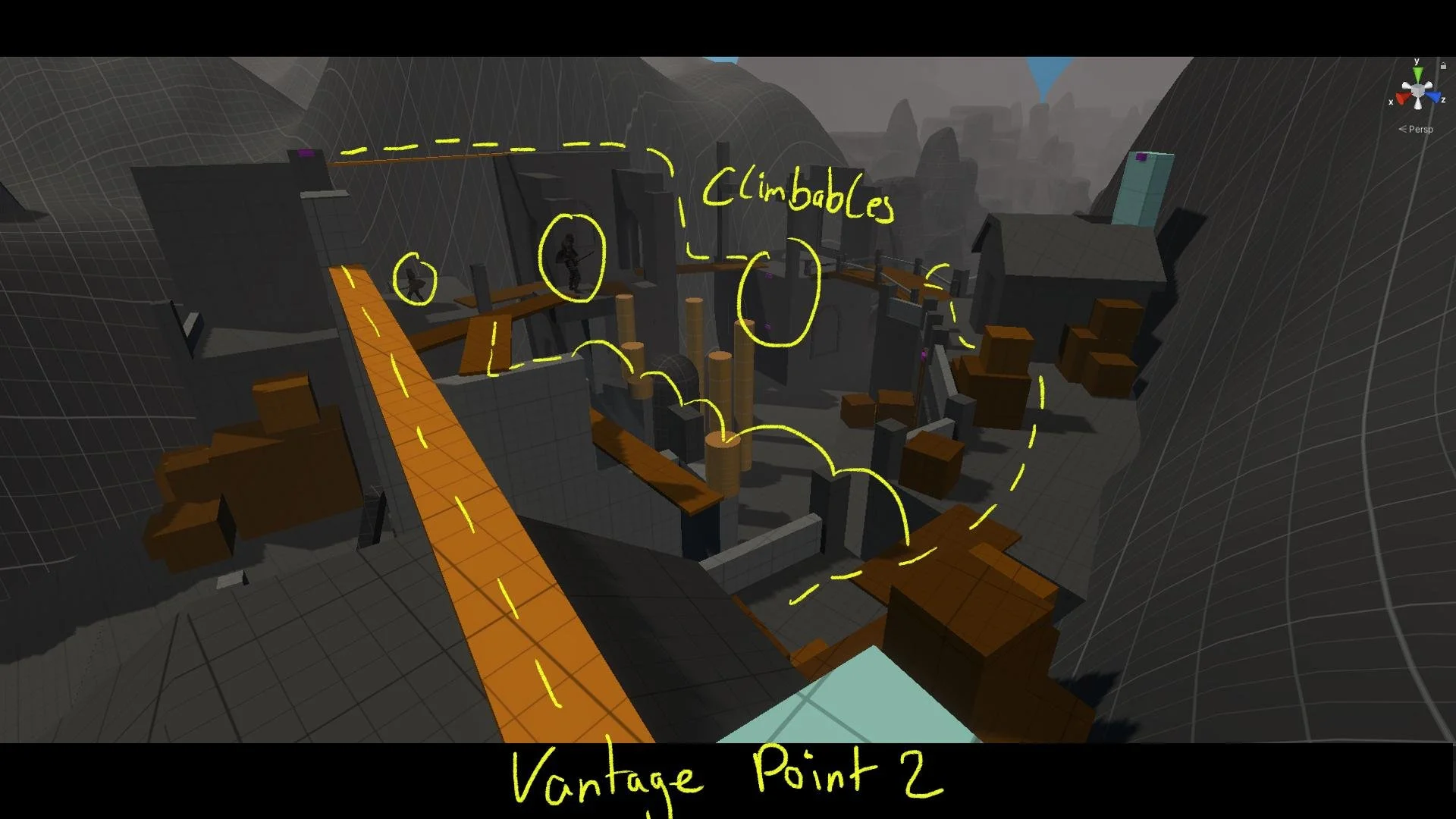
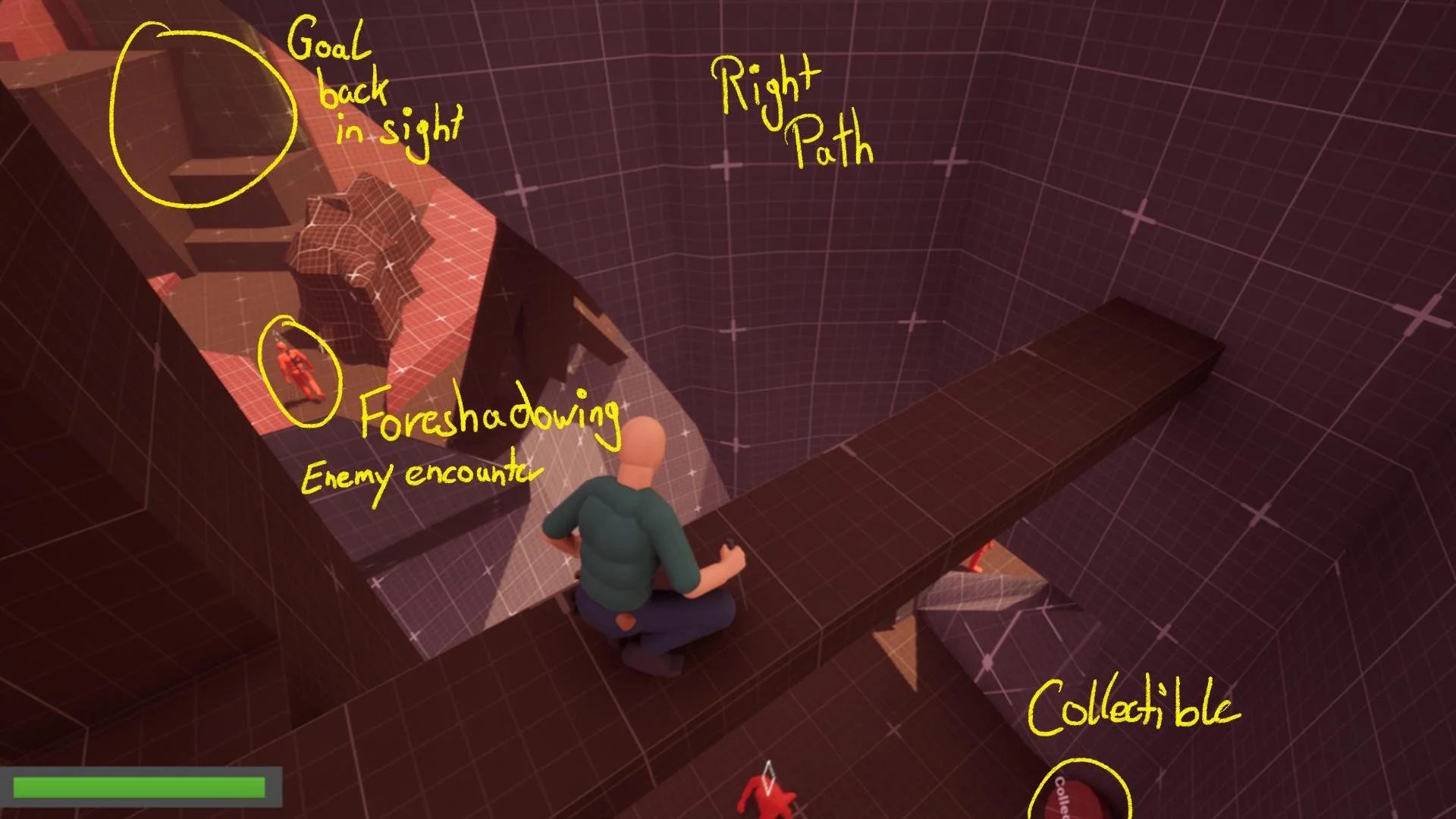
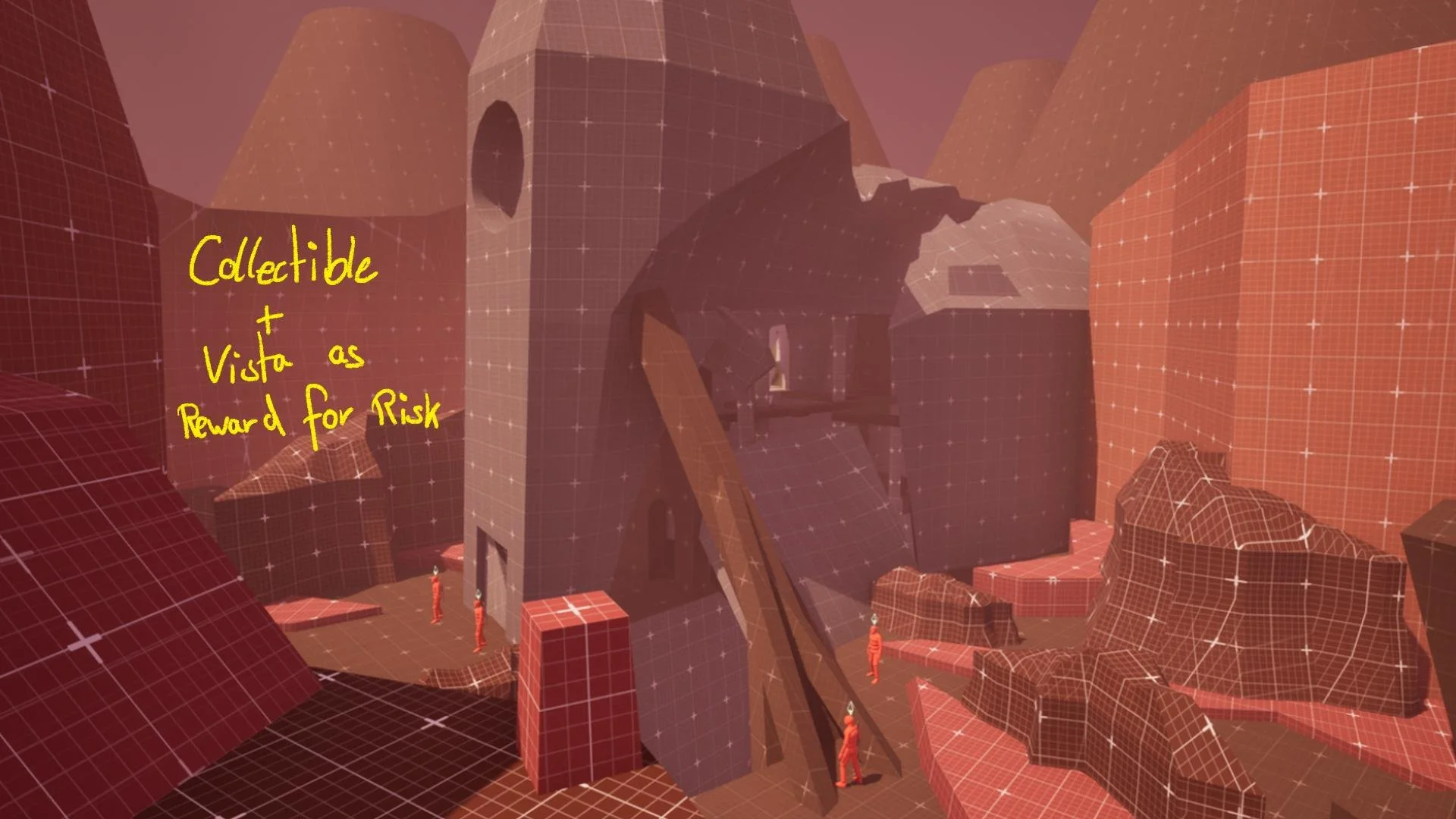
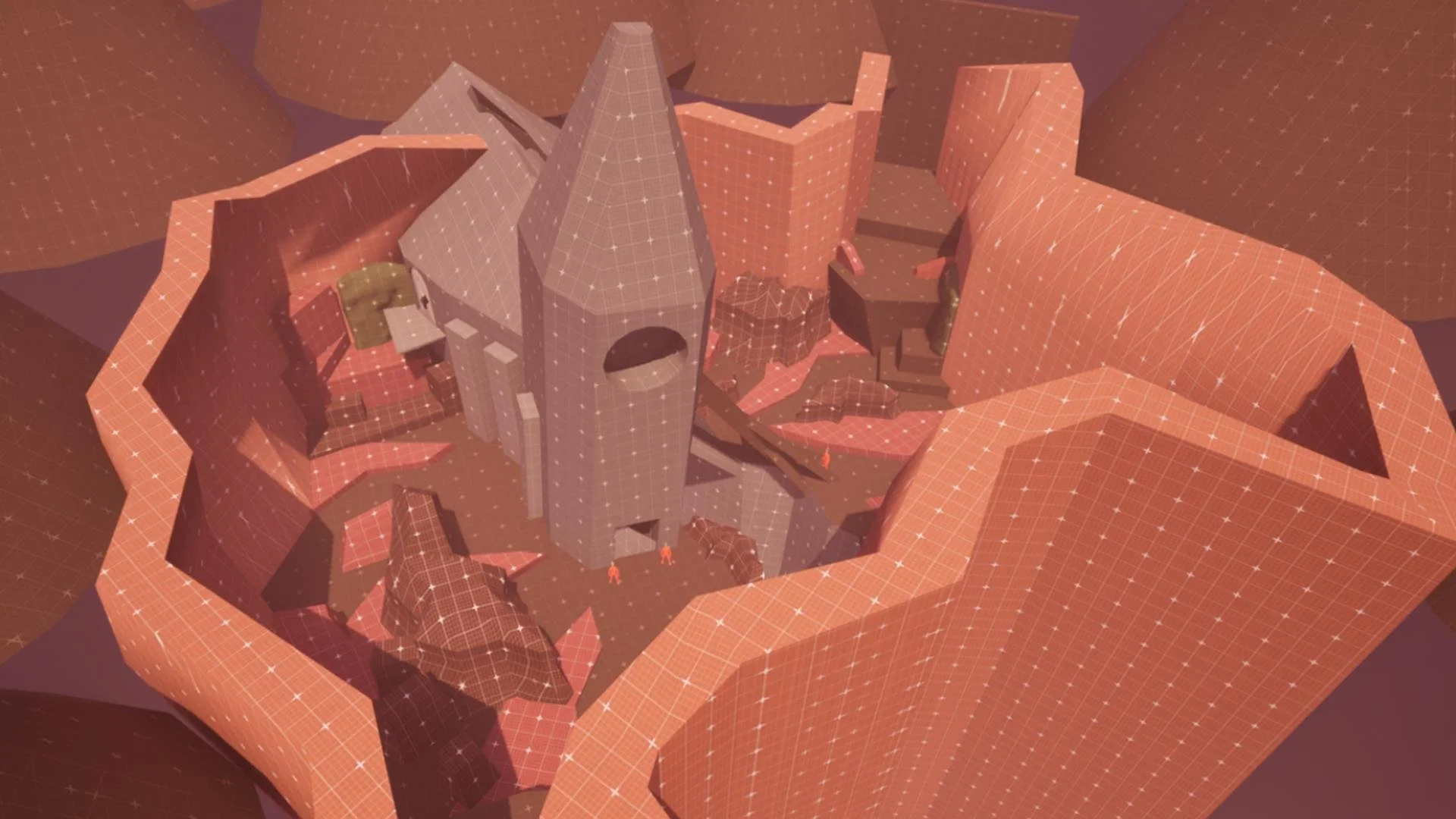
Designed a church set in a hellish environment, featuring a dramatic chasm splitting the structure and creating a scenic focal point.
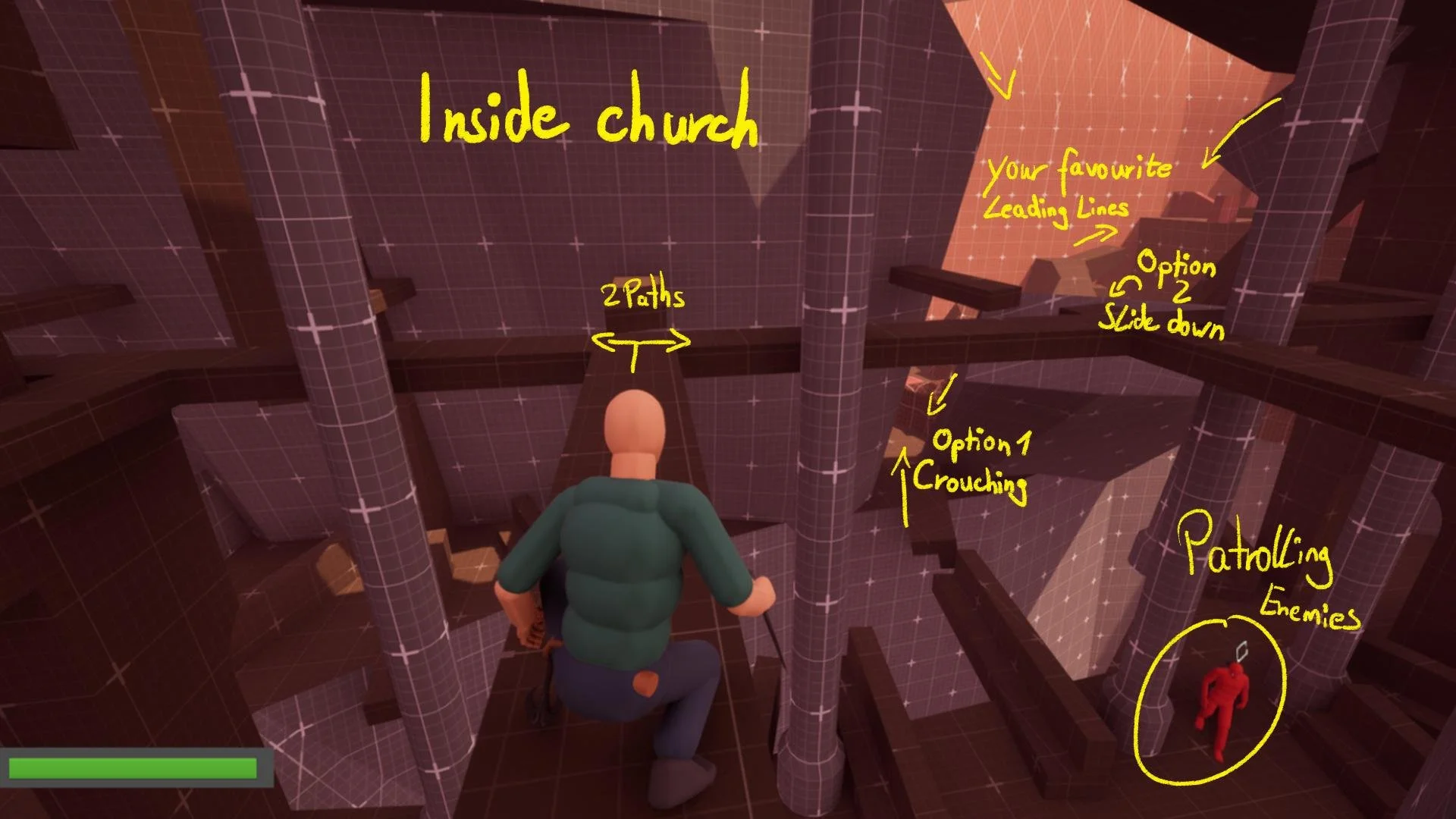
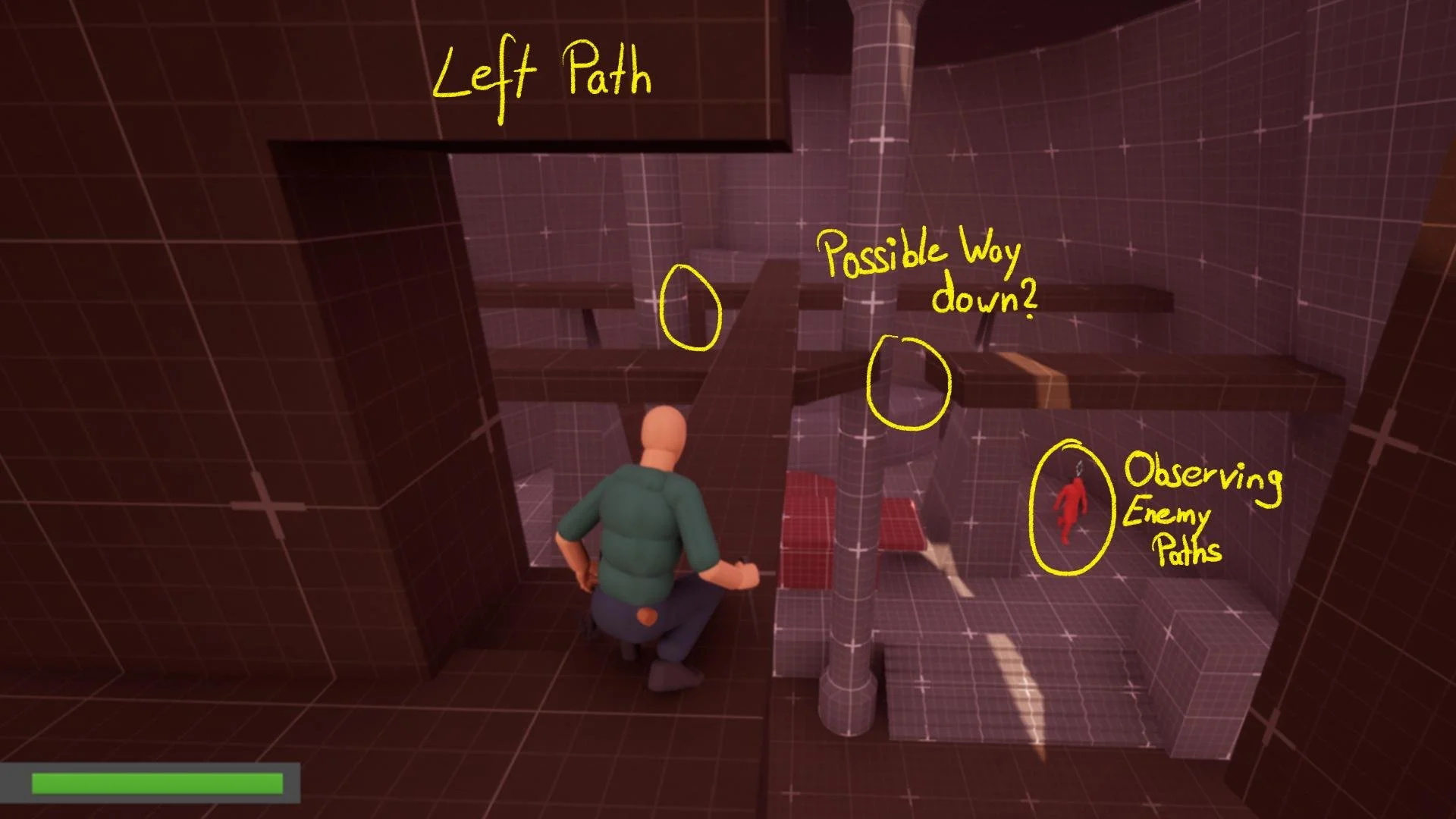
Integrated vertical traversal, with players moving across beams and high points, Assassin’s Creed–style, to navigate the church.
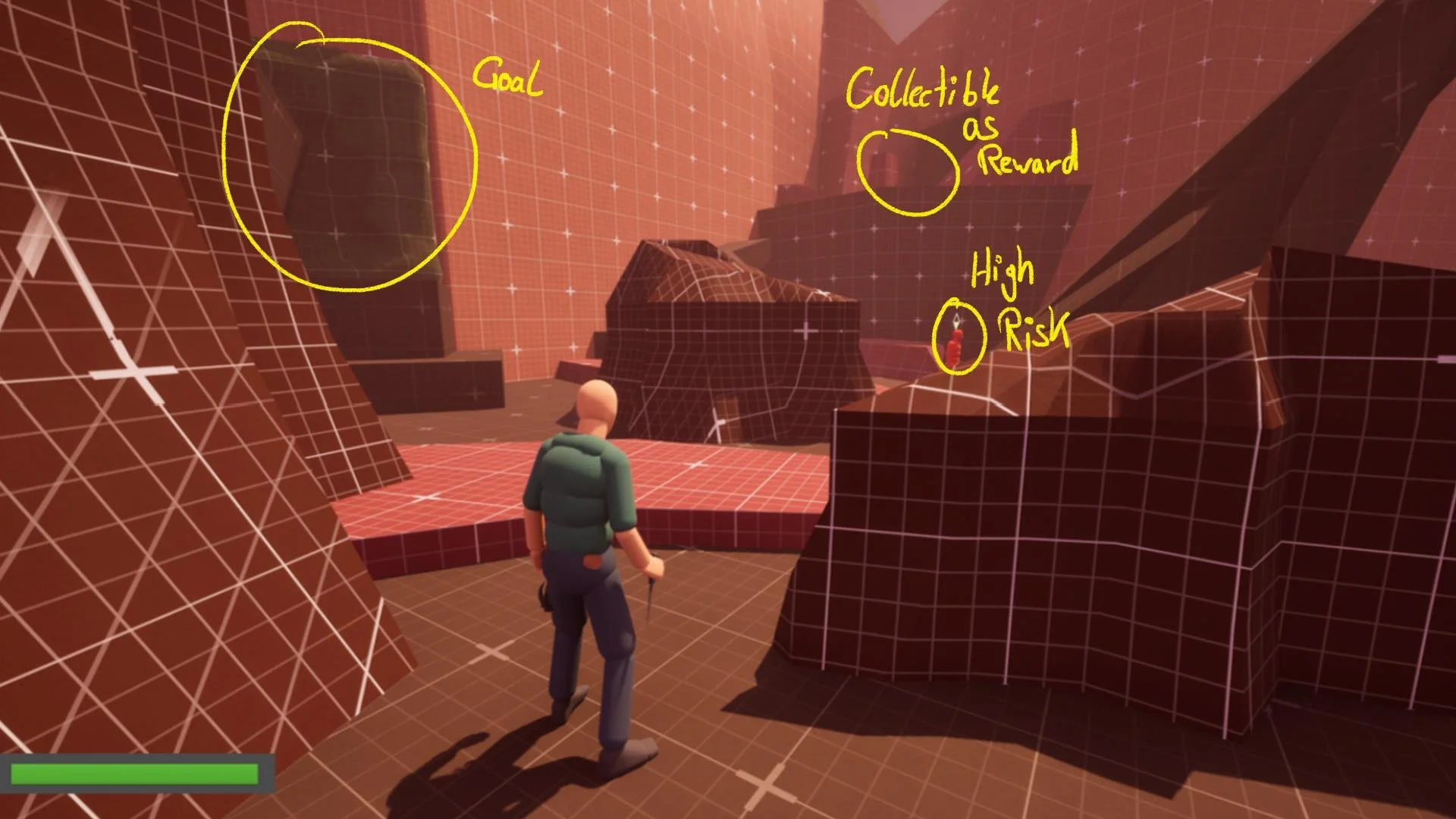
Included vantage points and collectibles, rewarding exploration with stunning visual moments and environmental storytelling.
Focused on stealth gameplay, revealing interesting areas gradually and encouraging player curiosity.
Offered multiple paths, allowing players to slide down, explore the chaotic benches, or move around the split church space.
Balanced tension, exploration, and visual spectacle, combining narrow stealth corridors with open scenic views for immersive gameplay.
#17: Day 10: Abandoned Base
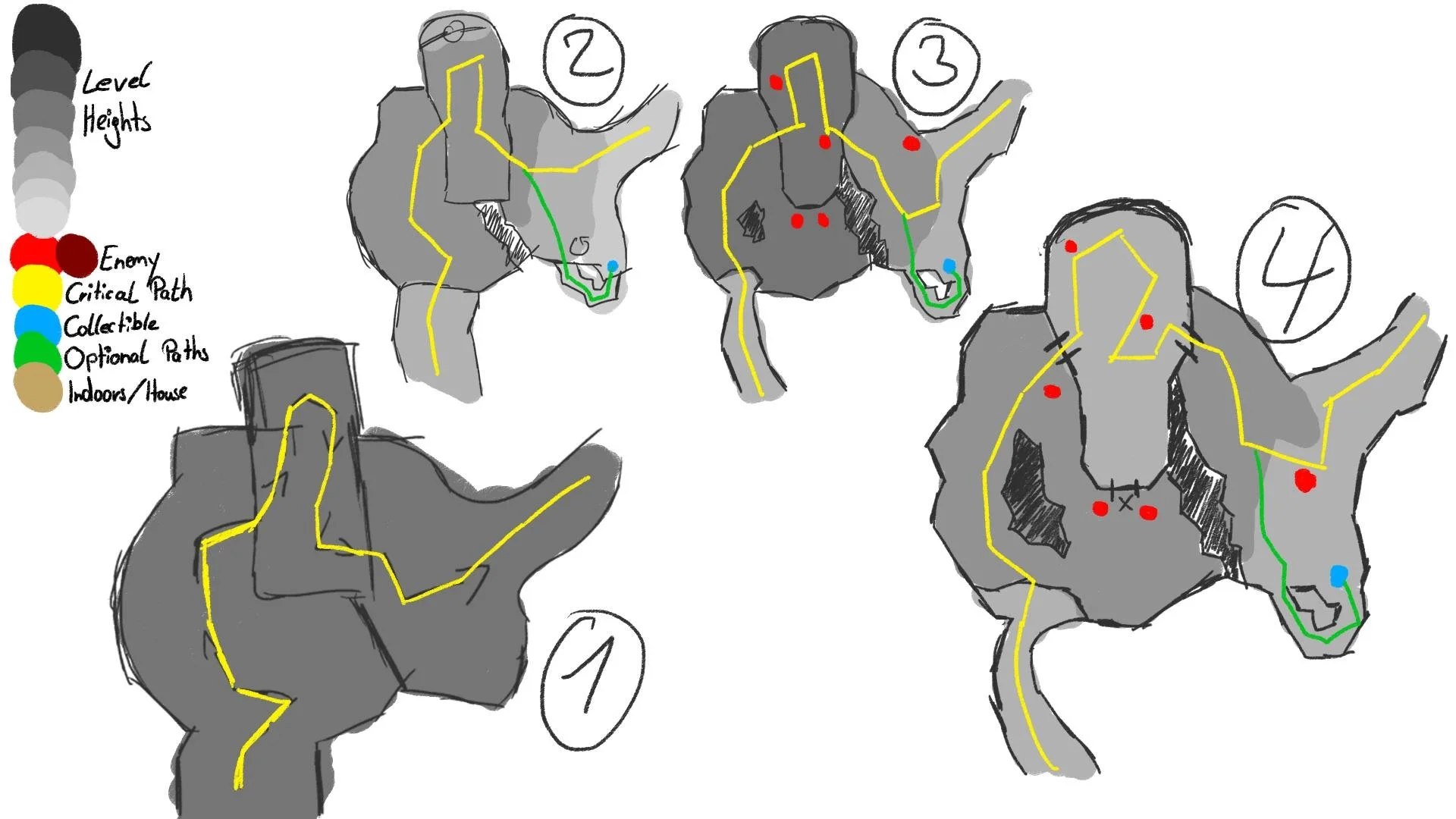
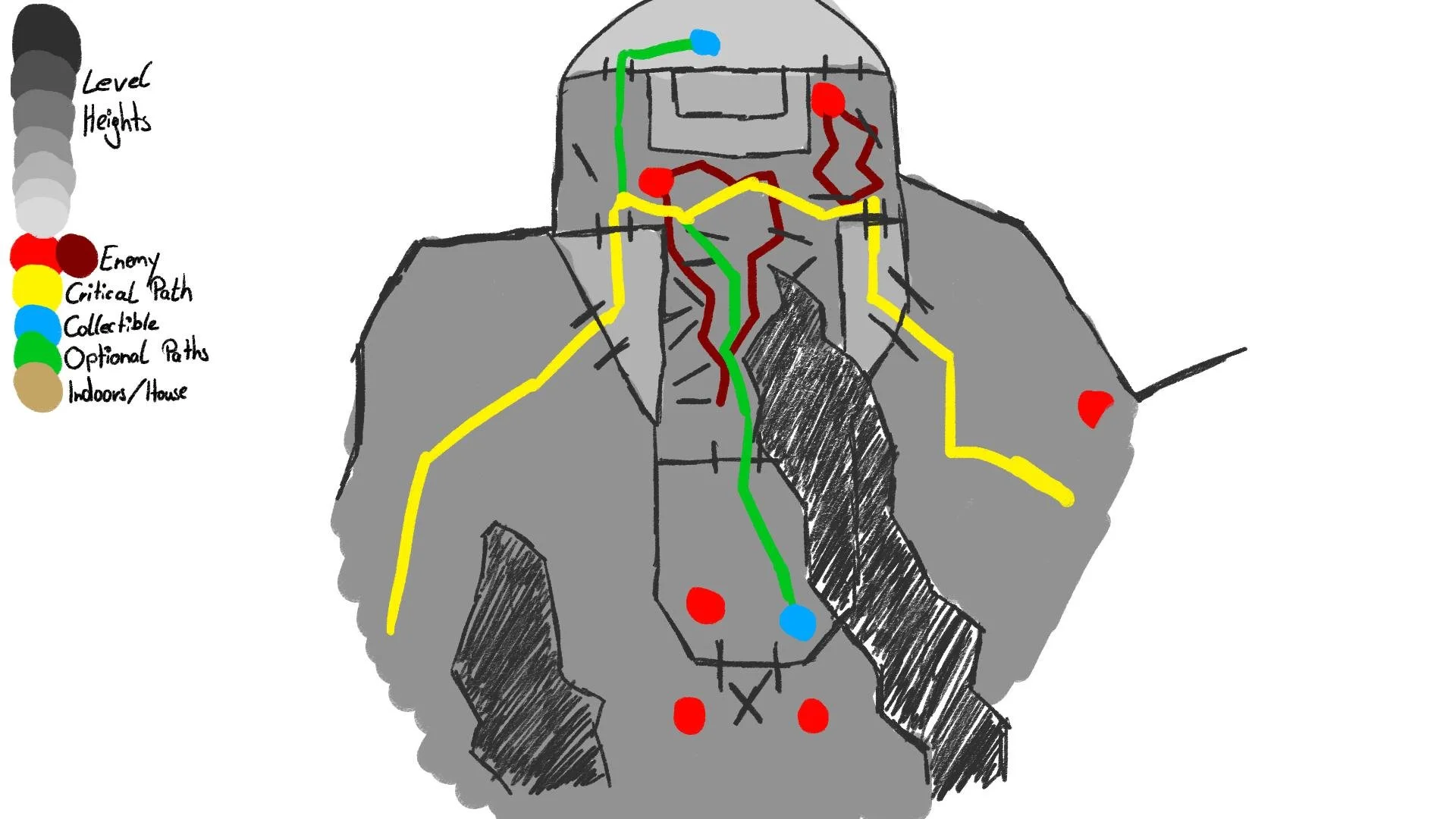
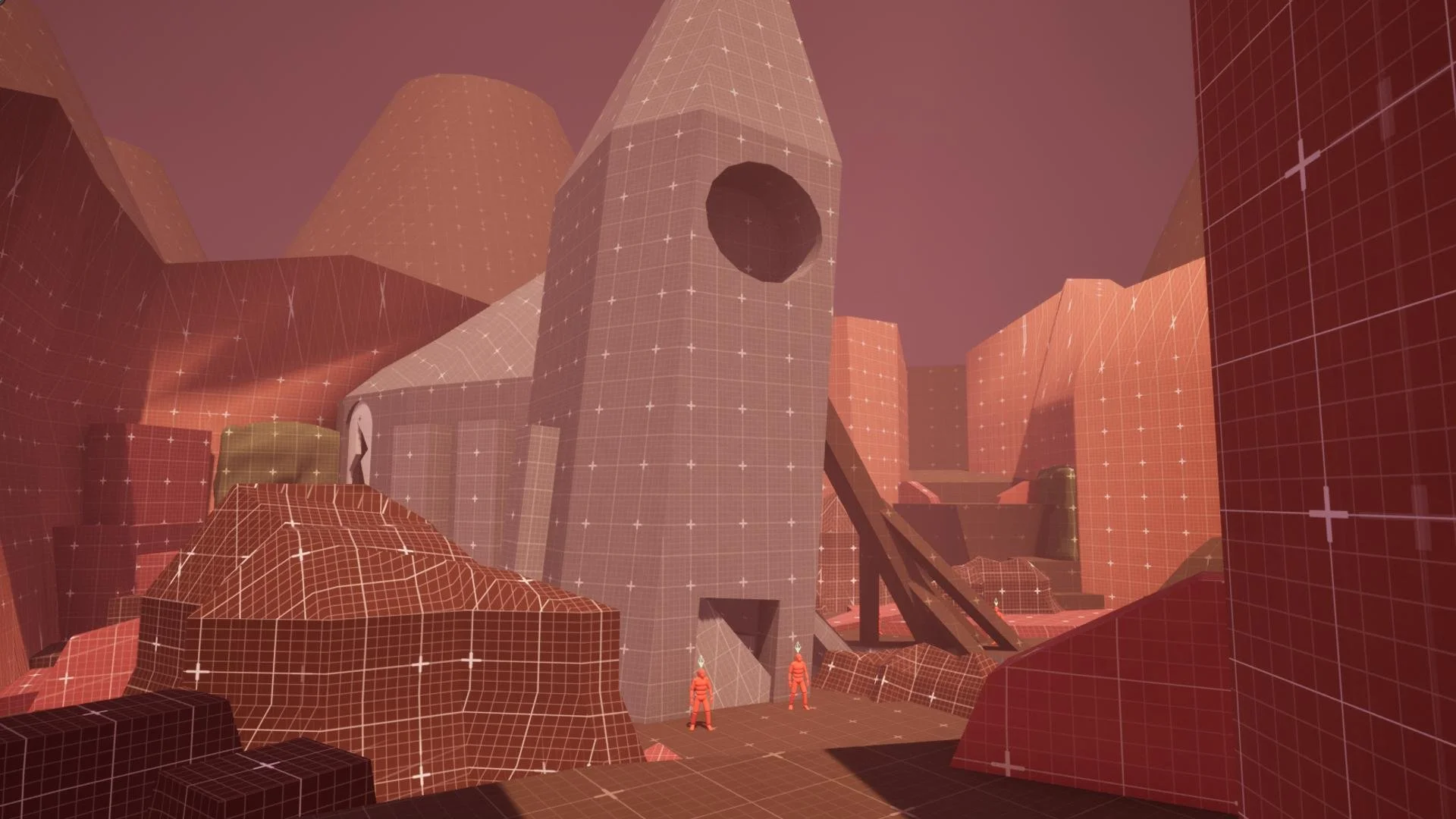
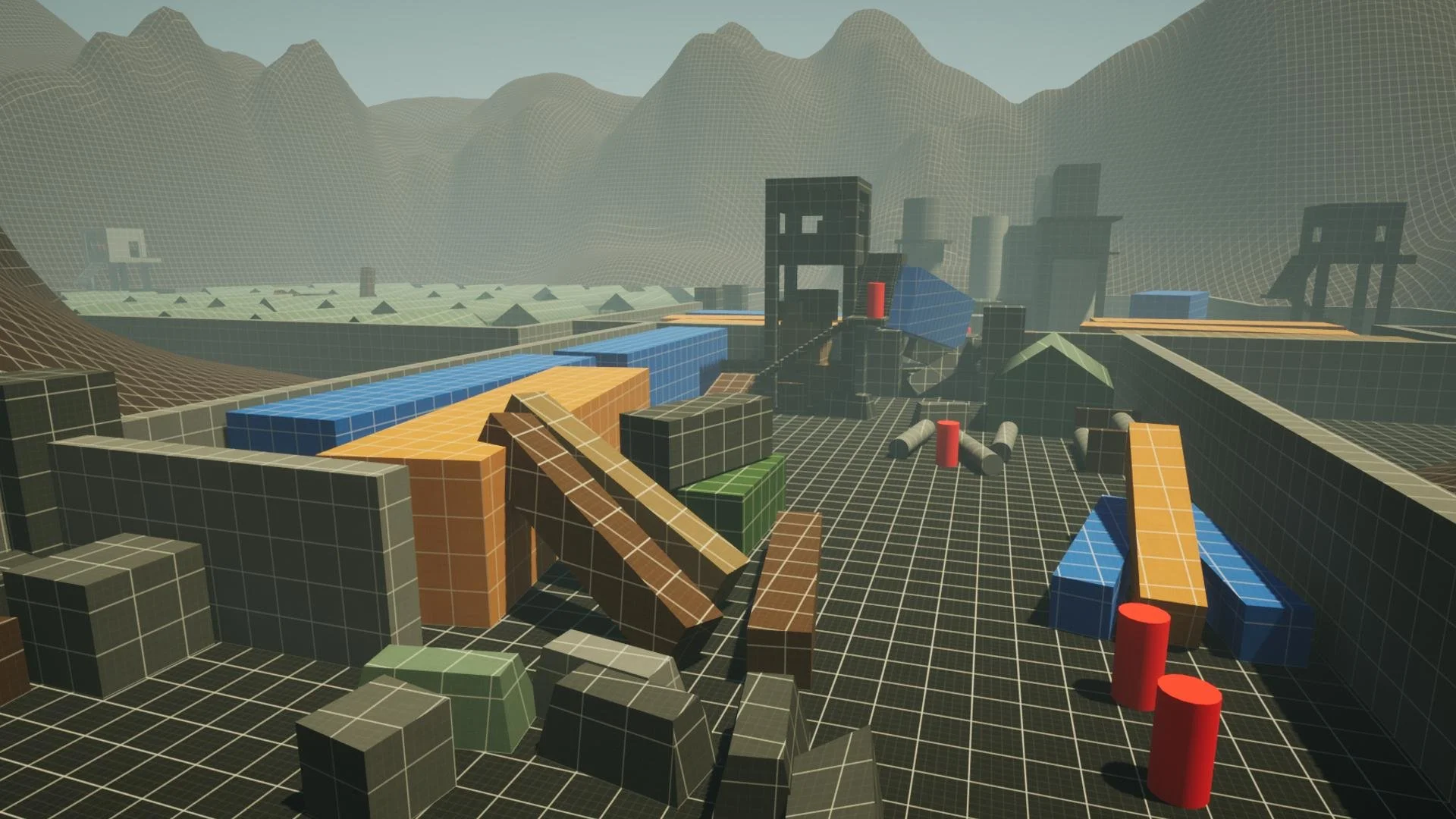
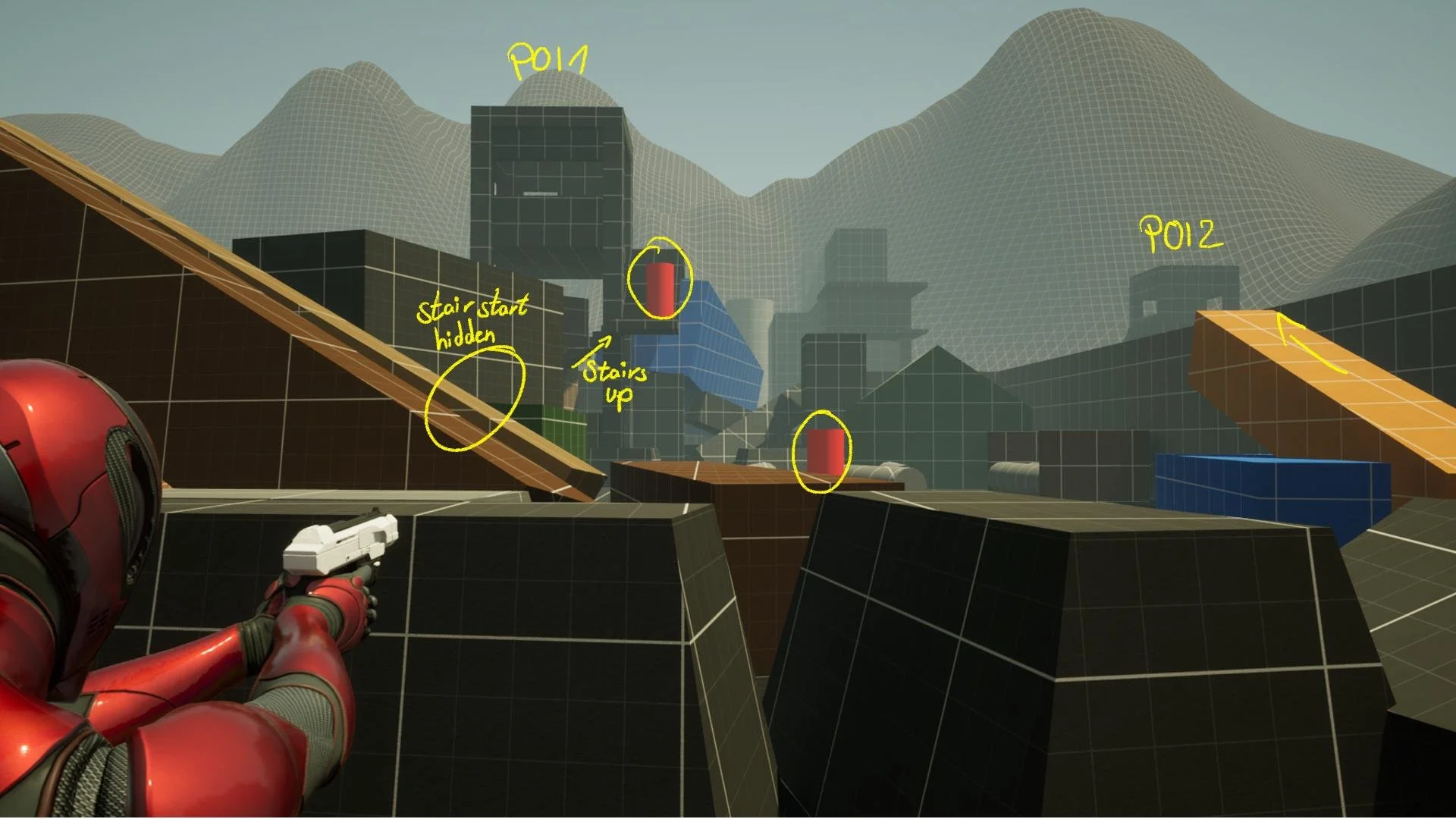
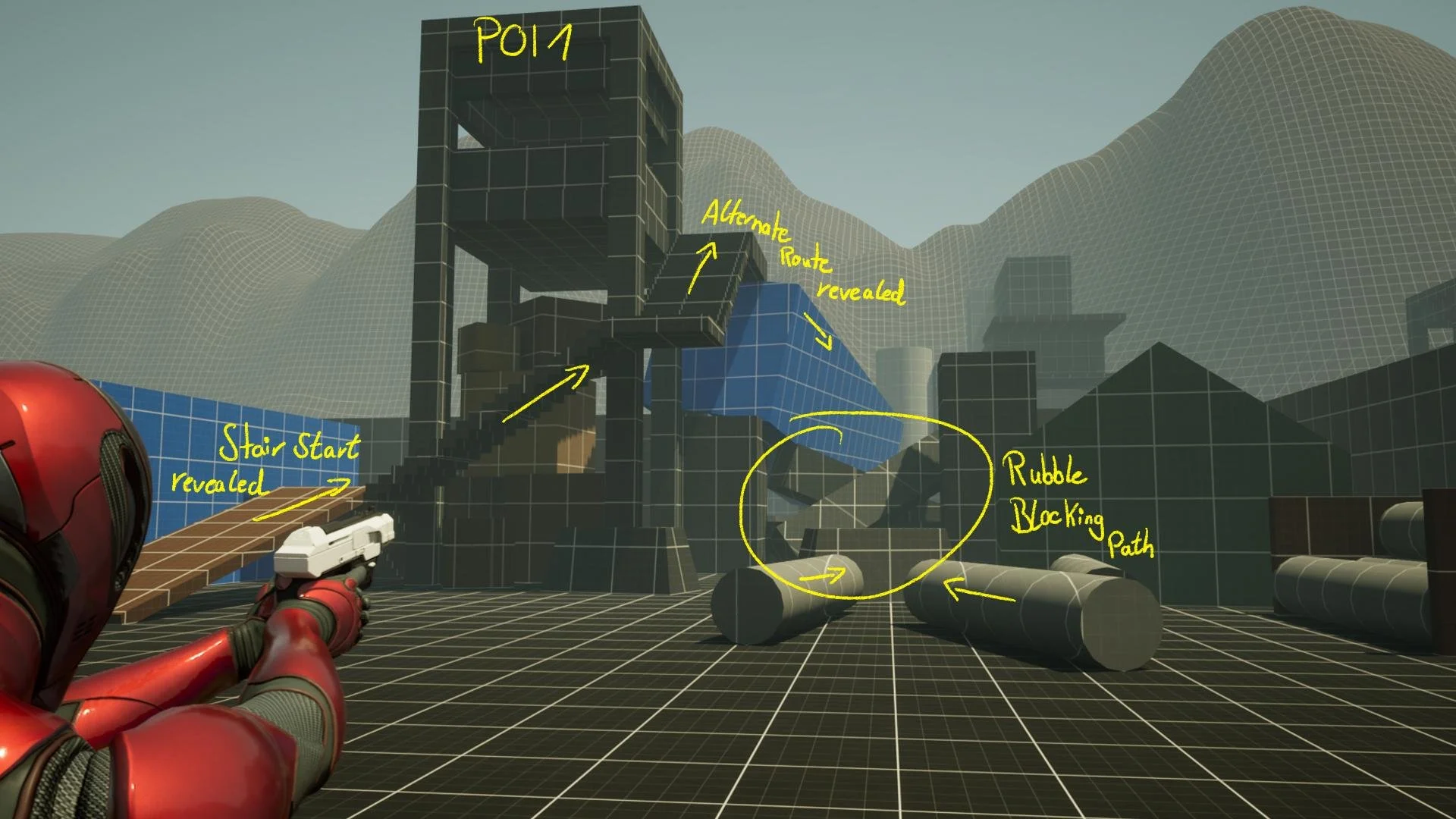
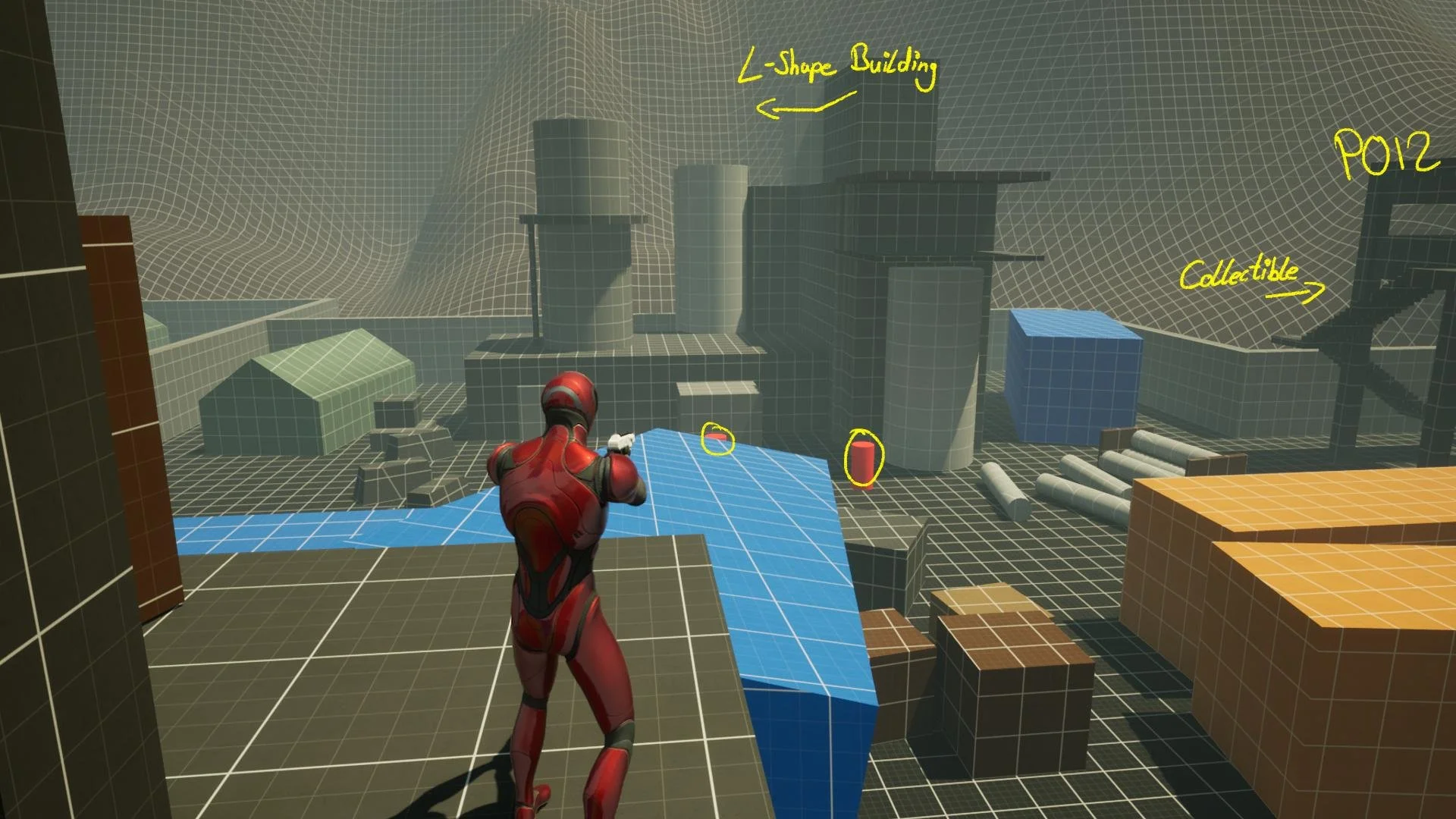
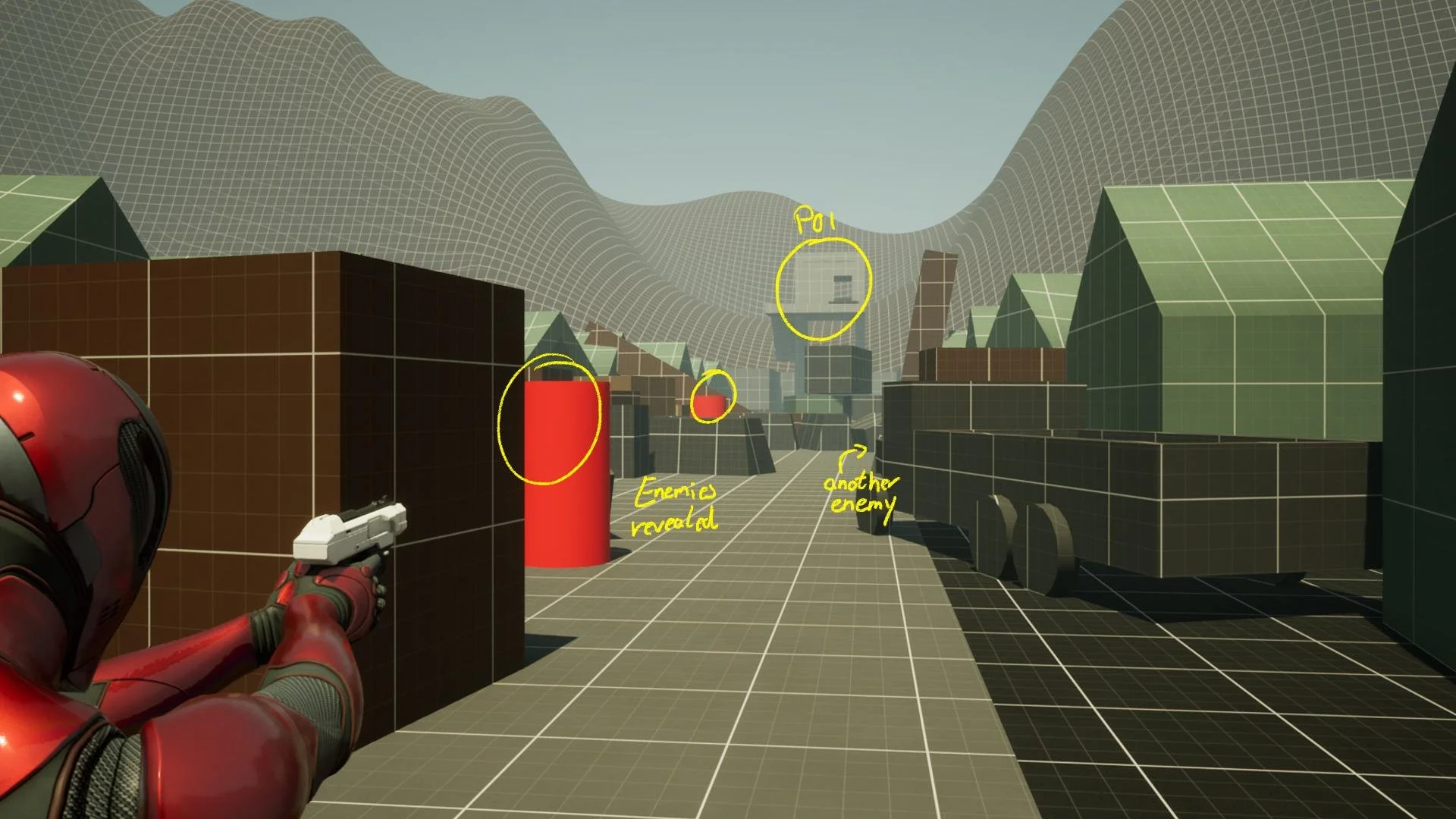
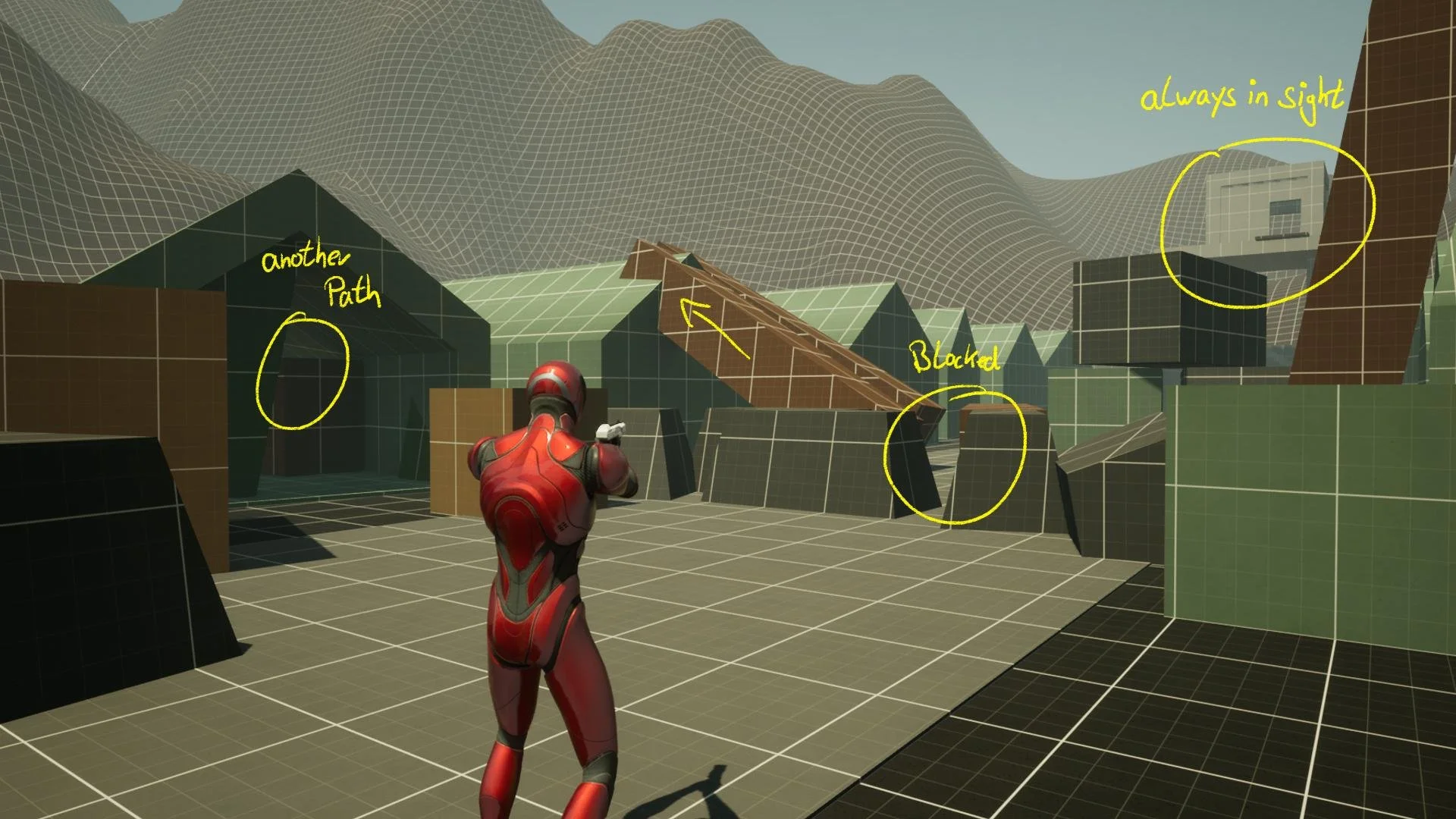
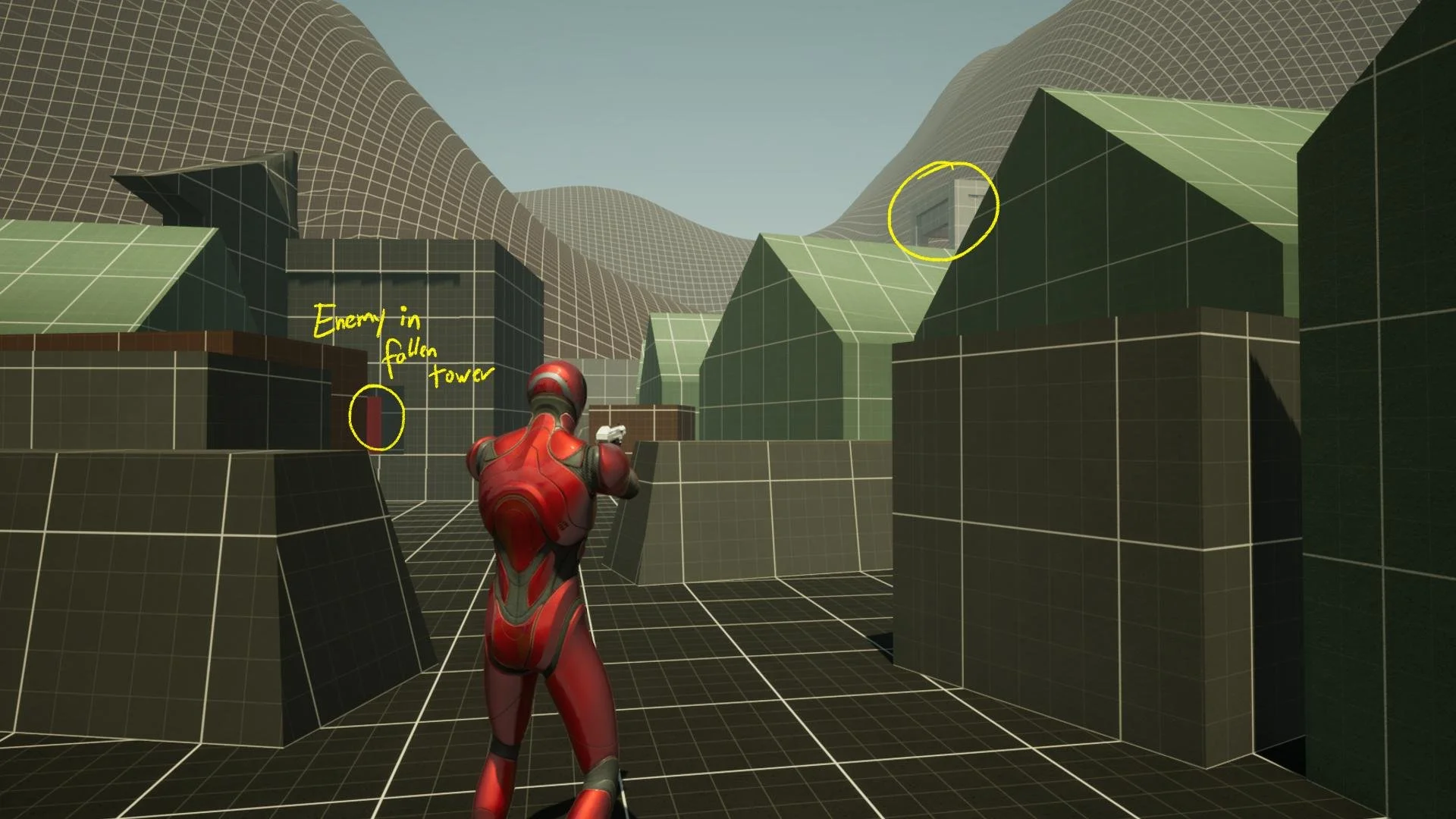
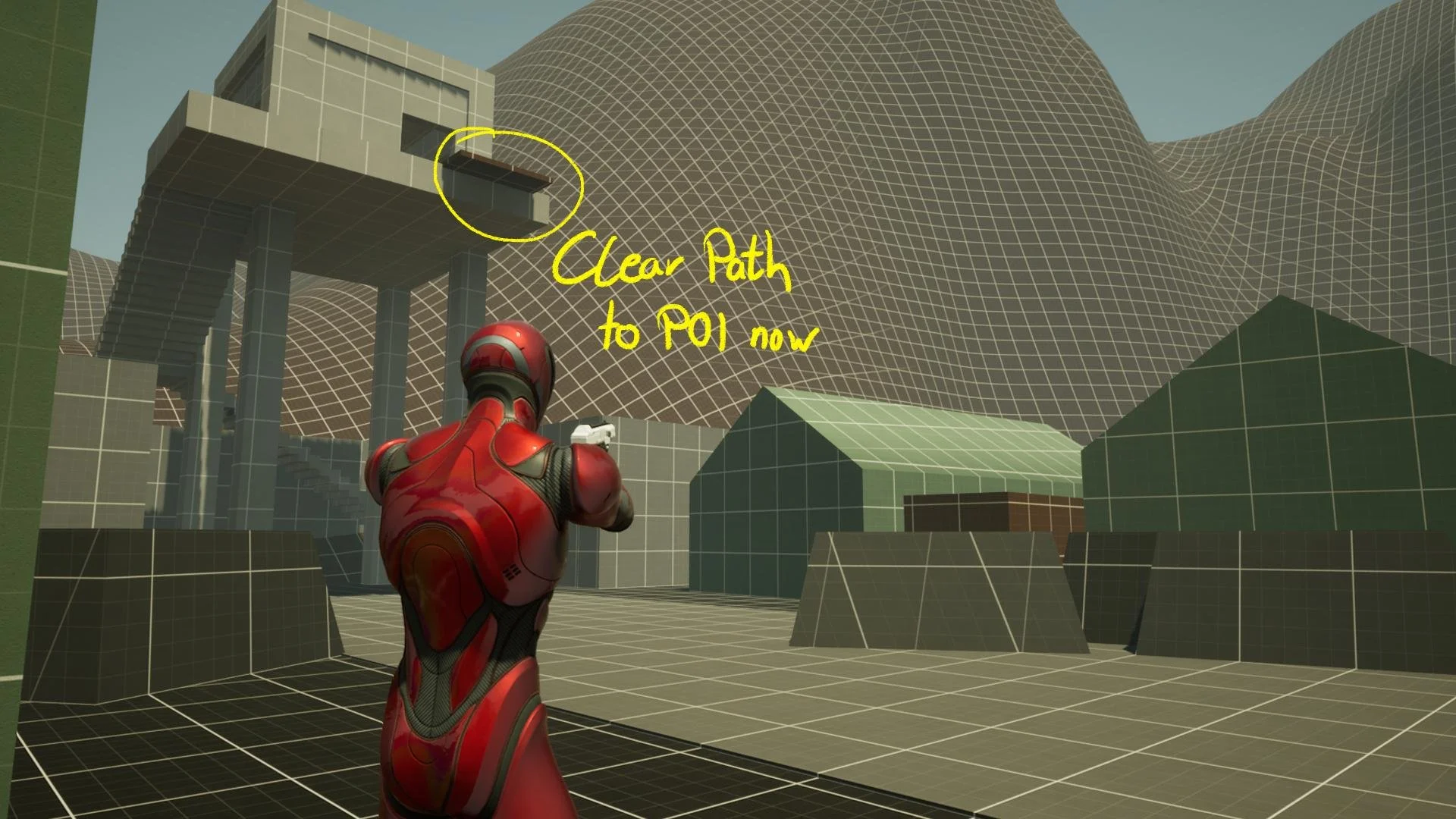
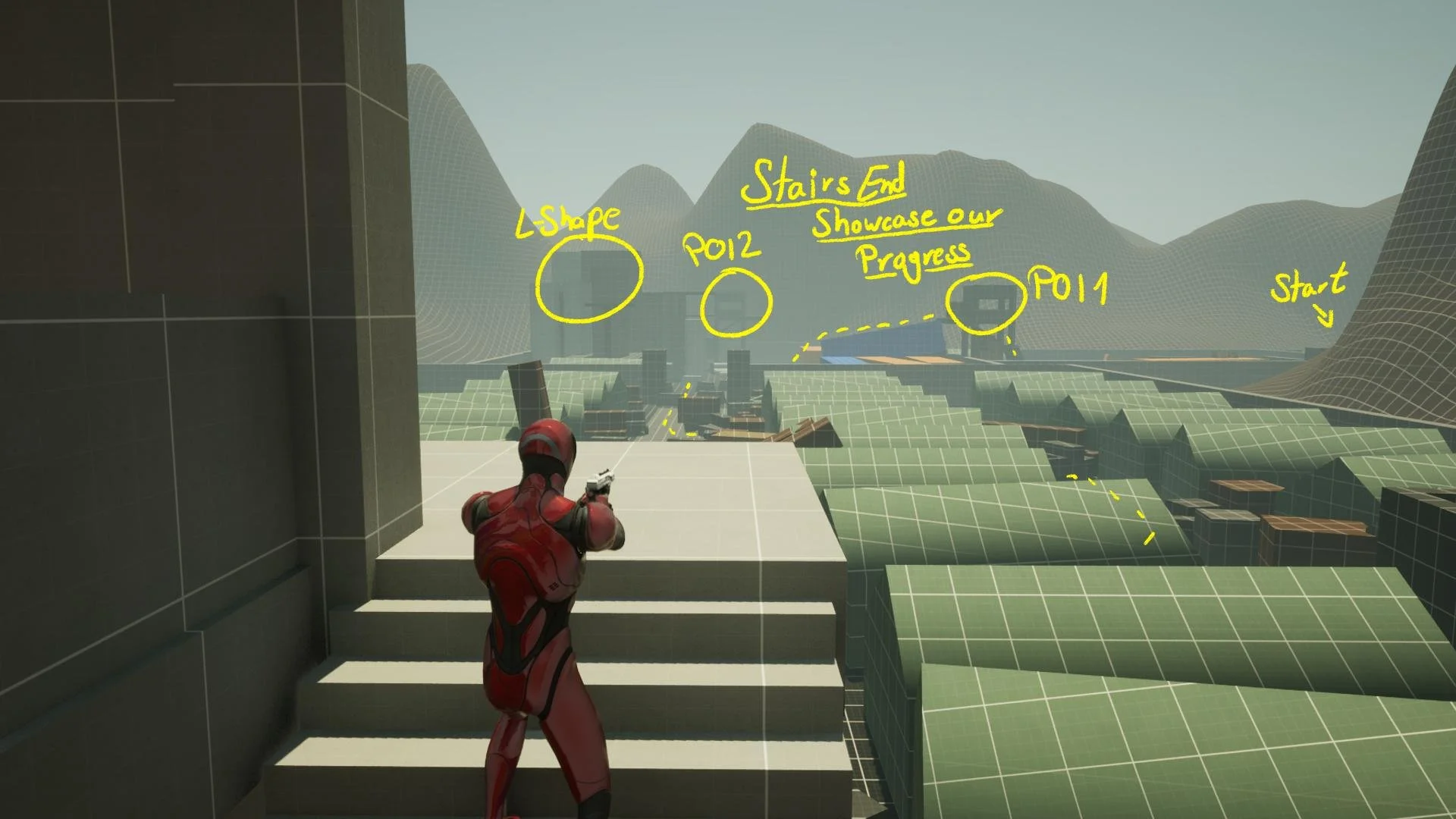
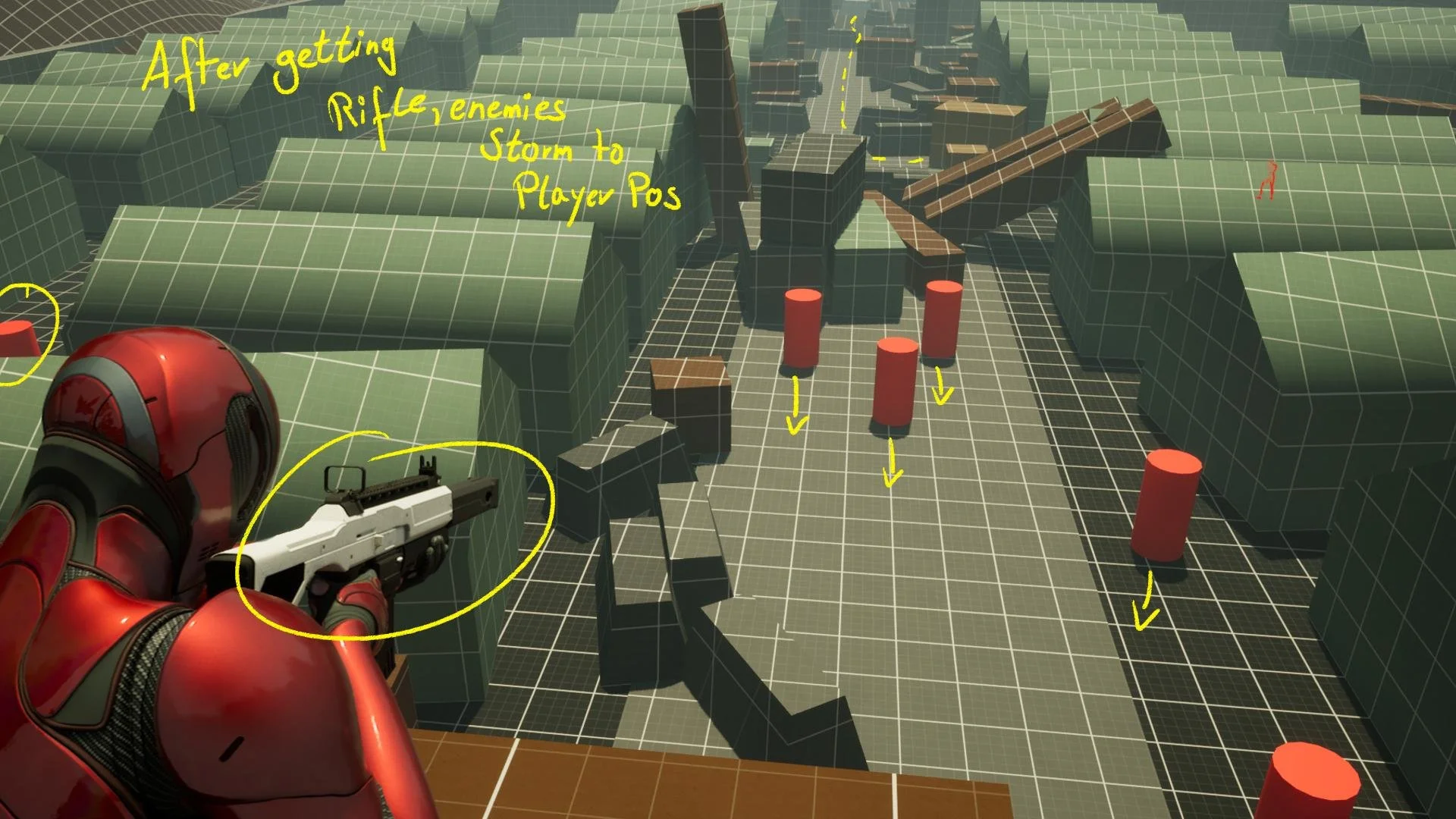
Designed a small abandoned military base built entirely on a flat plane, emphasizing horizontal navigation.
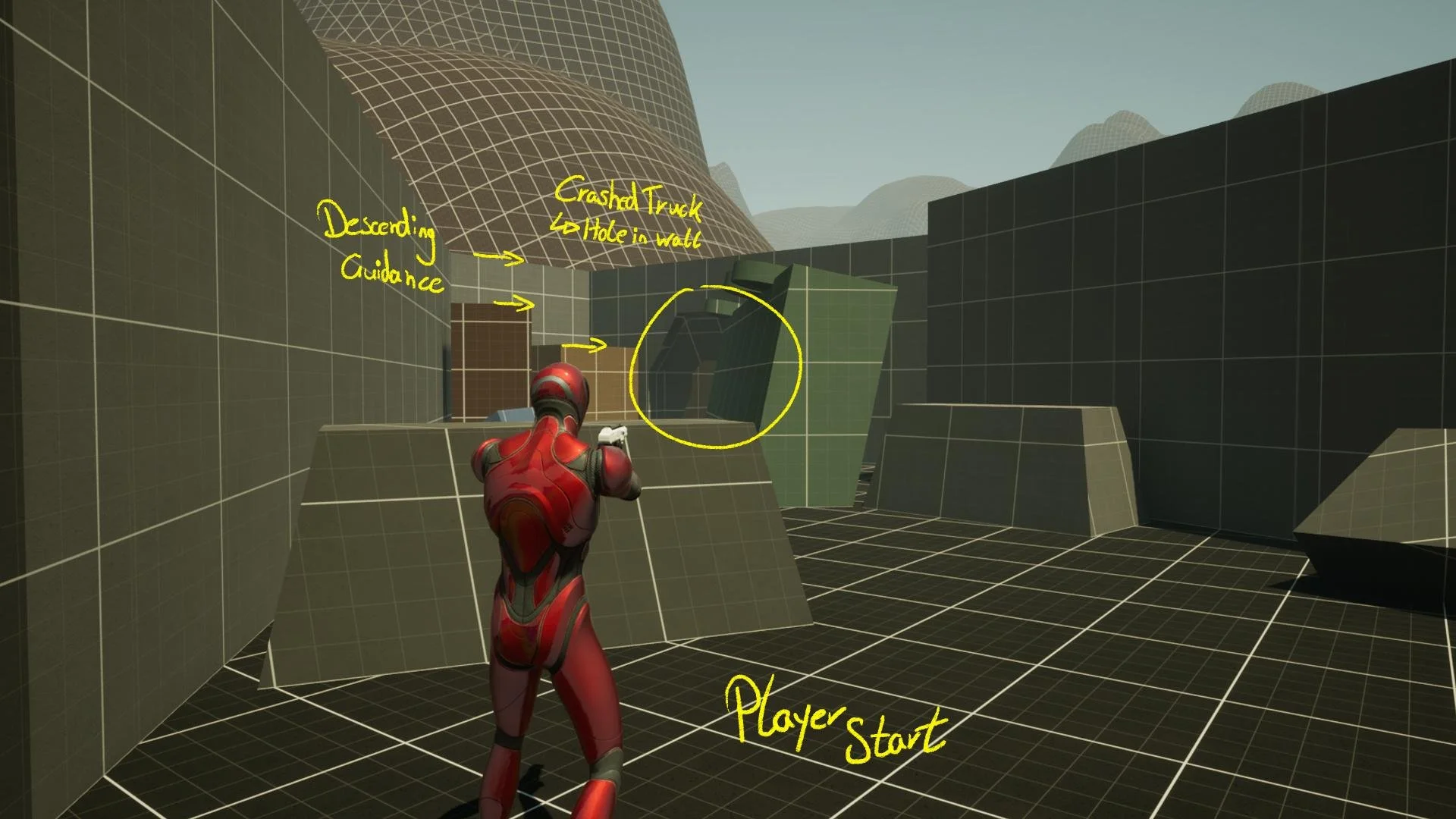
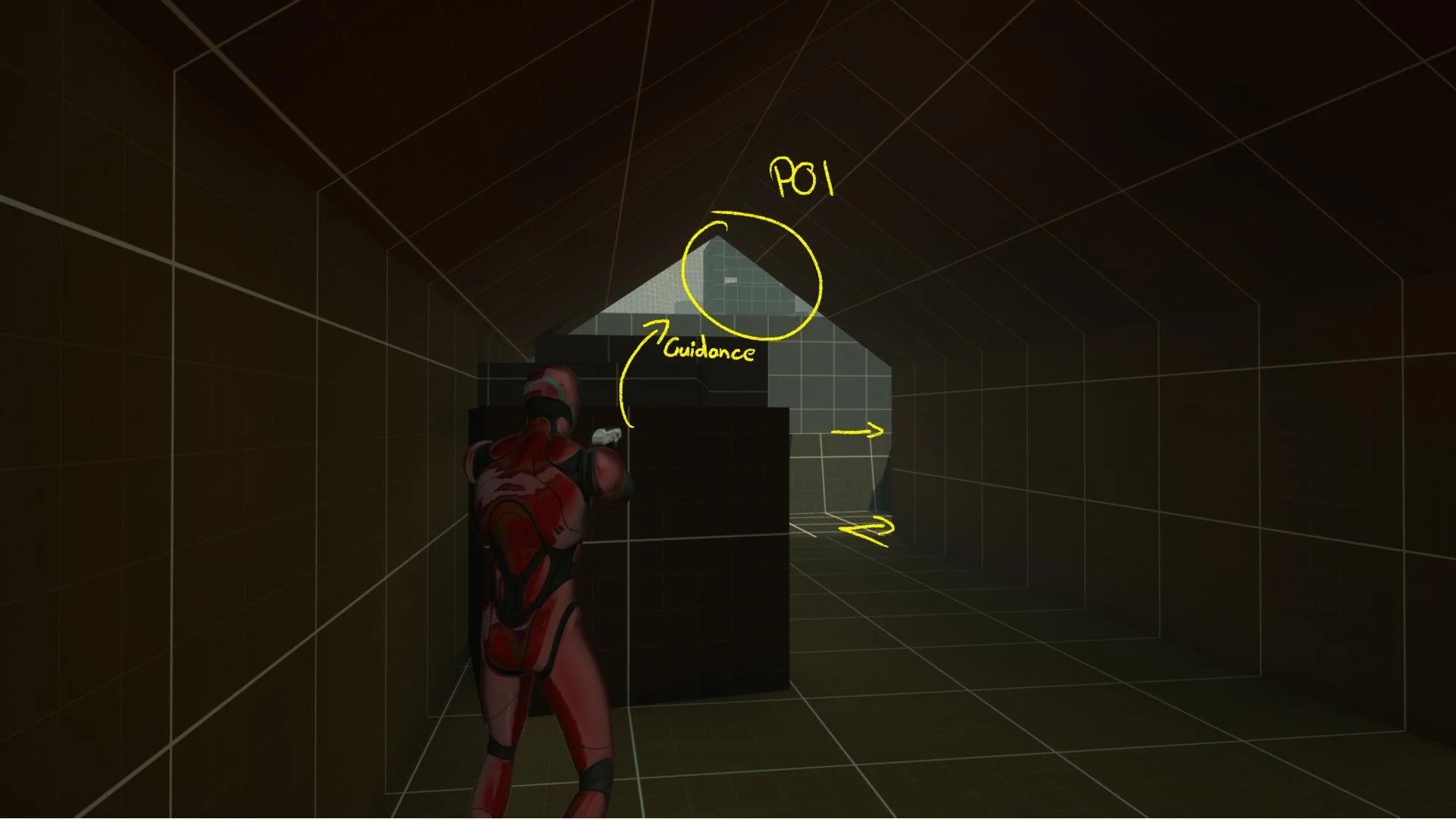
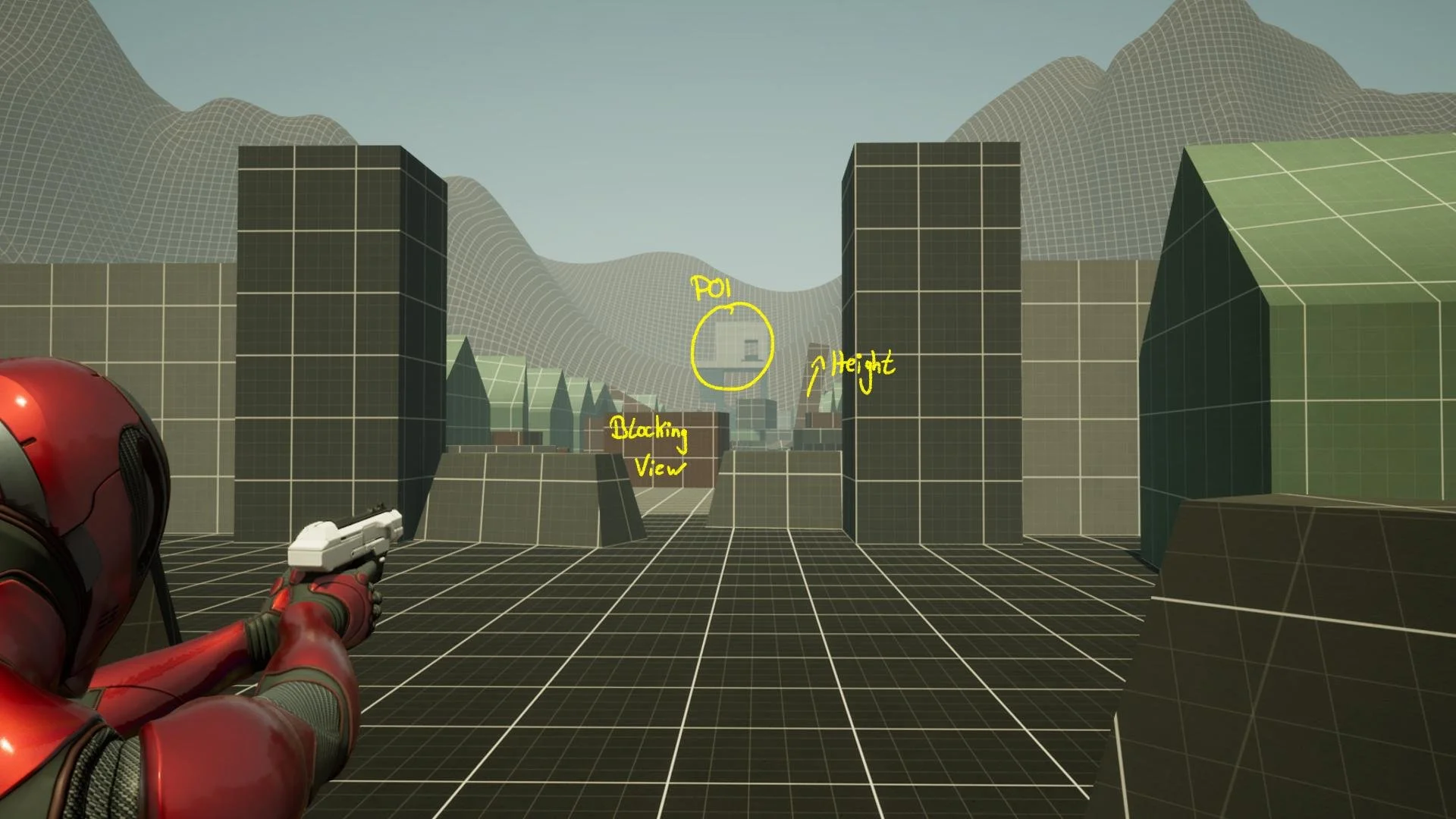
Focused on readability and player orientation, ensuring clarity in a compact, flat layout.
Used the level as a design test, exploring how gameplay pacing and flow are impacted without large elevation changes.
Experimented with minimal verticality, relying on asset height differences rather than terrain elevation to create traversal interest.
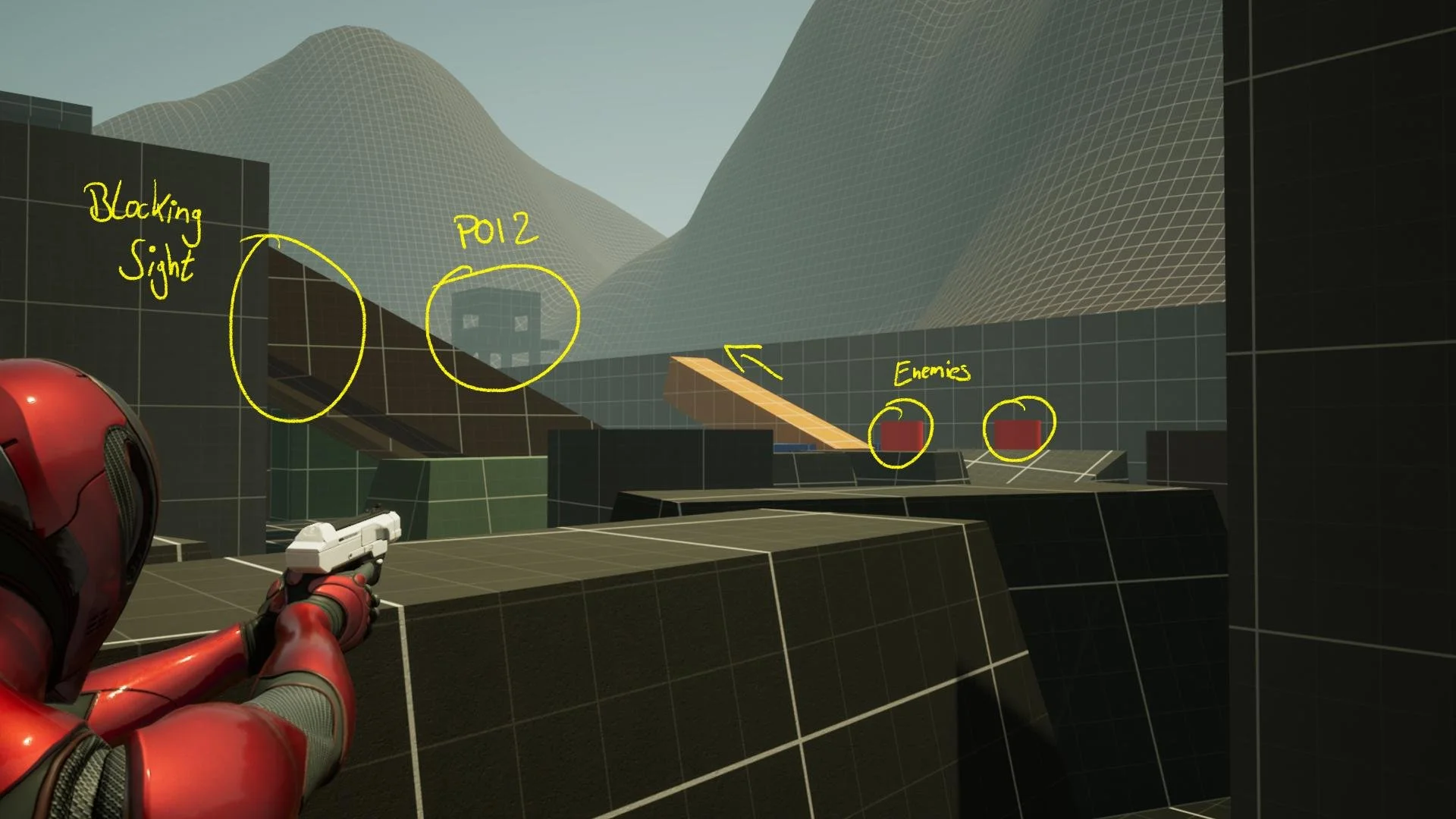
Created intuitive combat and exploration spaces, balancing open areas with cover provided by structures and objects.
Maintained spatial rhythm and player engagement through thoughtful placement of assets, vantage points, and points of interest.
#18: Day 1: Jungle Path
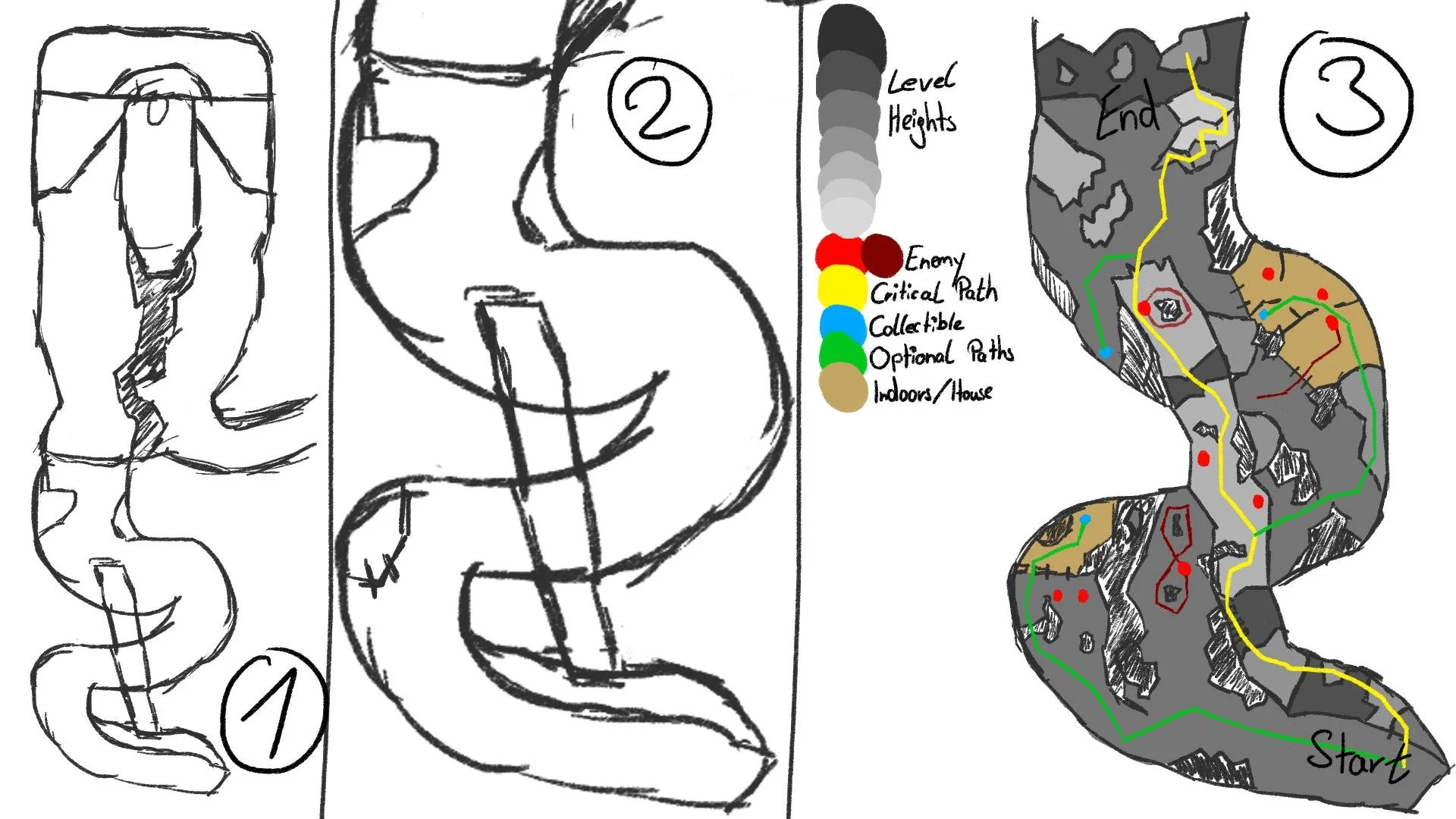
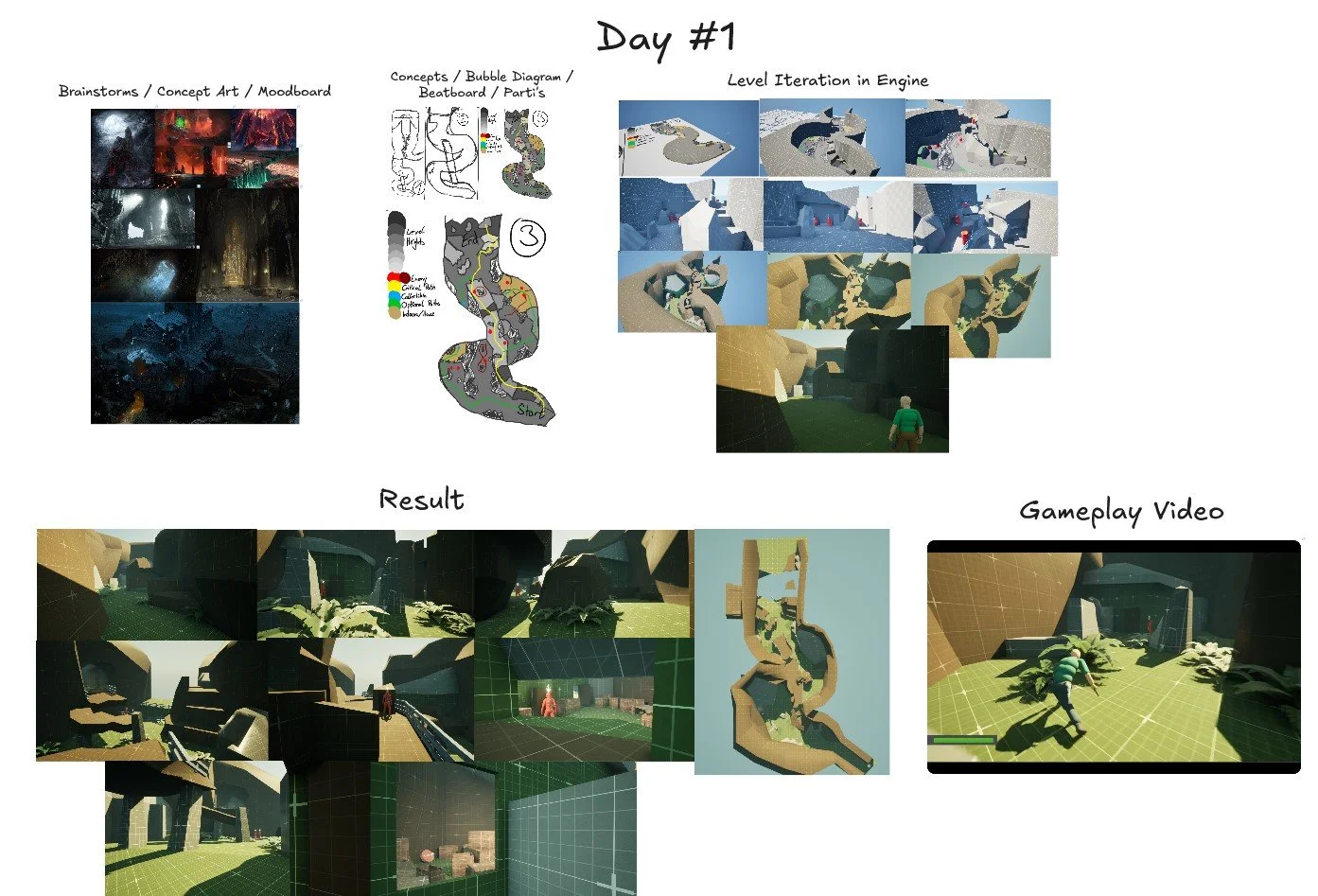
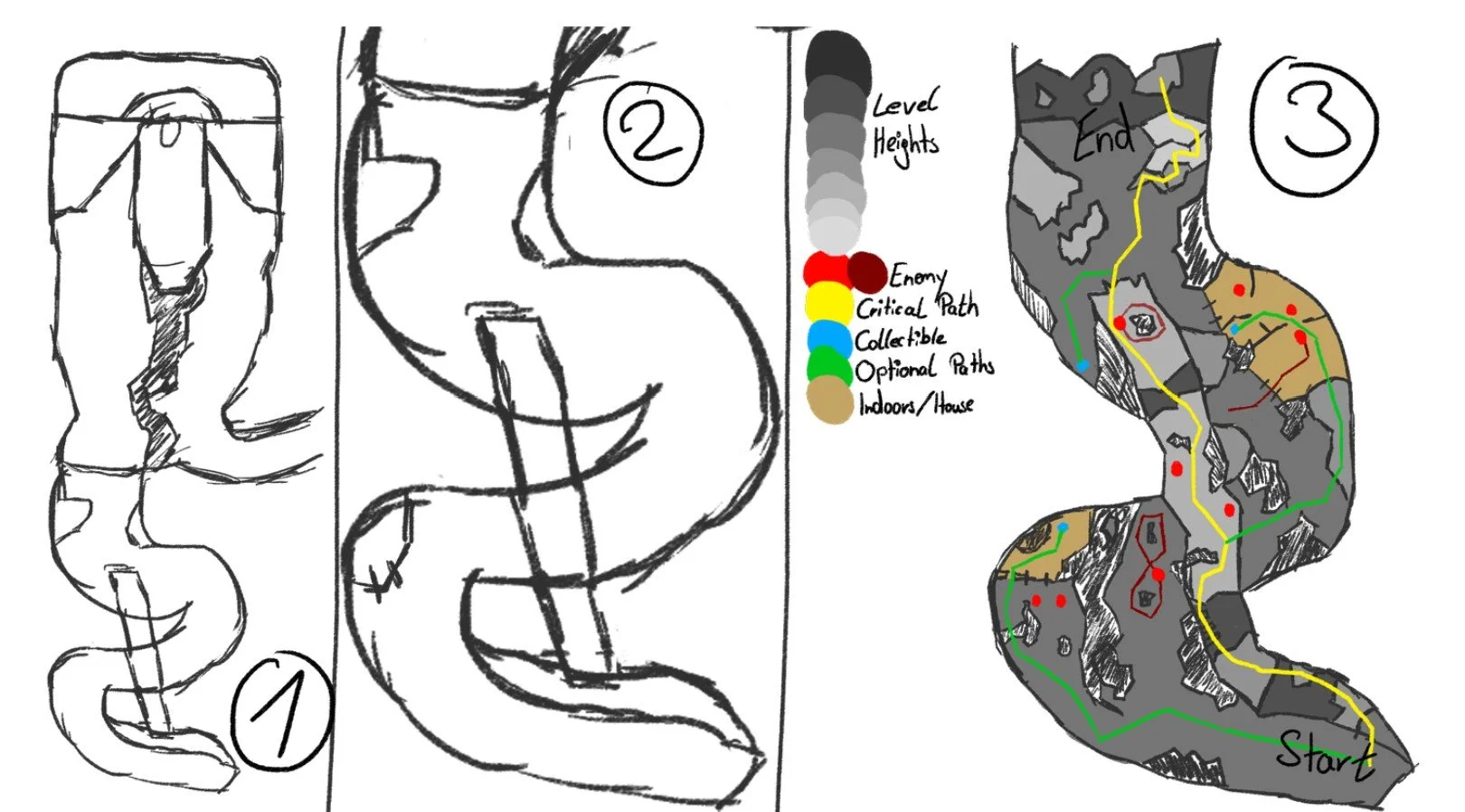
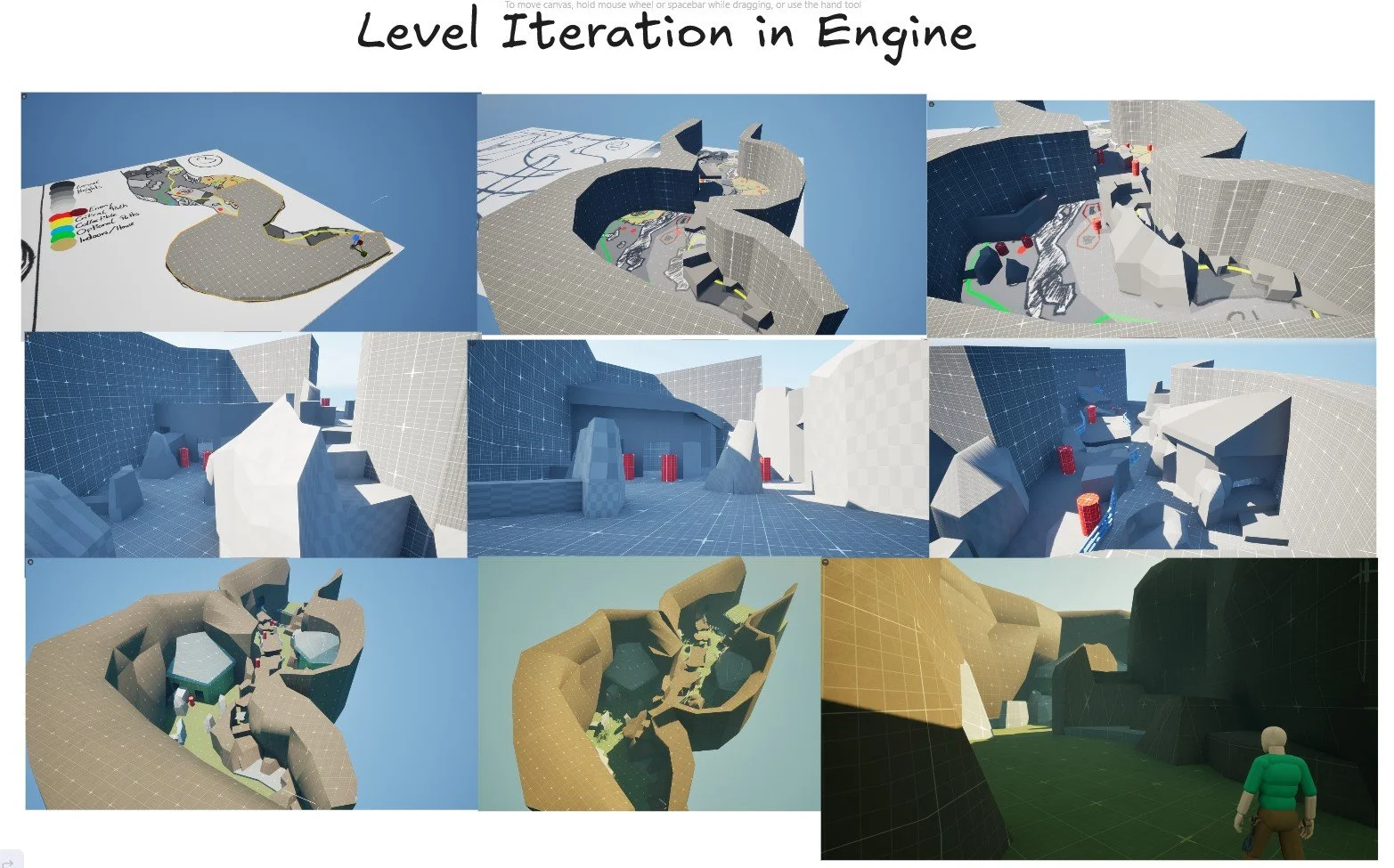
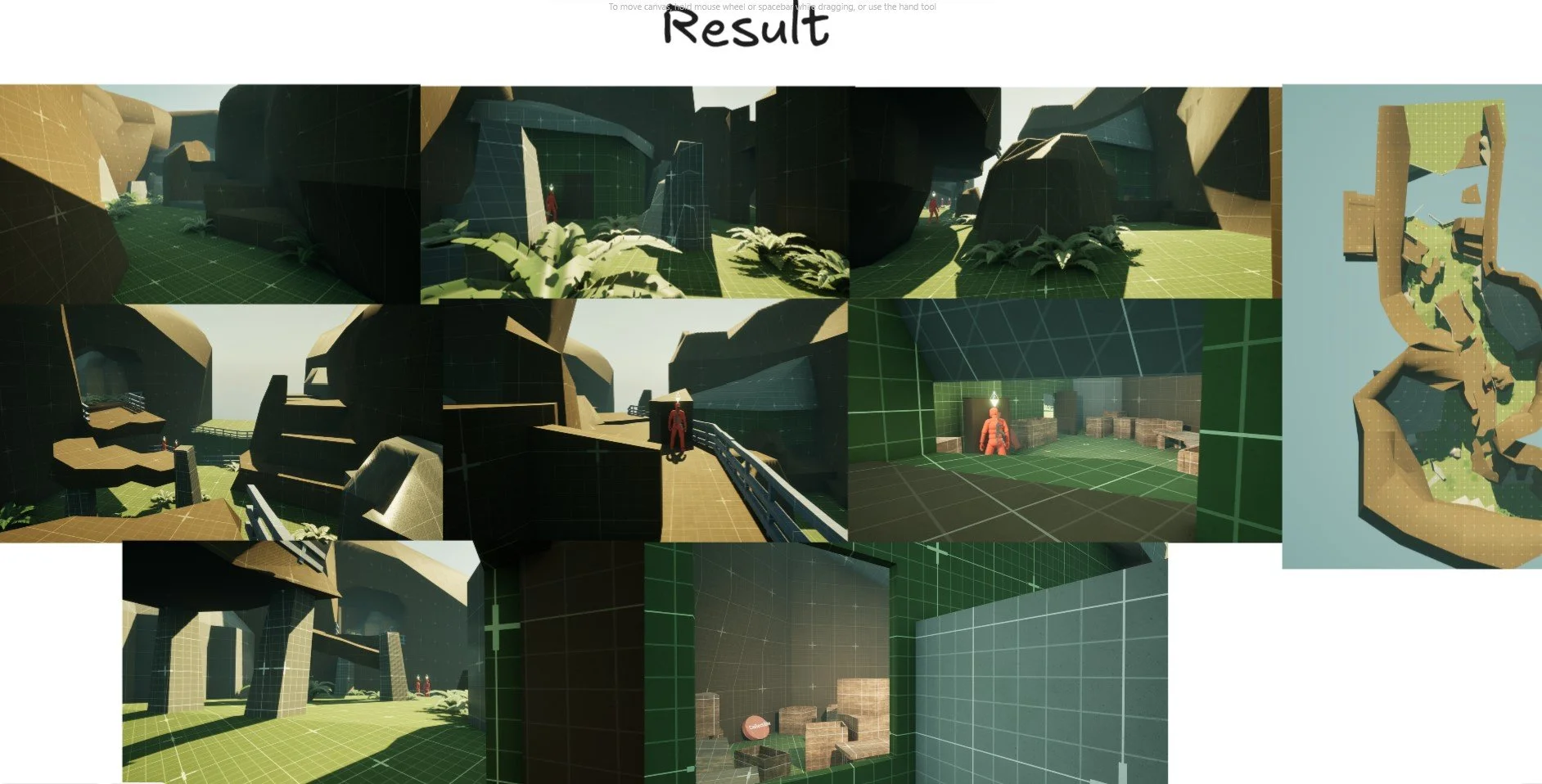
Designed a jungle path leading to a possible temple, combining exploration, combat, and collectibles.
Placed enemies strategically, encouraging careful planning and varied combat approaches.
Added environmental traversal moments, such as a dramatic one-way valve jump, to create memorable gameplay moments.
Integrated two distinct routes, one offering vantage points with parkour challenges, the other emphasizing tactical movement.
Included collectibles inside buildings, rewarding players who explore and sneak through structures.
Balanced exploration, verticality, and tactical choice, allowing players multiple ways to navigate and engage with the level.
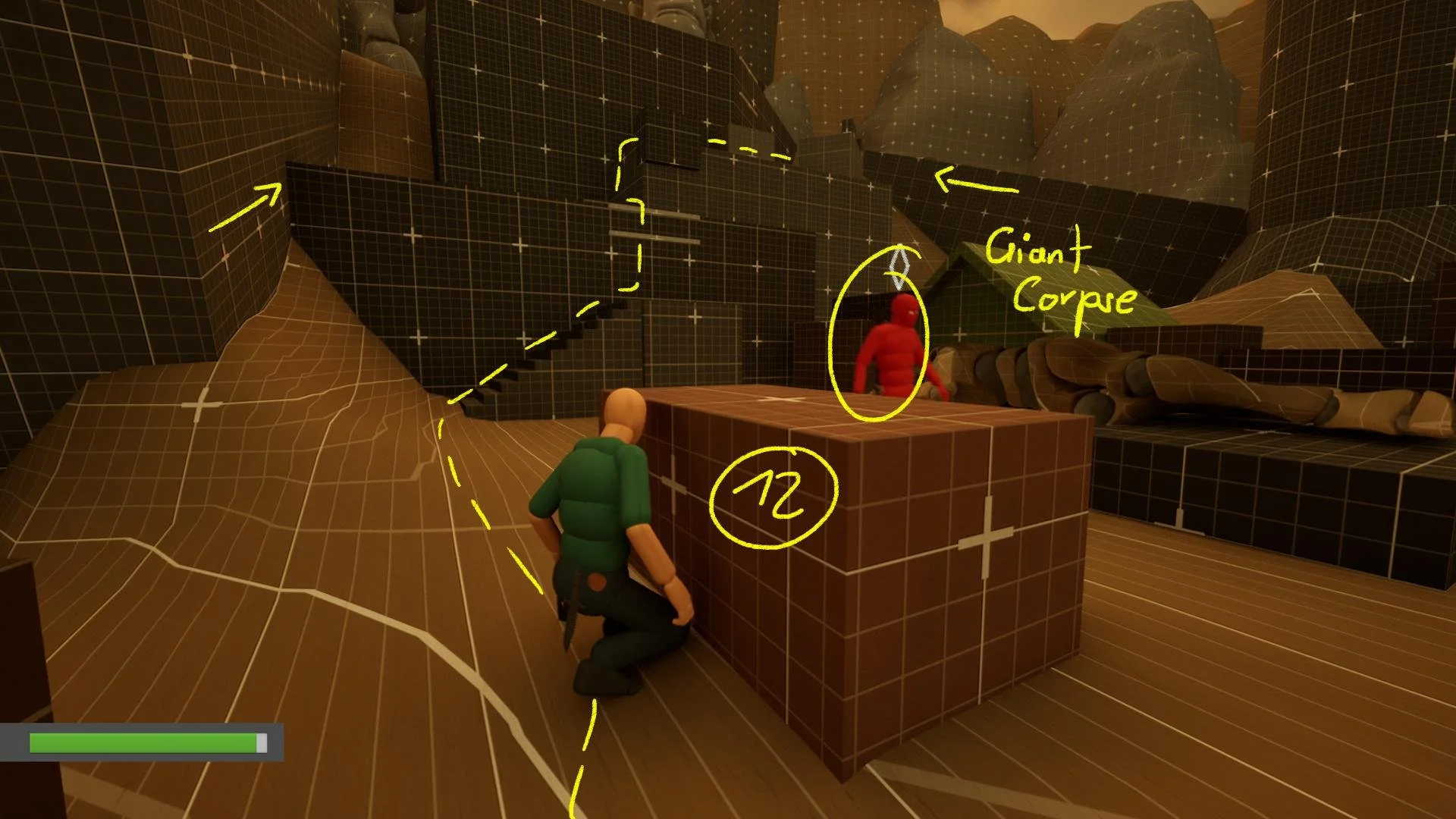
#19: Day 29: Temple of the Sun Giants
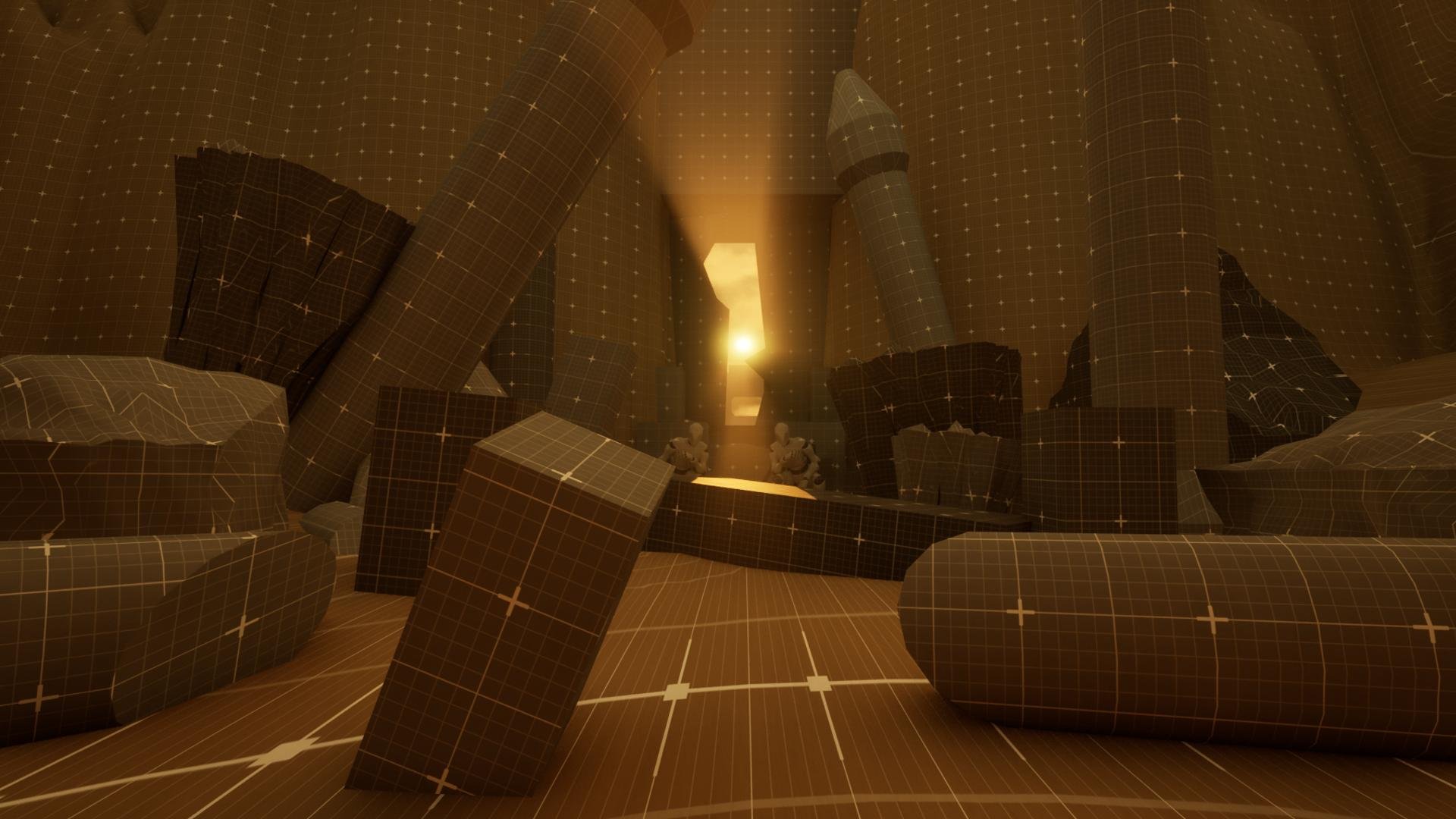
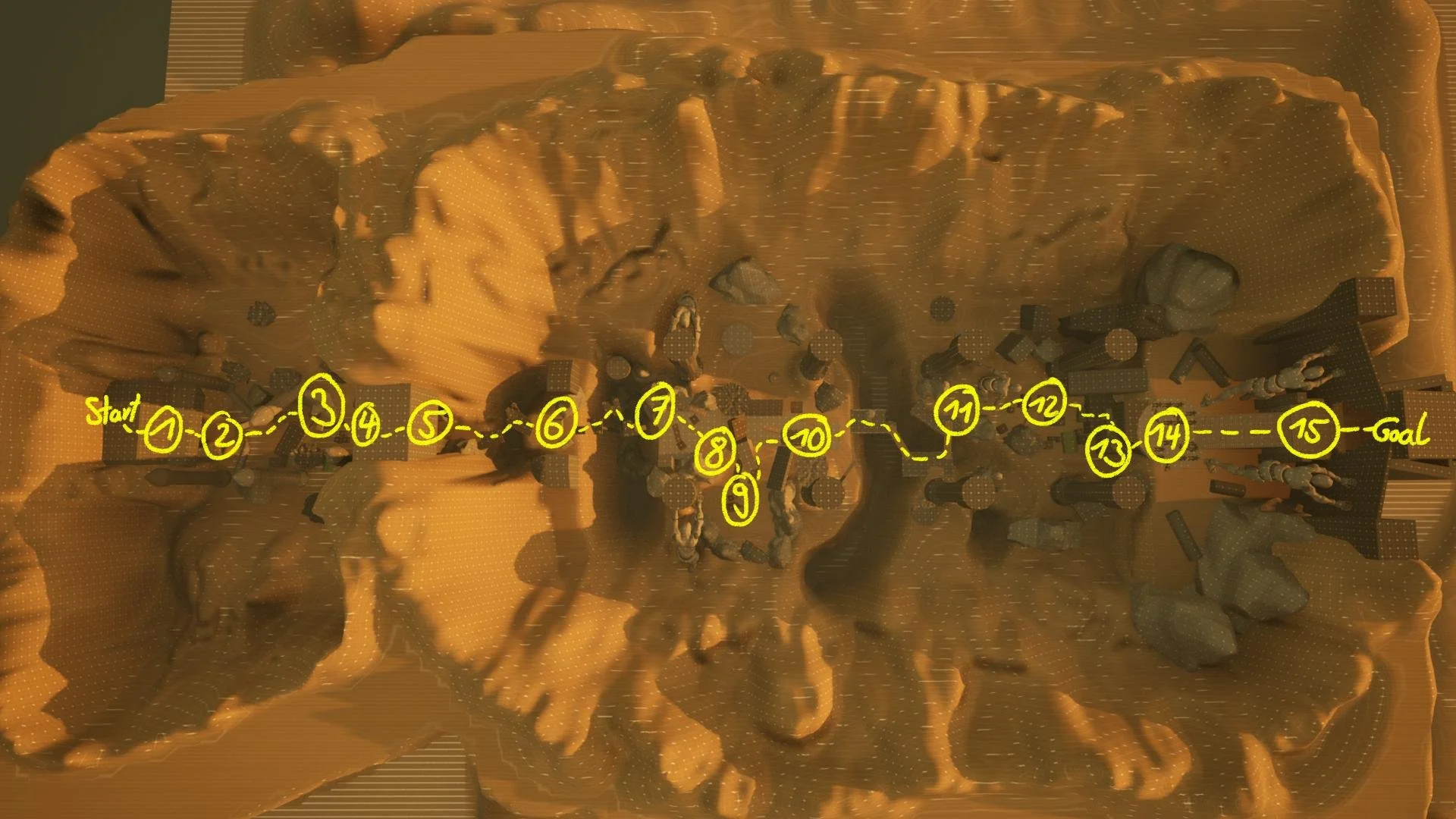
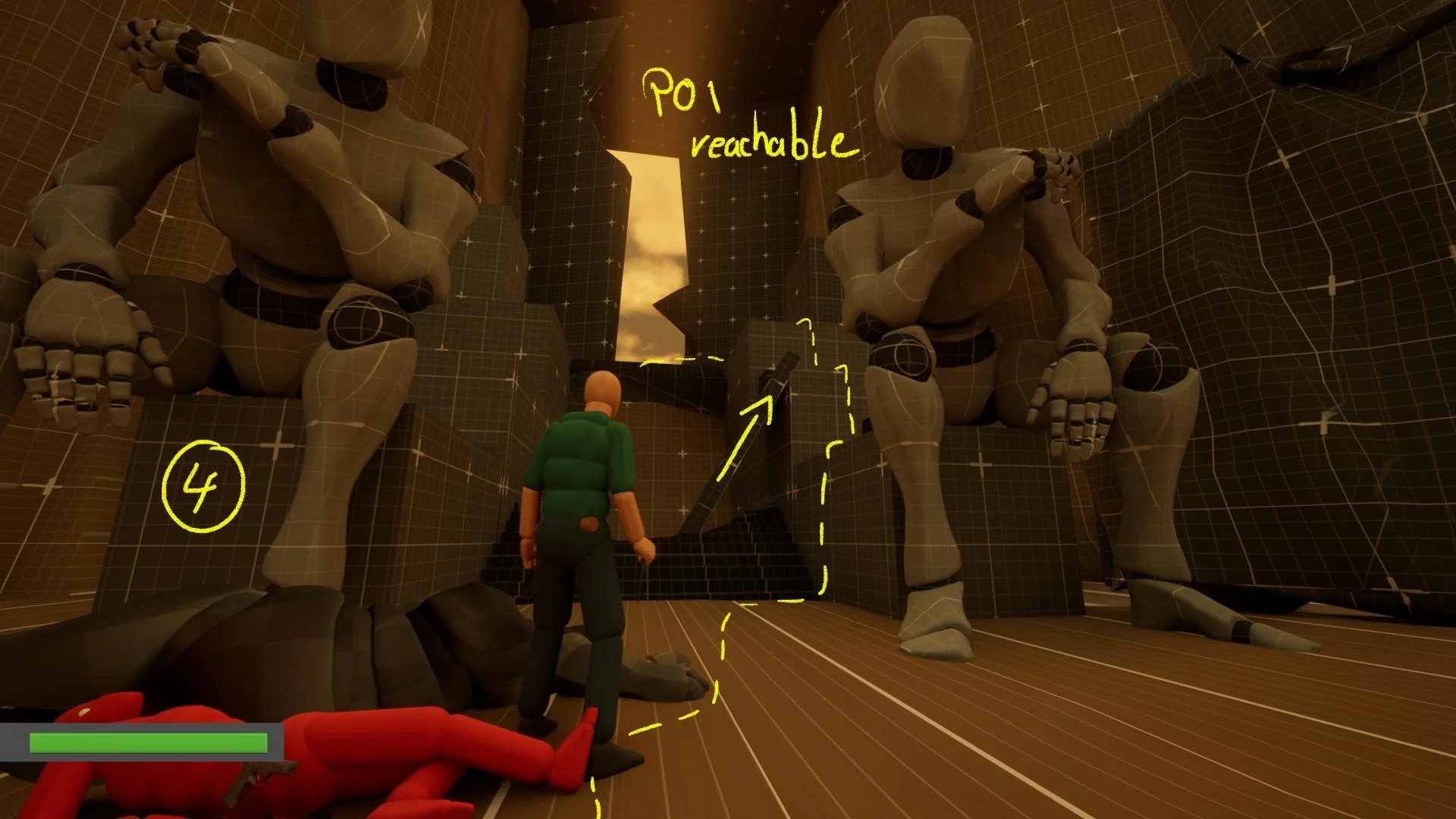
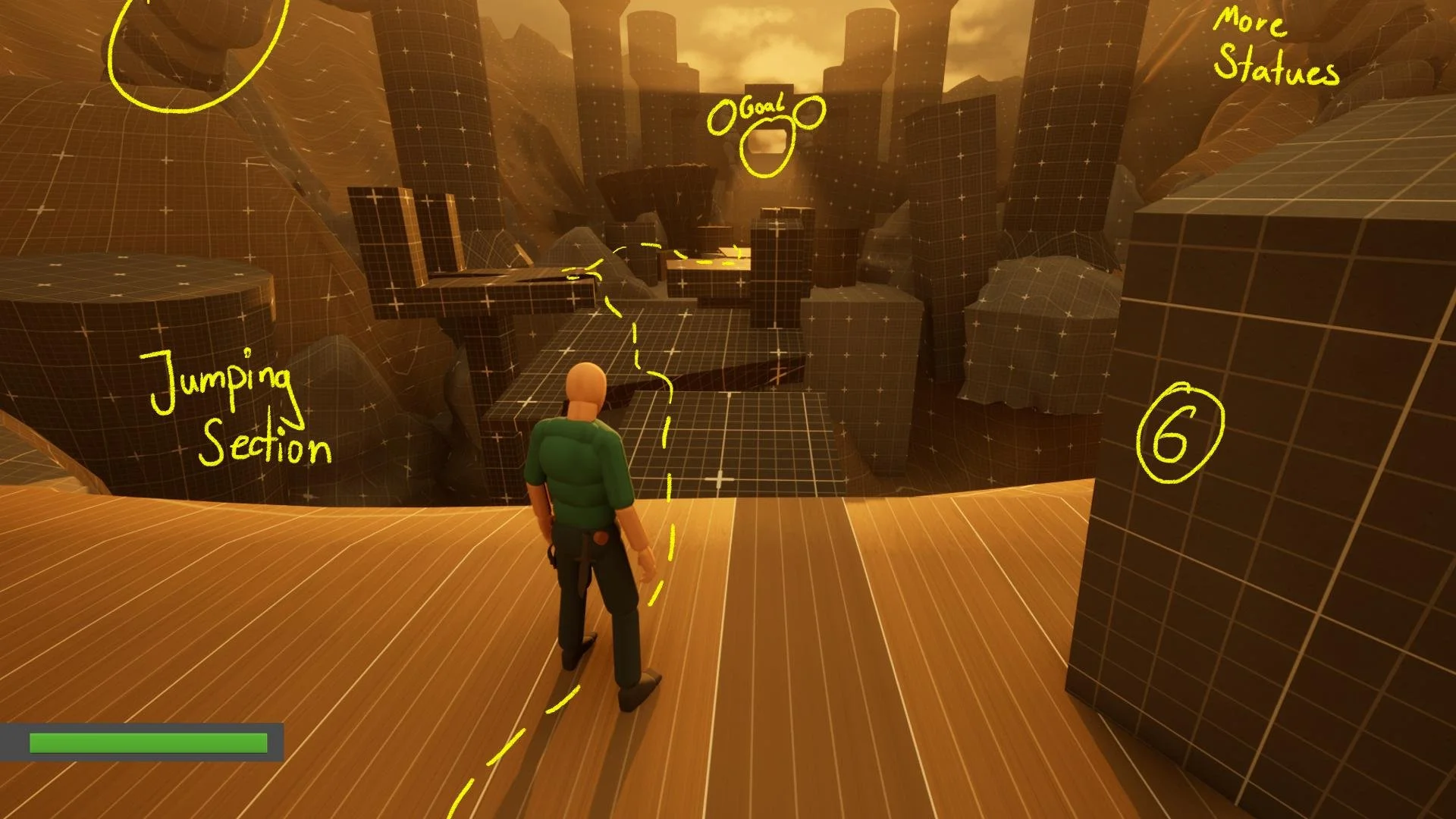
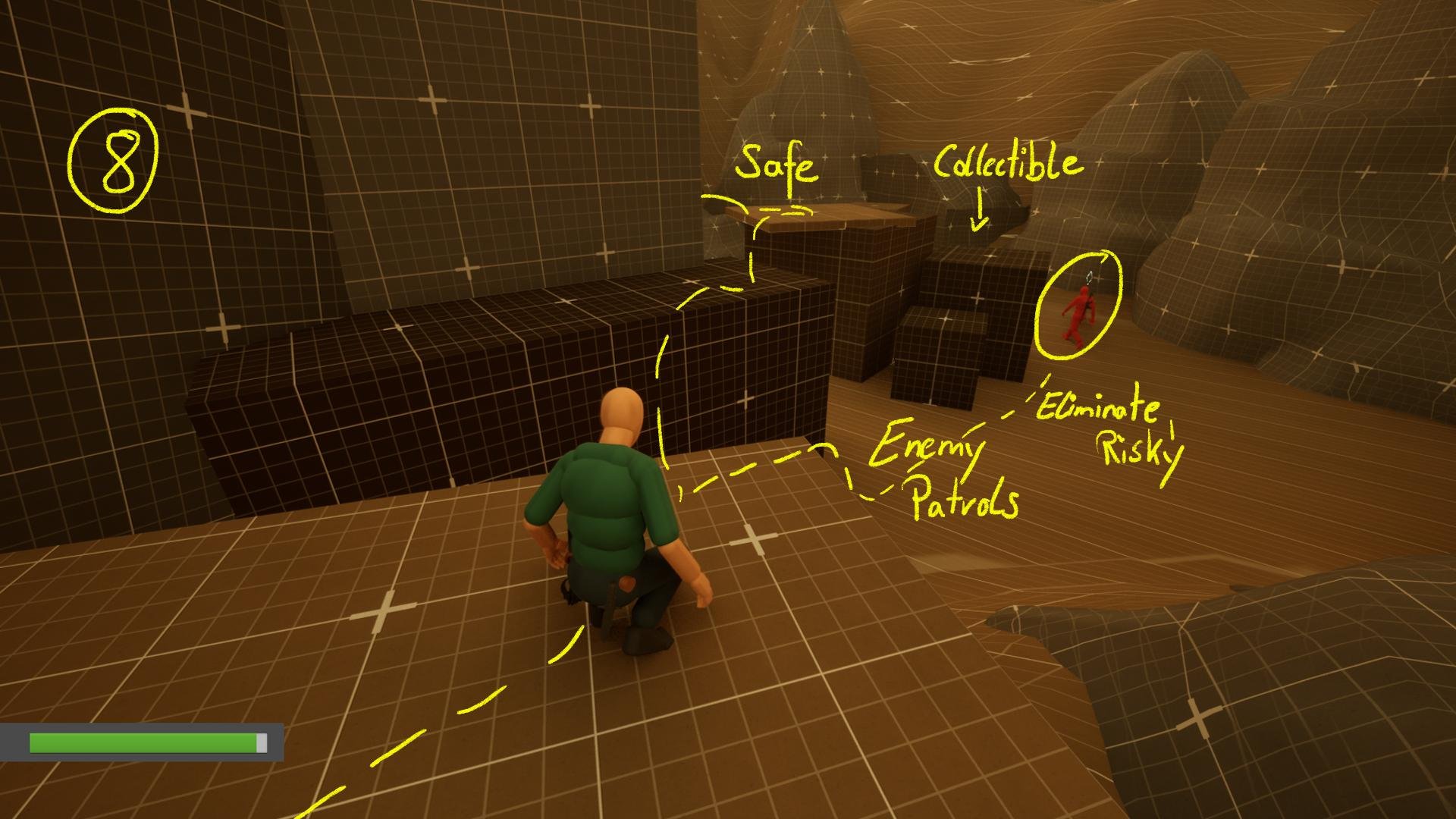
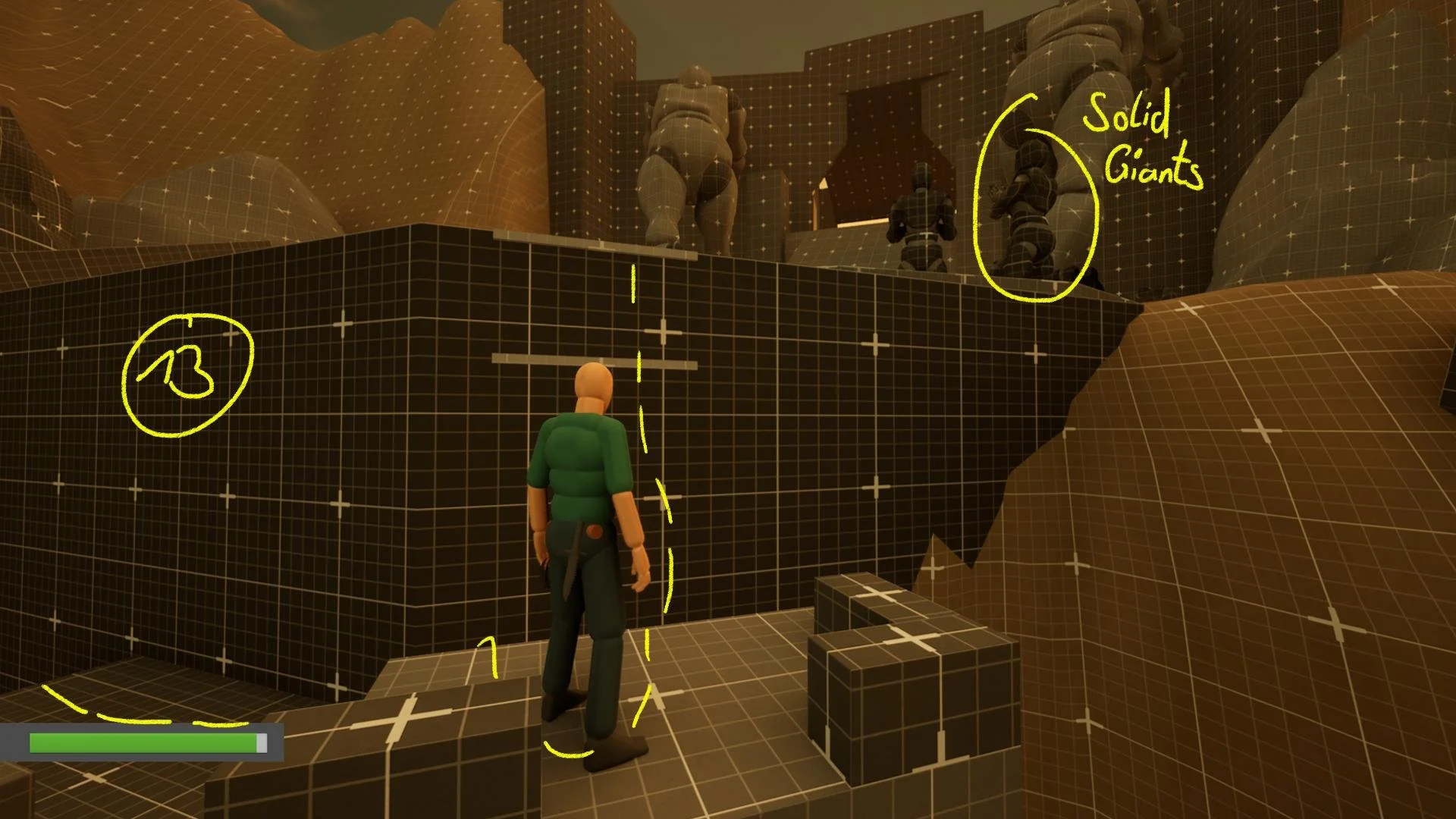
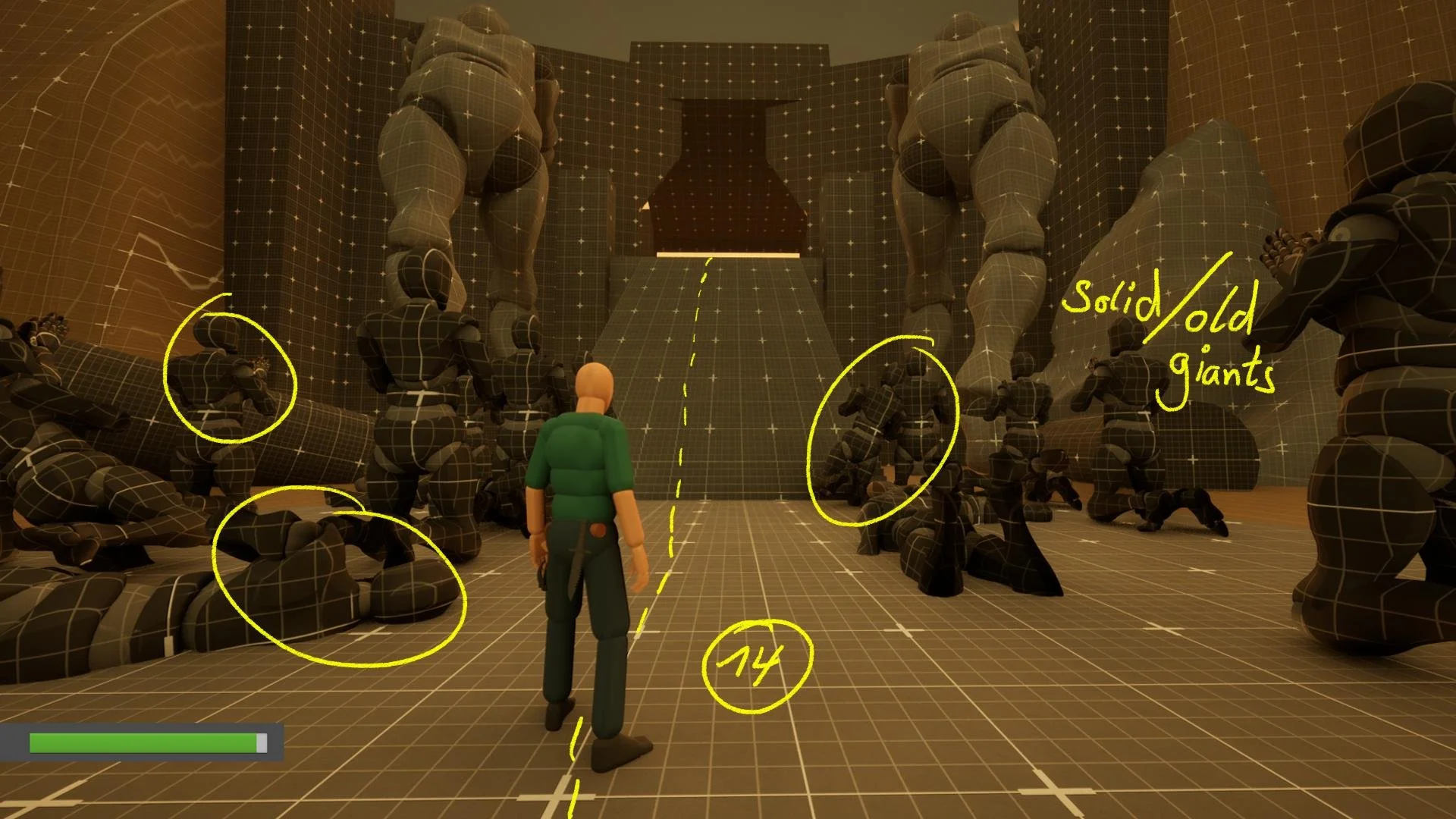
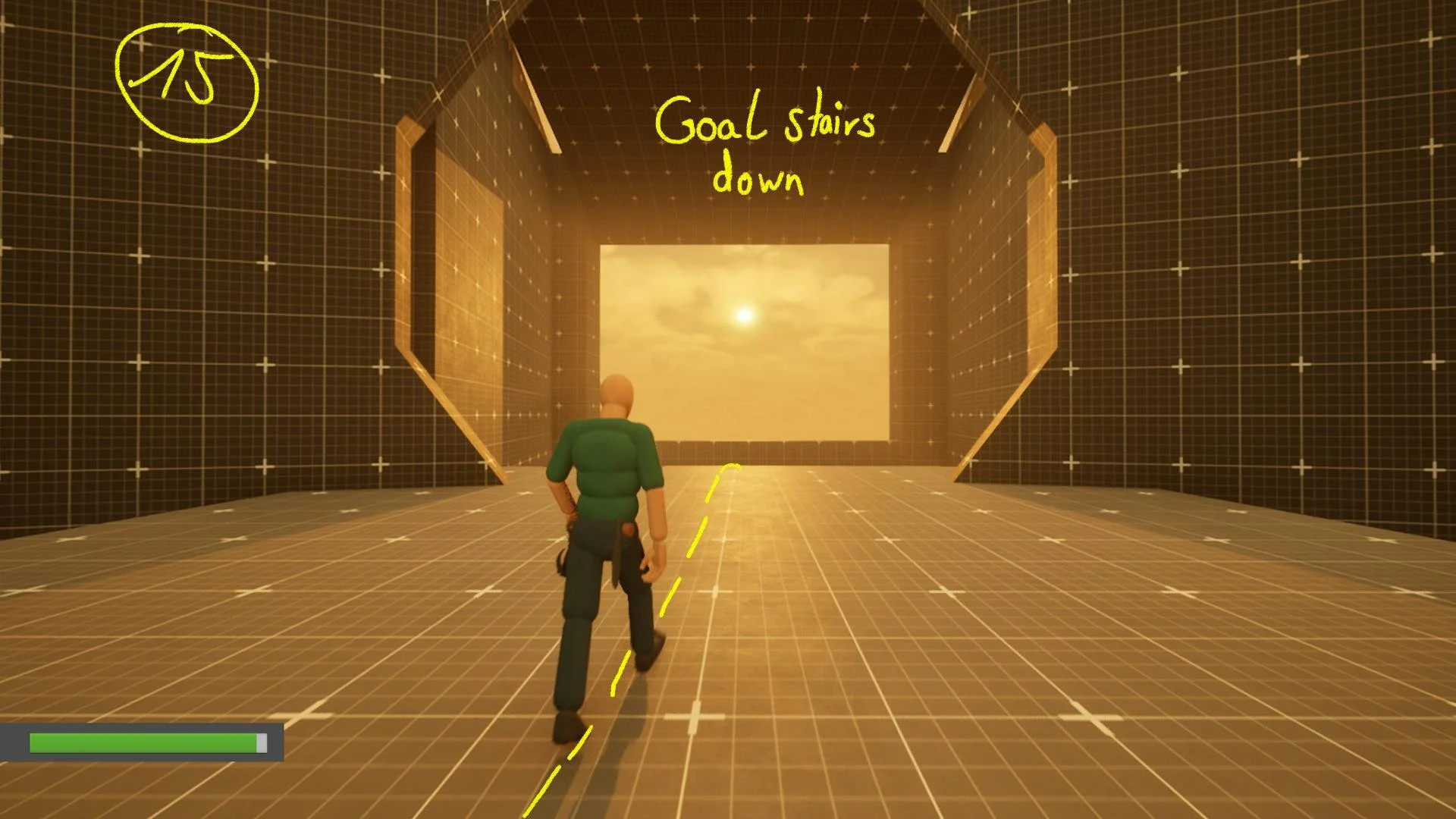
Designed a linear mountain desert level set in an ancient temple of the Sun Giants, combining environmental storytelling and exploration.
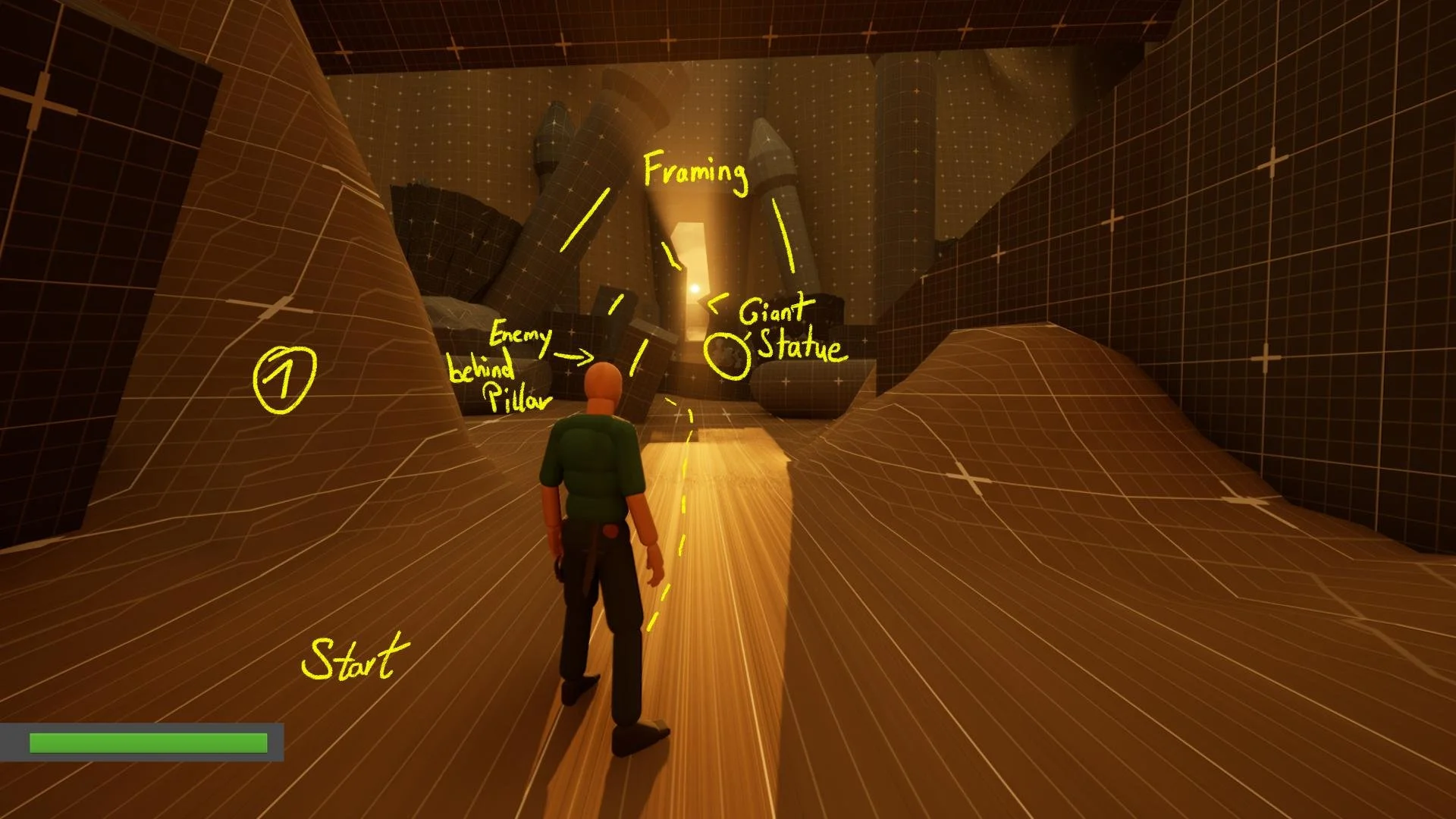
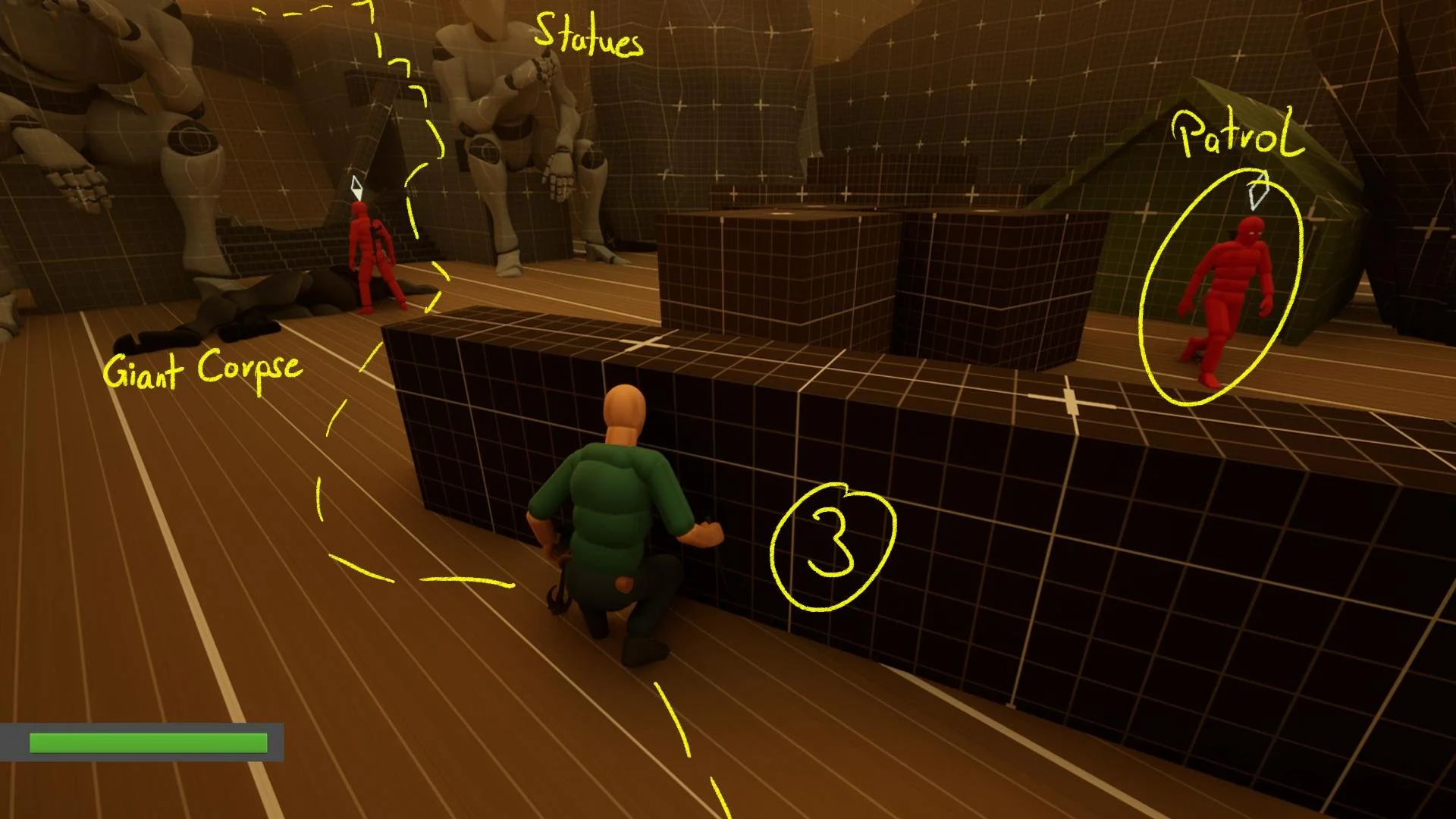
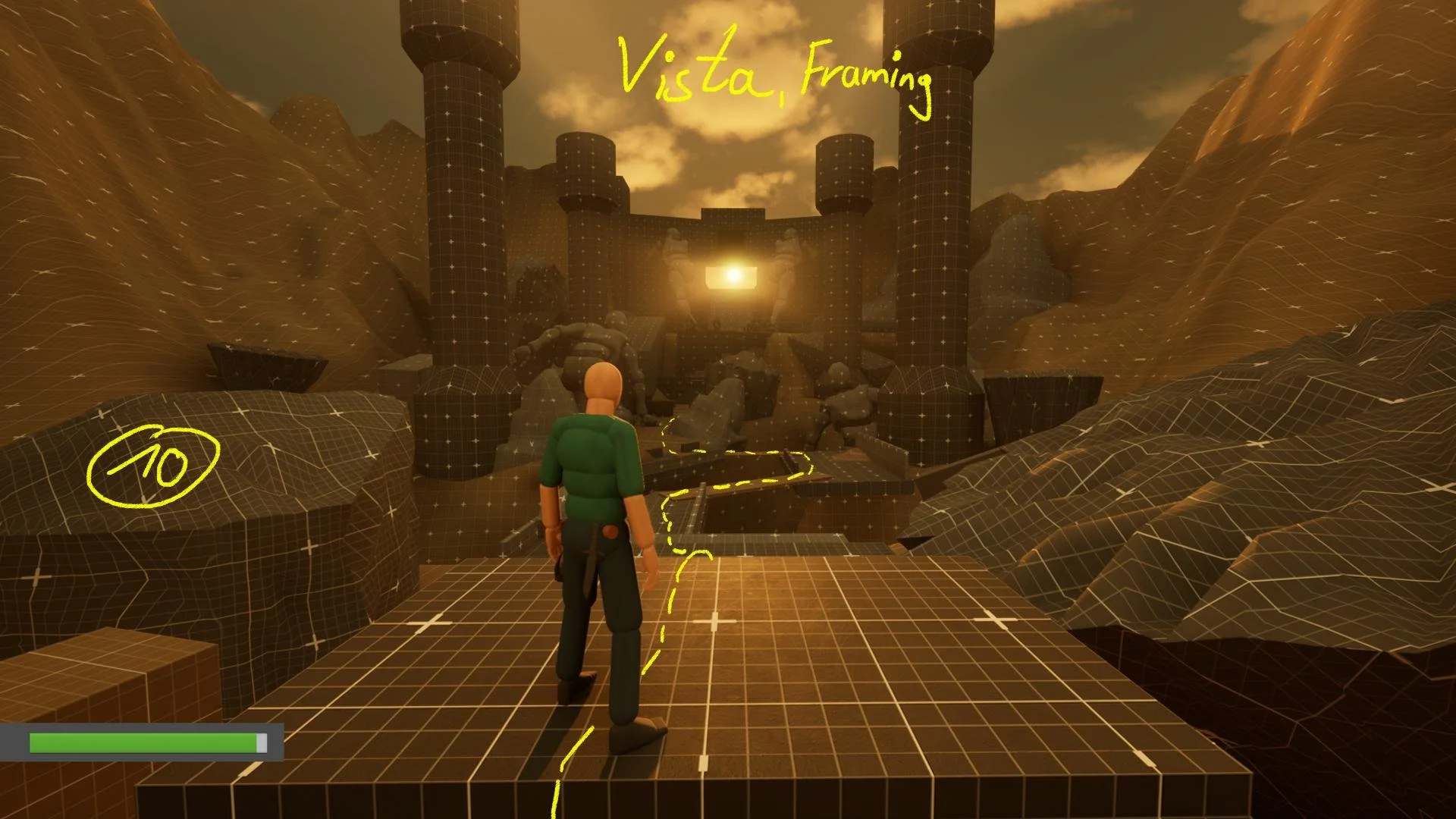
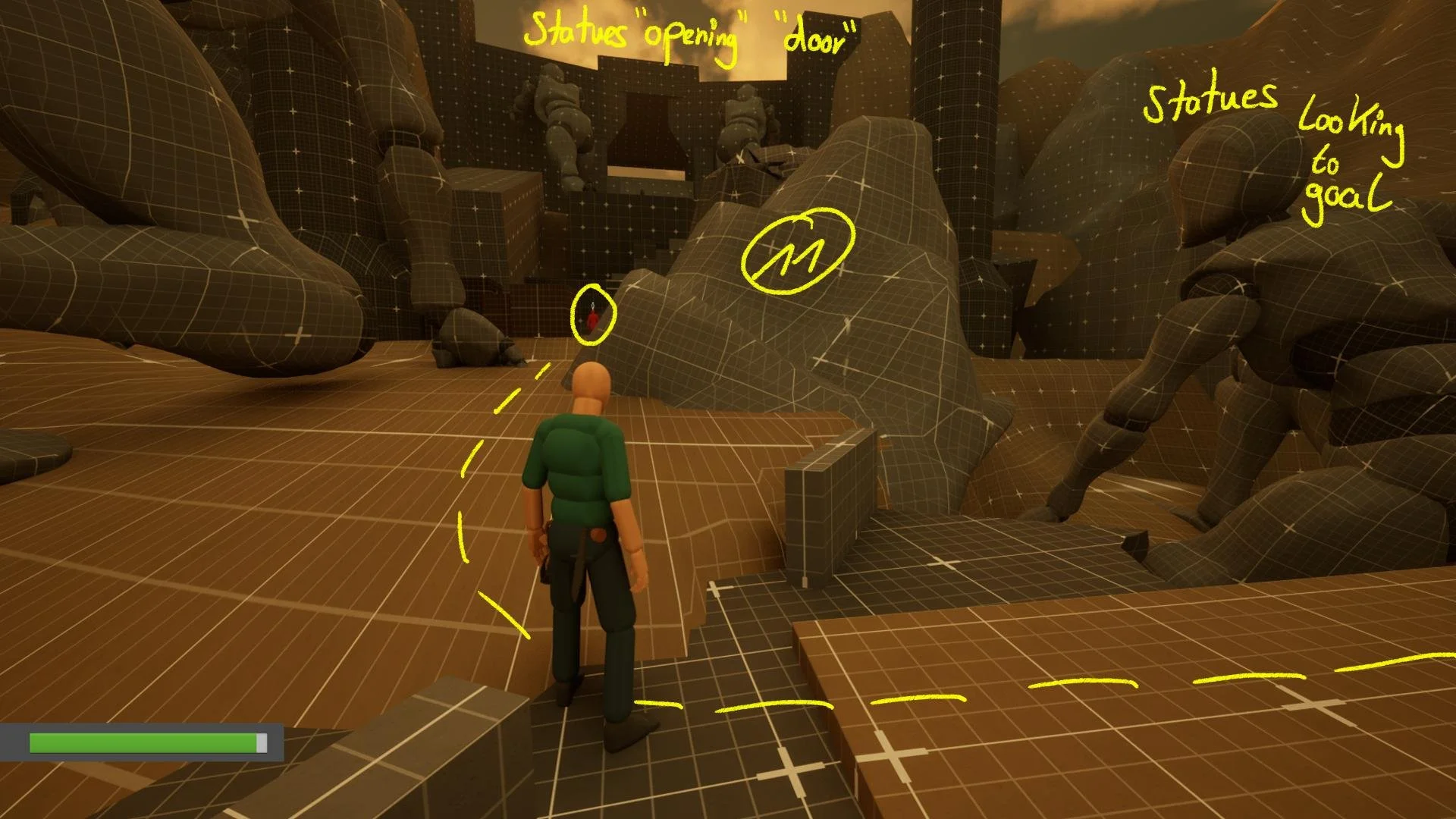
Filled the level with petrified giant statues, frozen mid-prayer, serving as both visual storytelling elements and navigational landmarks.
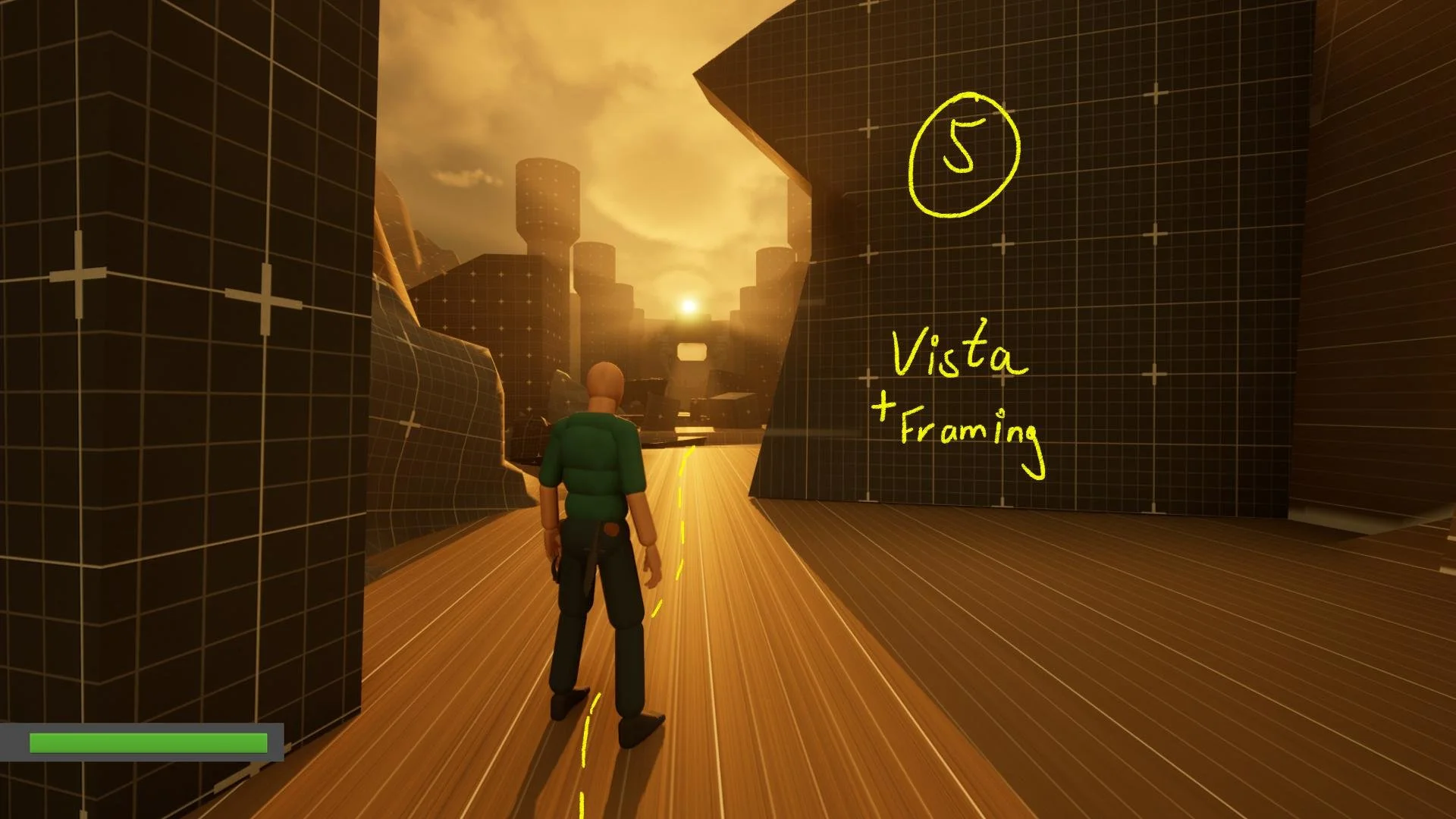
Emphasized open, vast spaces to highlight scale, atmosphere, and player immersion in the sunlit temple environment.
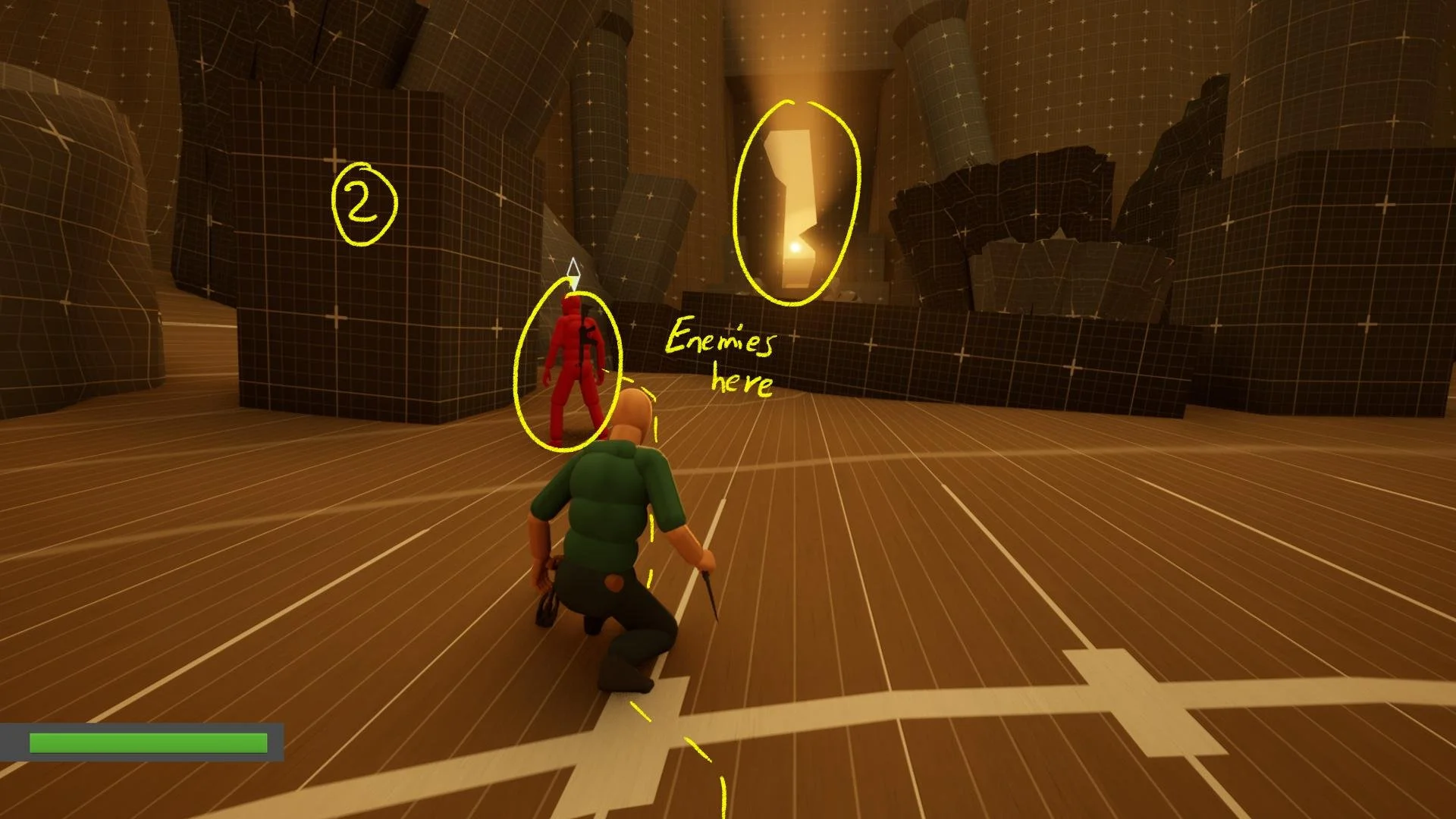
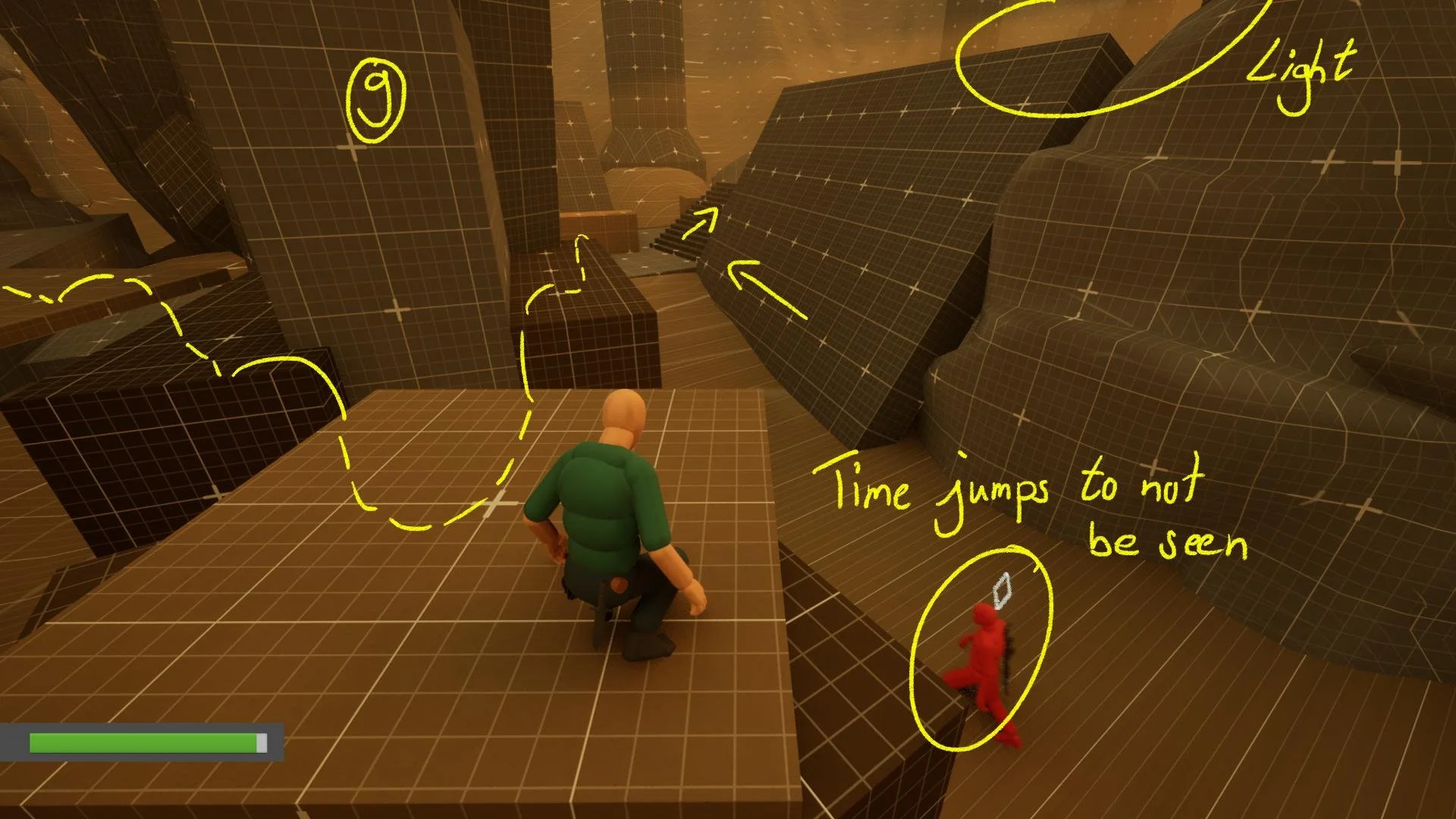
Focused on lighting as gameplay guidance, using shadow and gold-toned sunlight to lead players through the space naturally.
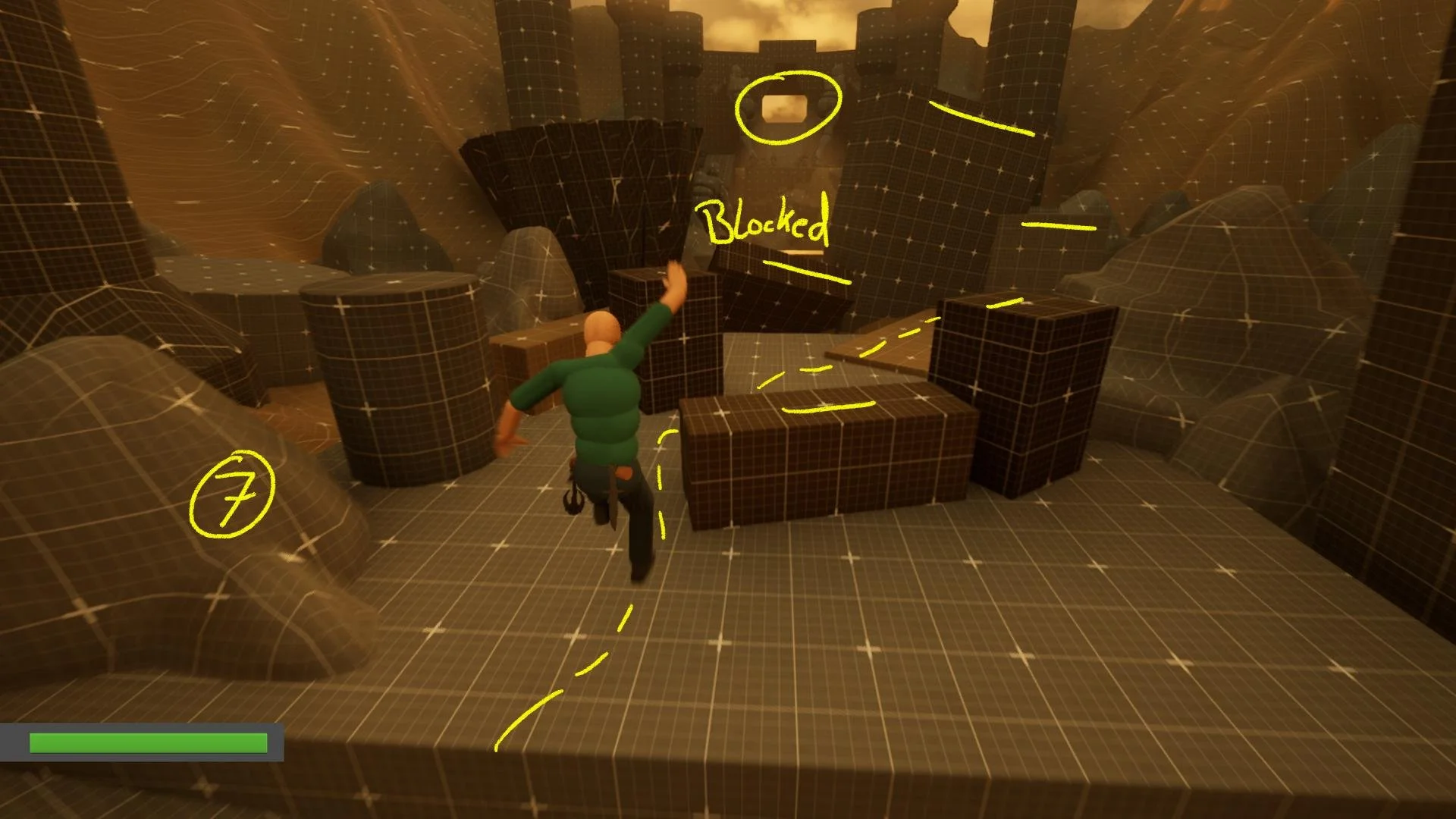
Introduced raider camps, requiring players to weave through obstacles and environmental hazards while exploring the ruins.
Balanced environmental eye candy with gameplay flow, creating a visually striking experience that guides and rewards exploration.
#20: Day 13: Tri Path Arena (Multiplayer)
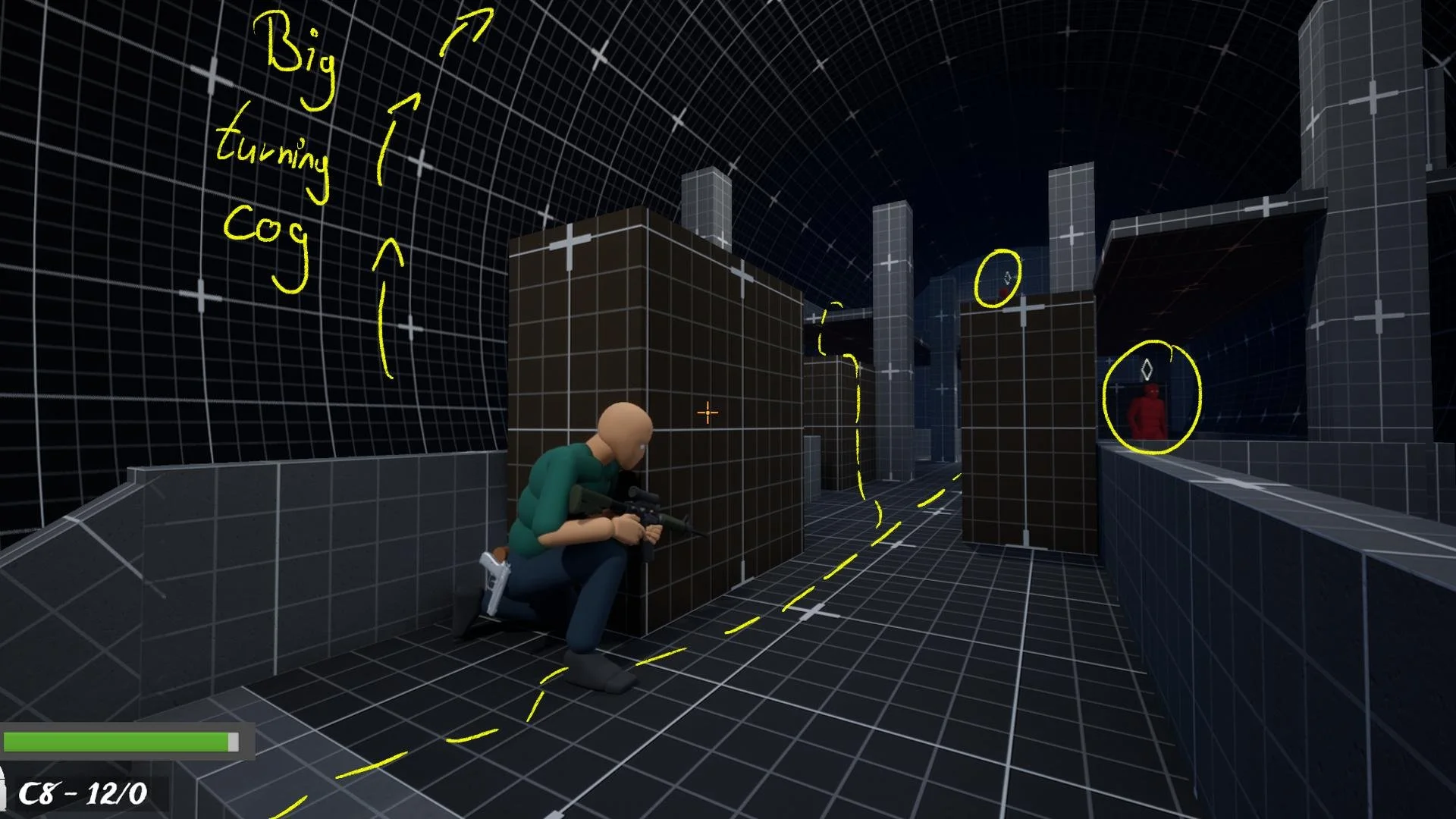
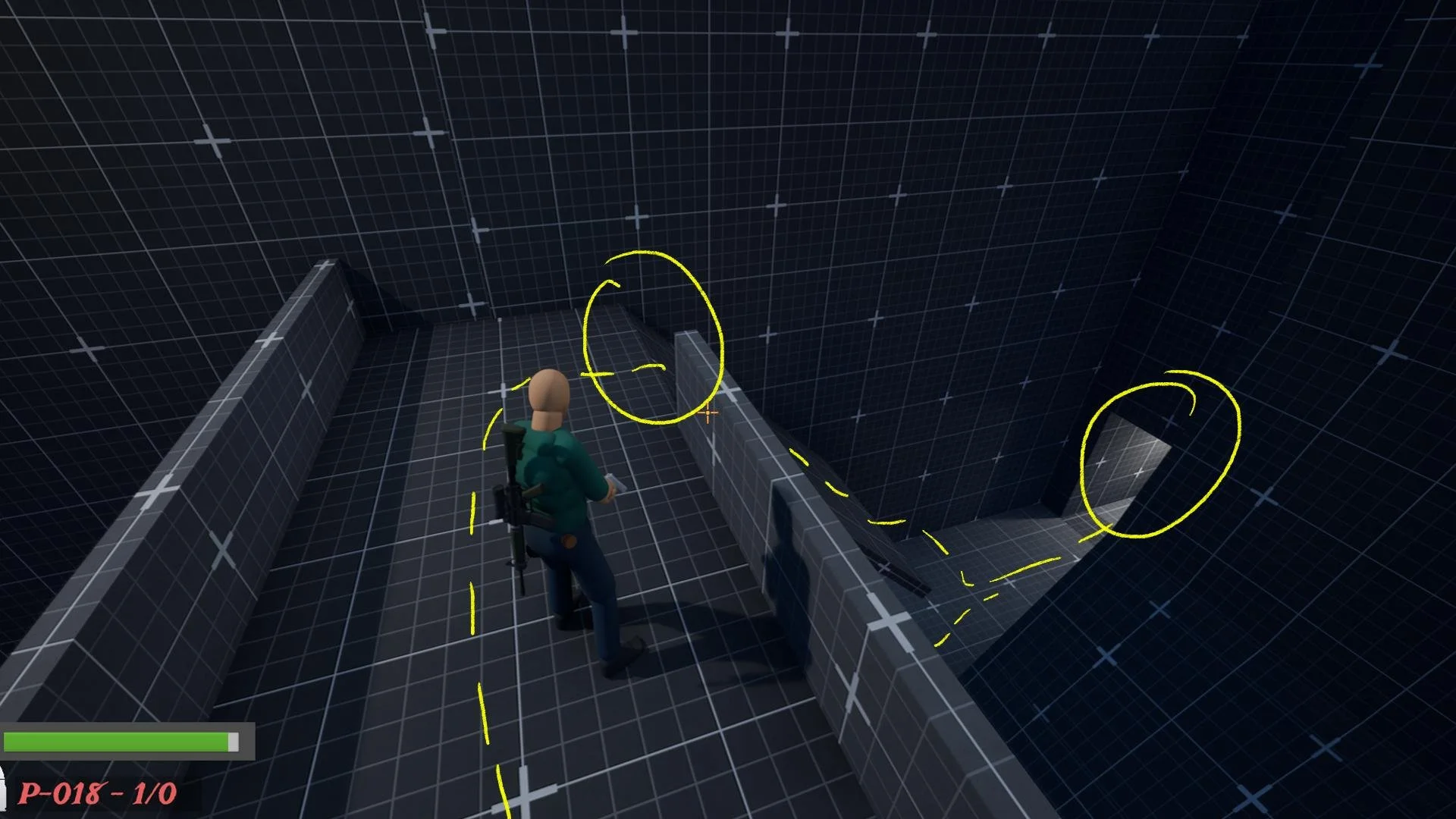
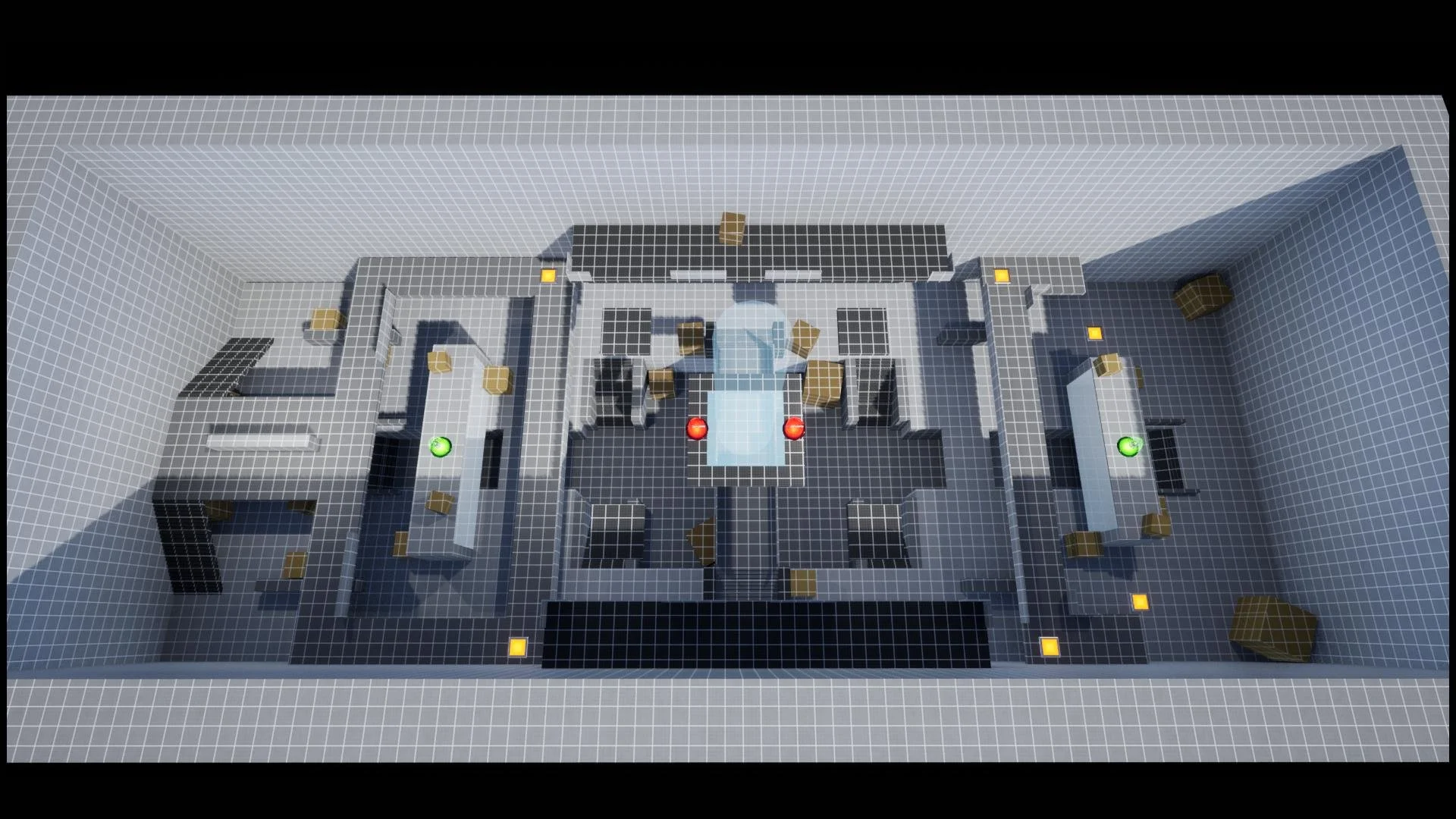
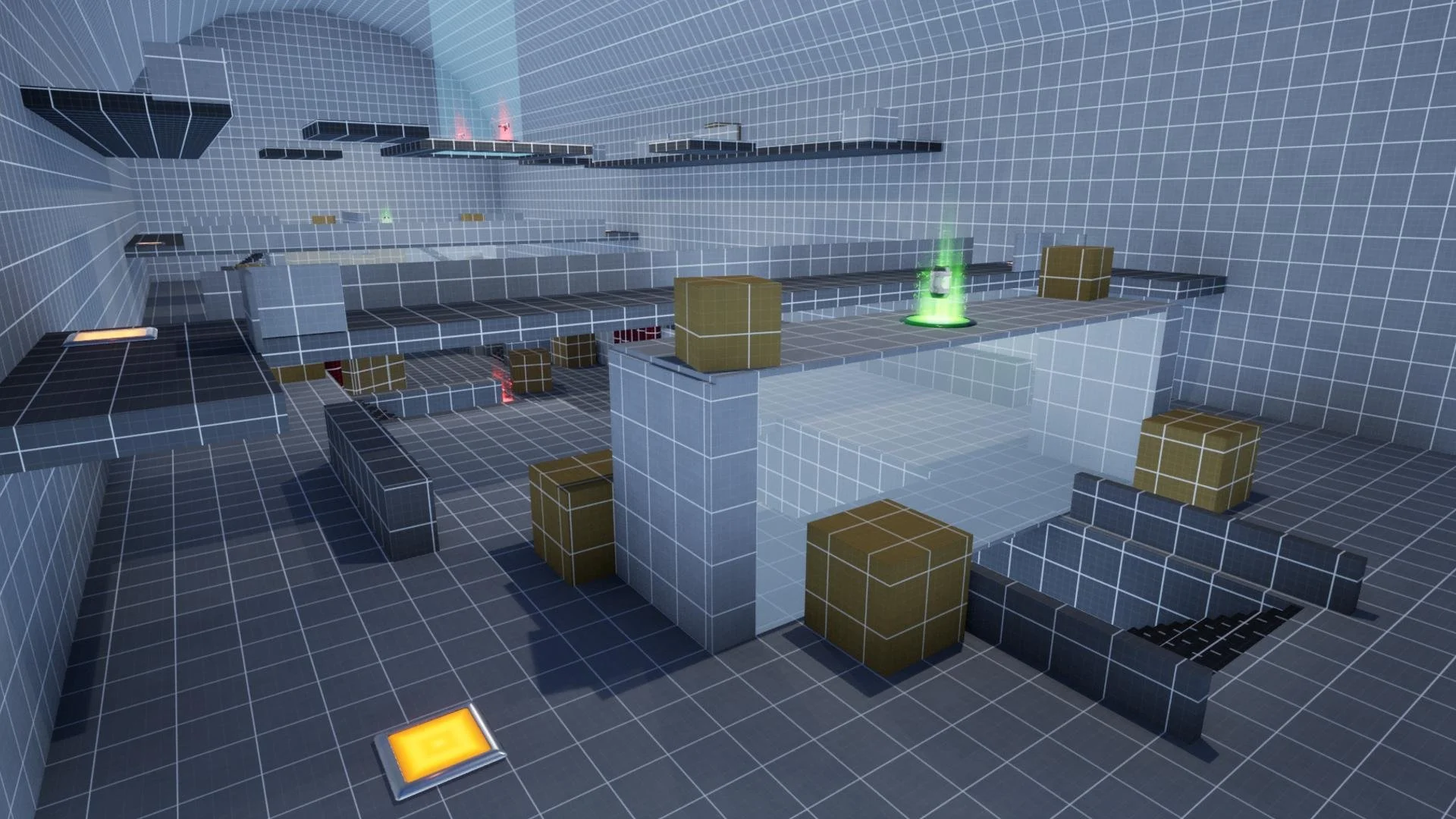
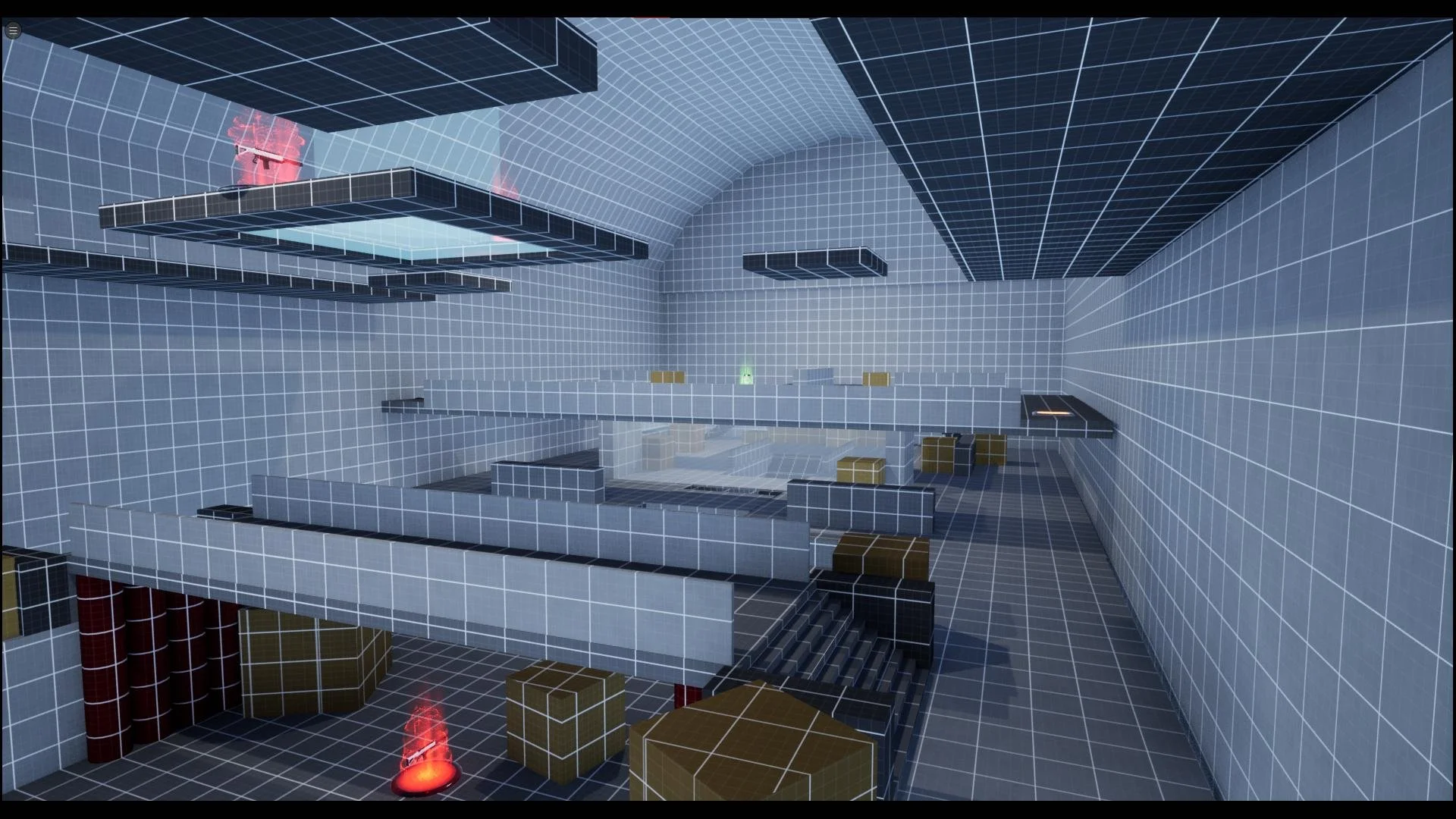
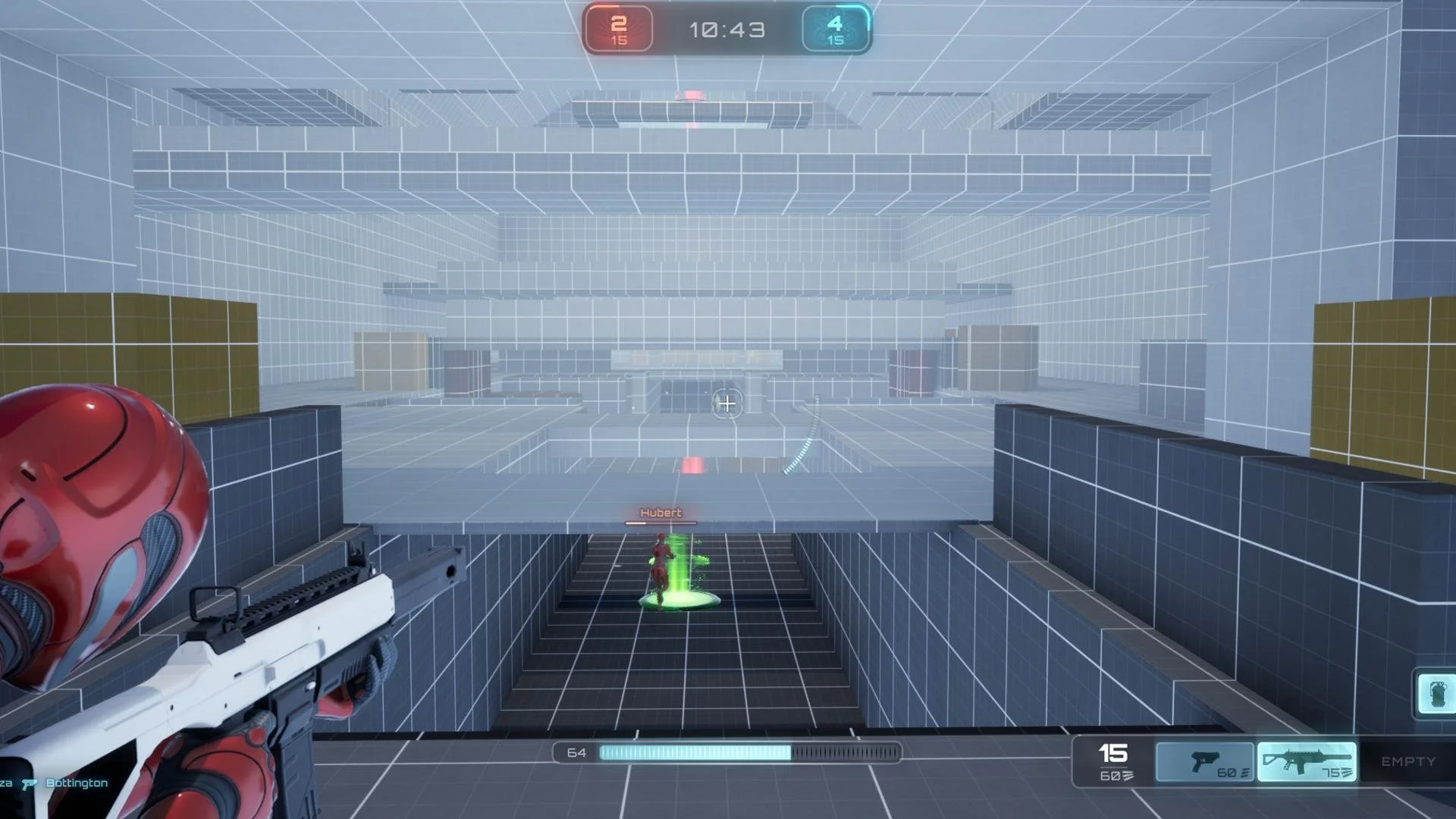
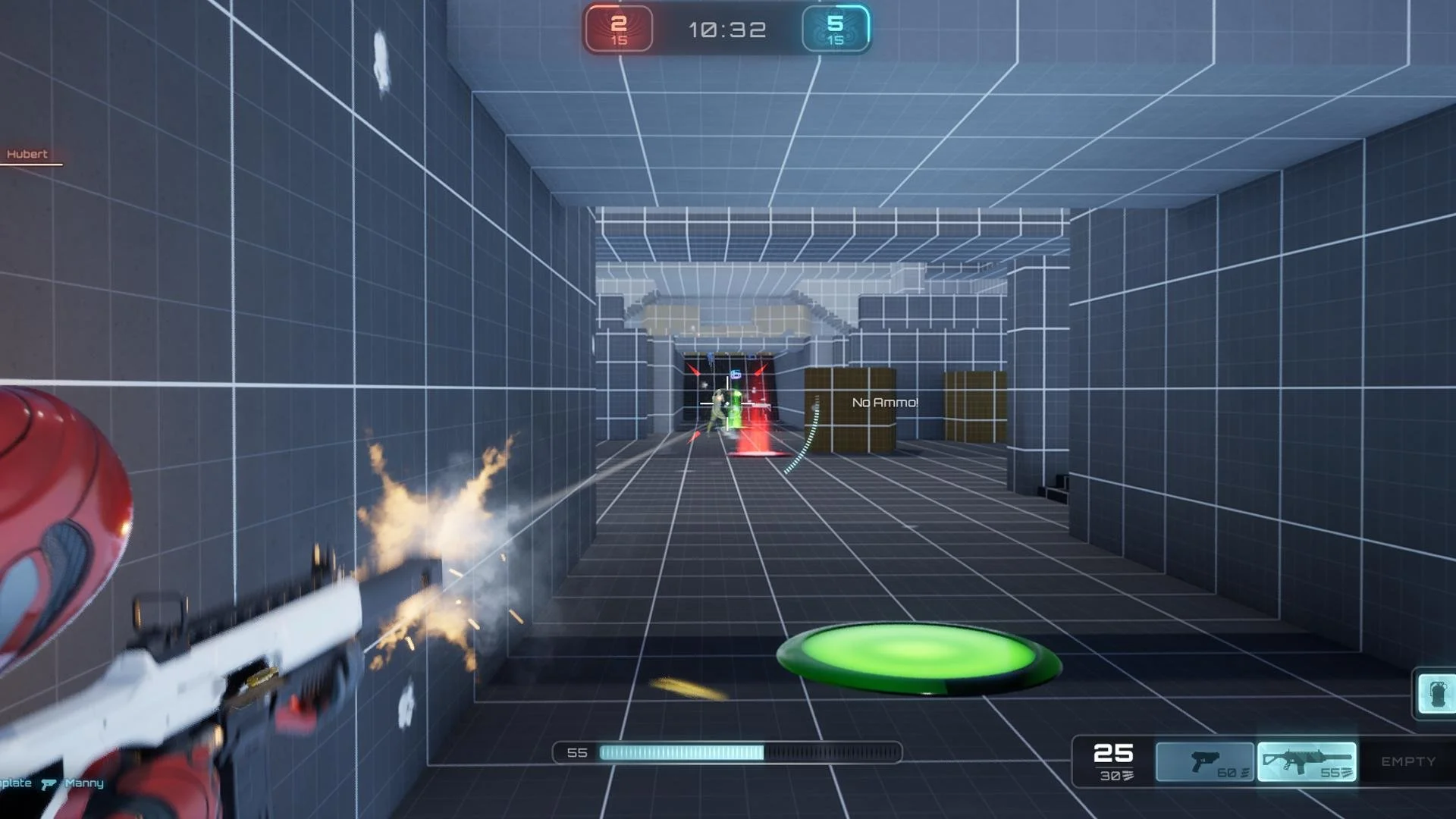
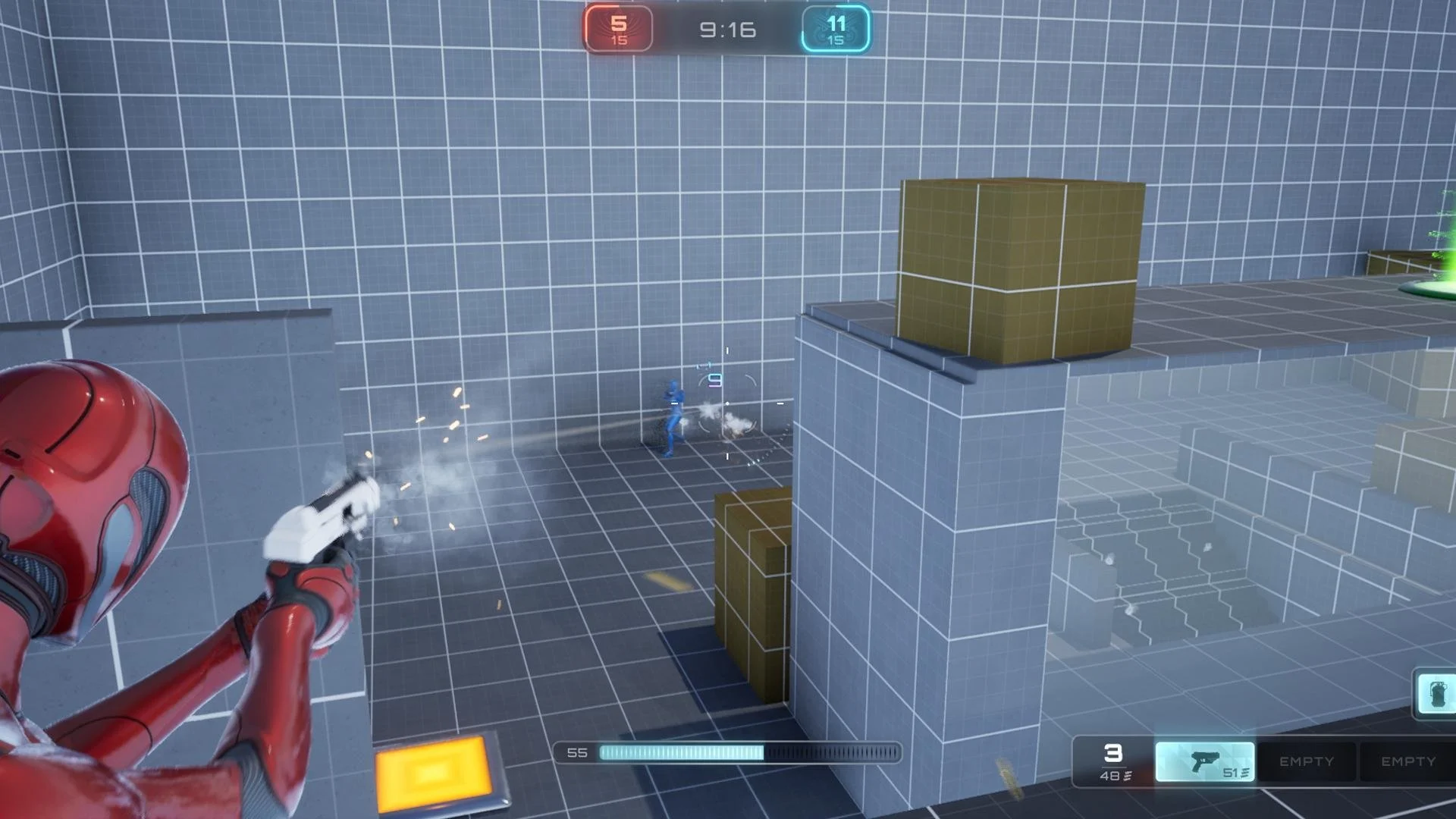
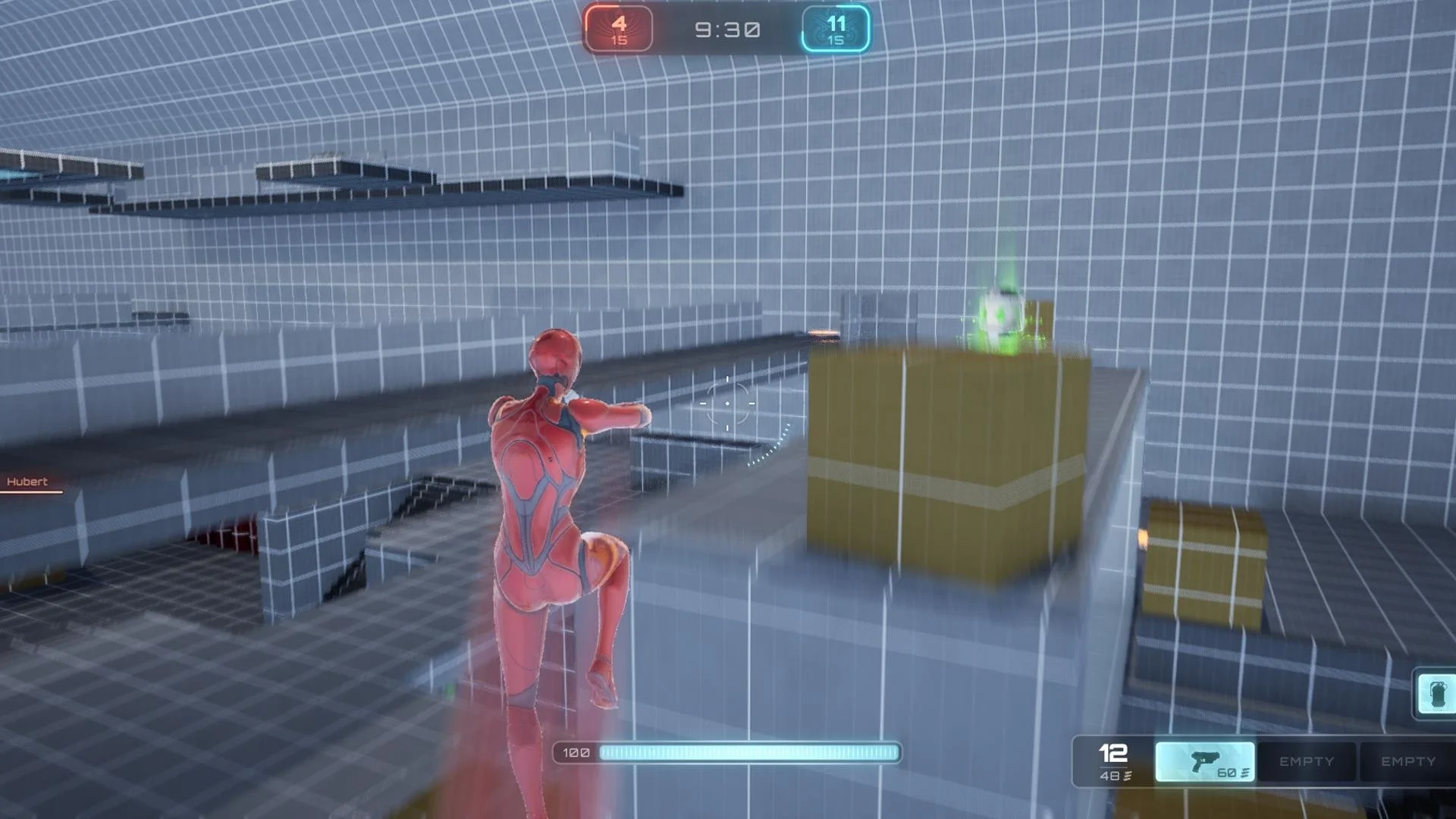
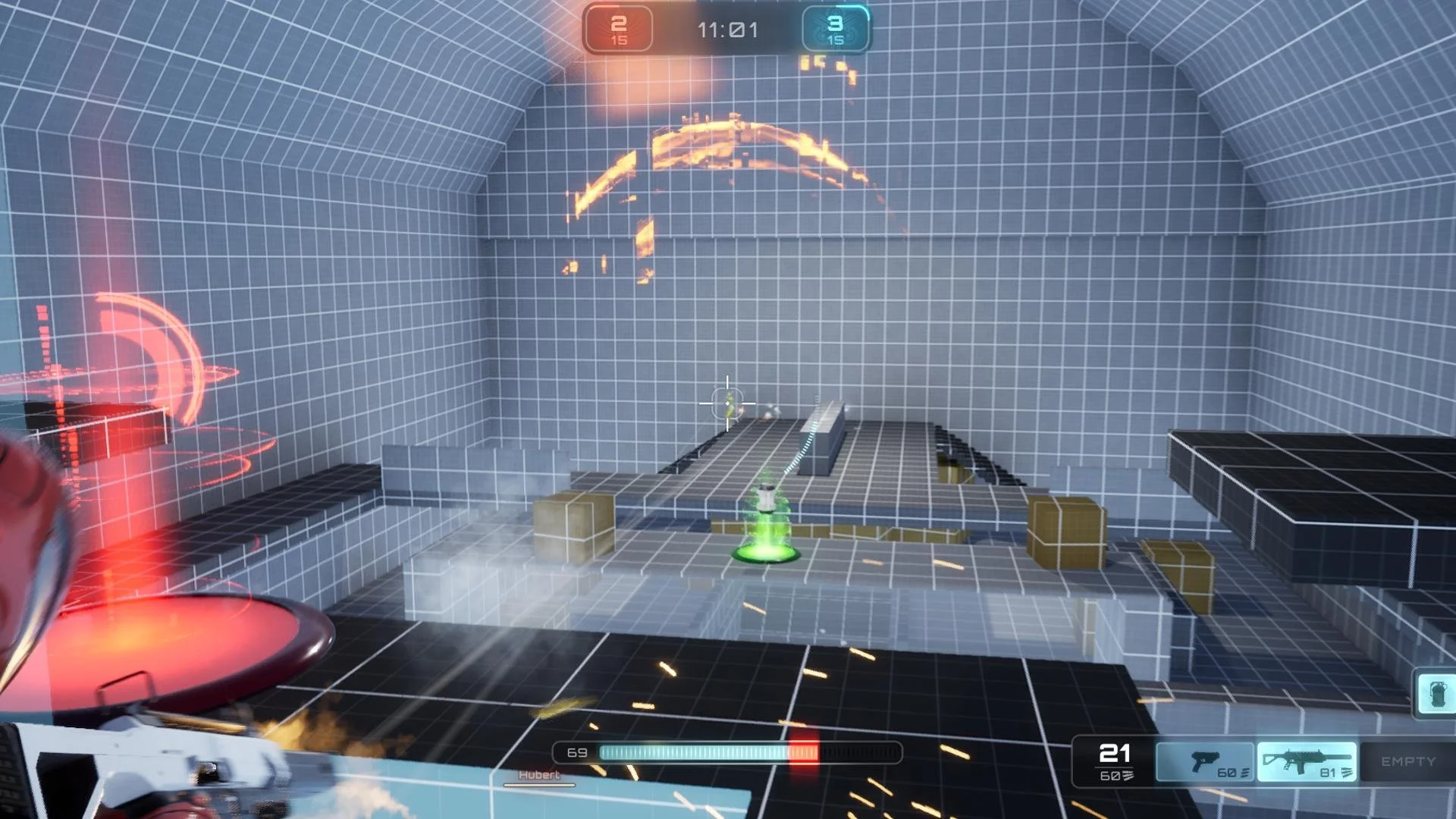
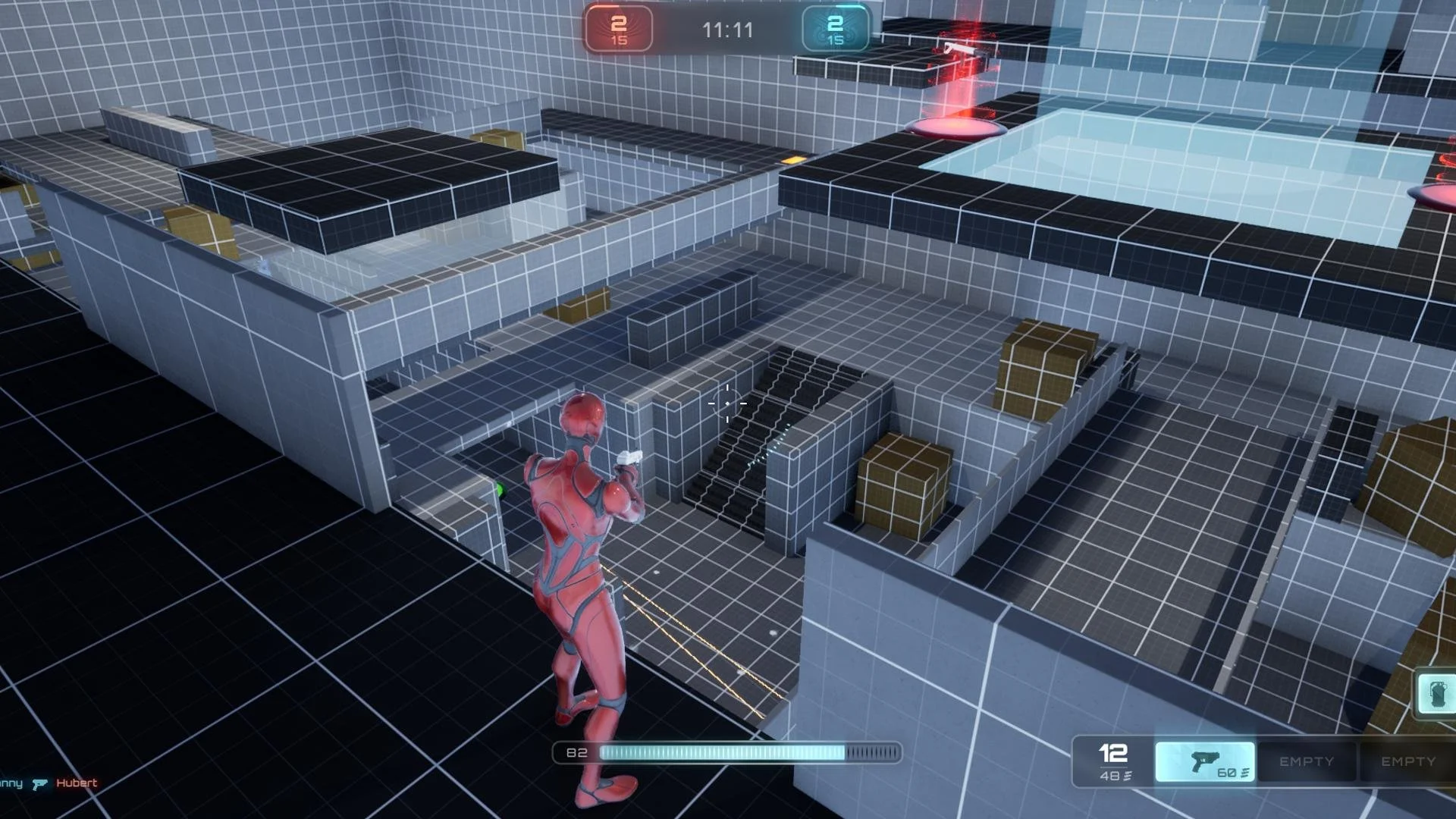
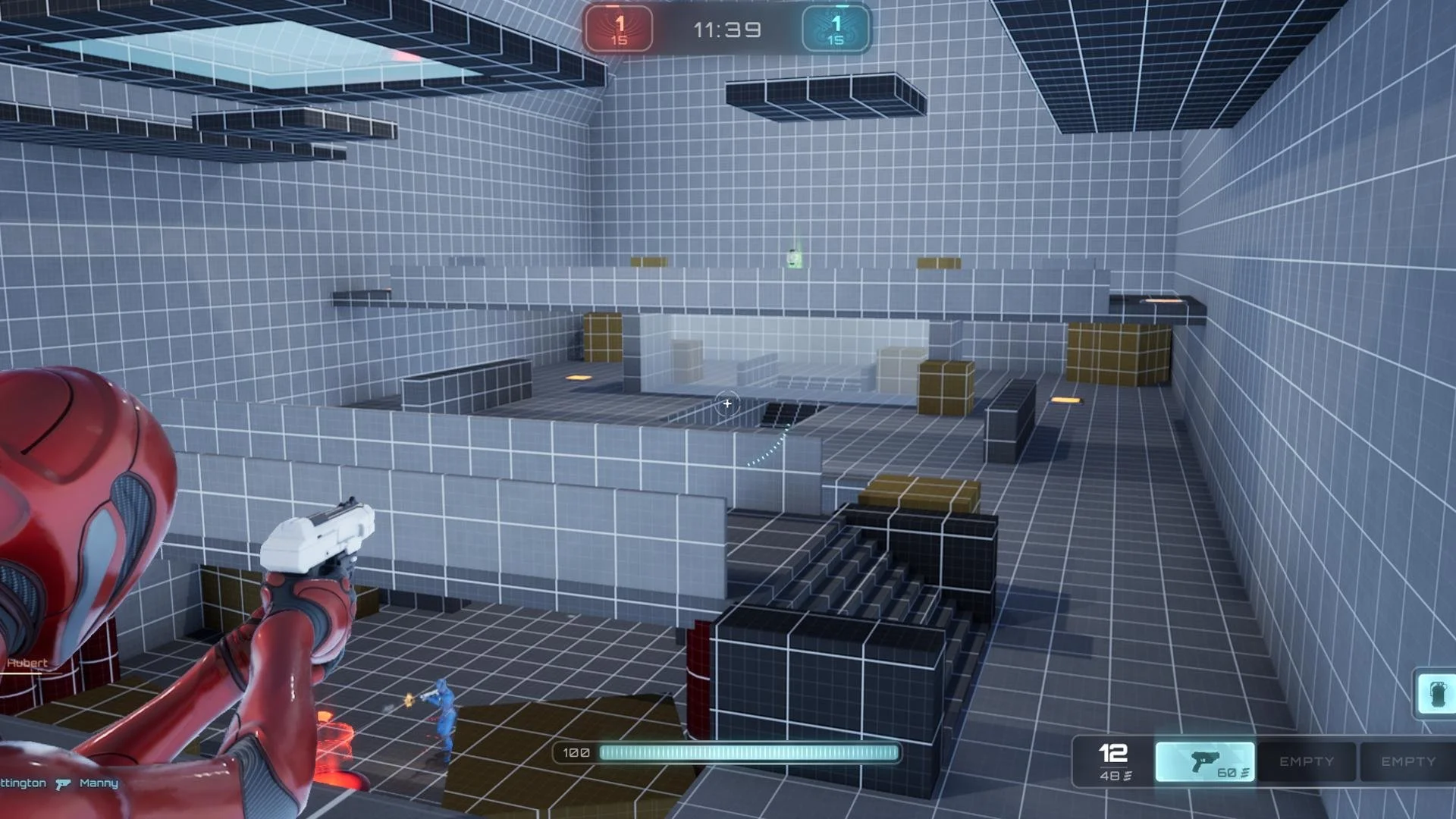
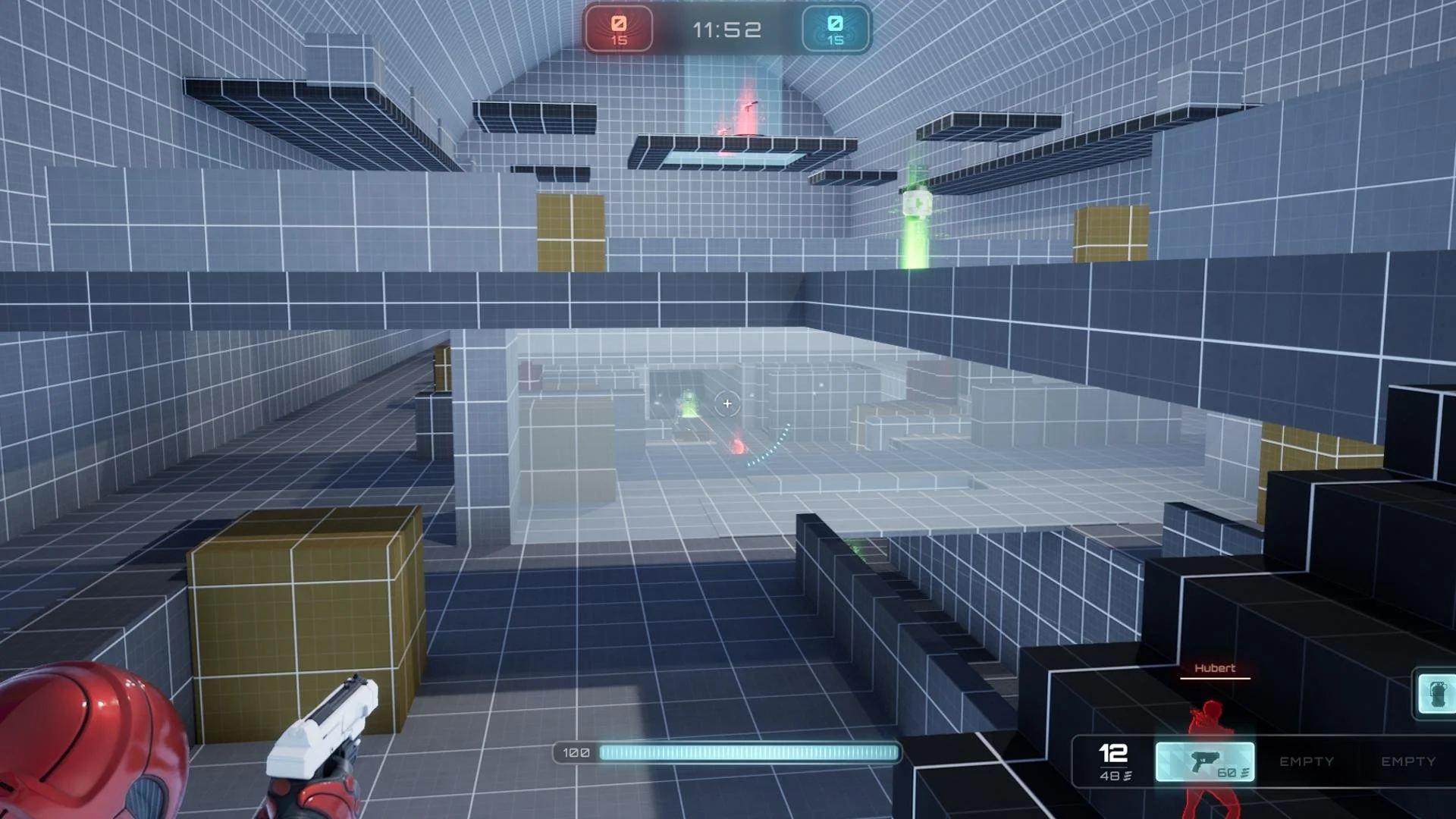
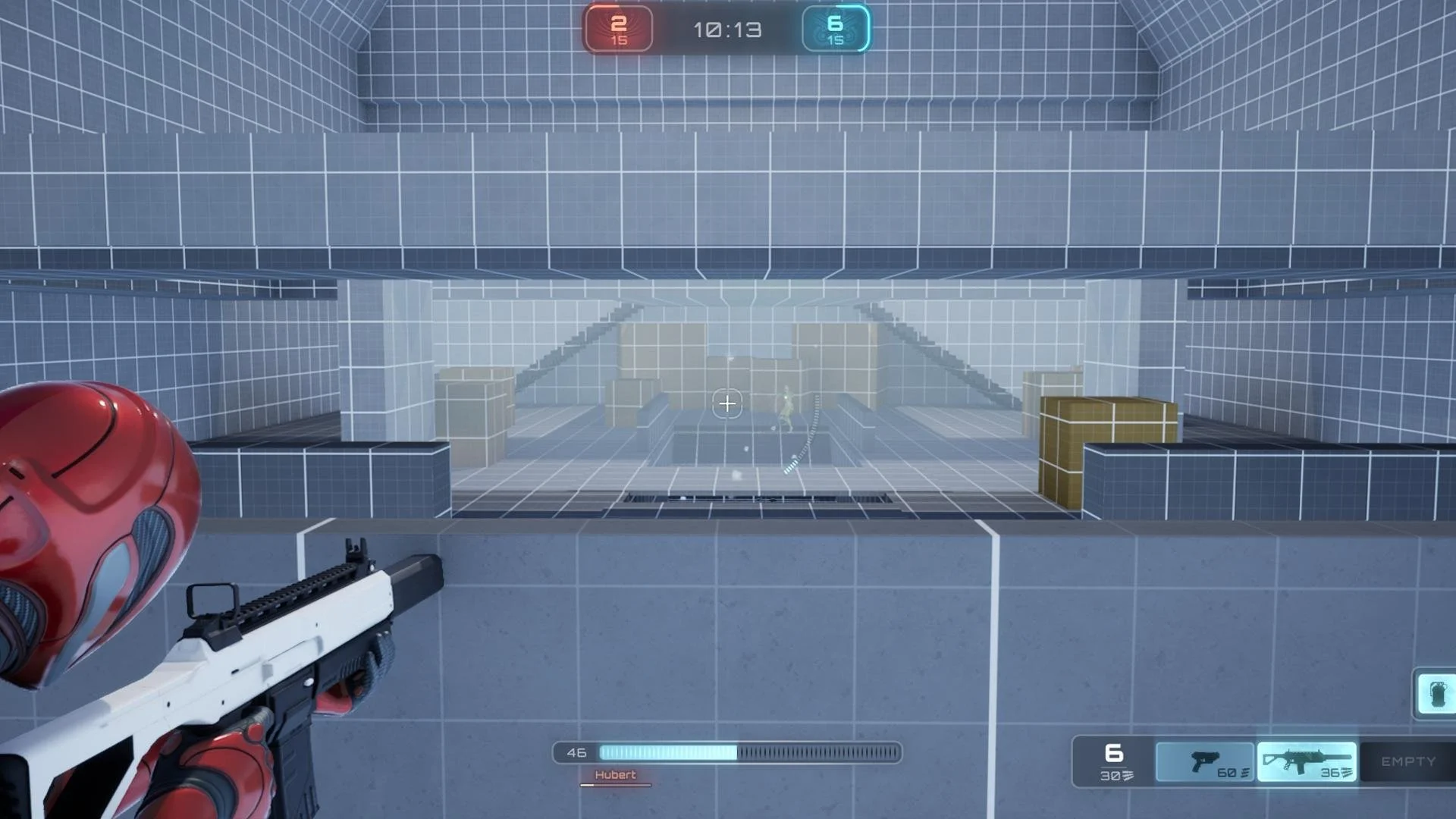
Designed a 2v2v2 arena featuring three vertical layers connected by a long, tunnel-like main path for multi-level combat.
Integrated gameplay elements like health packs, jump pads, bridges, and see-through assets for tactical depth and visibility.
Focused on multi-level flow and spatial awareness, testing how players navigate vertical combat spaces.
Balanced open sightlines and tight corners, encouraging quick repositioning, strategic movement, and smart use of elevation.
Created a high-risk, high-reward vantage point, offering map control but exposing players to enemy fire, emphasizing timing and strategy.
In retrospect should have gone less of an abstract theme, to showcase depth in a better way.
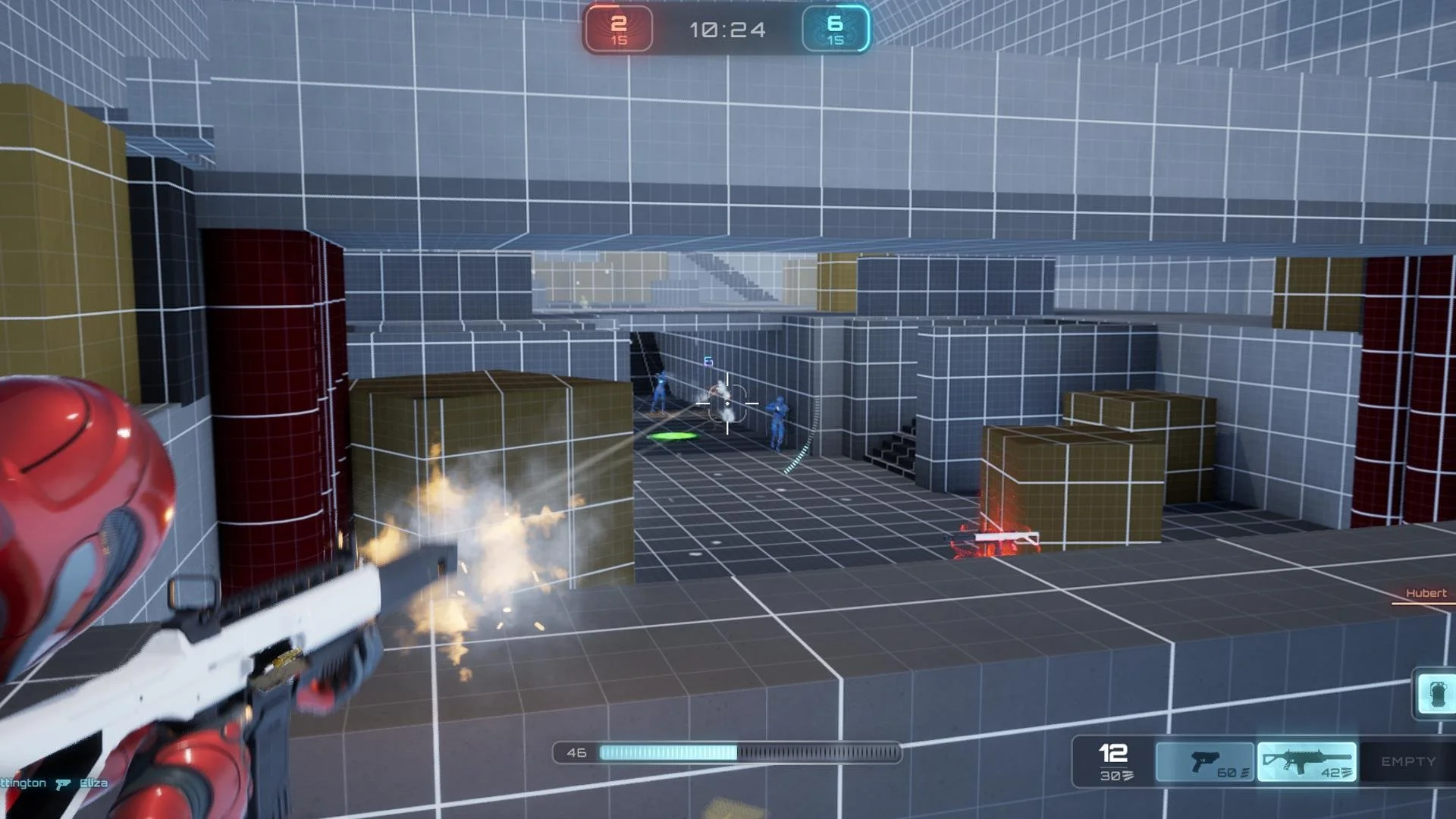
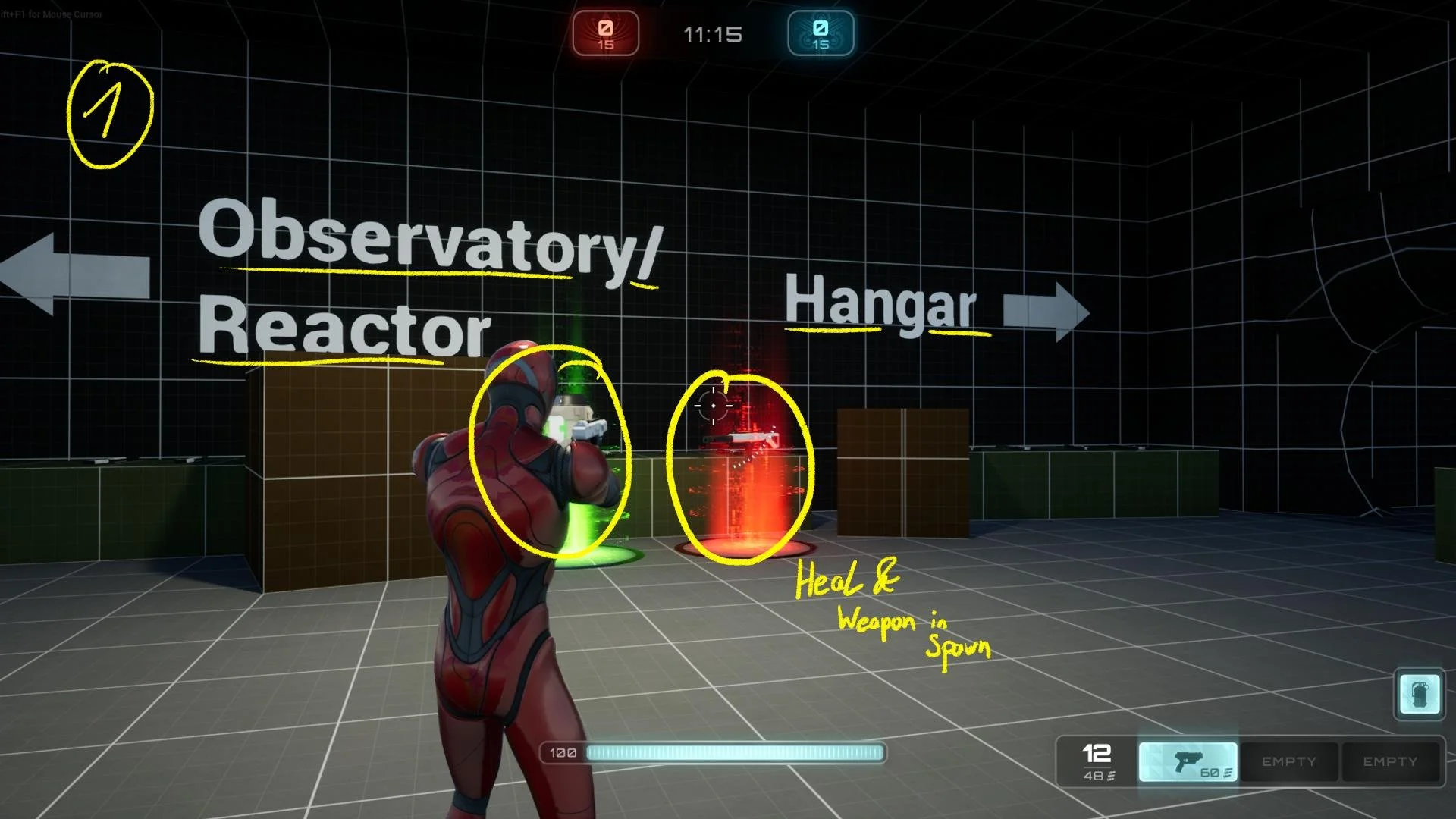
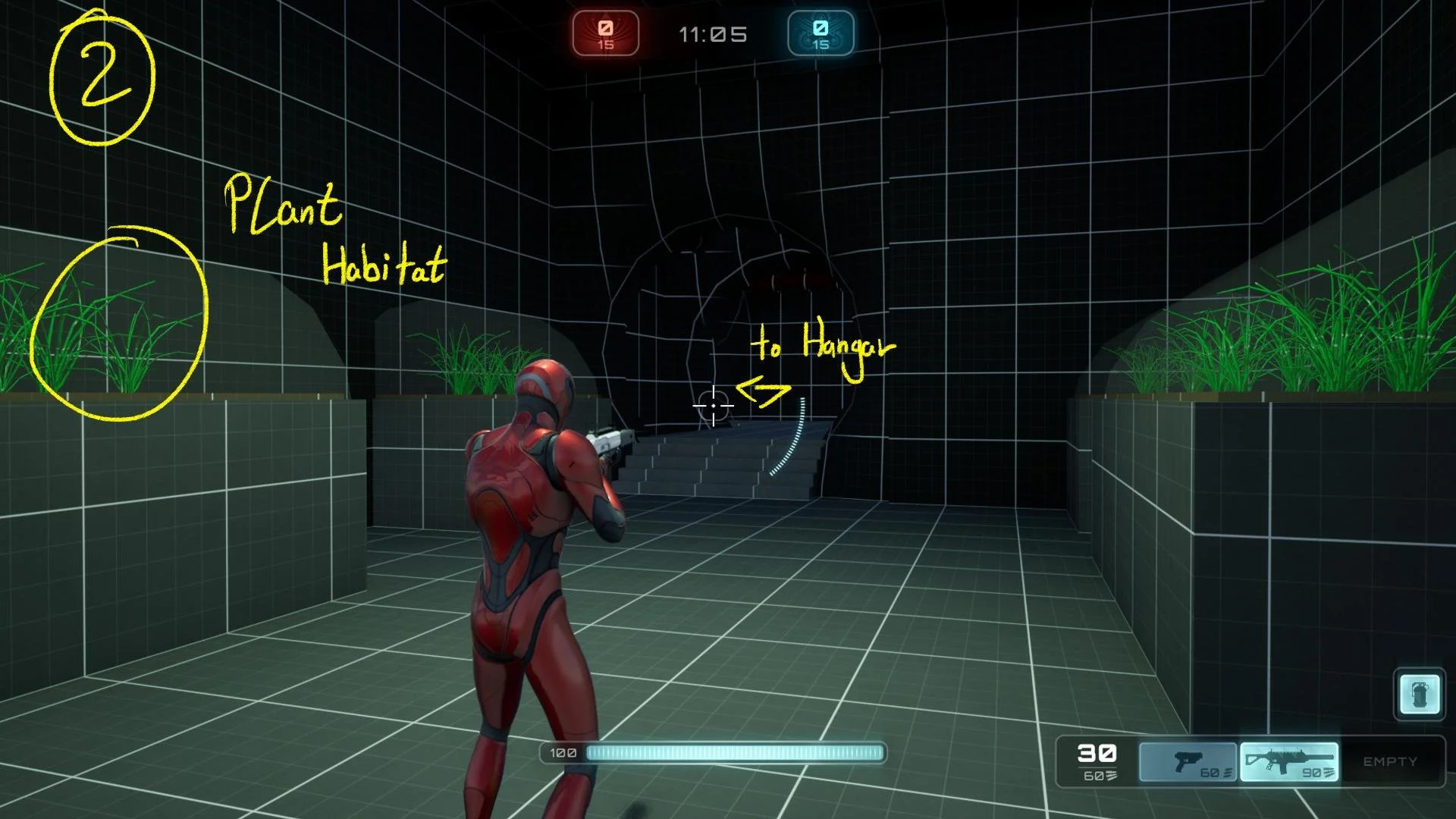
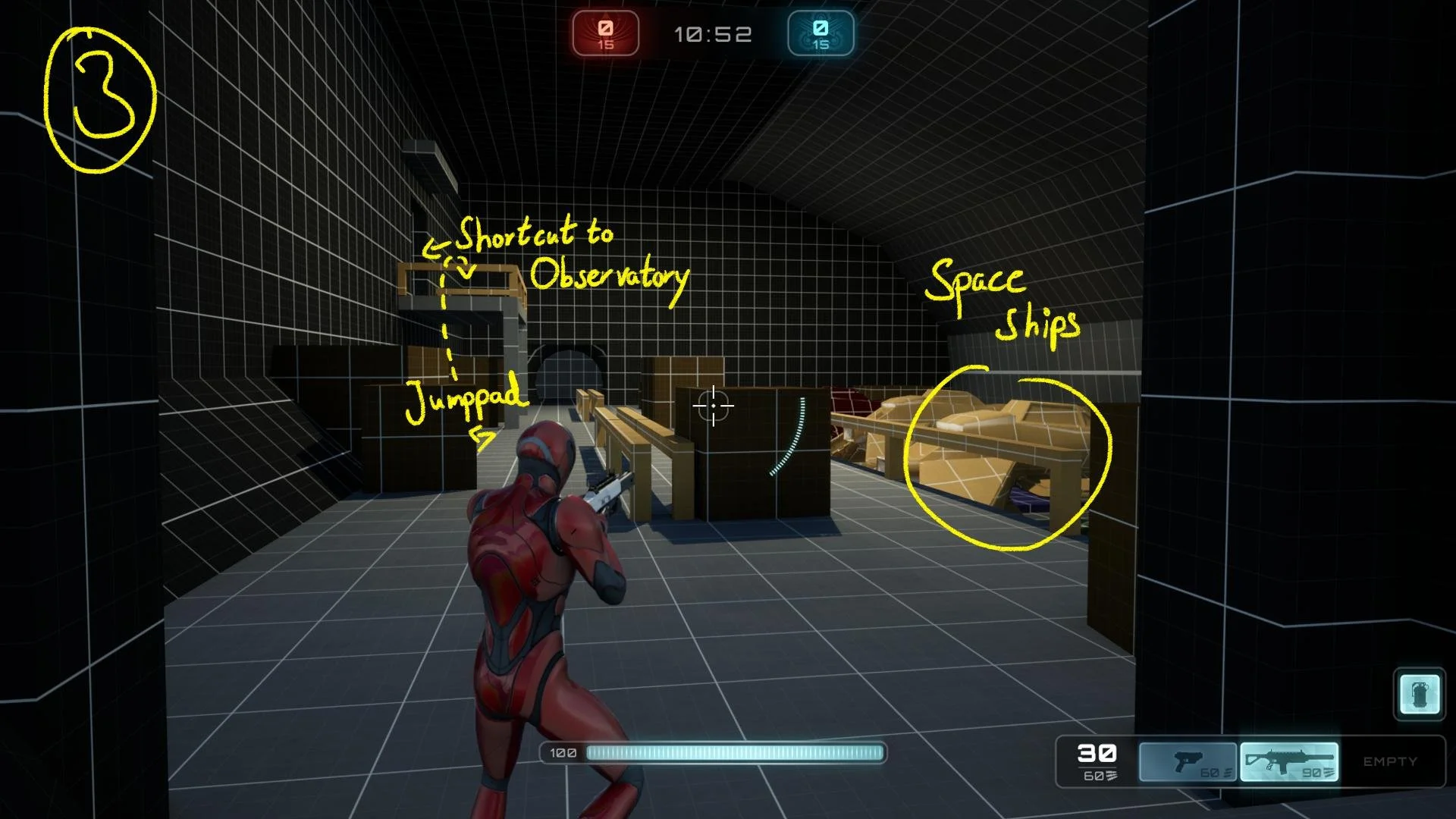
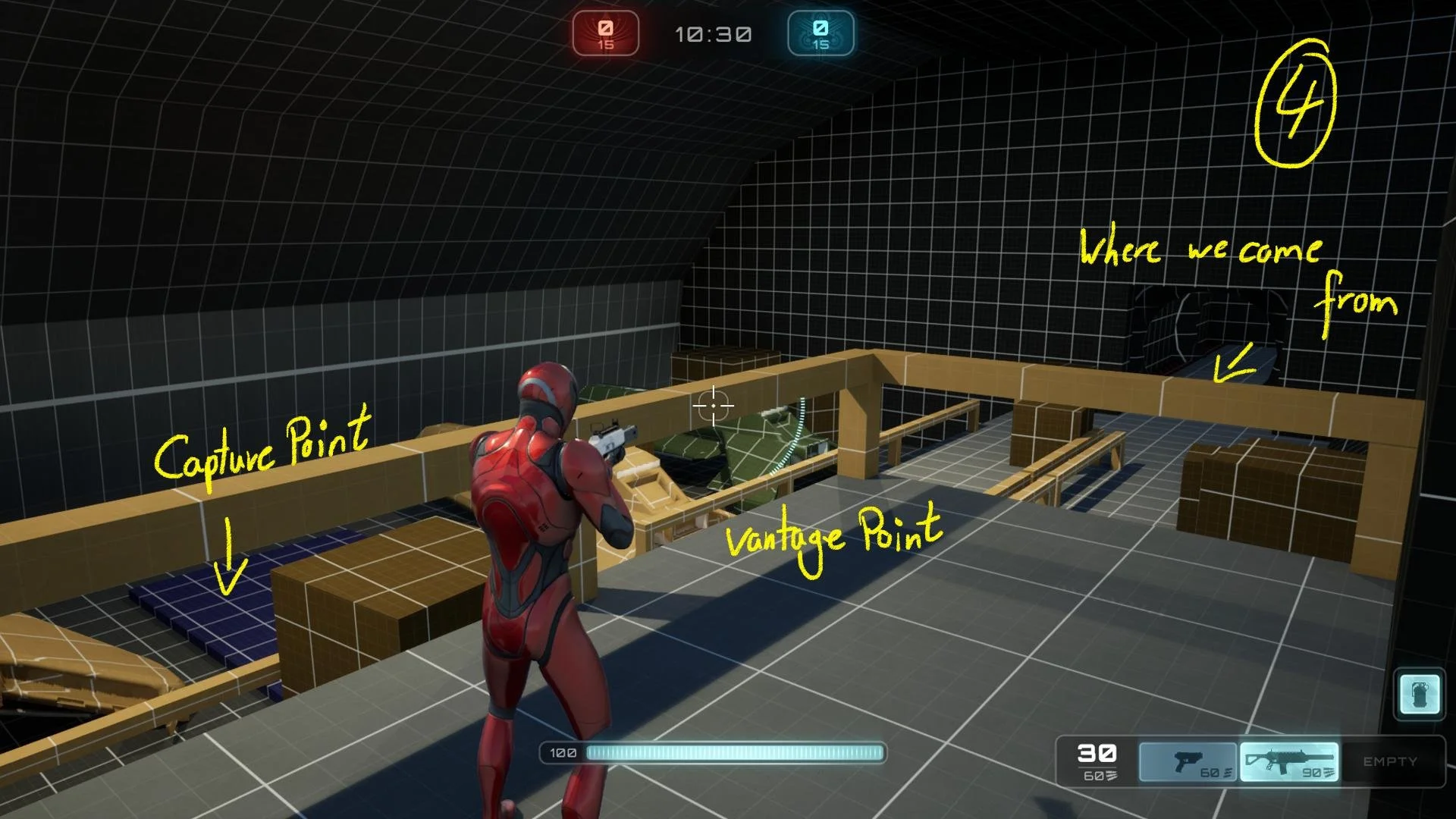
#21: Day 12: Orbital Conflict (Multiplayer)
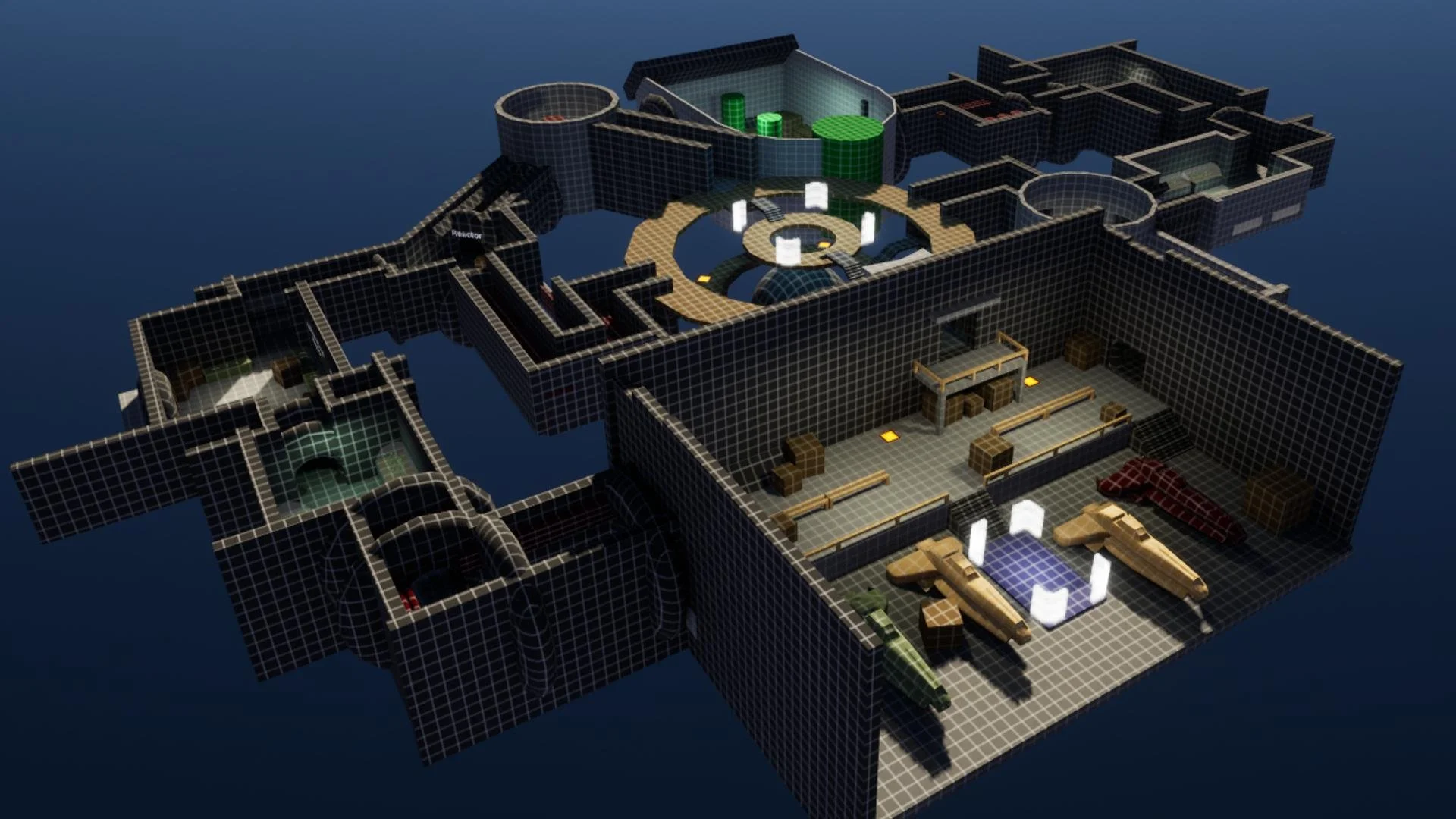
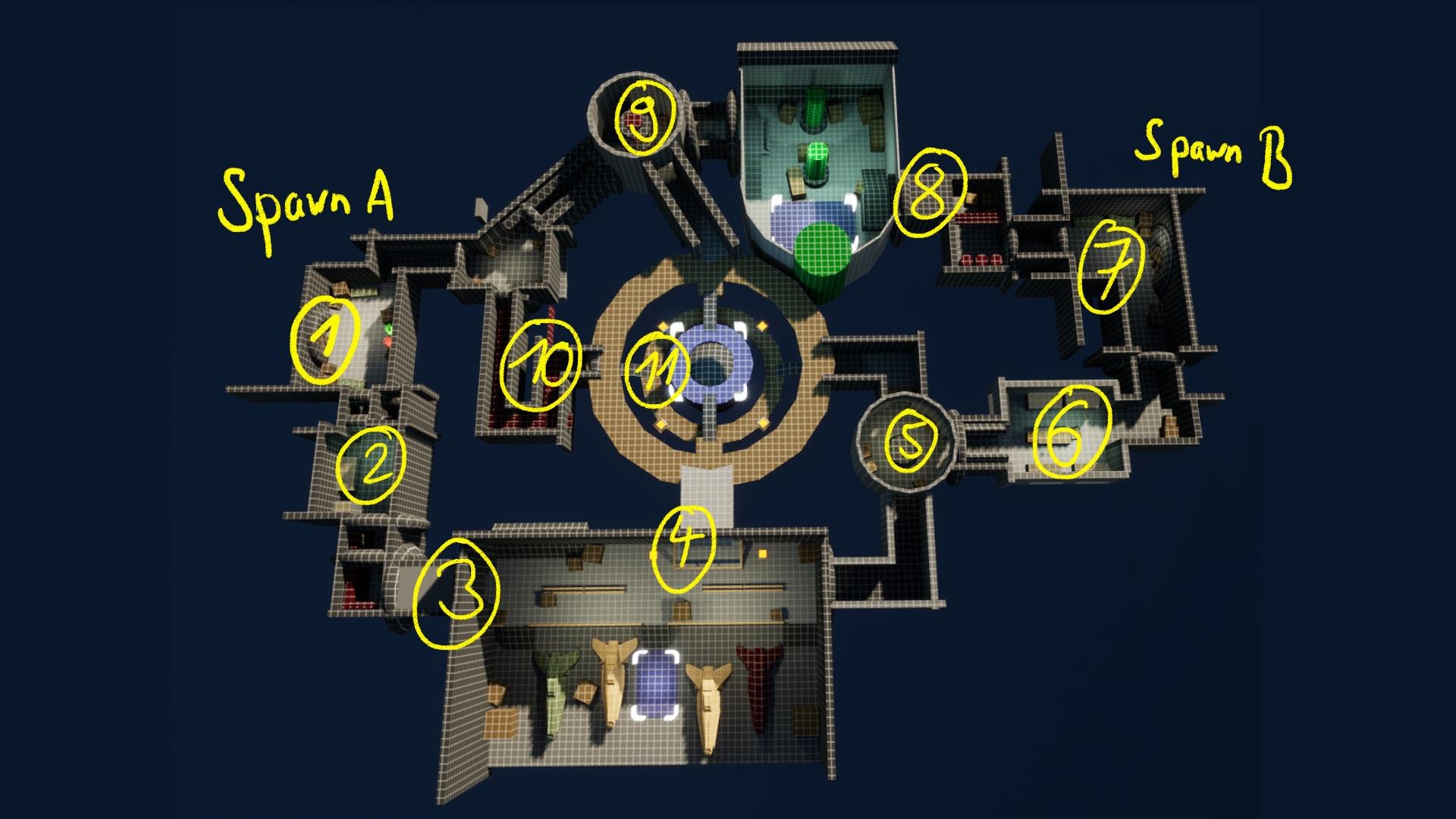
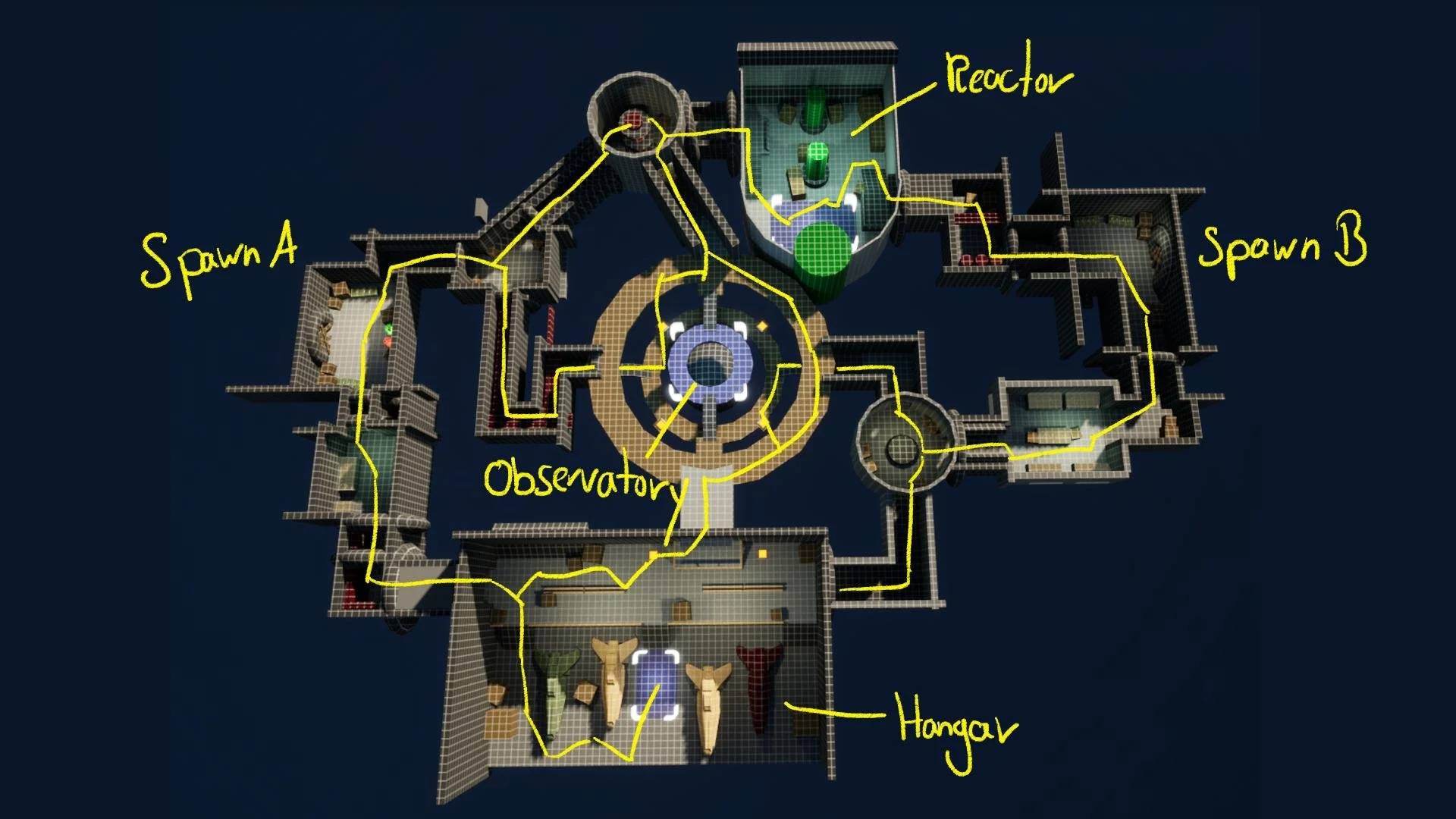
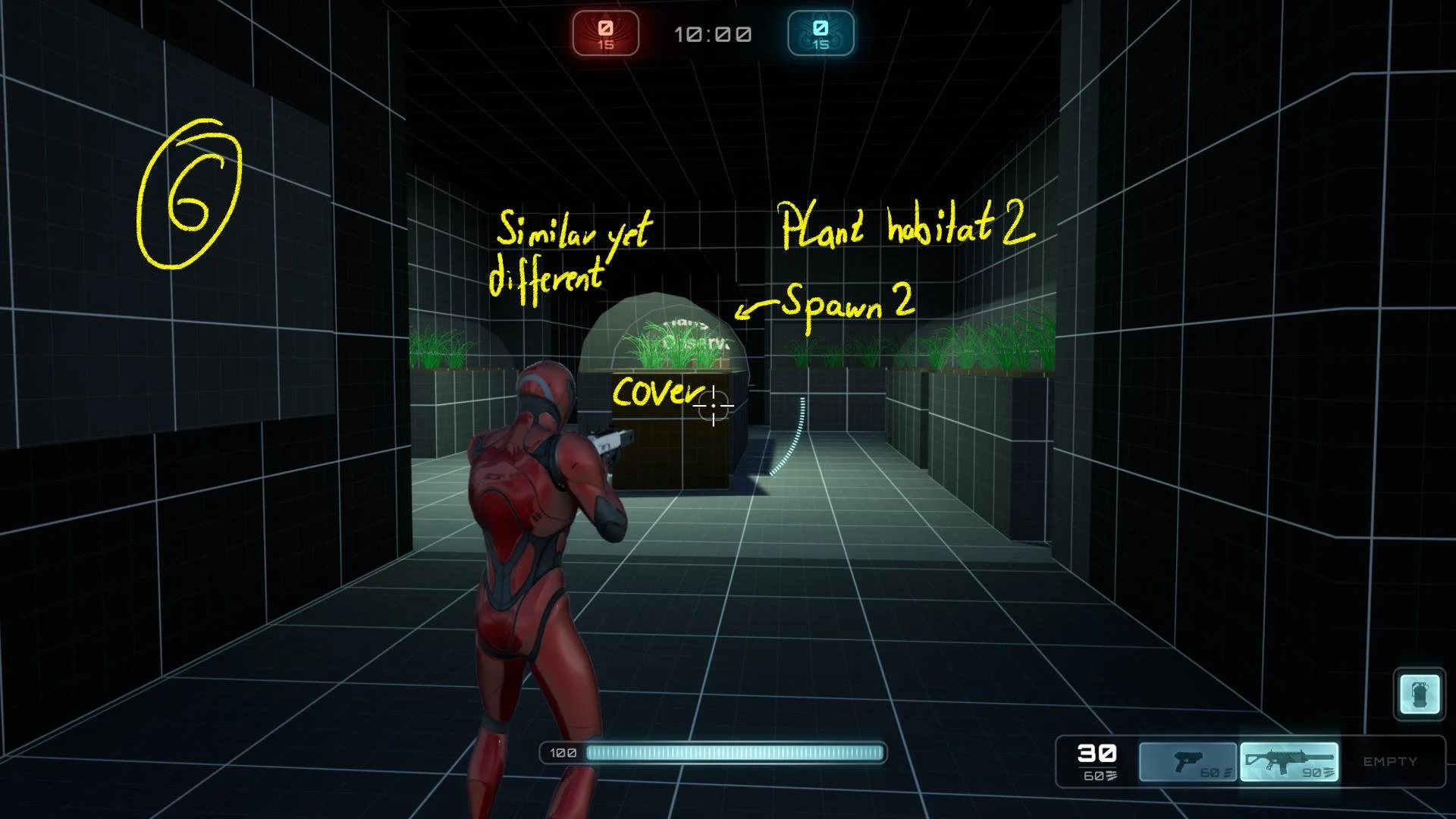
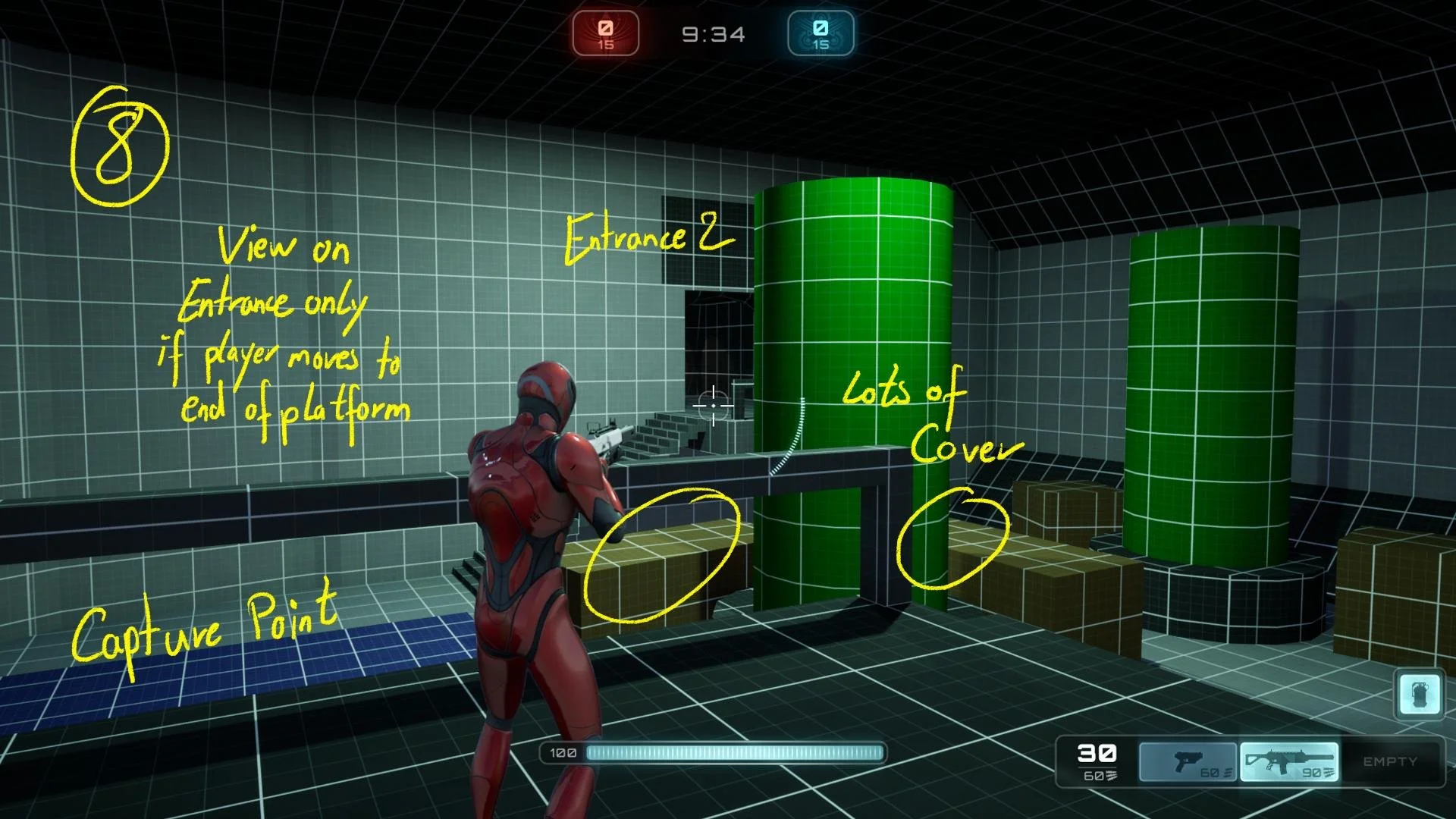
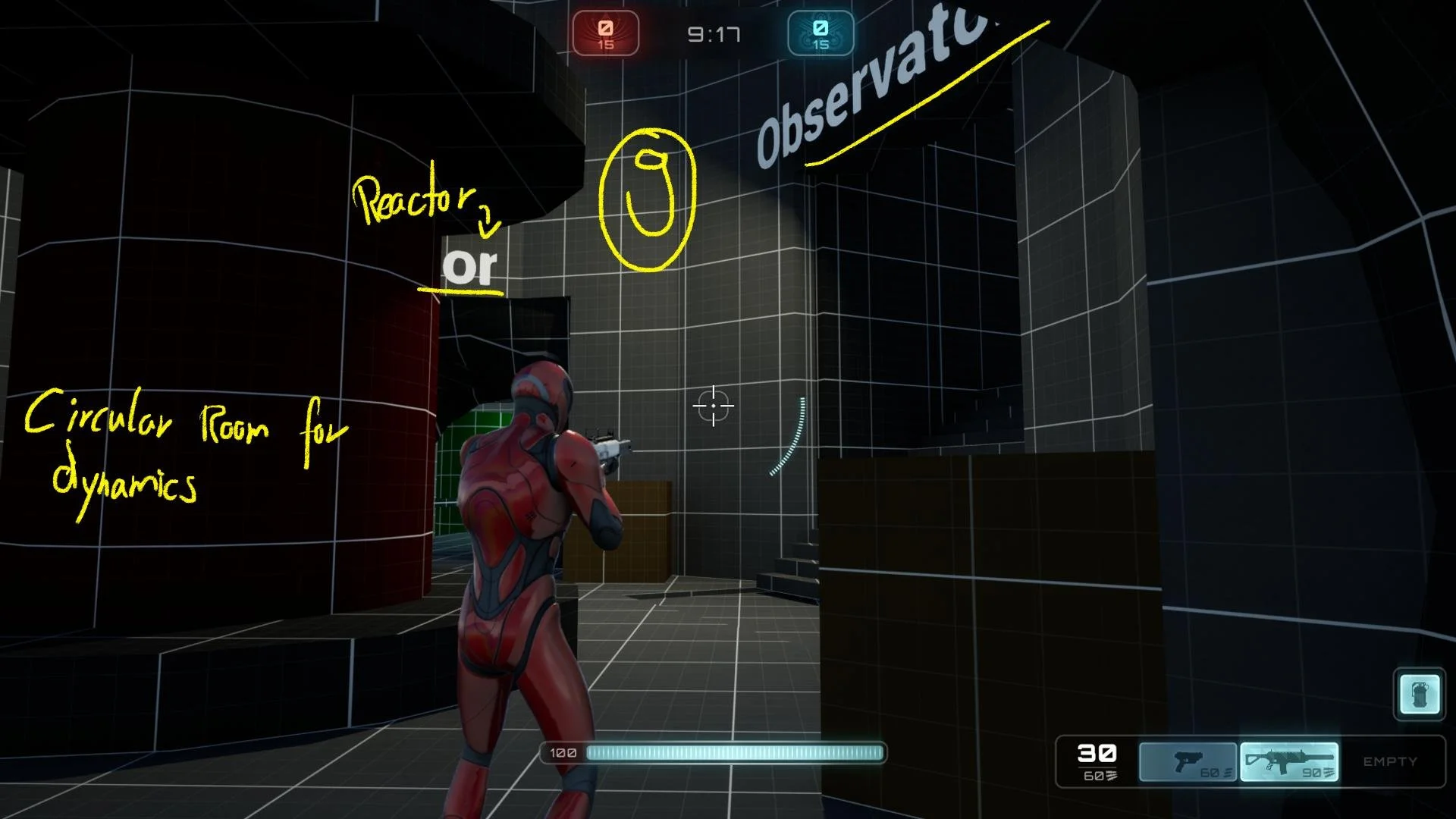
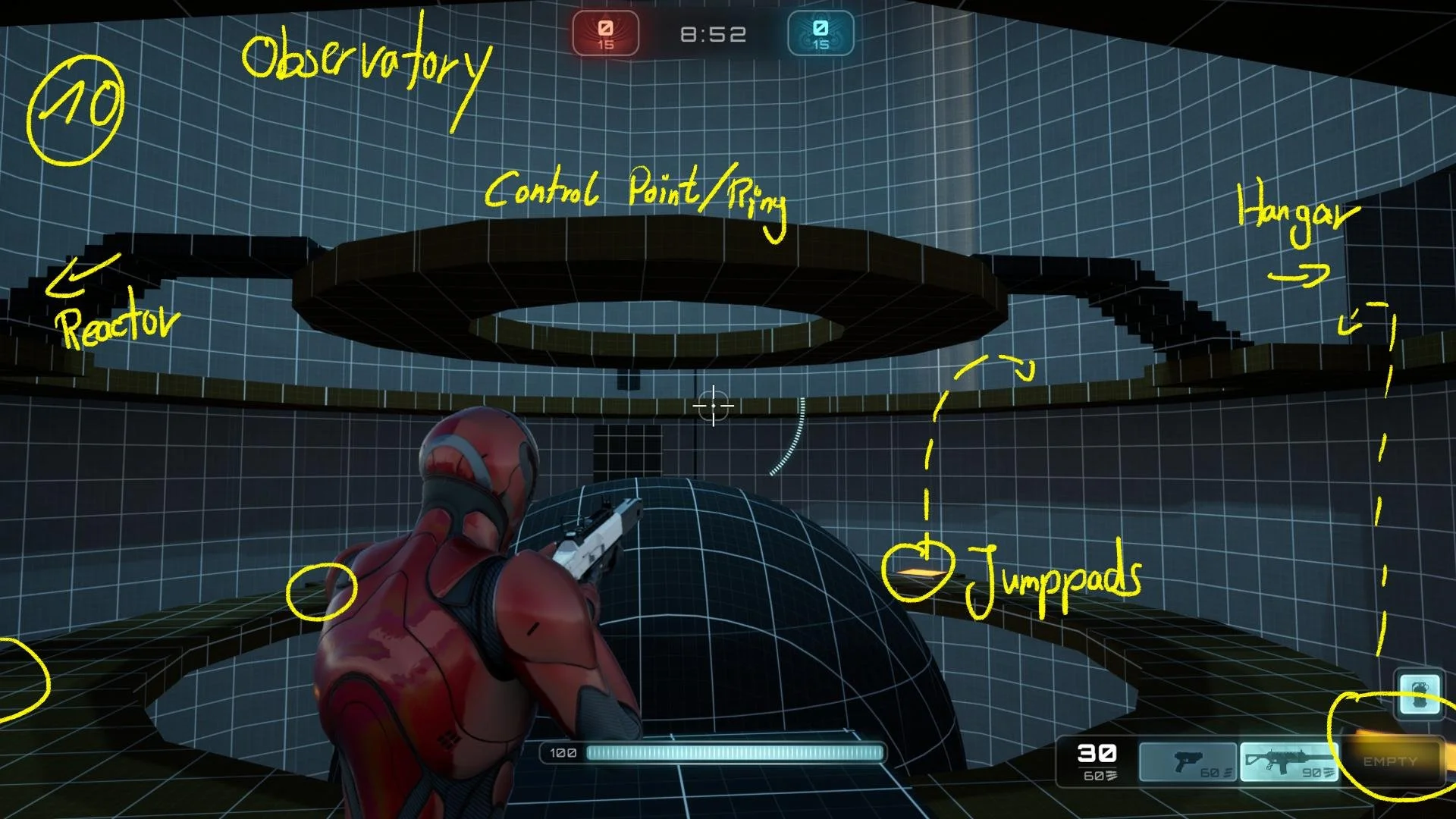
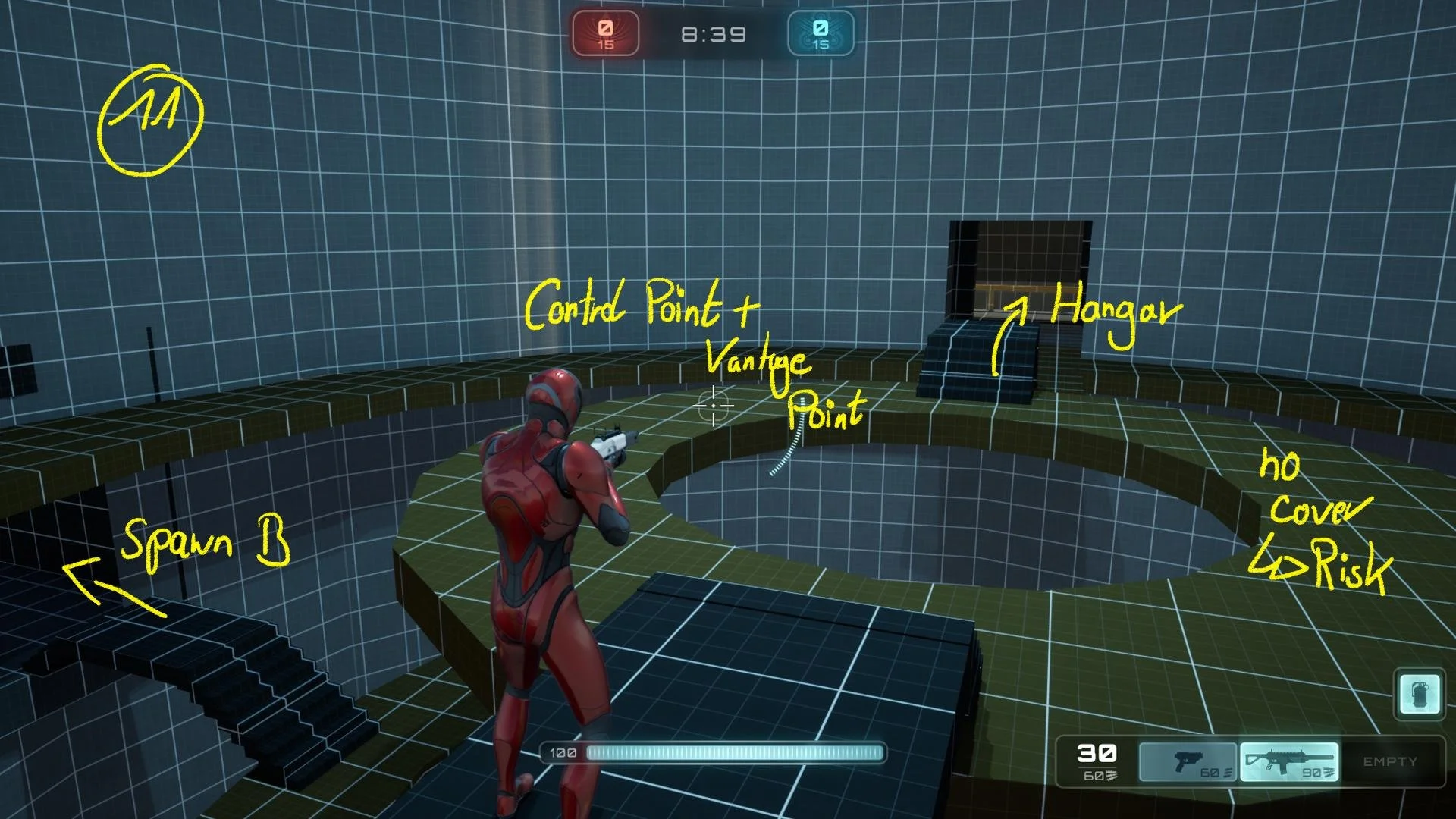
Designed a multiplayer space station map featuring three distinct capture points, each with unique spatial identity and layout.
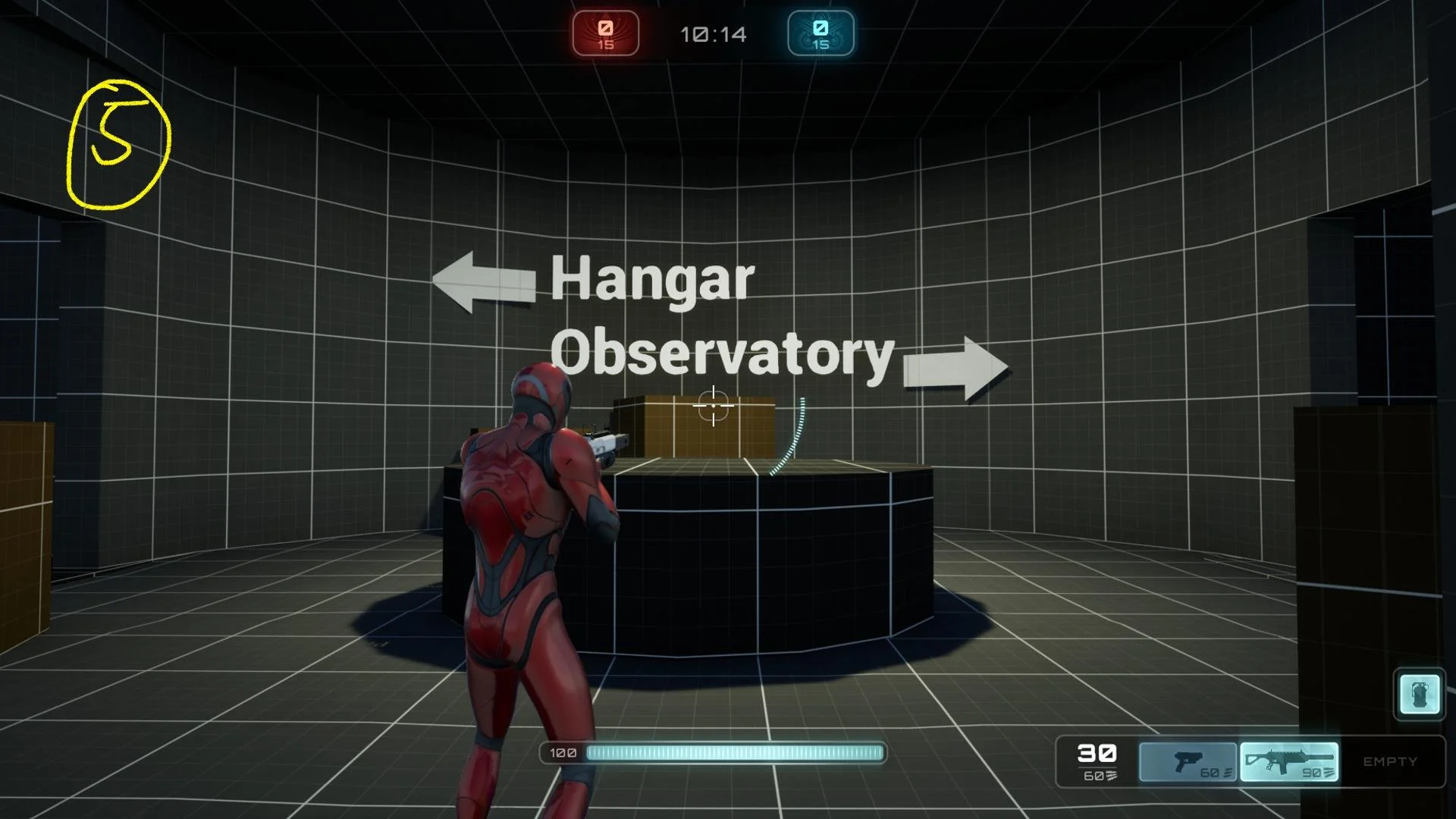
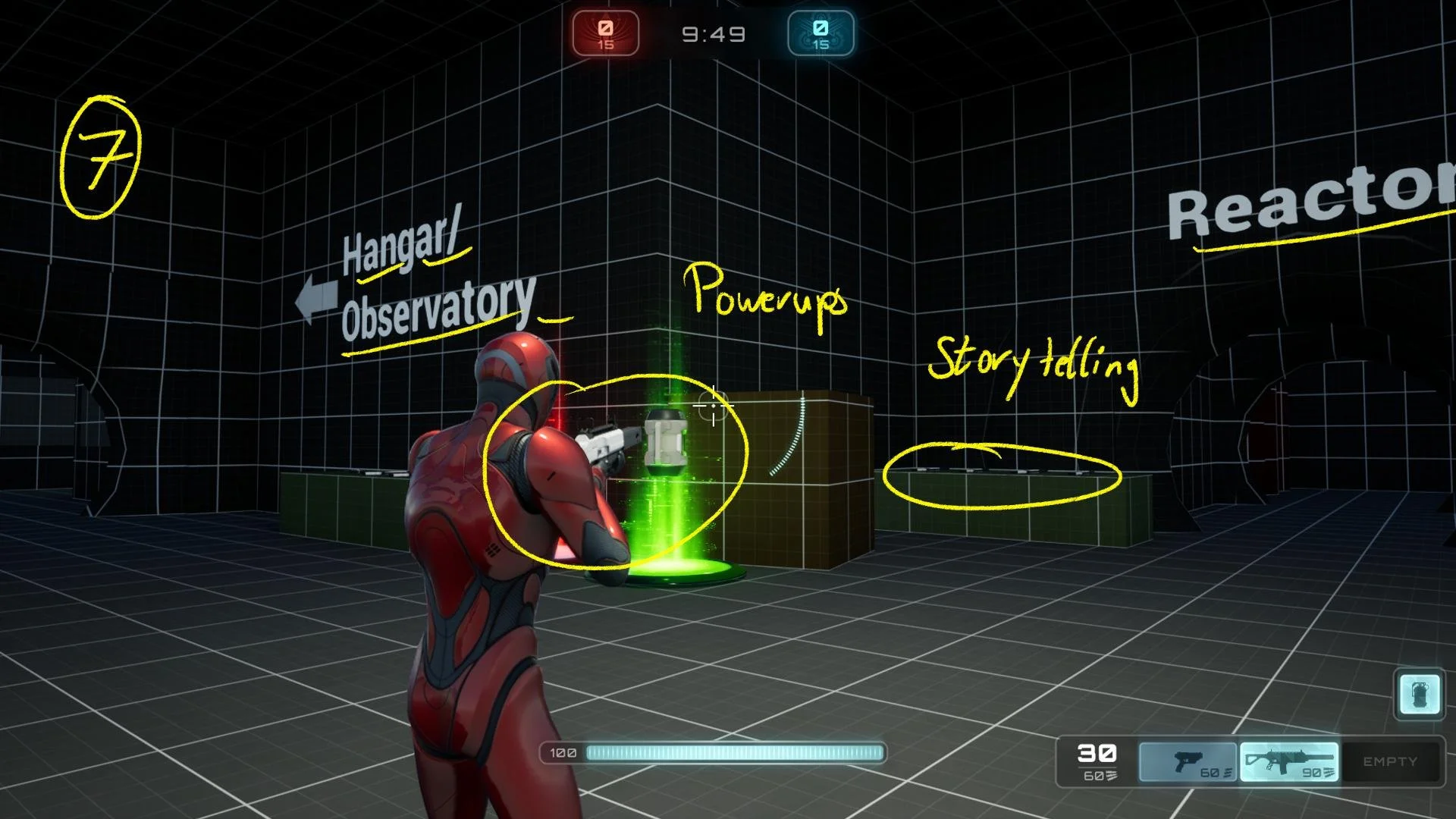
Hangar Bay: long sightlines with “parked” ships, risky vantage point accessible via jump-pad, connecting directly to the Observatory.
Focused on balanced travel times, spatial clarity, and unique props, ensuring each area feels distinct and supports Capture the Point / Elimination gameplay.
Reactor Core: circular chamber with two separate entrances, no direct sightlines, encouraging tactical positioning.
Observatory Deck: two-story central area with upper and lower levels, vertical engagements, and careful navigation to avoid falls.
Emphasized verticality, tactical choice, and player flow, encouraging varied approaches and rewarding spatial awareness.
#22: Day 5: The Broken Crossing
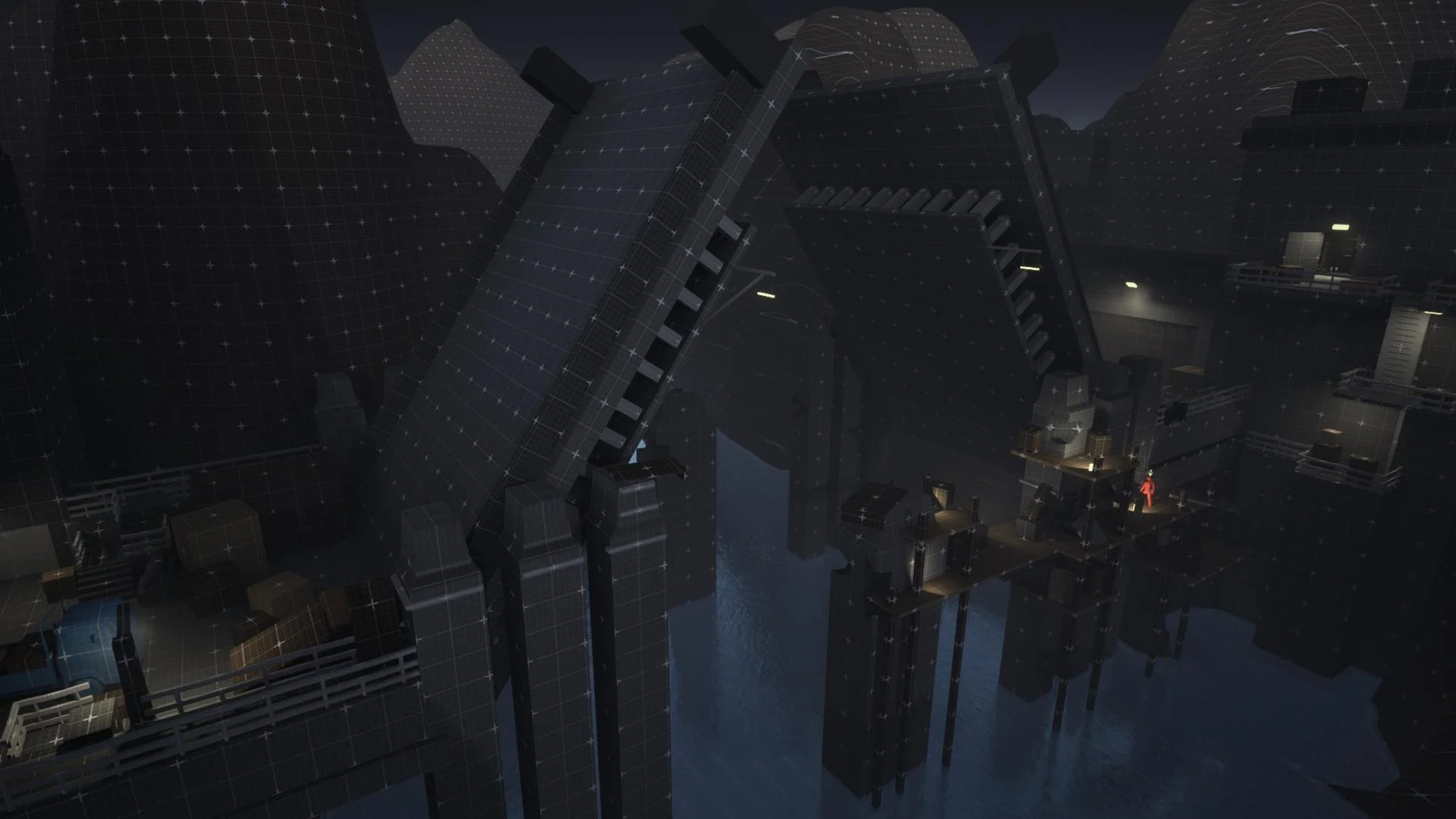
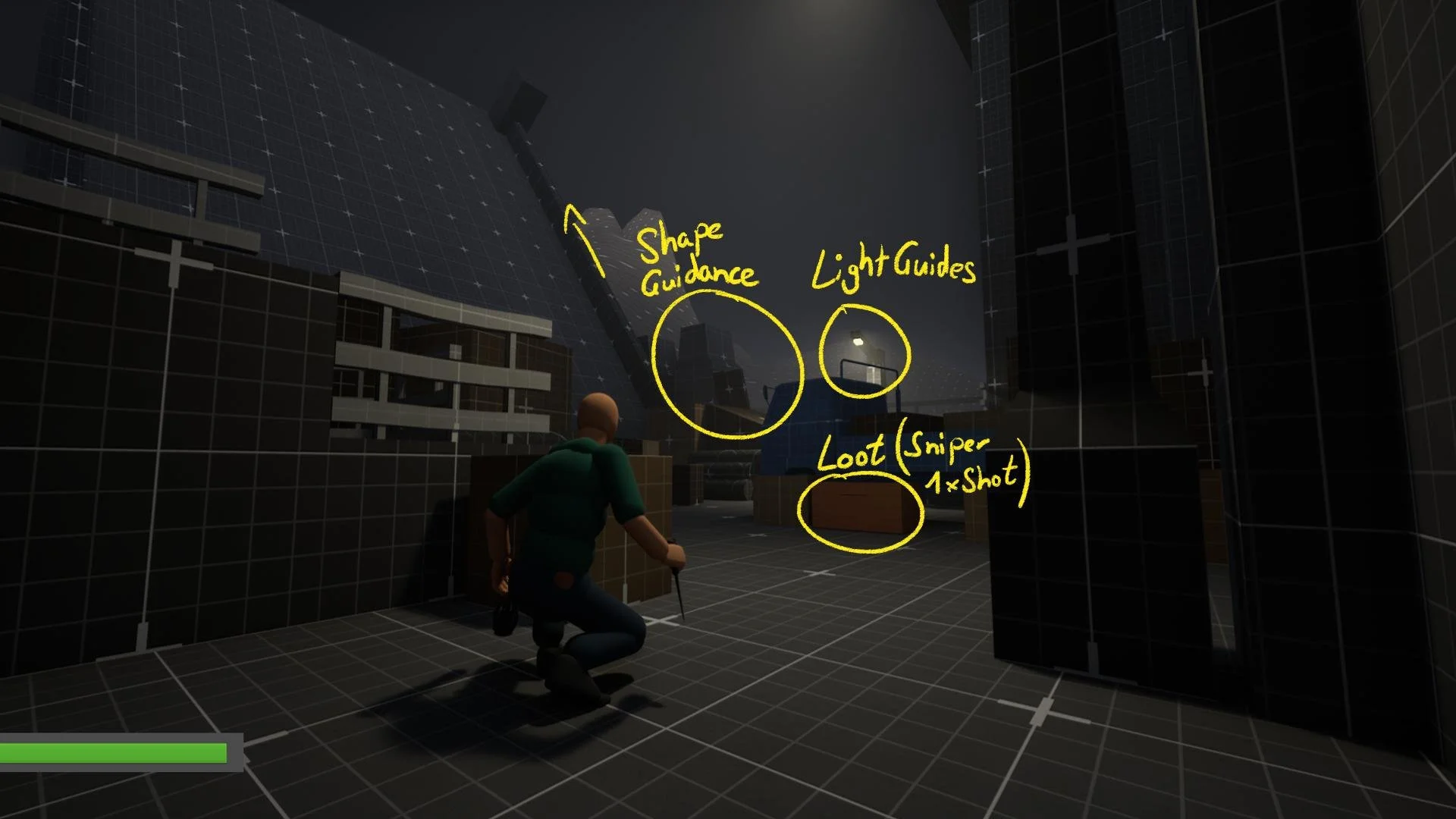
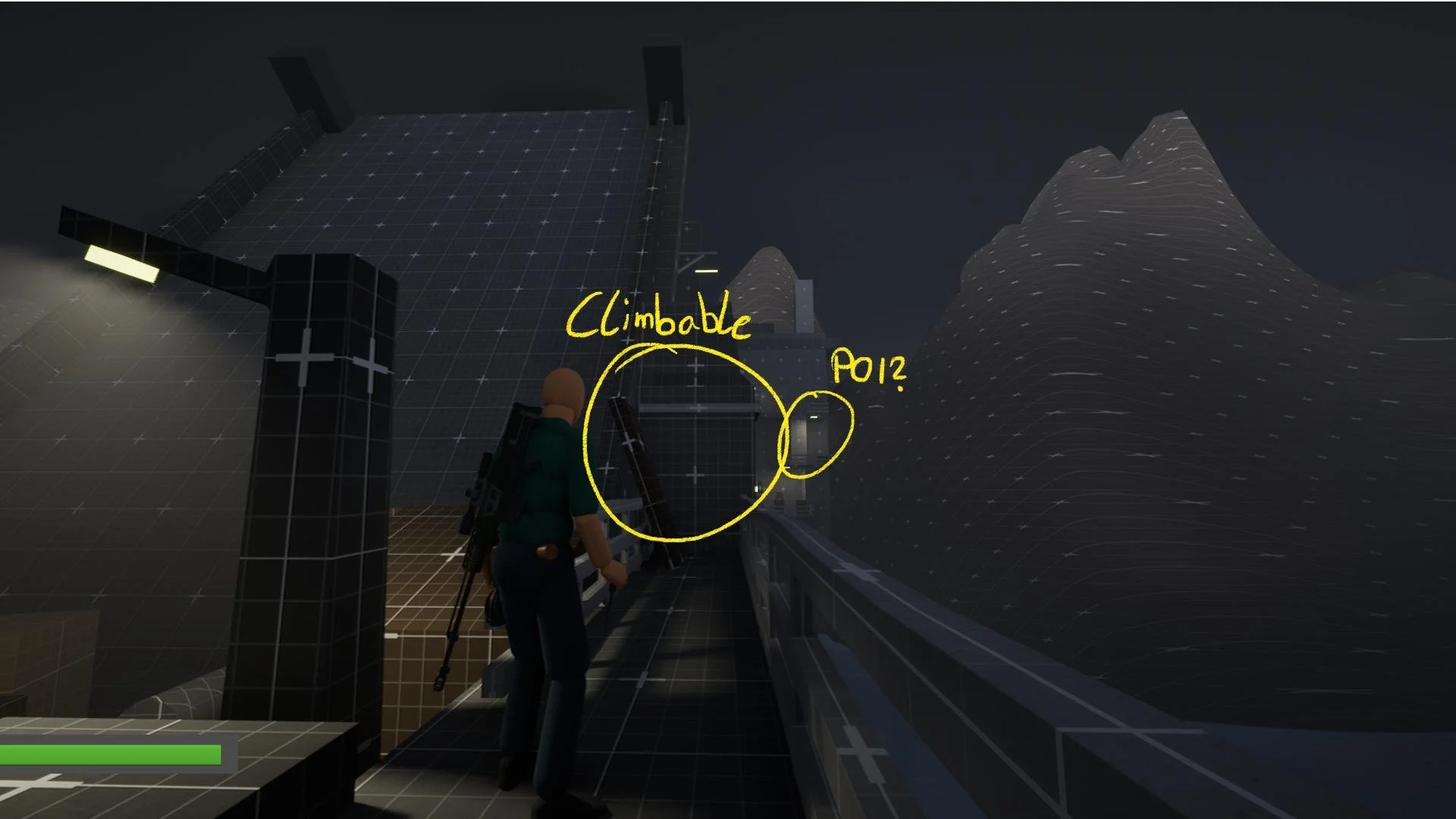
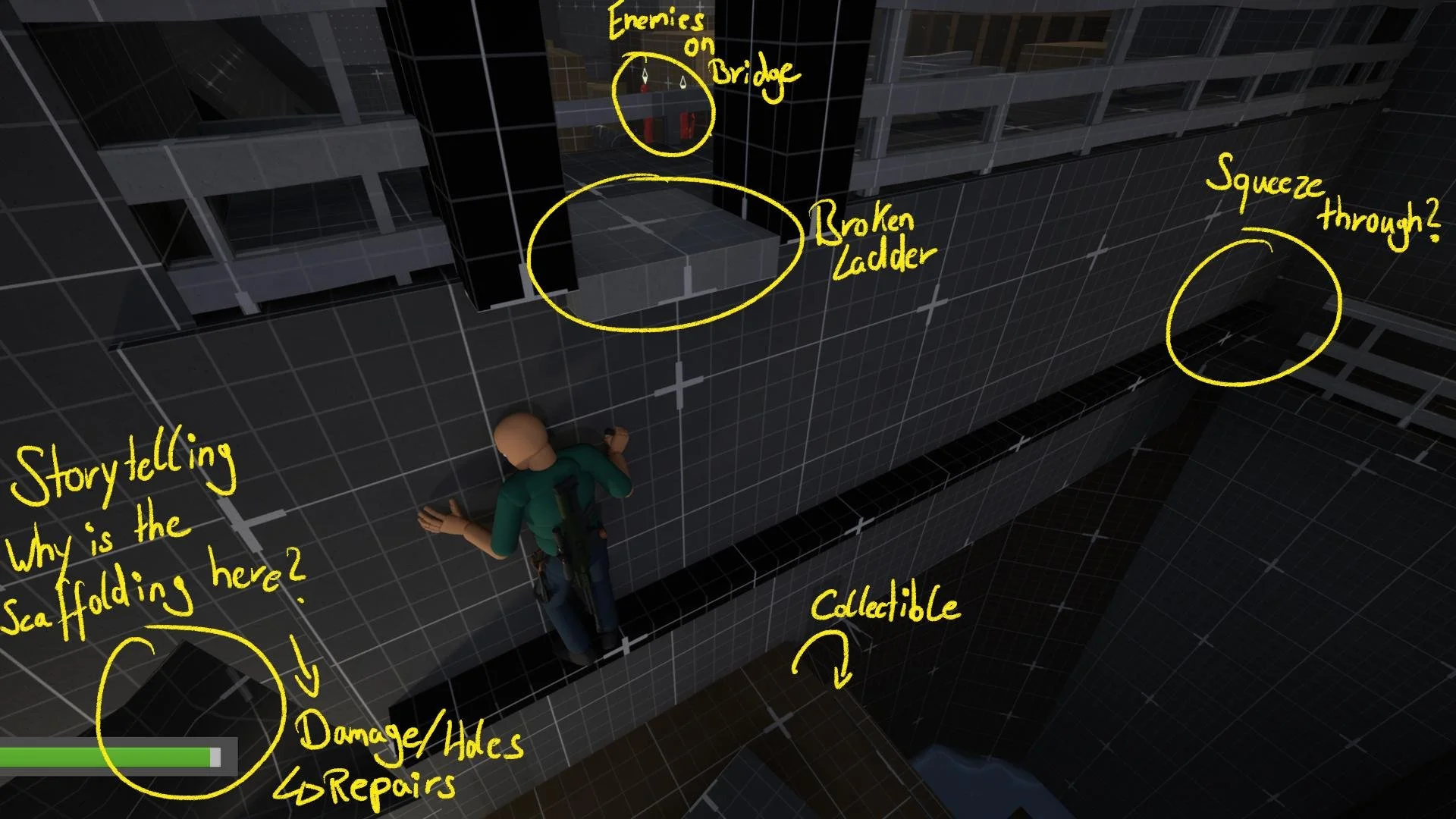
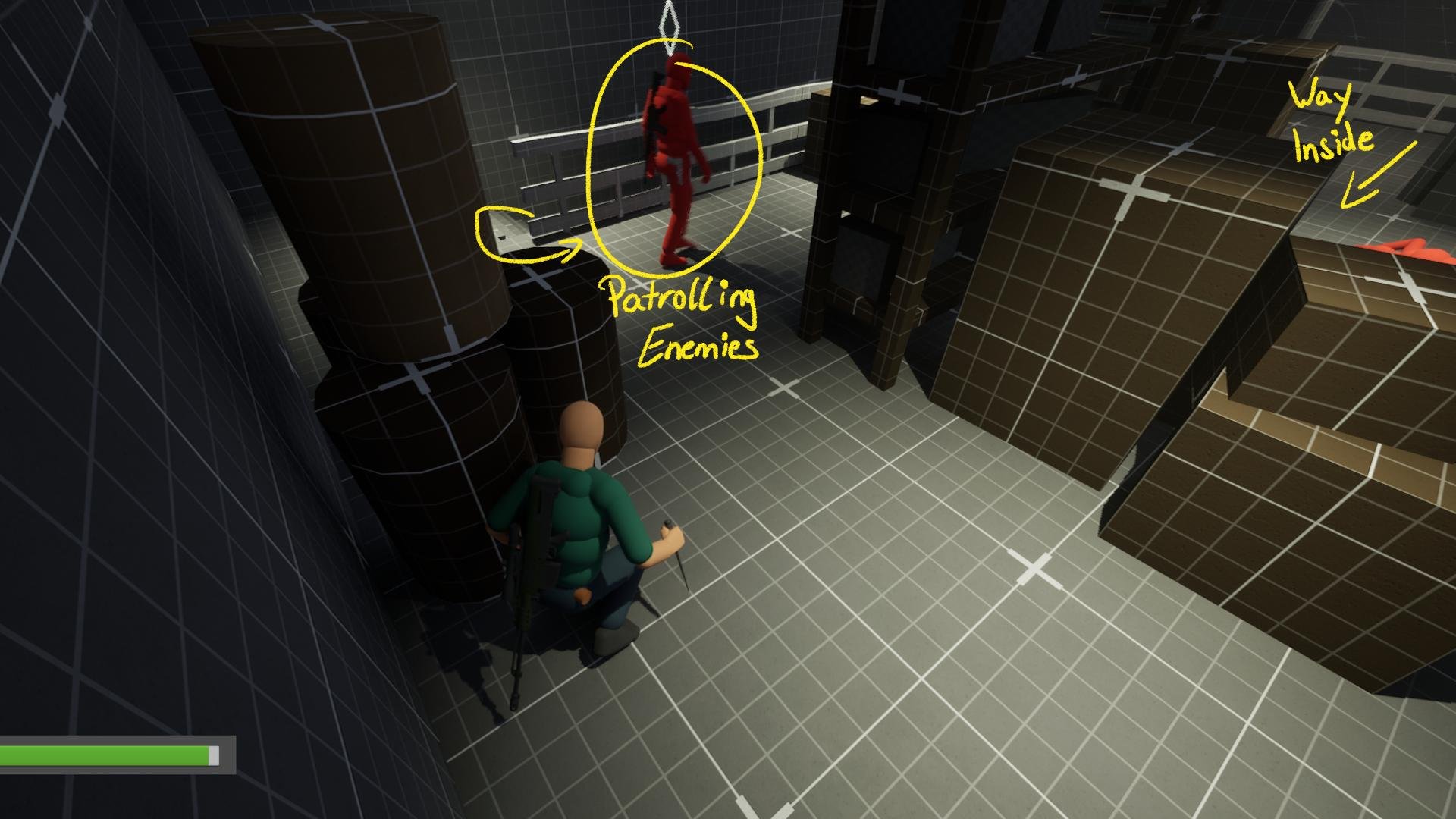
Designed a nighttime bridge level following the Hidden Warehouse, emphasizing vertical and stealth gameplay.
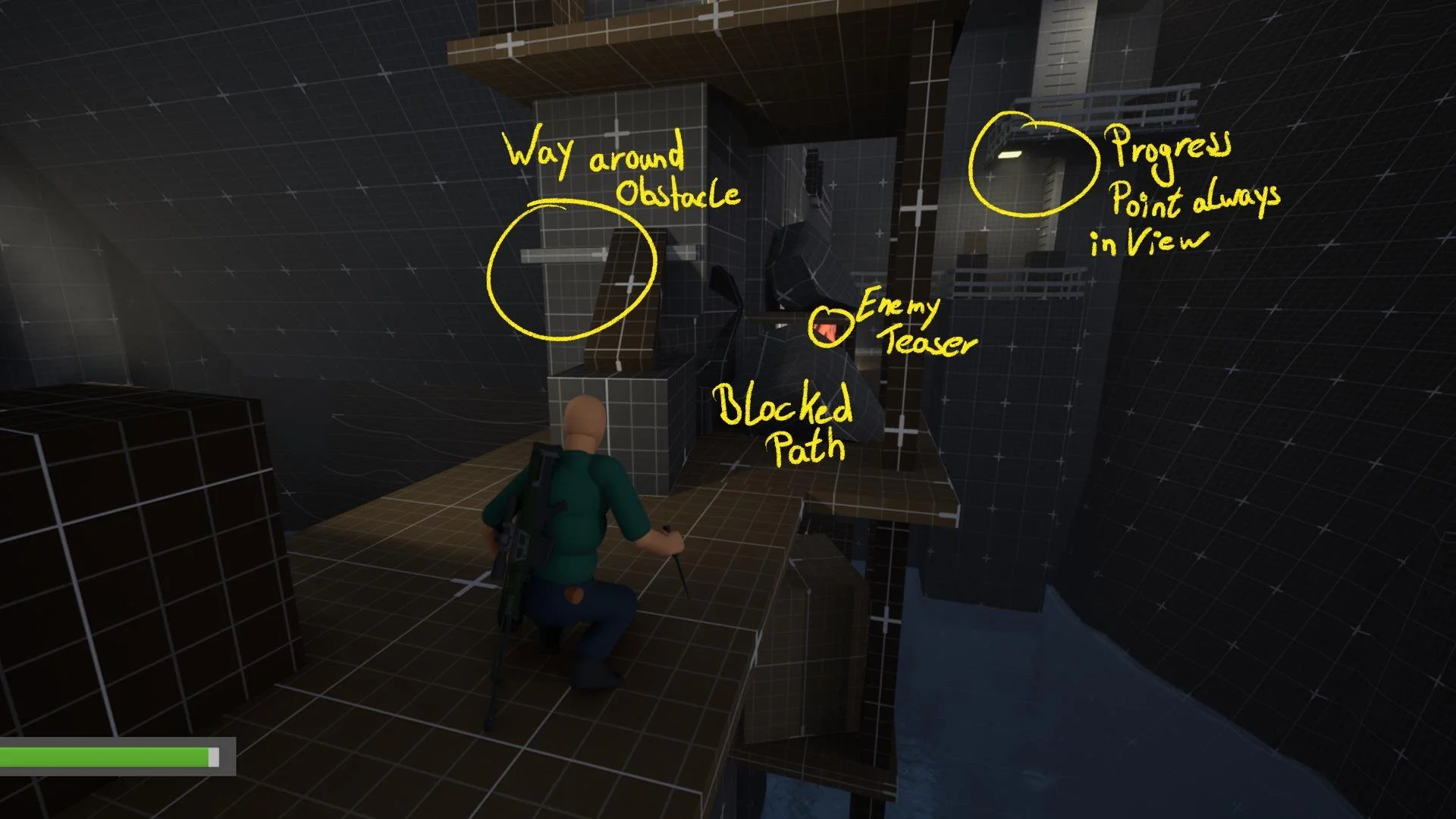
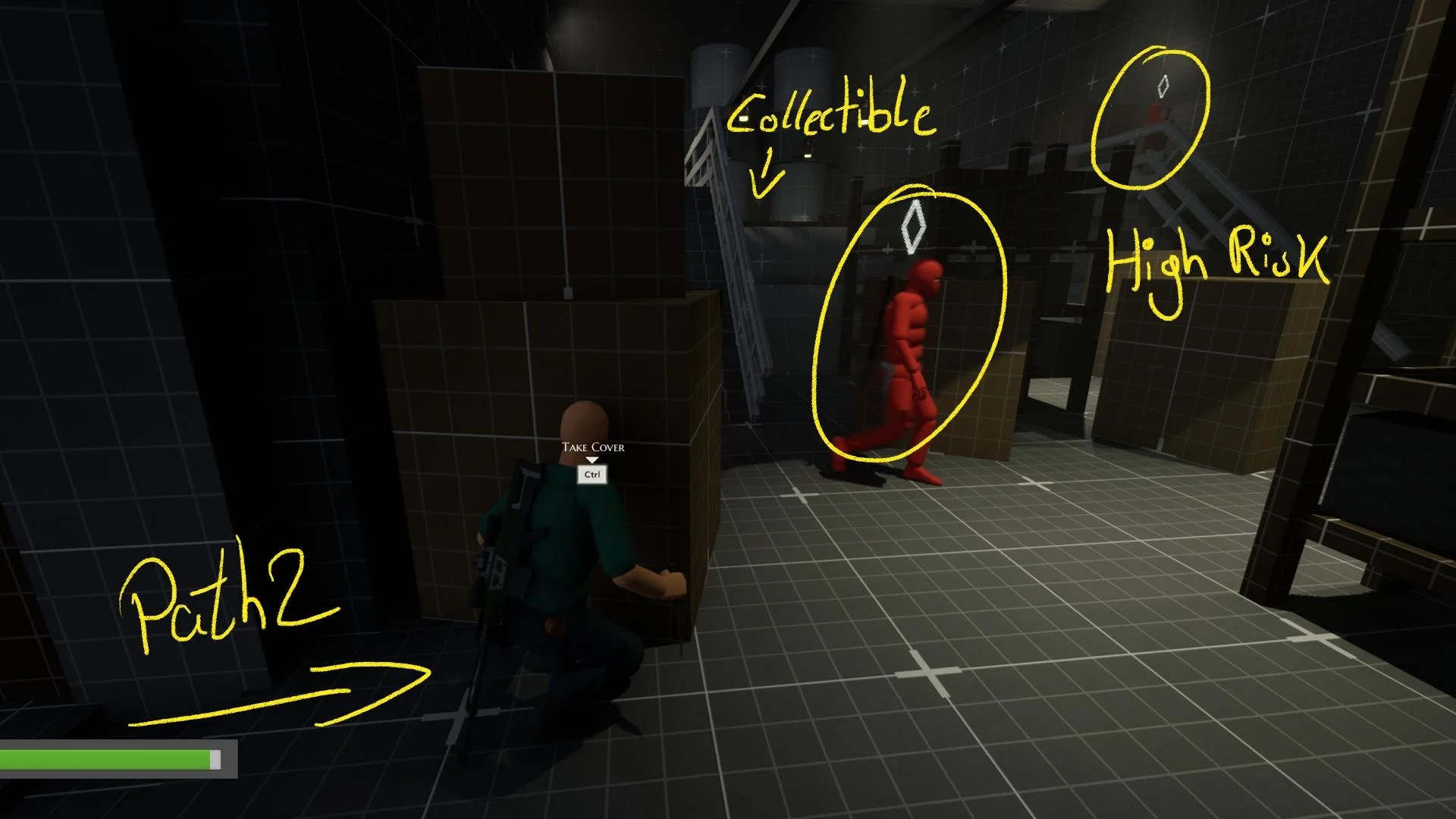
Focused on stealth mechanics, requiring players to time movements and engage guards strategically.
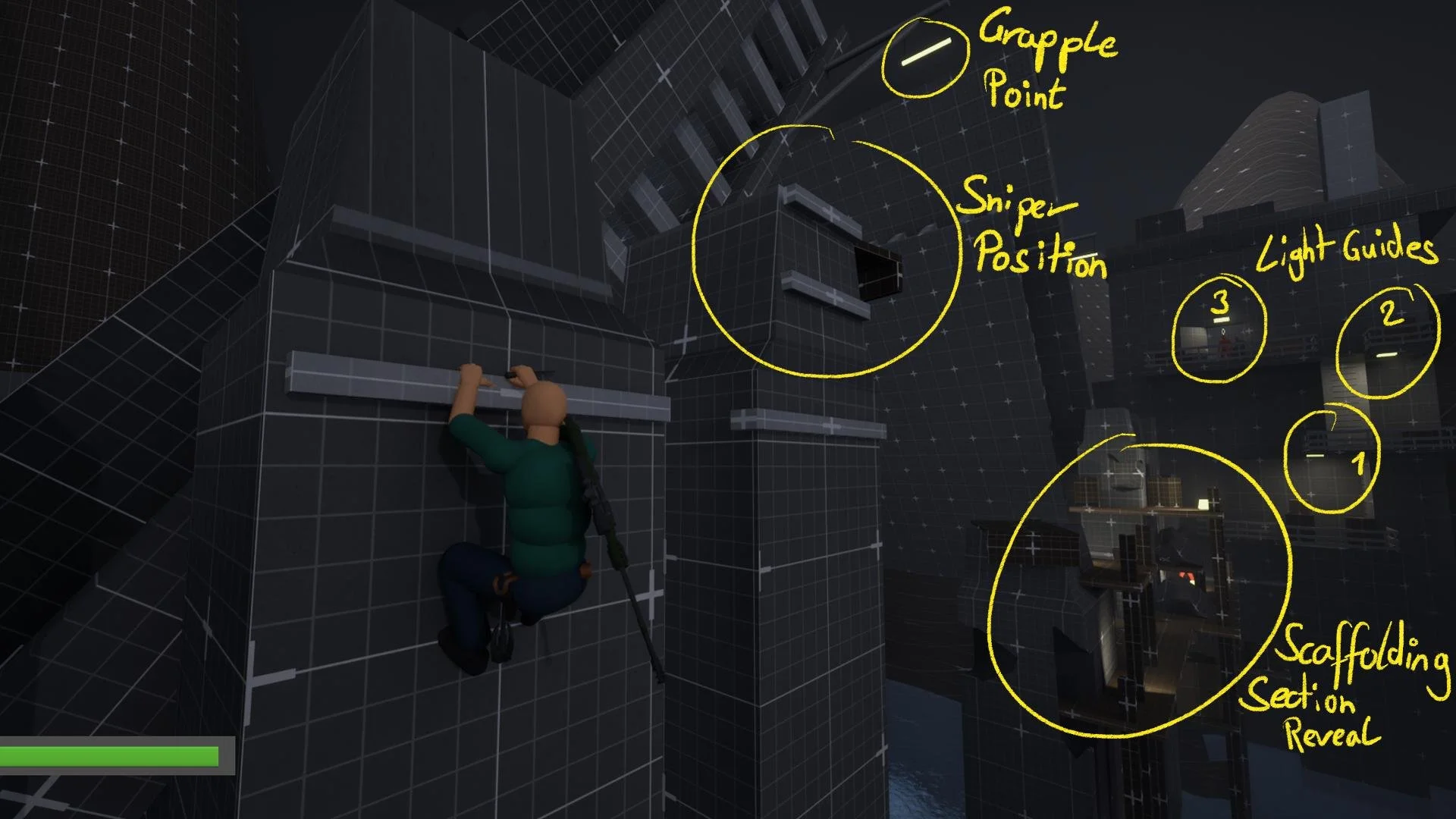
Emphasized lighting as a gameplay and navigation tool, guiding players and highlighting safe paths during night gameplay.
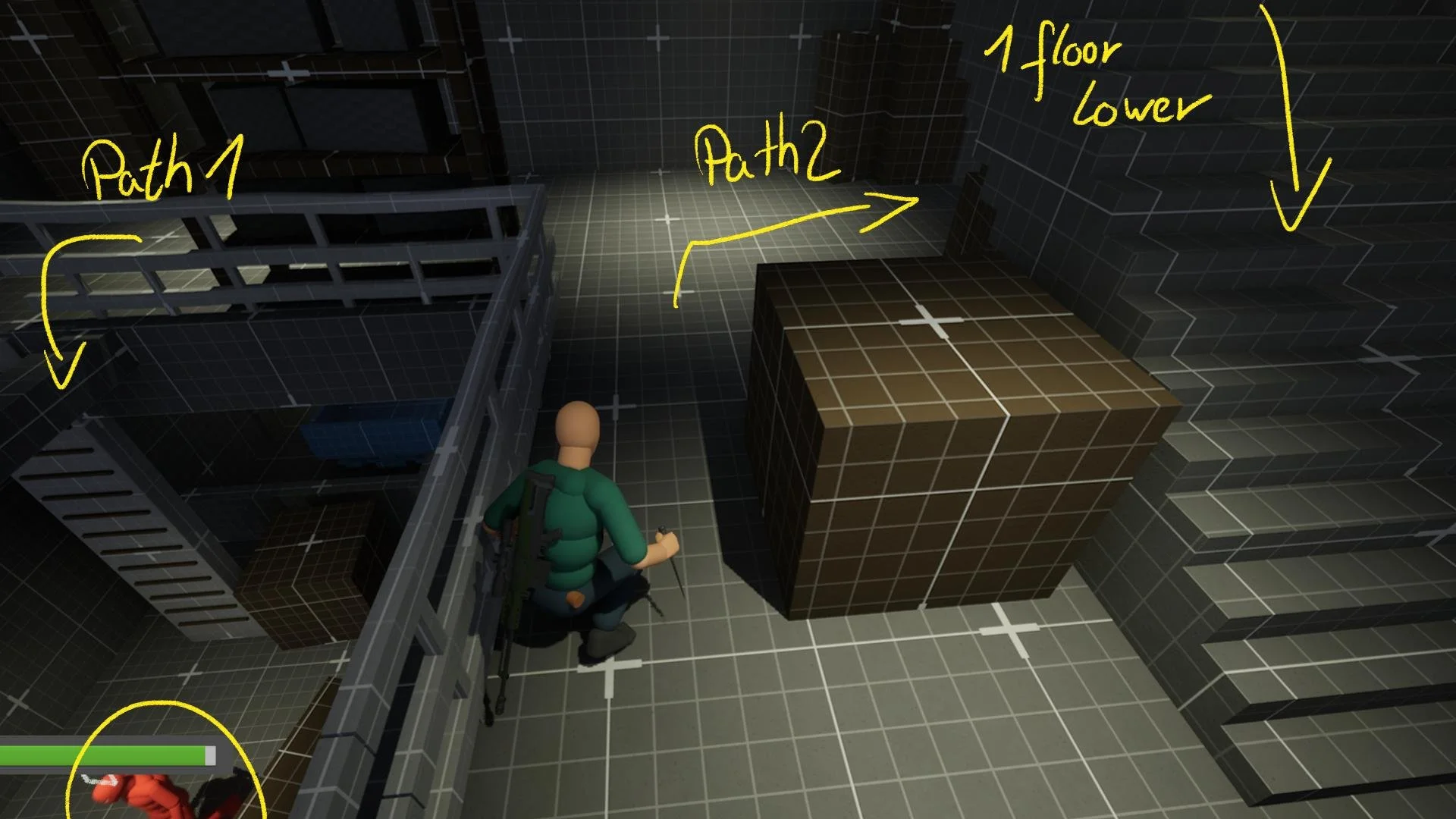
Created alternate paths using scaffolding and repair structures, allowing players to climb into guard towers.
Integrated hookshot traversal to access construction areas and bypass heavily guarded sections.
Designed complex interior and exterior guard tower encounters, combining timing, verticality, and multiple approaches for player choice.
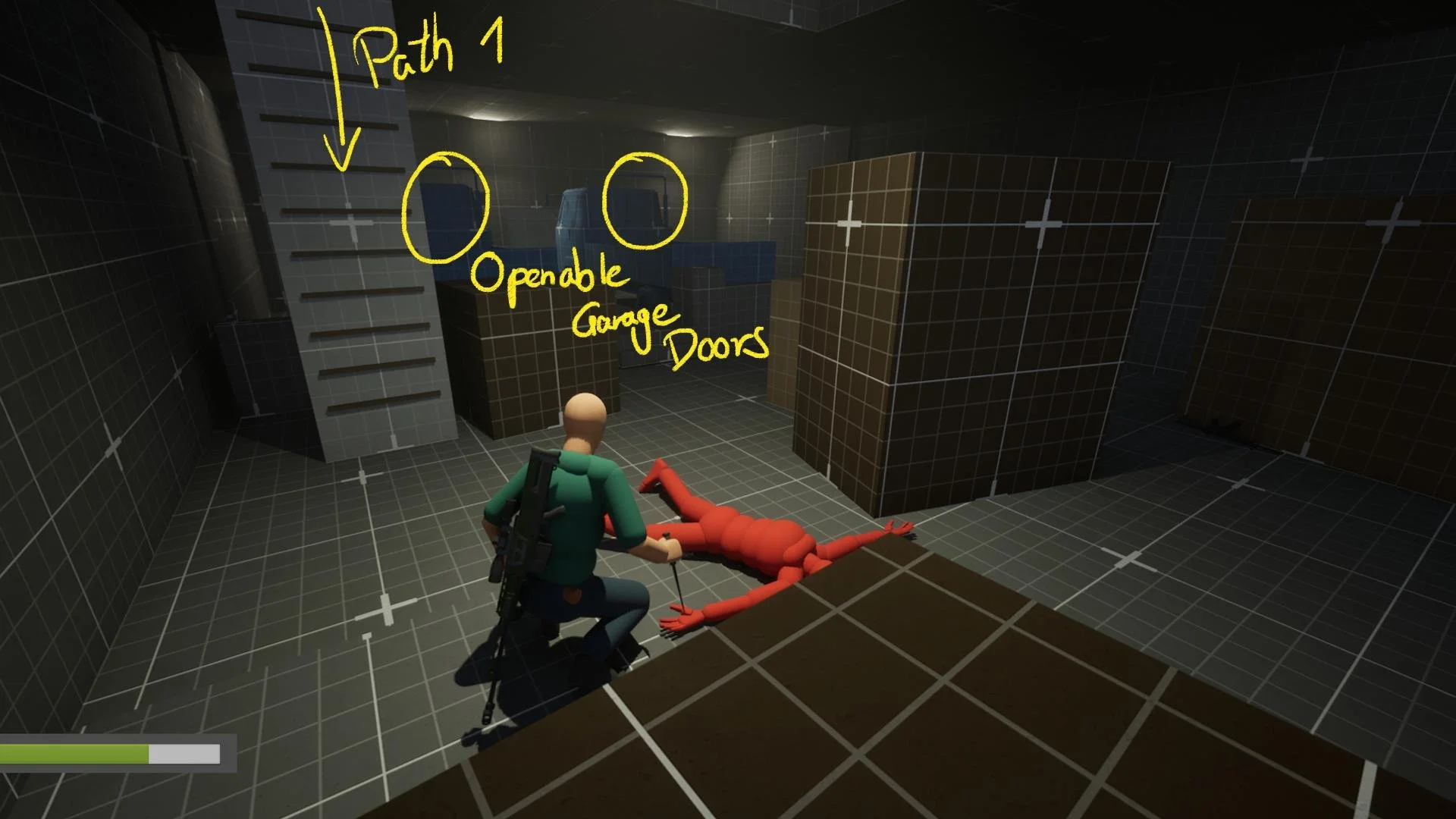
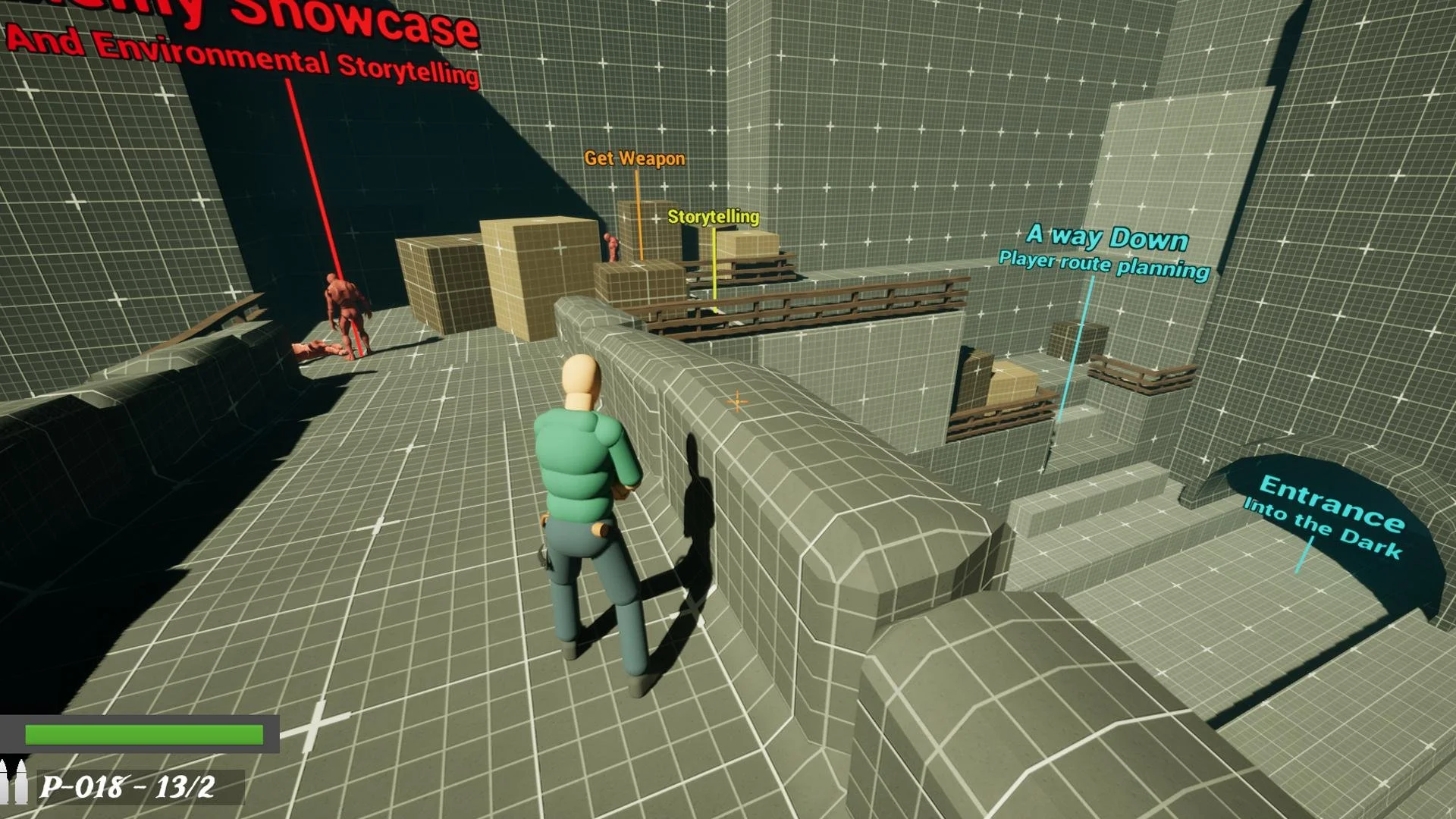
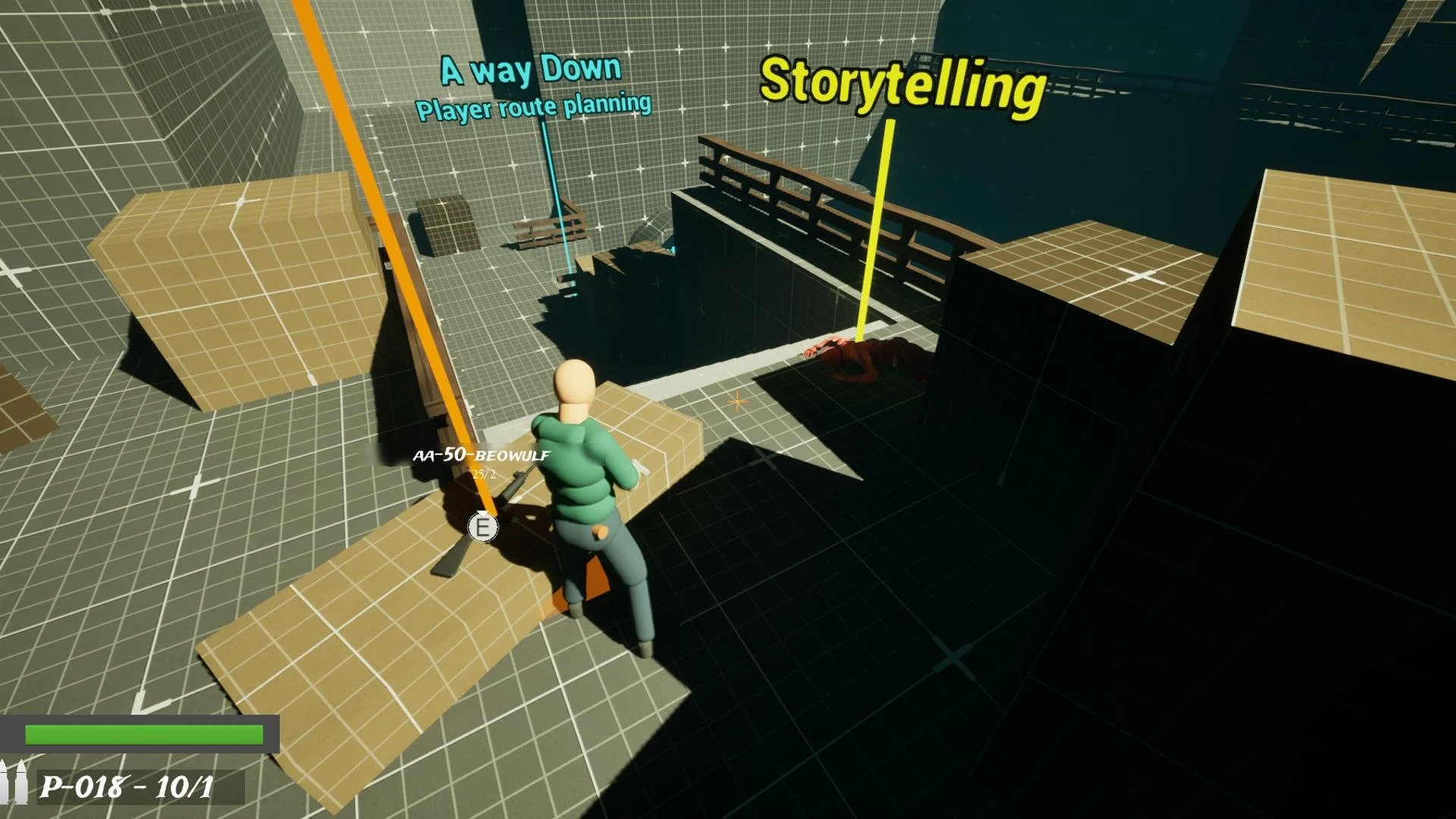
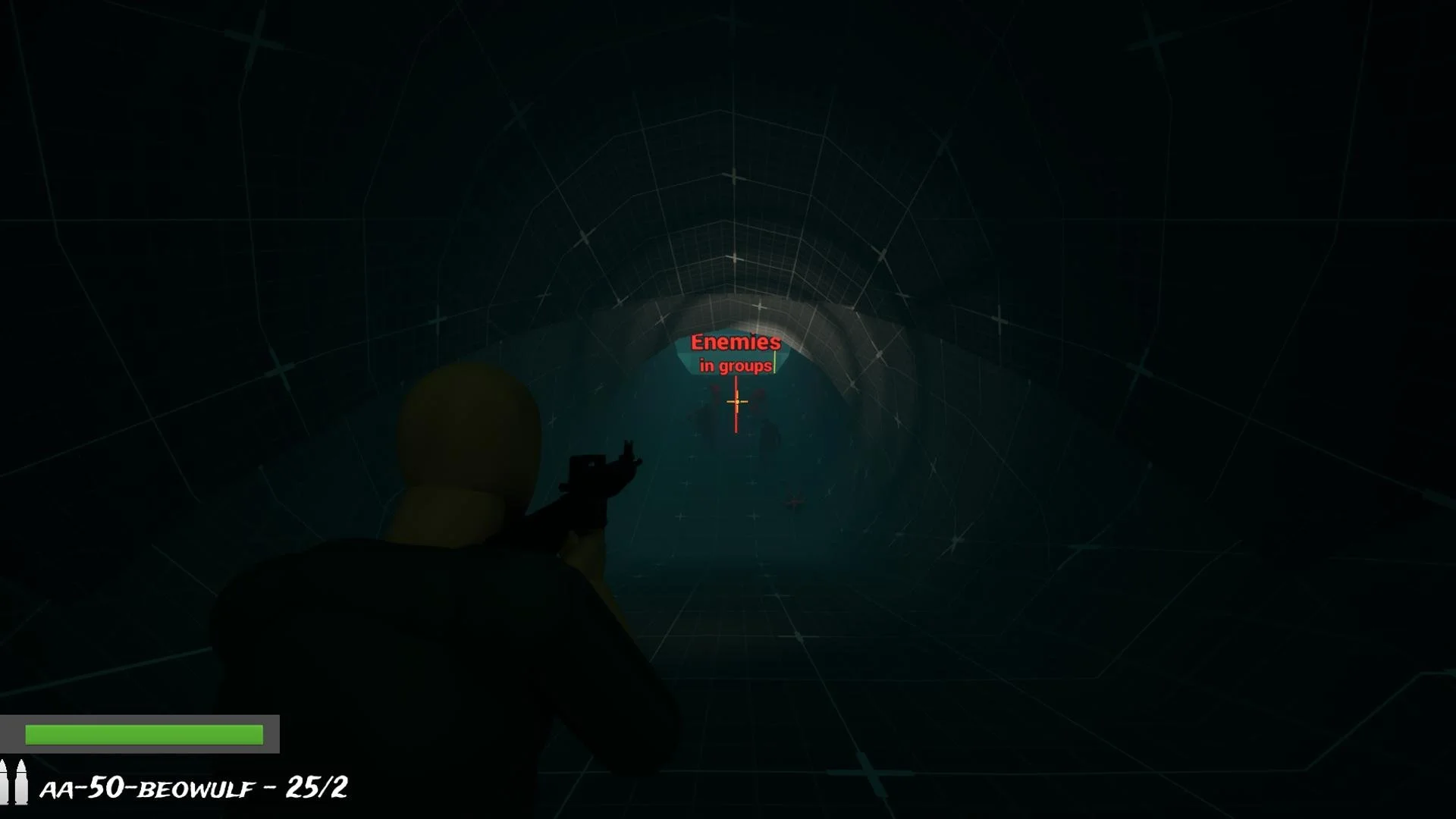
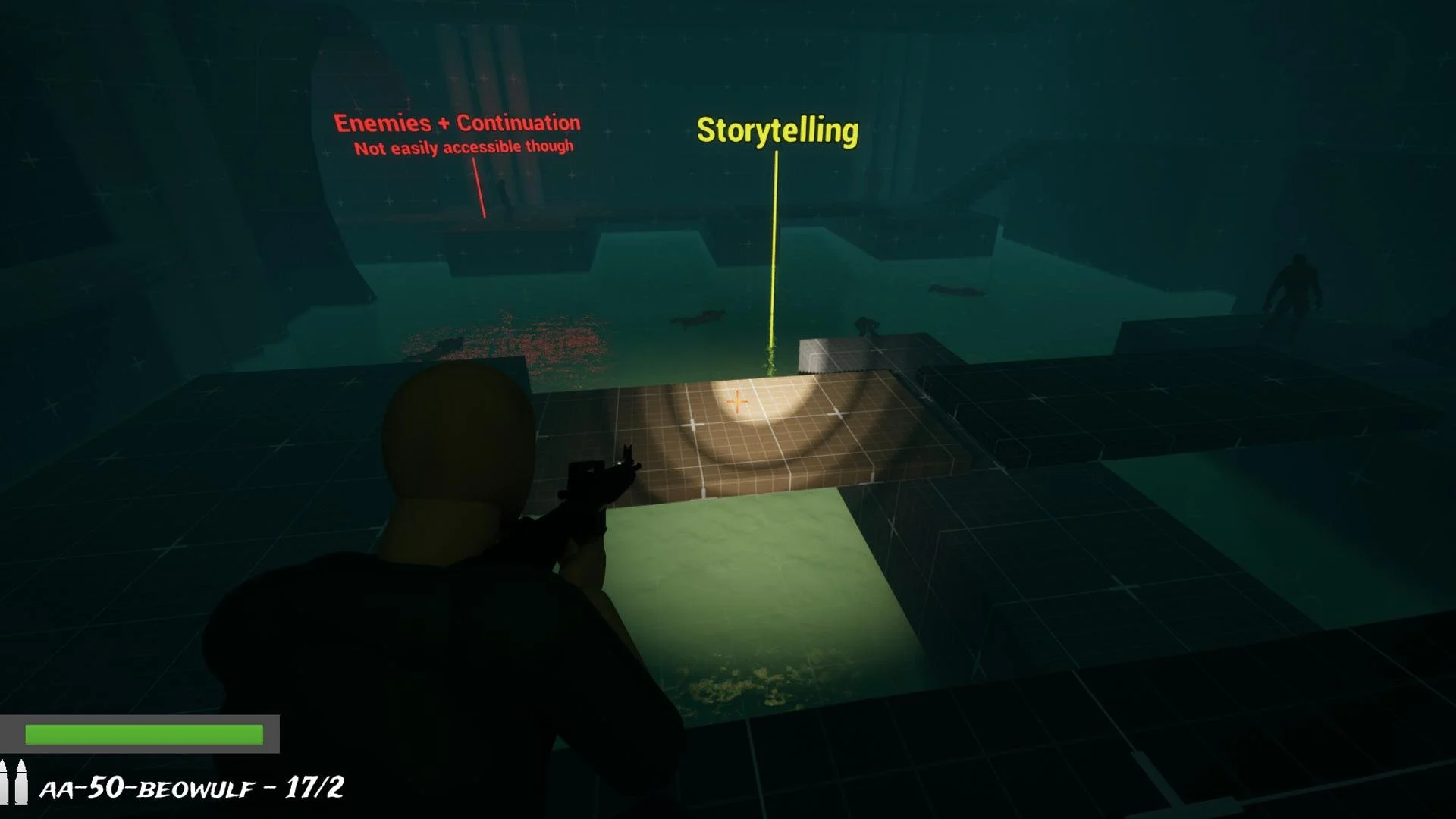
#23: Day 26: Under the City
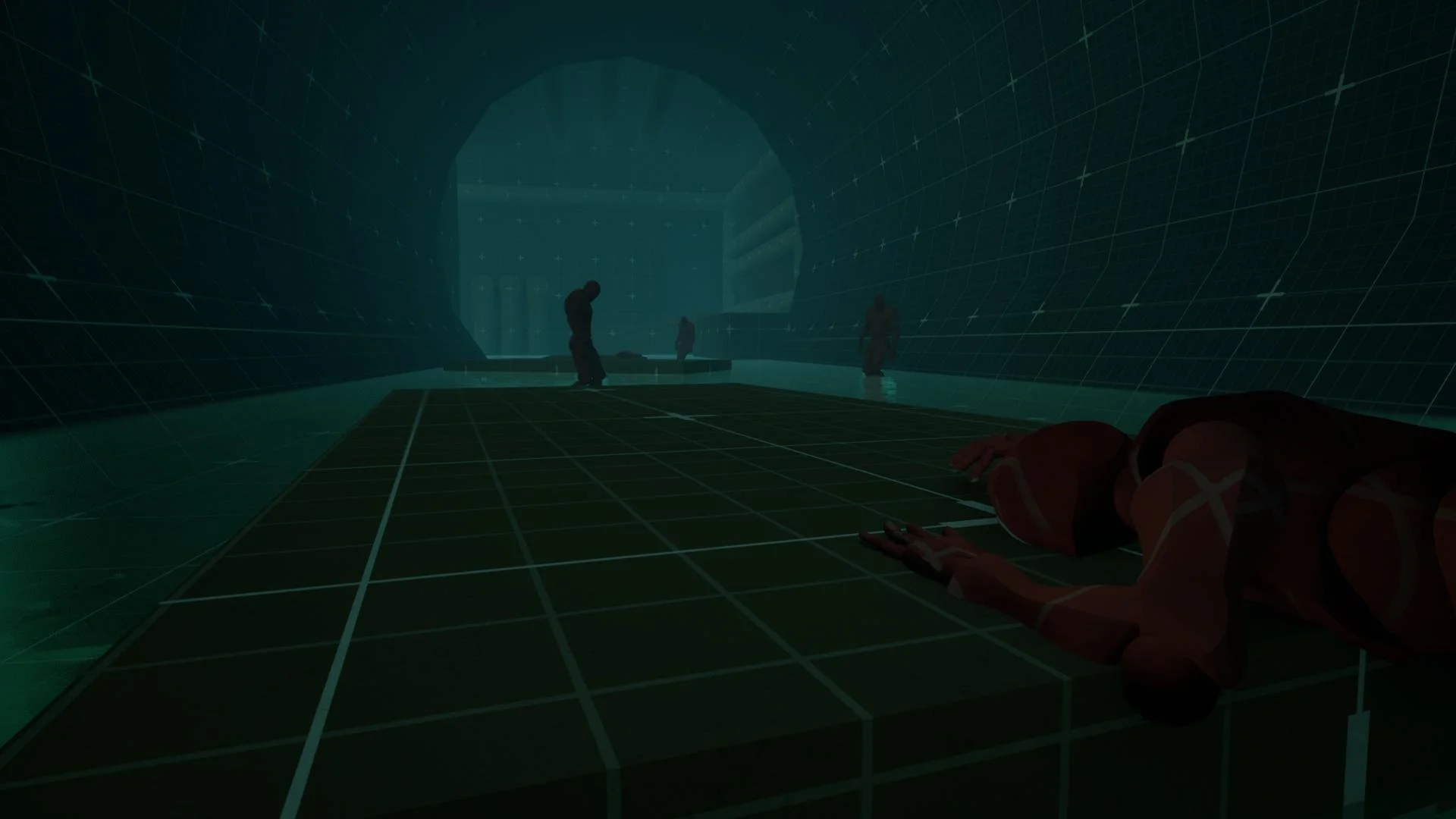
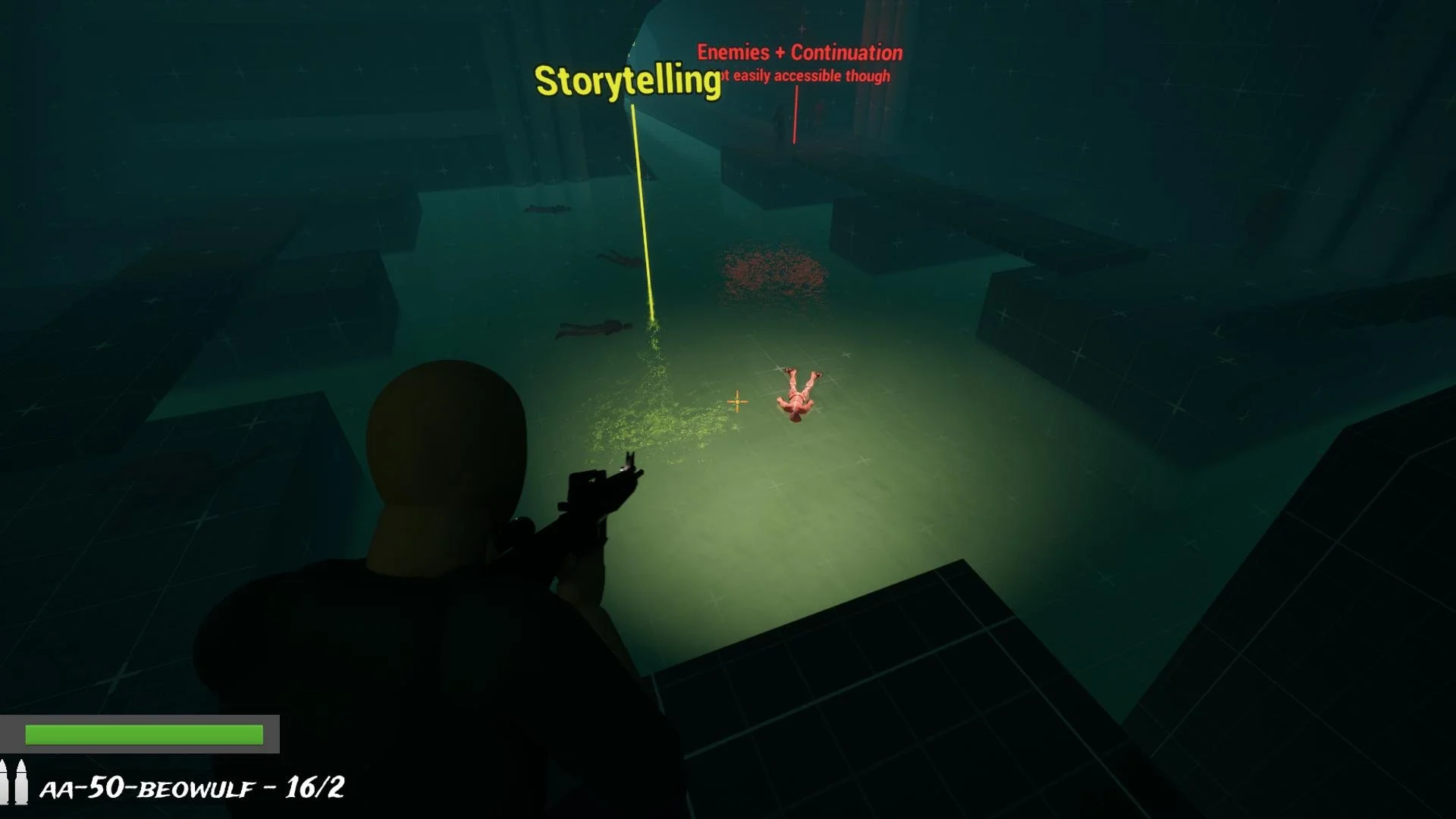
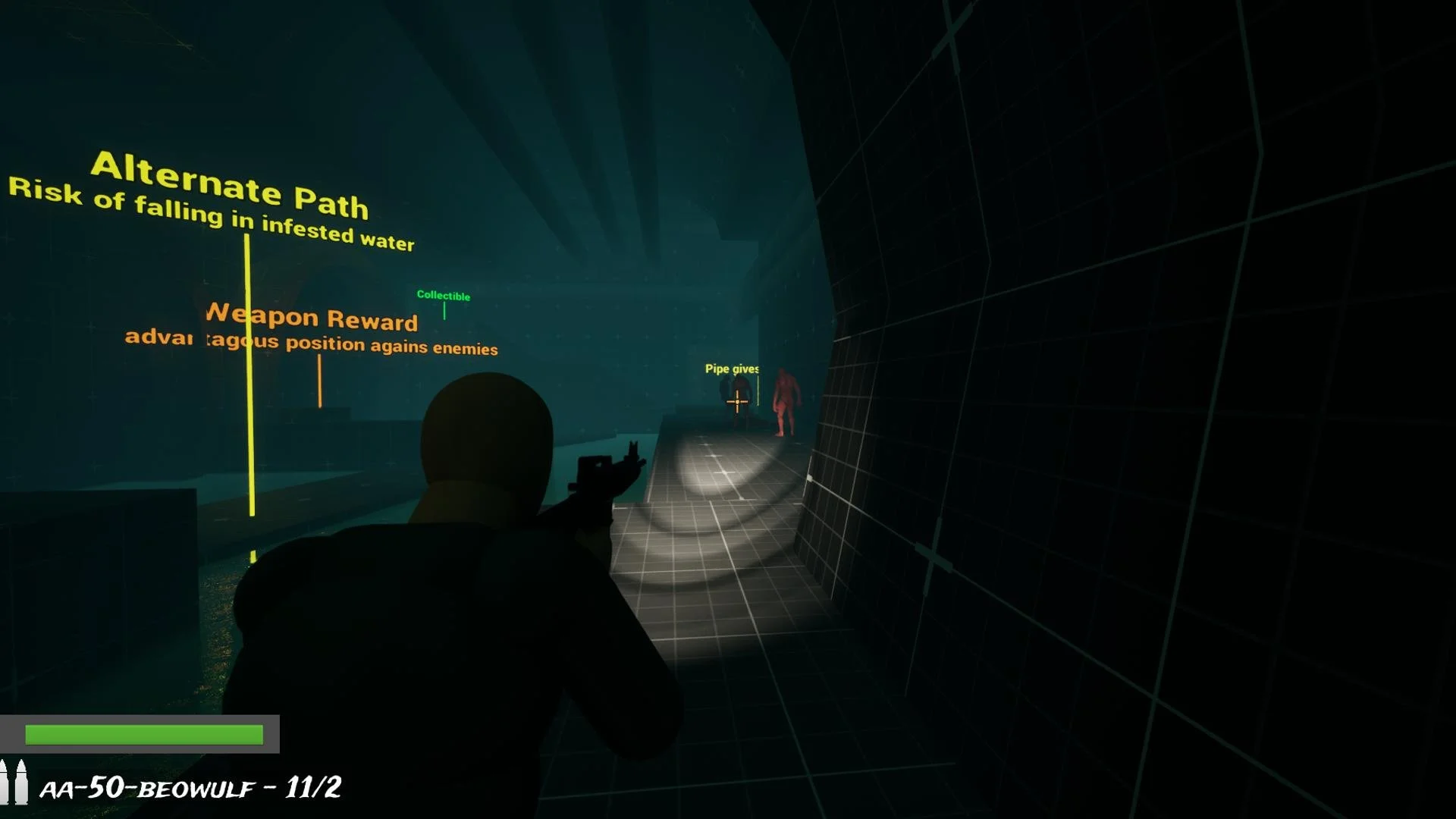
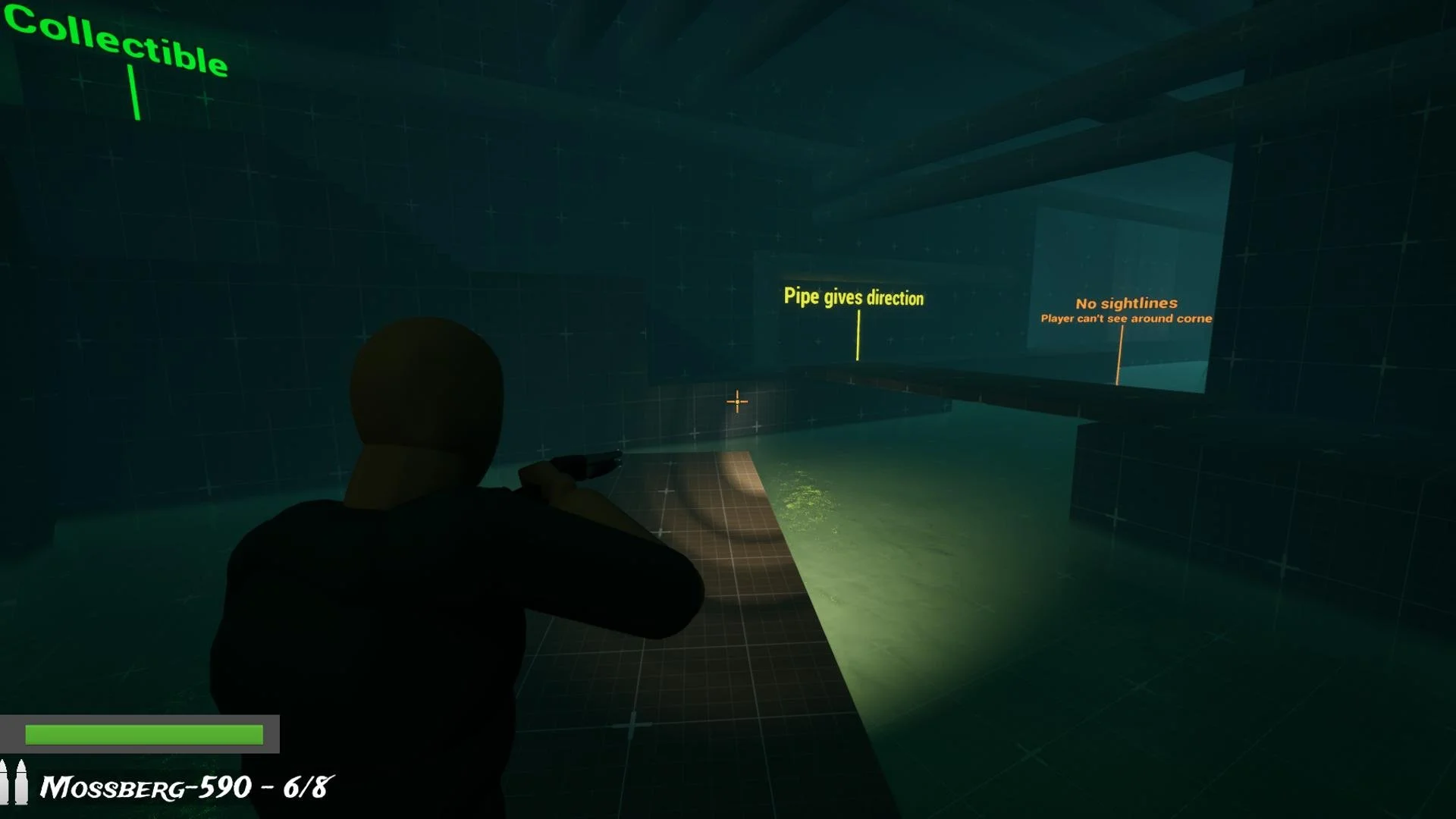
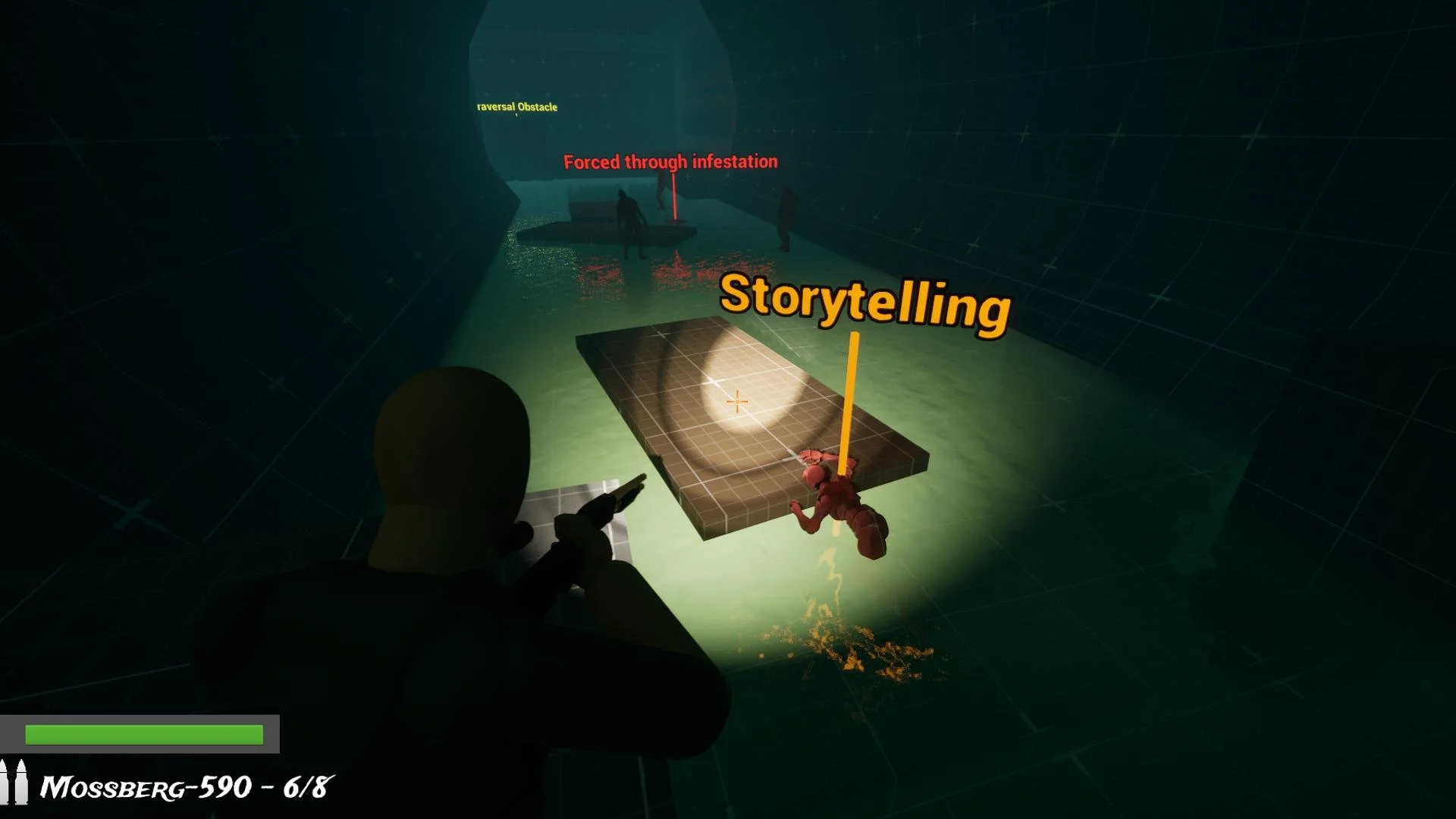
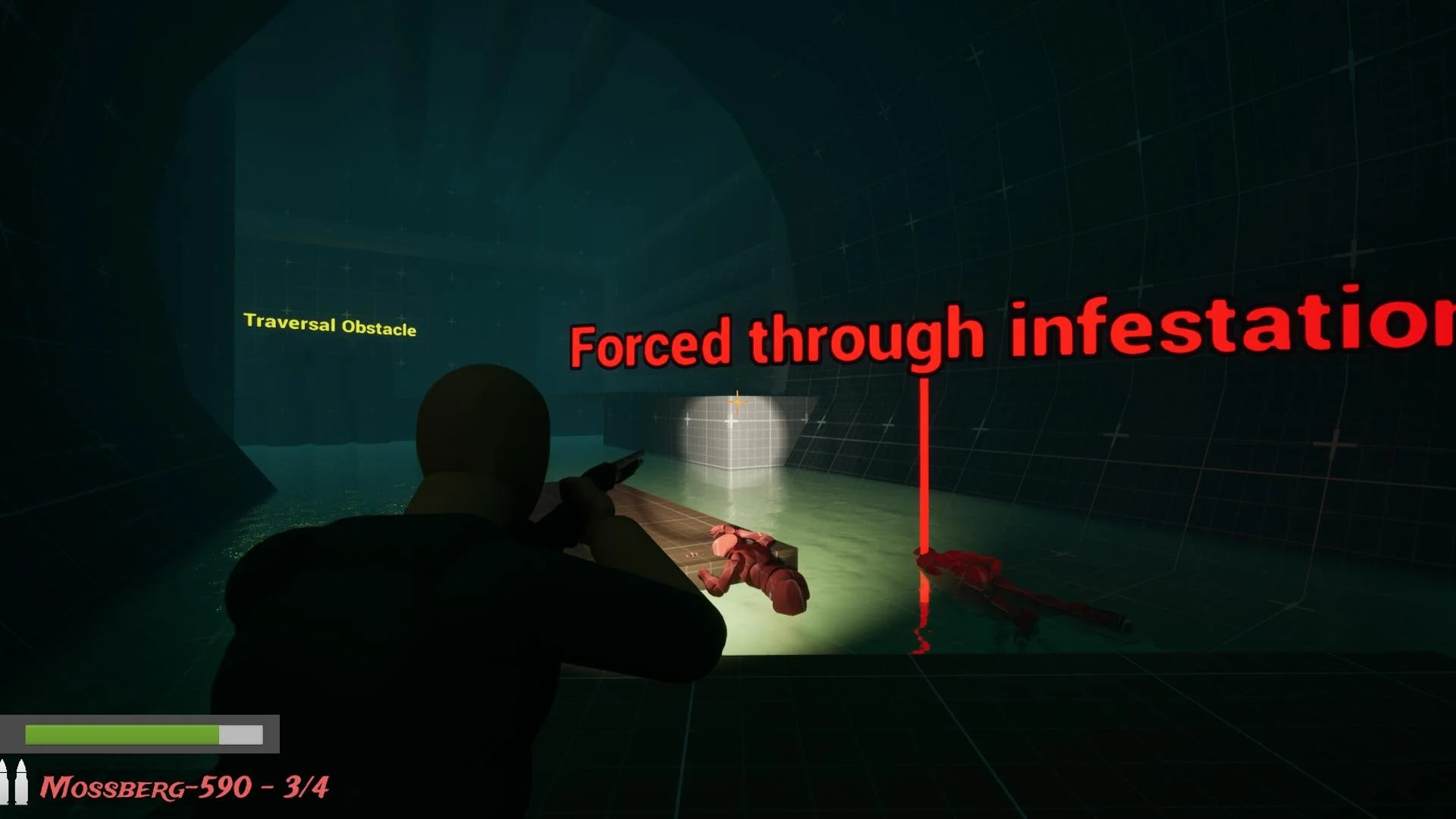
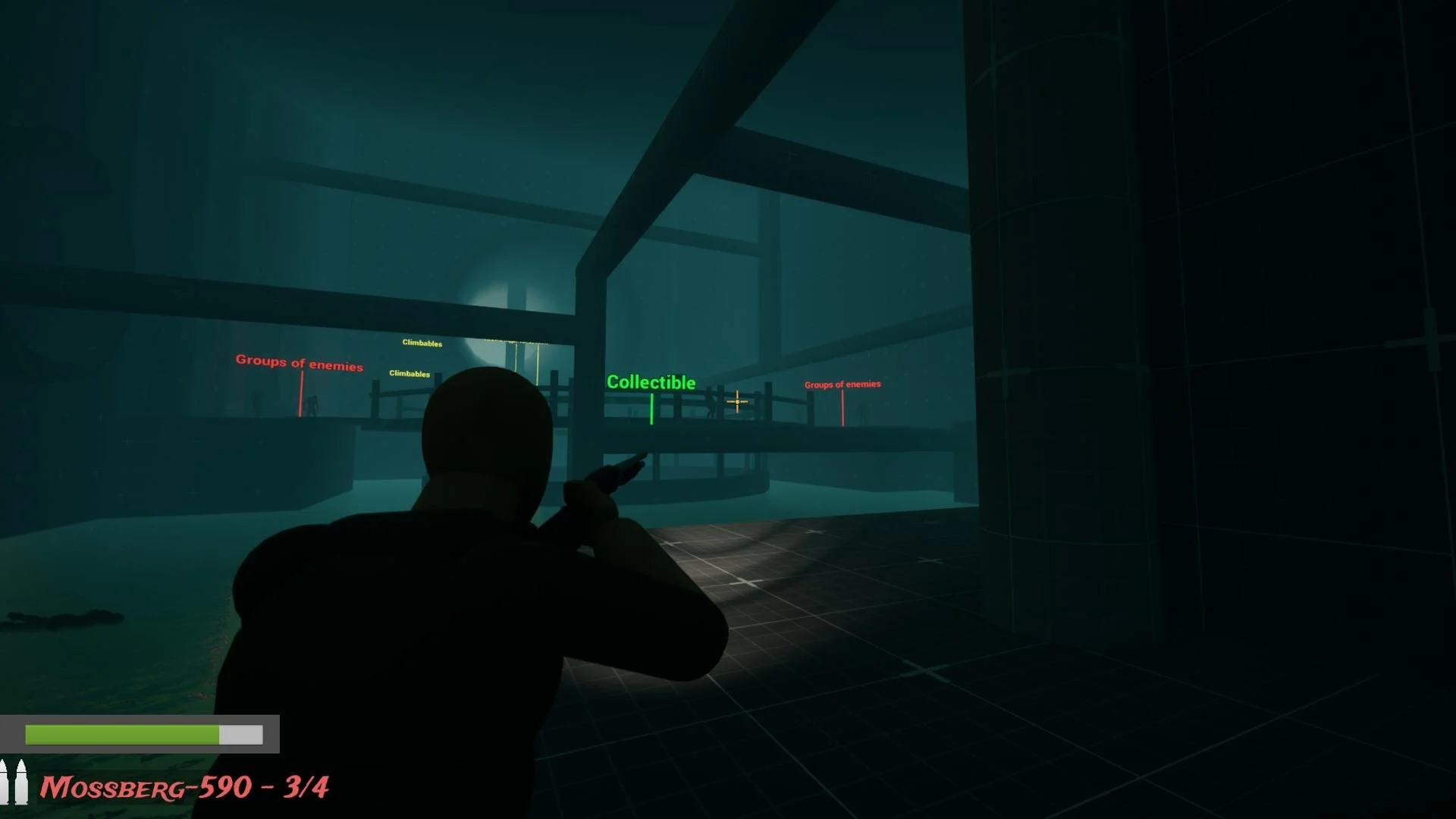
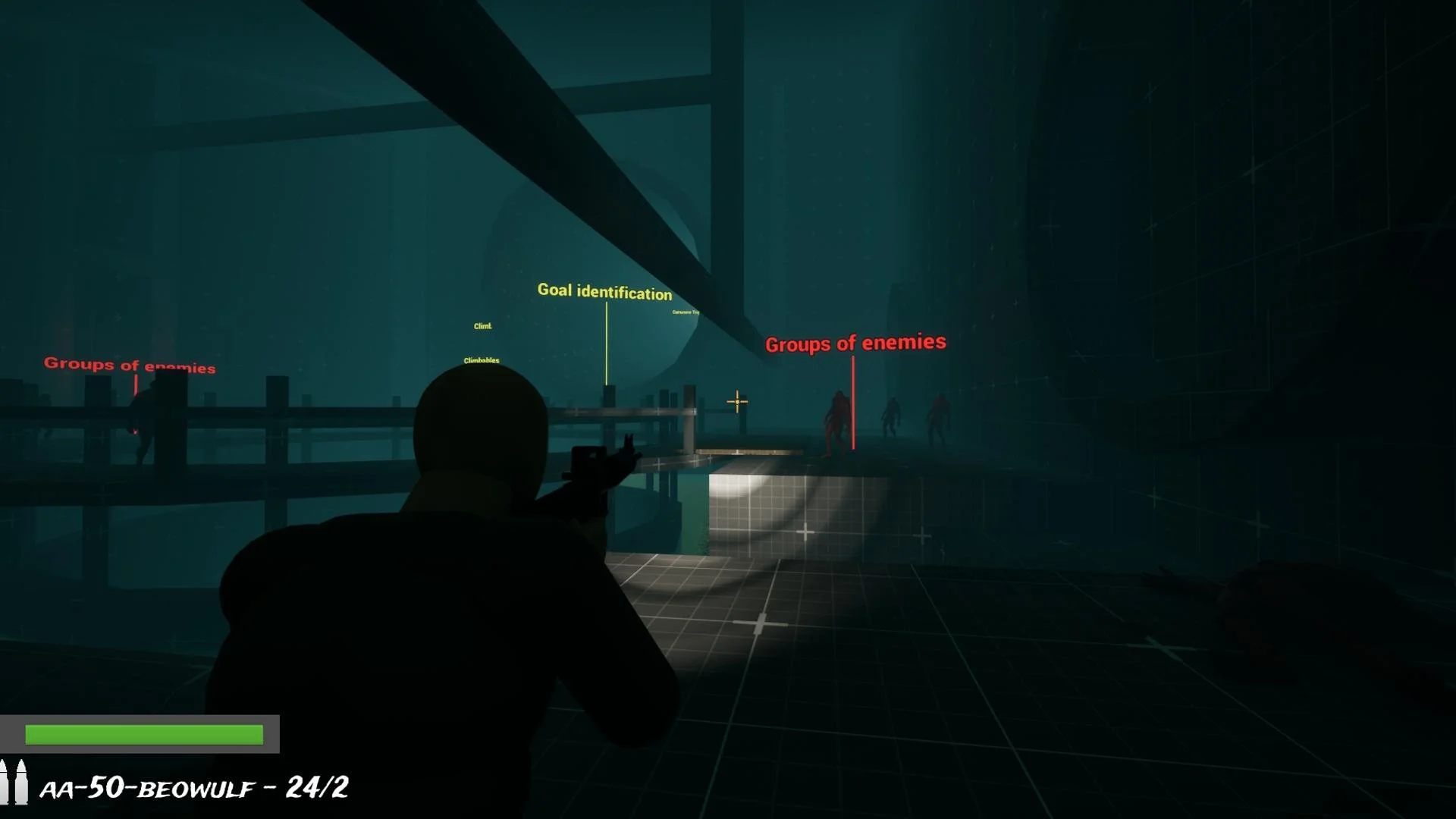
Designed a dark, wet sewer level beneath a city overrun by zombies, emphasizing tension and tactical navigation.
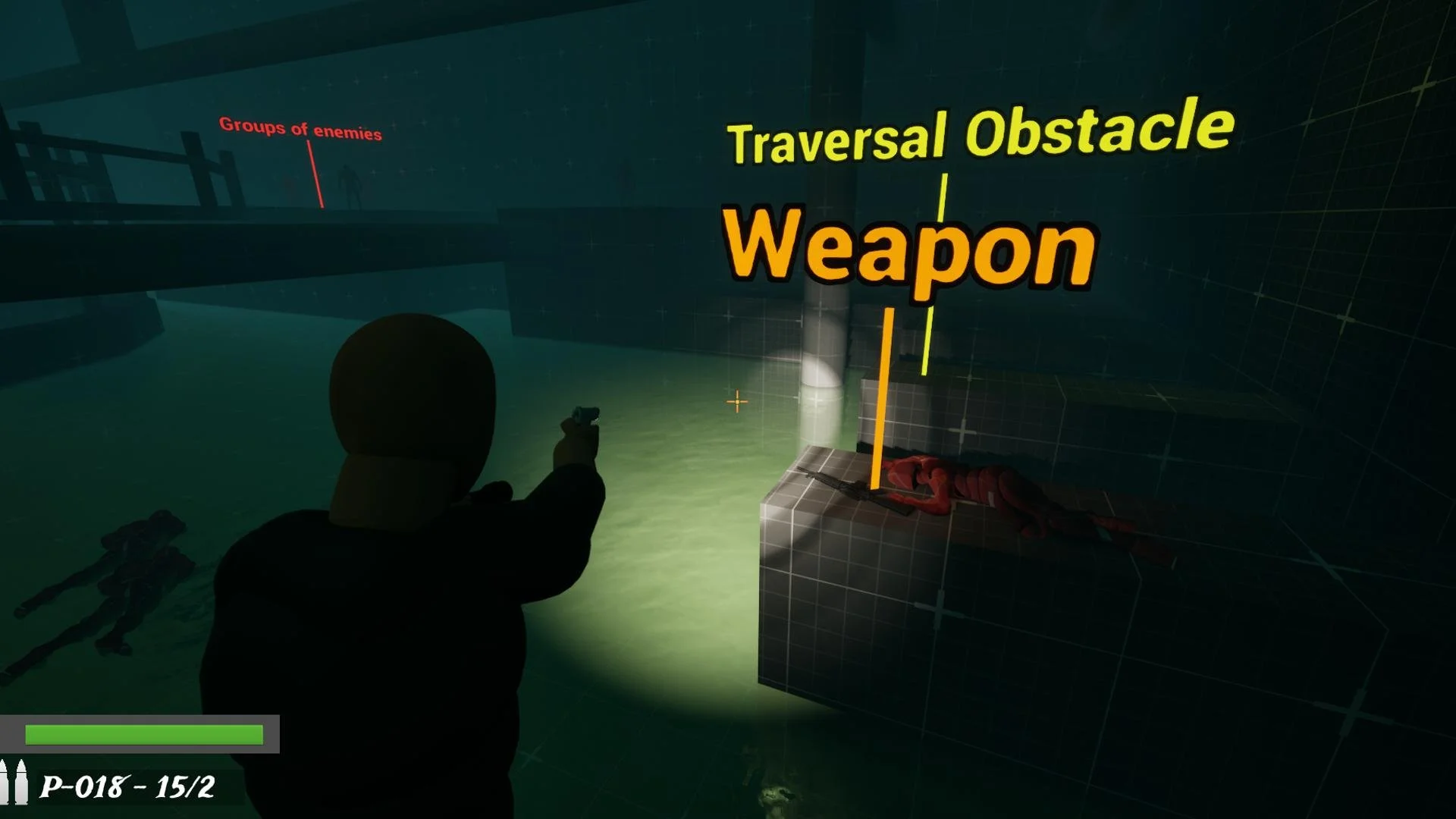
Incorporated environmental hazards, such as contaminated water, to guide players toward higher ground and strategic positioning.
Focused on path presentation and navigation clarity, ensuring players understand where they’ve been, where they’re going, and what’s worth exploring.
Utilized flashlight-focused gameplay, forcing players to manage visibility and movement carefully.
Created multiple paths with rewards, including hidden weapons and collectibles for observant players.
Balanced exploration, risk, and tactical choice, rewarding careful observation and thoughtful movement through the hazardous environment.
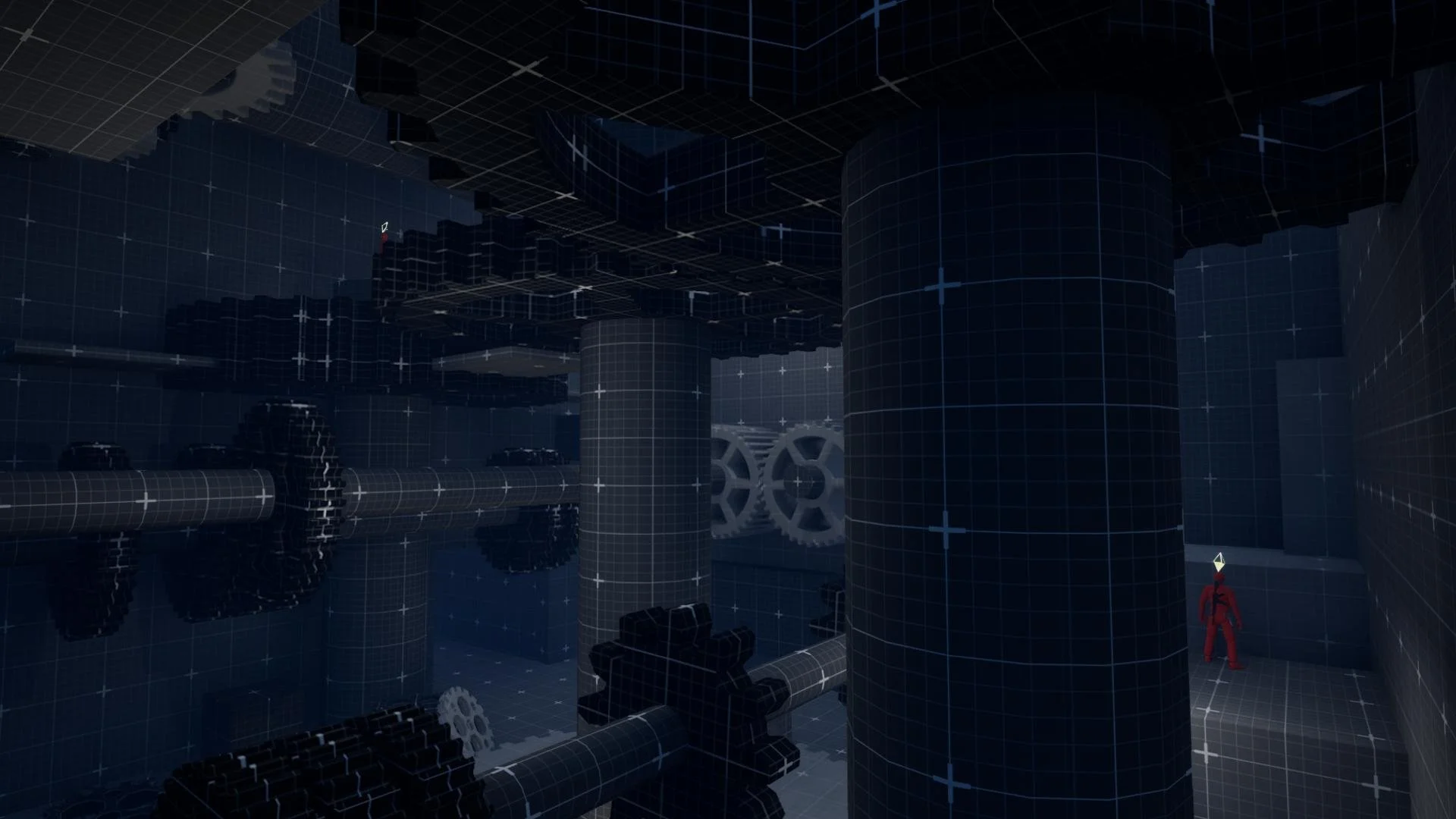
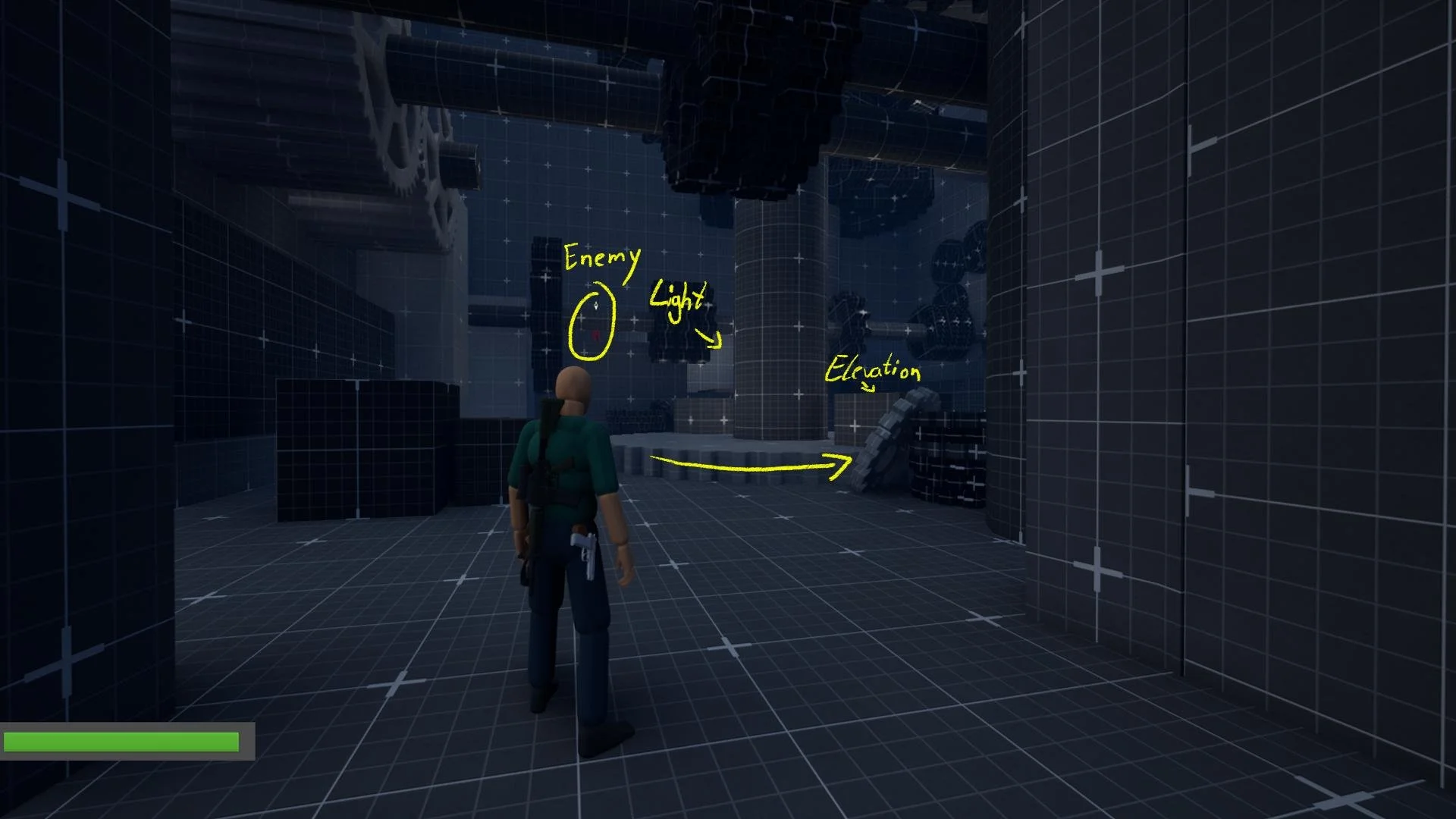
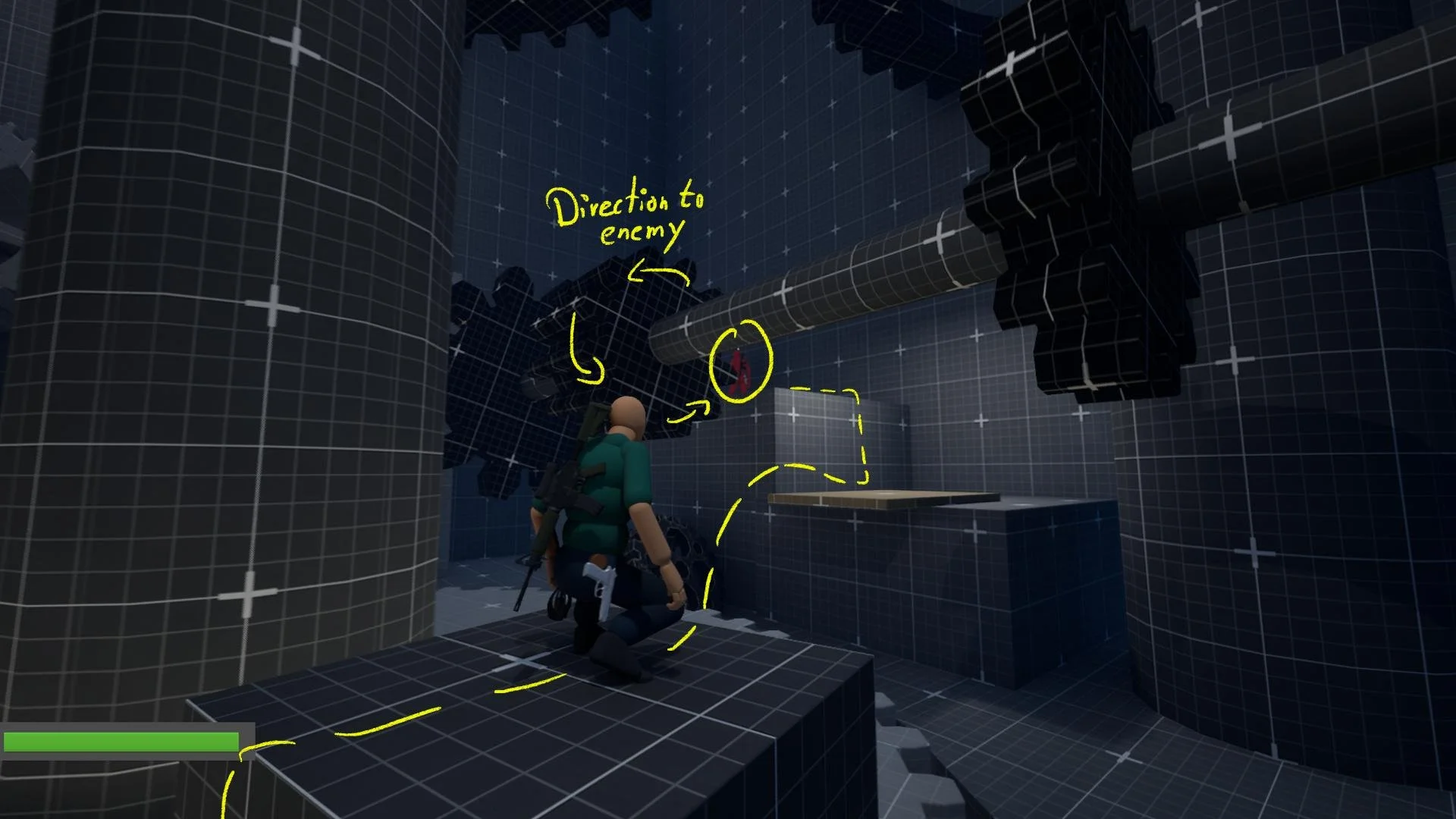
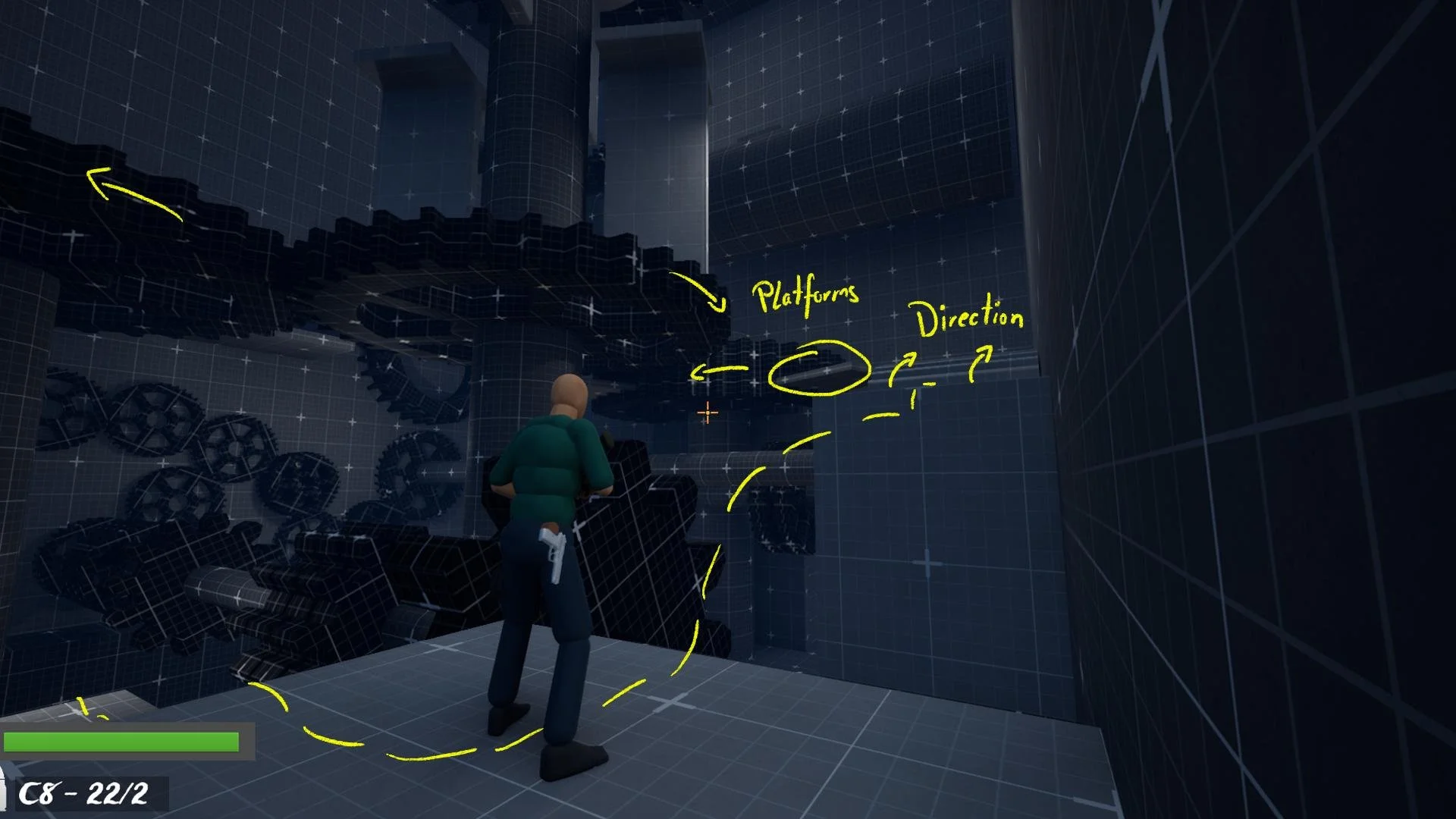
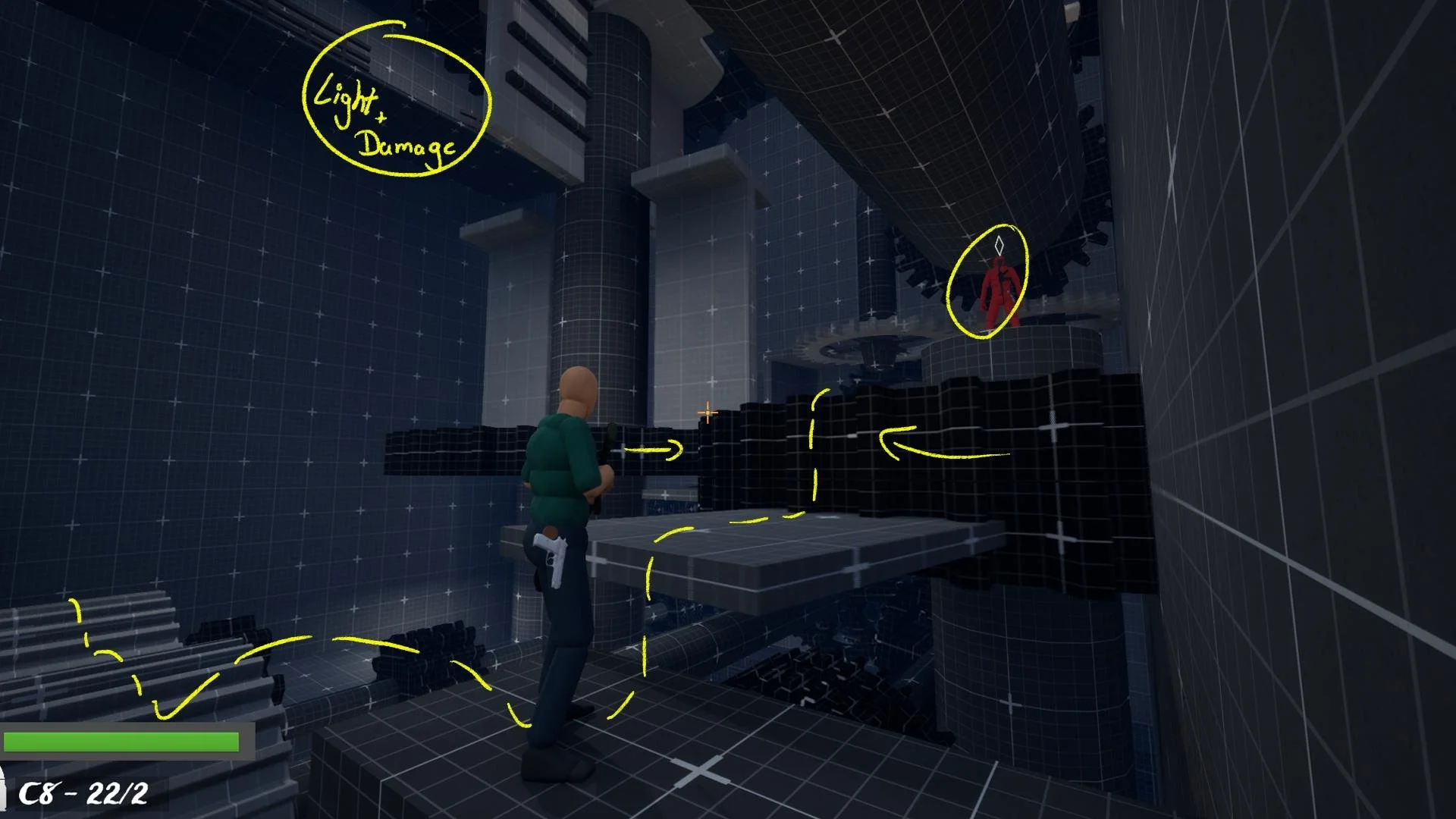
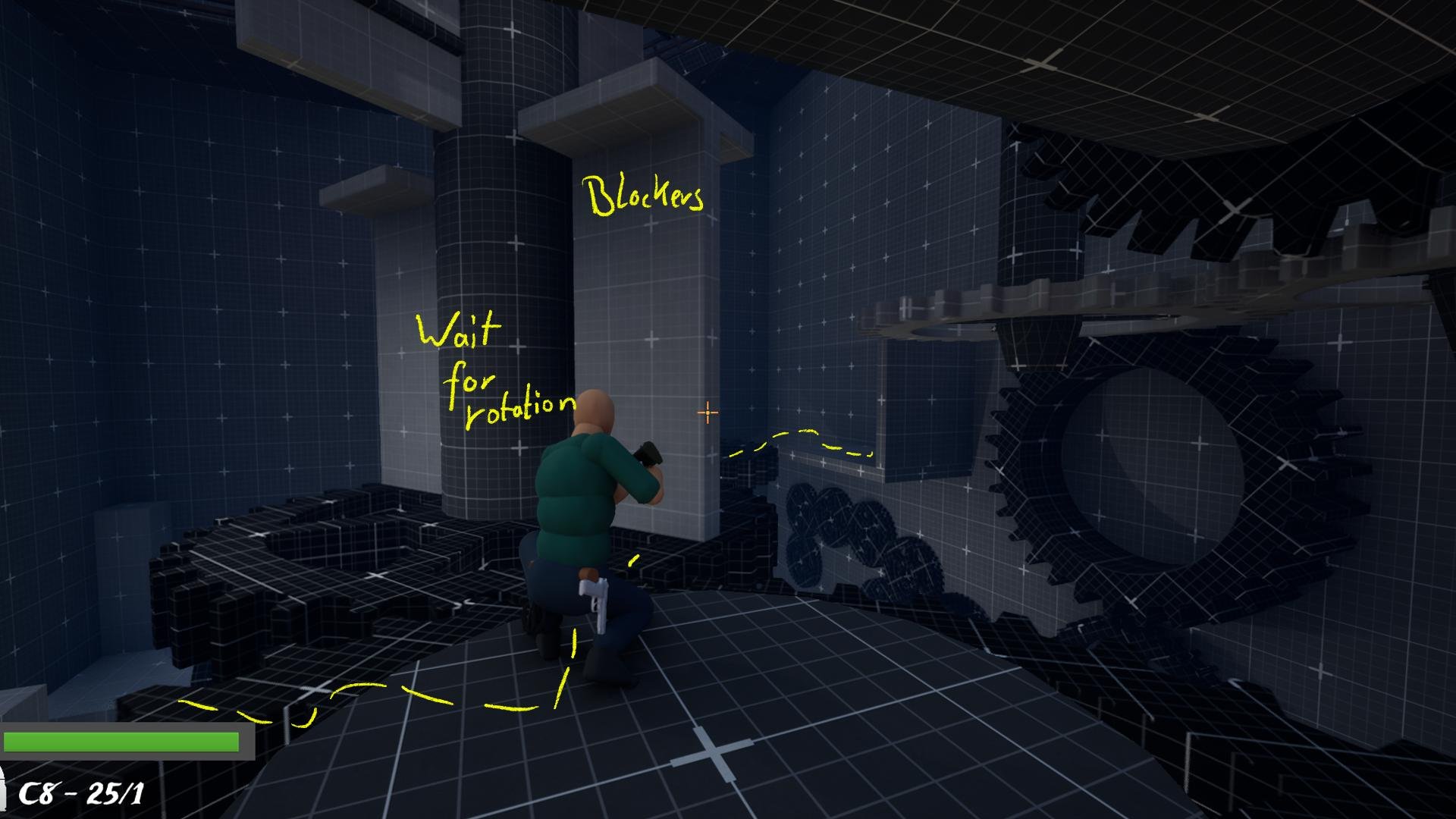
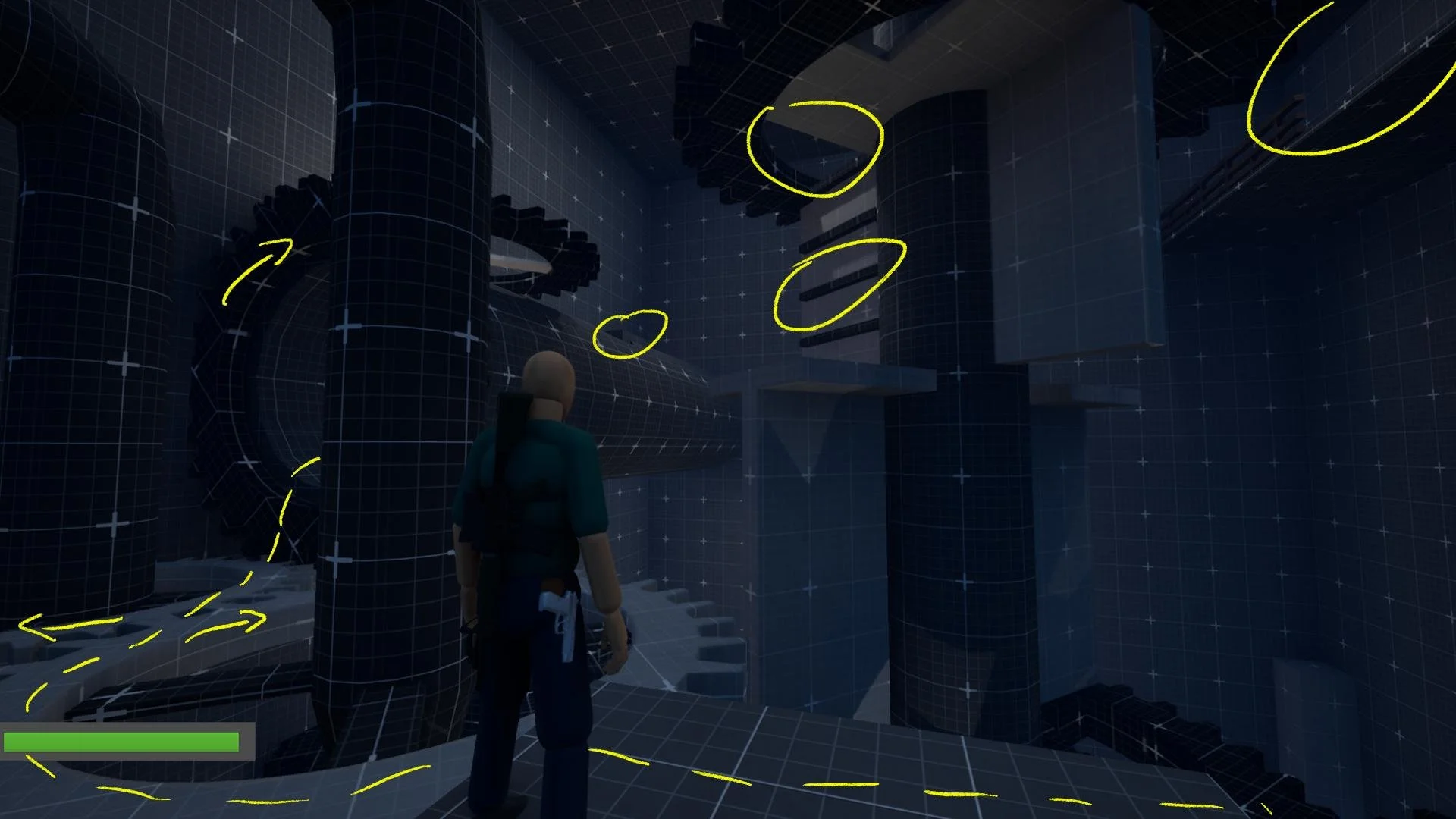
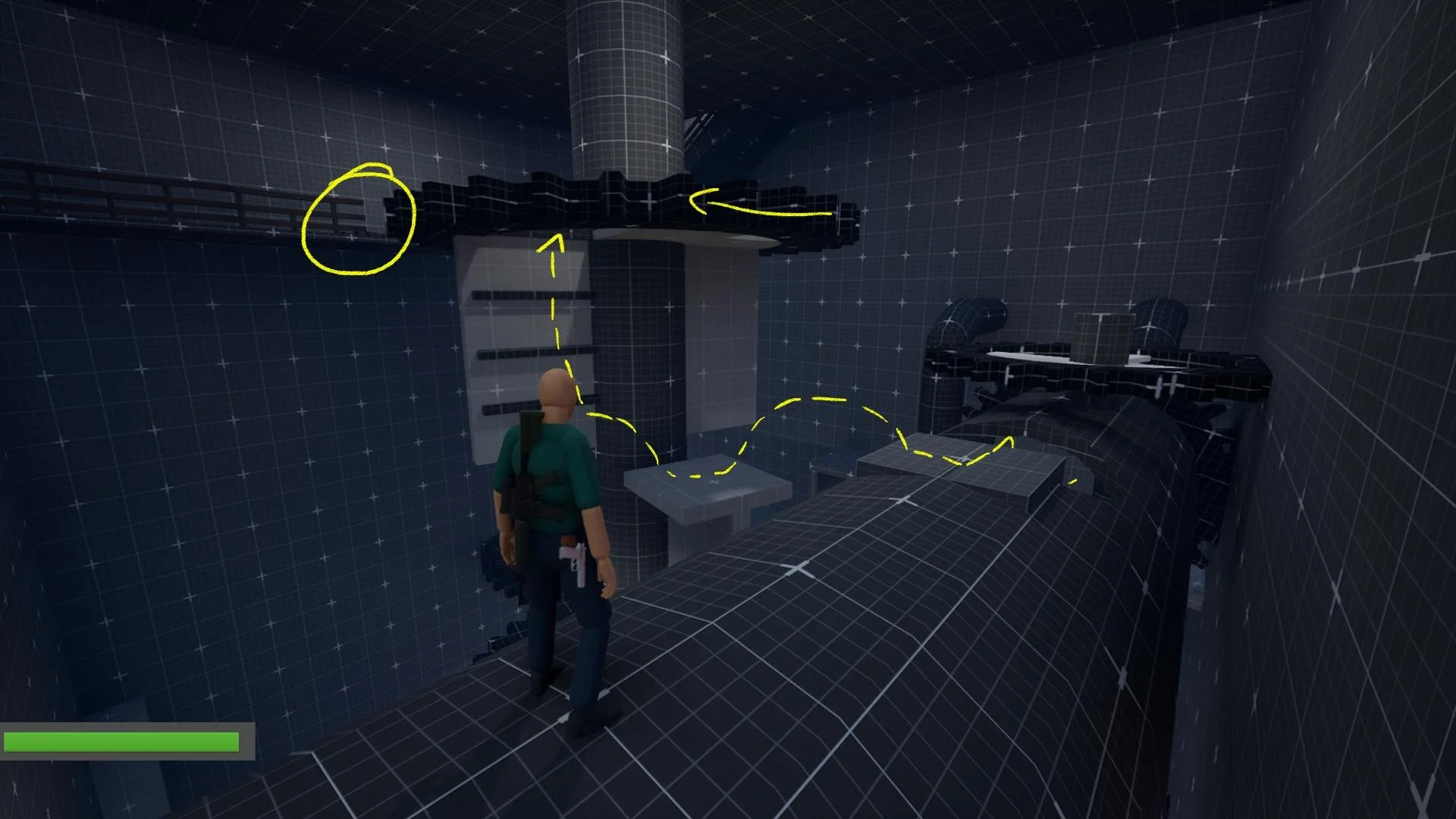
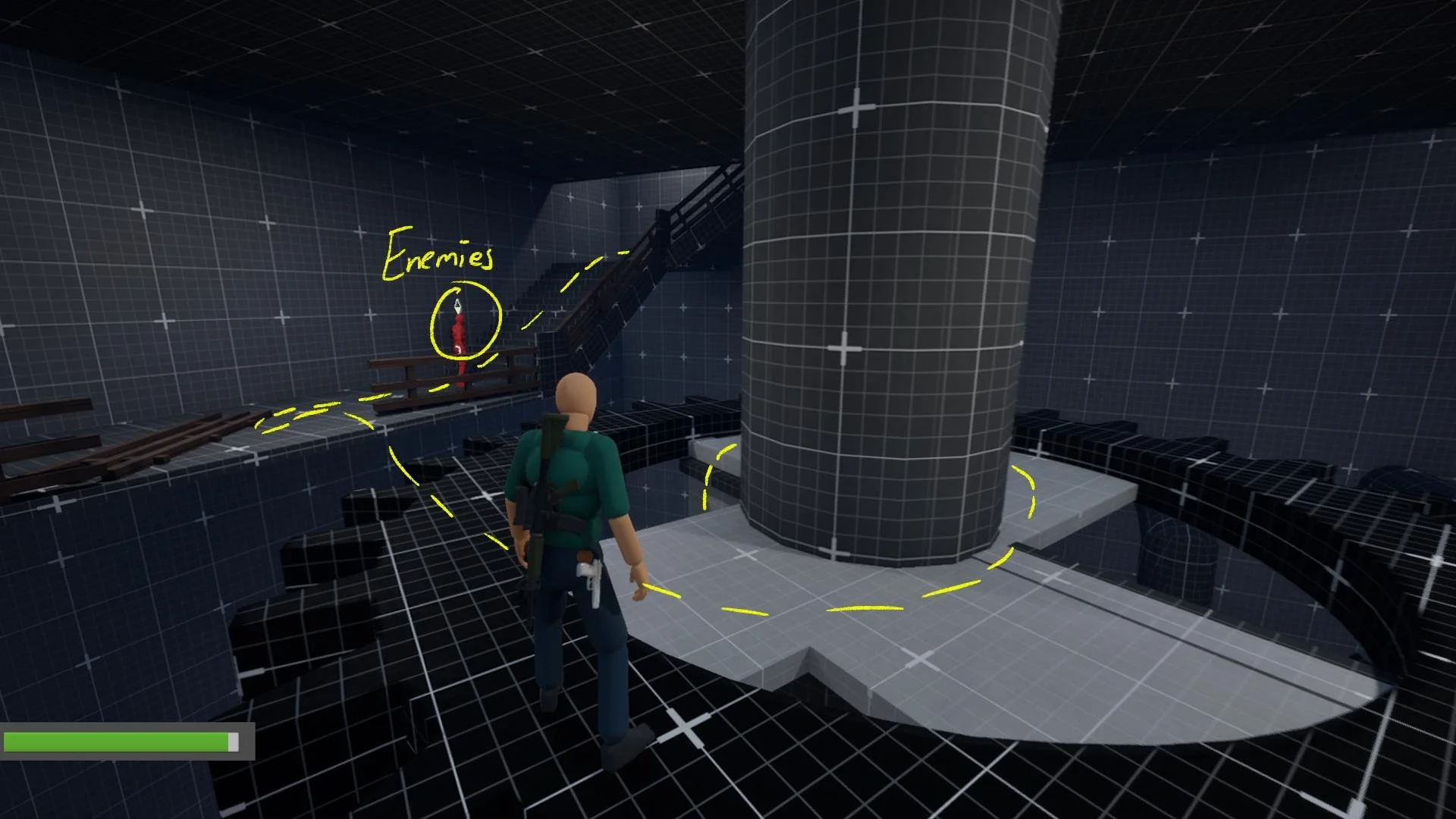
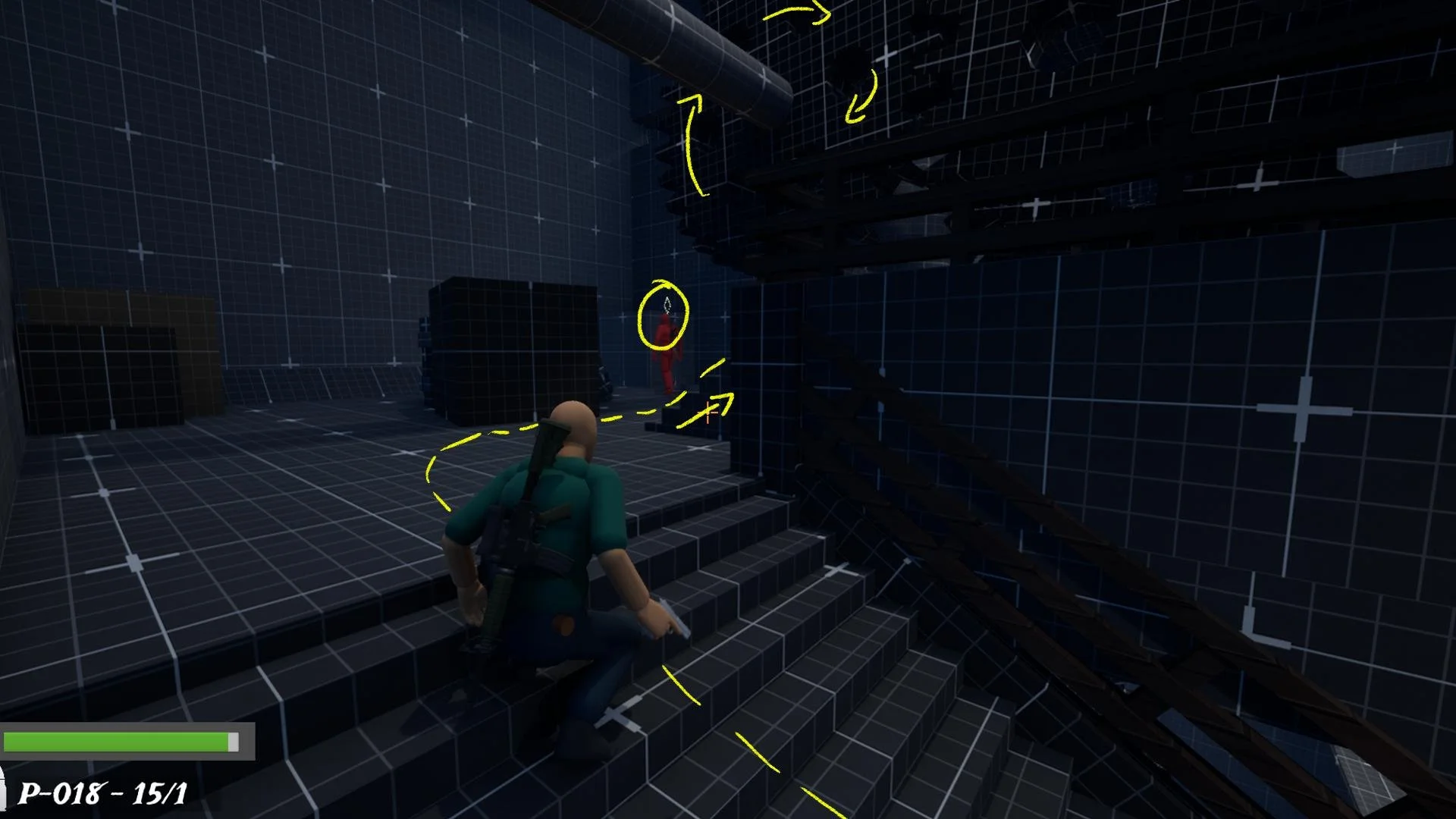
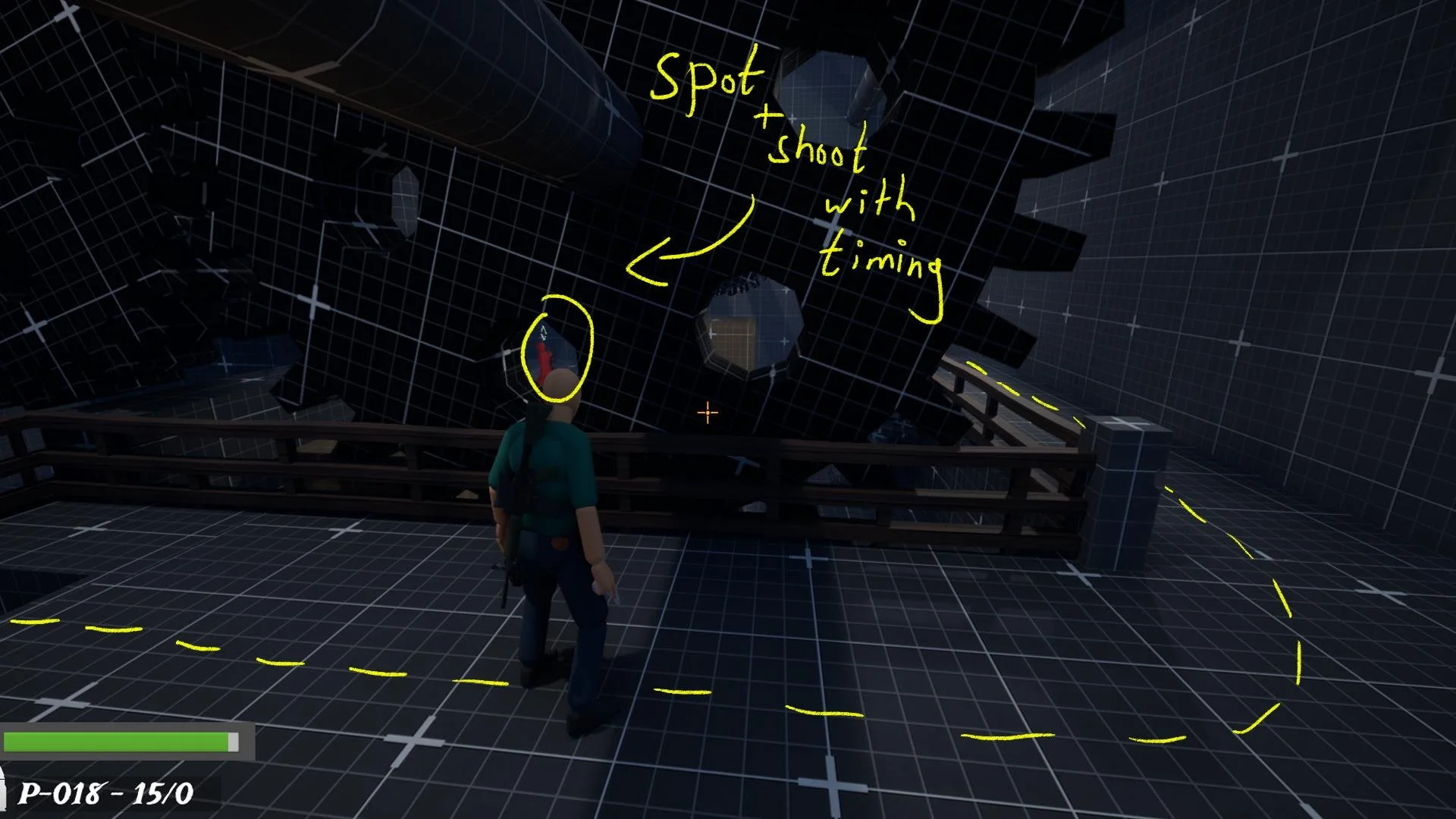
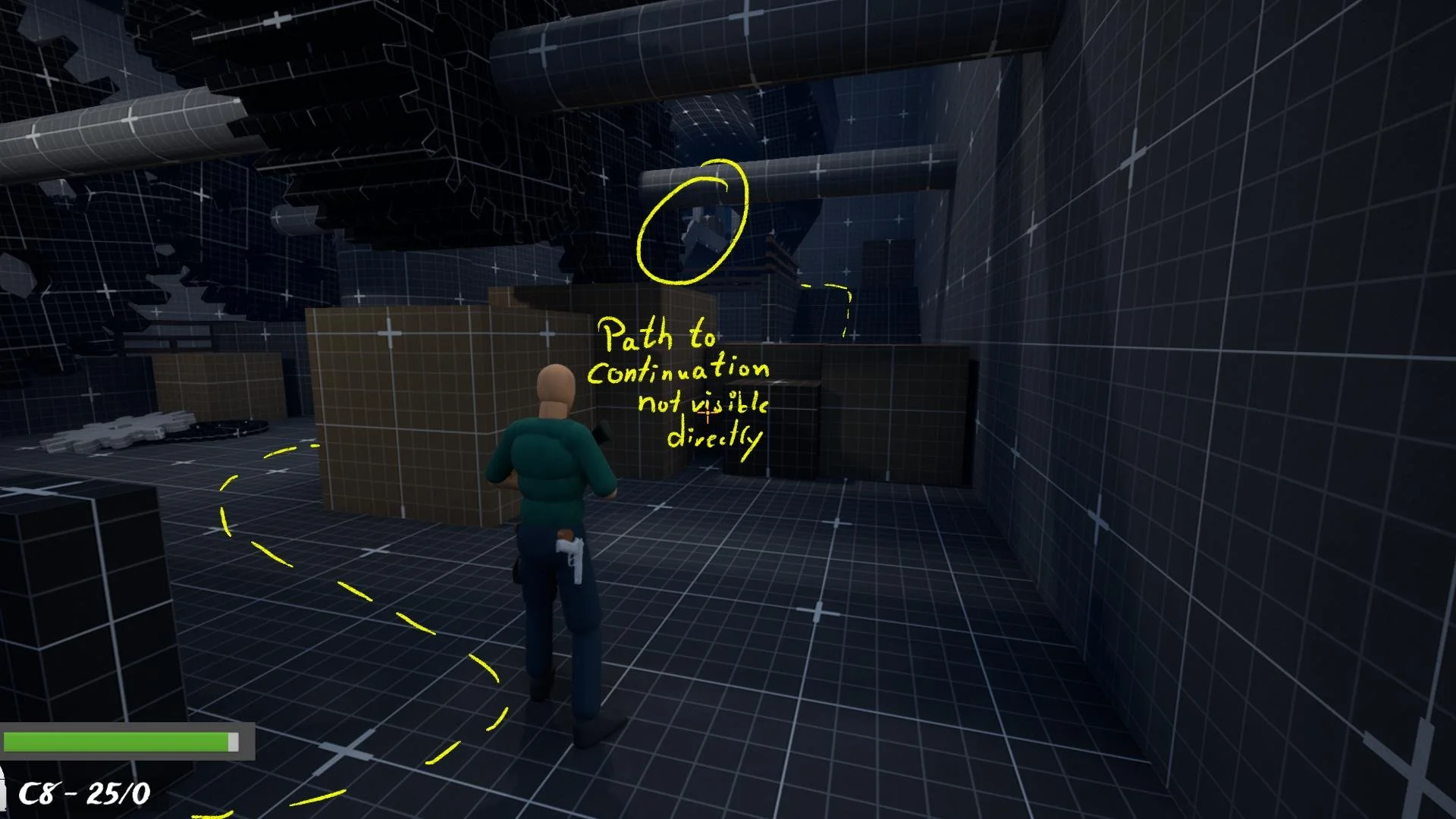
#24: Day 23: Clockwork Ascent
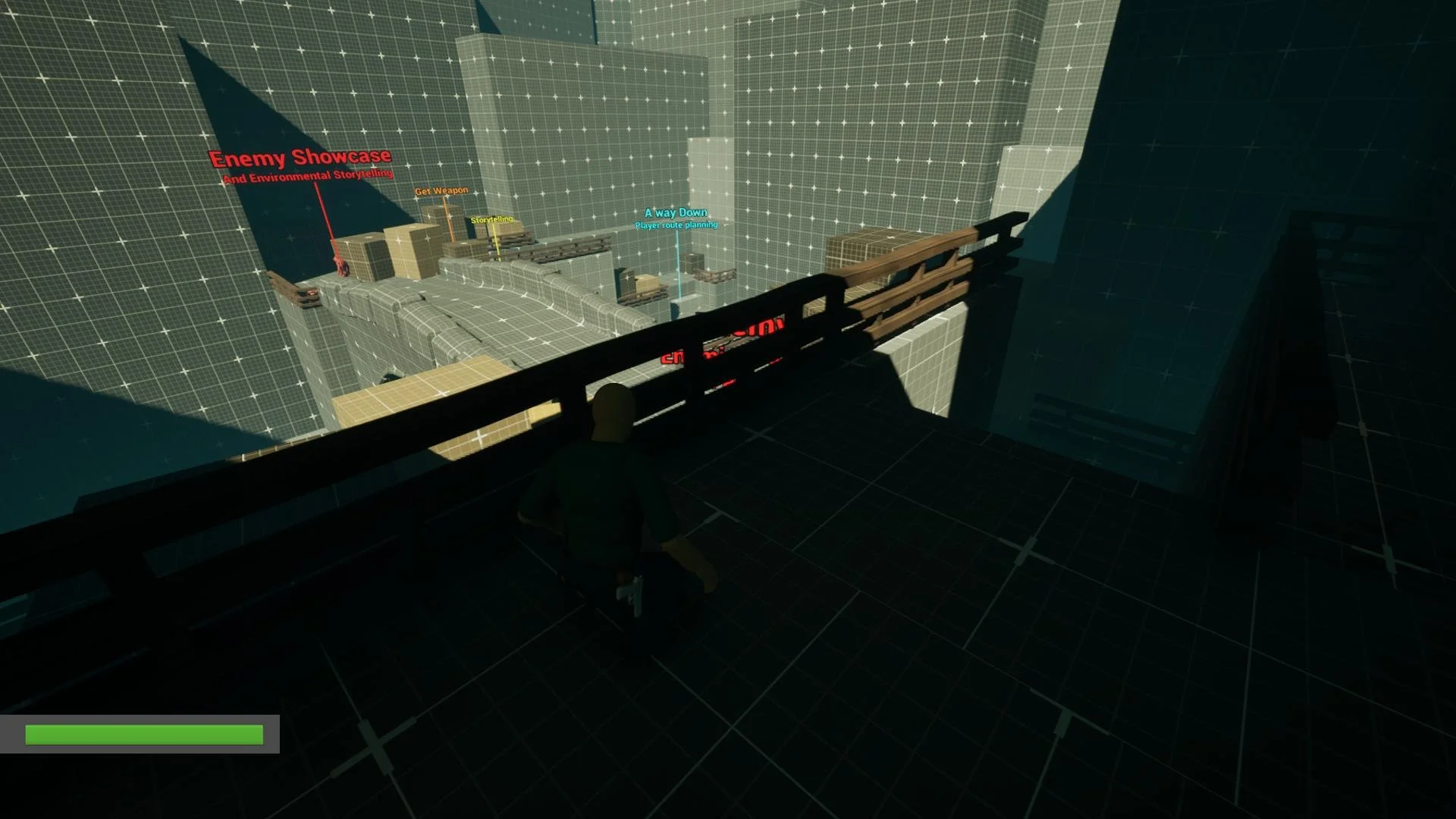
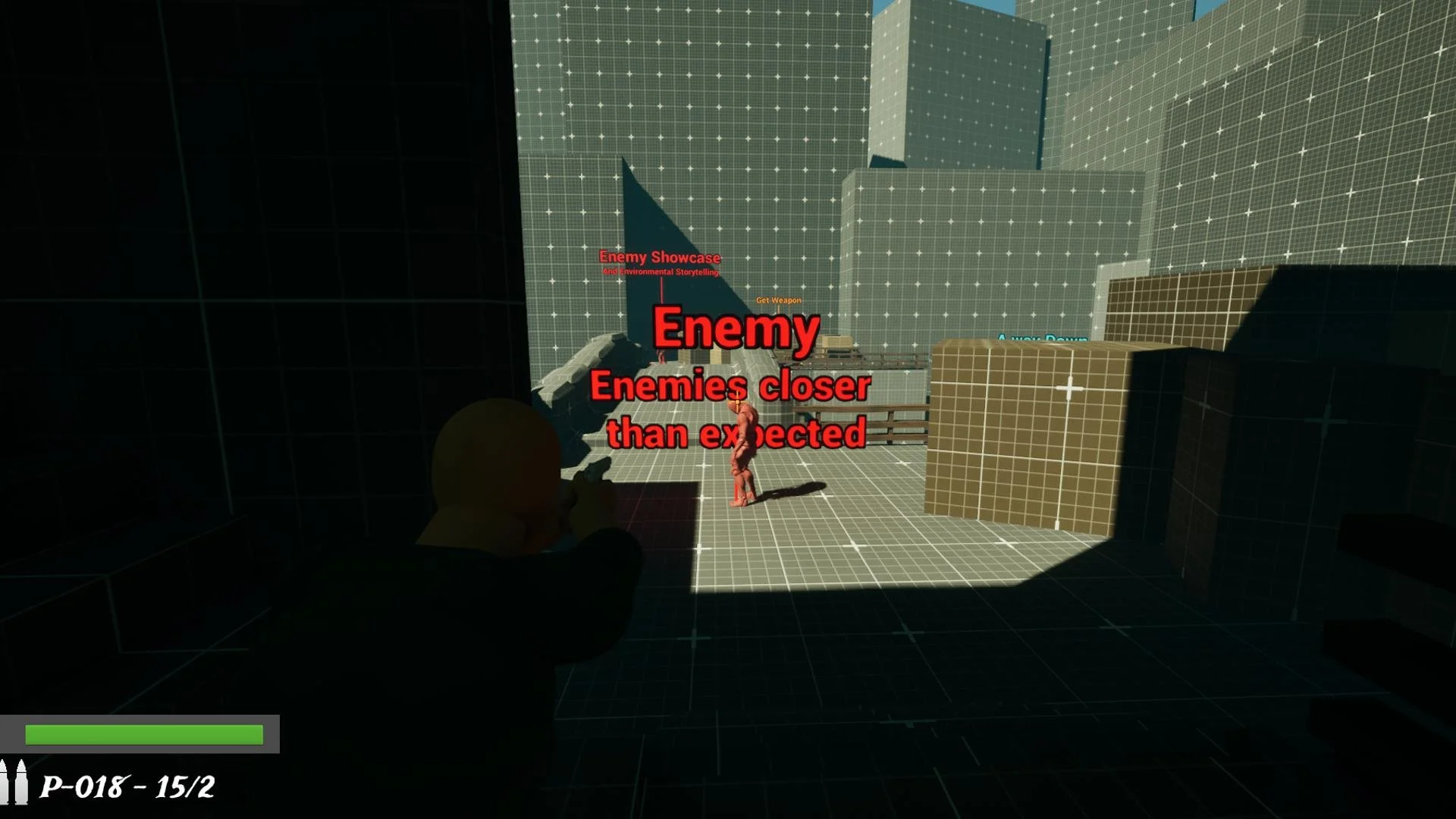
Designed a vertical Cog Tower level, where players climb through a maze of shifting machinery, giant gears, rotating platforms, and metal walkways.
Created dynamic, moving obstacles, making timing and spatial awareness crucial throughout the ascent.
Emphasized verticality and pacing, with each floor introducing new traversal and combat challenges.
Focused on environmental traversal as the primary challenge, with enemies present but the machinery posing the greatest danger.
Included a stealth-oriented section near the top, combining climbing, careful movement, and patrol avoidance to build tension.
Designed for visual and gameplay spectacle, encouraging players to experience the energy and motion of the level.