Level Summary
This linear, story-driven RPG level was built in Unreal Editor for Fortnite using Fortnite’s native systems to create a single-player-focused experience. Players progress from defending a village to confronting a corrupted king, guided by careful pacing, environmental storytelling, and purposeful player power progression.
Responsibilities
Researched narrative-driven RPG
and linear
action level design to shape pacing and progressionDefined the core concept, story, and gameplay vision within Fortnite’s
native systemsBuilt and iterated on level layouts and blockouts for scale, readability, and flow
Designed encounters, enemy placement, and combat escalation using Fortnite logic and devices
Conveyed story through environmental storytelling rather than cutscenes
Completed full set dressing
and visual polish using framing
and landmarksControlled camera framing and sightlines to highlight key moments
Designed a multi-stage final encounter, including a
narrative-driven death-and-respawnPlaytested and iterated to refine pacing, difficulty, and player clarity
Details
Team Size: Solo Project
Genre: Fortnite RPG
Setting: : A lush mountainside with a lake and several medieval castles and other Points of interest
Level Duration: 15-25 minutes
Role: Lead Level Designer, Project Manager
Development Time: 1 month as a side project
Engine: Unreal Engine for Fortnite (UEFN)
Trailer
Level Showcase: Shadow of a Fallen Crown
If you’re short on time, basically, for this project I…
Created a custom fully Set-Dressed RPG level in Unreal’s Editor for Fortnite
Created cutscenes, narrative events, and scripted events to help players immerse in the level
Organized playtest sessions, to iterate on the level to increase player engagement to the highest level
Received feedback from players and implemented their feedback
Created a narrative final boss fight, as a narrative and level high-point for a memorable ending
Utilized Fortnite’s asset packs to set-dress the blockout into a final level
Some Level Impressions by Playtesters
“It’s impressive how much narrative and structure was achieved using Fortnite’s existing systems.”
“The pacing felt very intentional. Each area had a clear purpose, and I always understood where I was going and why.”
“This doesn’t feel like a Fortnite map at all, it plays more like a RPG.”
“This levels narrative was very pretty interesting for a level prototype. Would not mind a continuation of it!
Sadly the functionality is a bit limited, no skills not many weapons. For the future: please include more weapons and maybe an upgrade system!”
“The final twist with dying and coming back changed how I saw the ending, it felt surprising and earned.”
Pre-Production
Main Ideas
Level Goals
Adapt Fortnite’s native systems to support a linear, single-player RPG experience.
Create a clear narrative arc through space, moving from safety to isolation to final confrontation.
Shape pacing through controlled encounter density and quiet traversal moments.
Guide players using landmarks, framing, and sightlines instead of UI.
Communicate story and lore through environmental storytelling and interesting cutscenes.
Reward exploration with
optional paths and side encounters.Deliver a strong narrative climax using a purposeful death-and-respawn moment.
Provide a polished, complete experience within a focused 15-20 minute runtime.
Core Elements
Enemy AI & Combat: patrolling enemies, elite rebels, undead knights, and demon spawns using
Fortnite logic.Player Progression: sword and bow unlocks, healing items, and power spikes.
Set Dressing & Storytelling: villages, taverns, and castles convey narrative without text.
Guidance & Framing: landmarks, sightlines, and lighting highlight objectives.
Encounters & Pacing: scripted ambushes, mini-bosses, and side areas.
Purposeful Mechanics: death-and-respawn event and Forgotten
King trial for climax.Exploration Rewards: hidden paths, healing pickups, and small narrative secrets.
UEFN Systems Integration: animations, AI, devices, triggers, and combat
fully in Fortnite.
Level Sequence
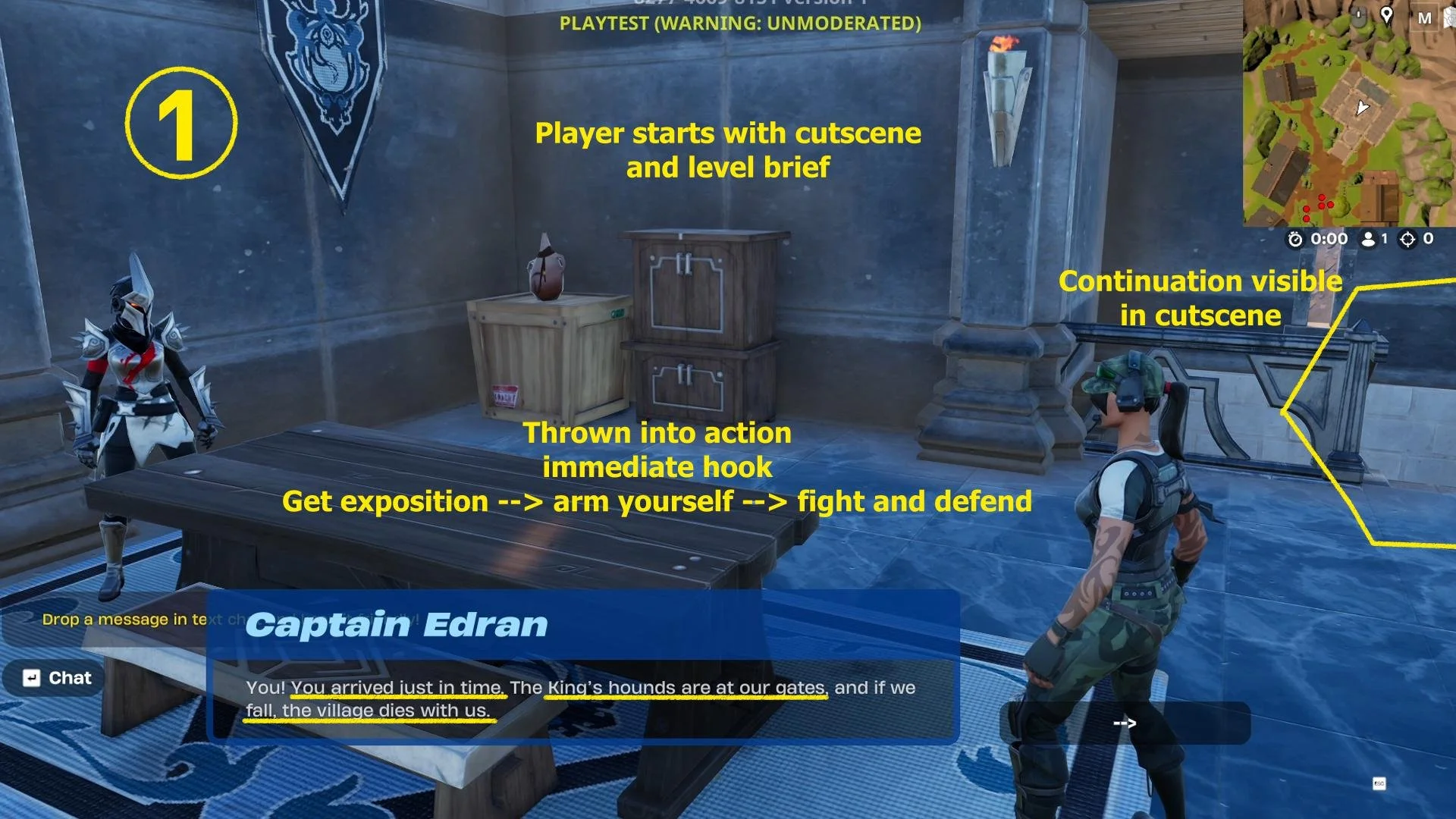
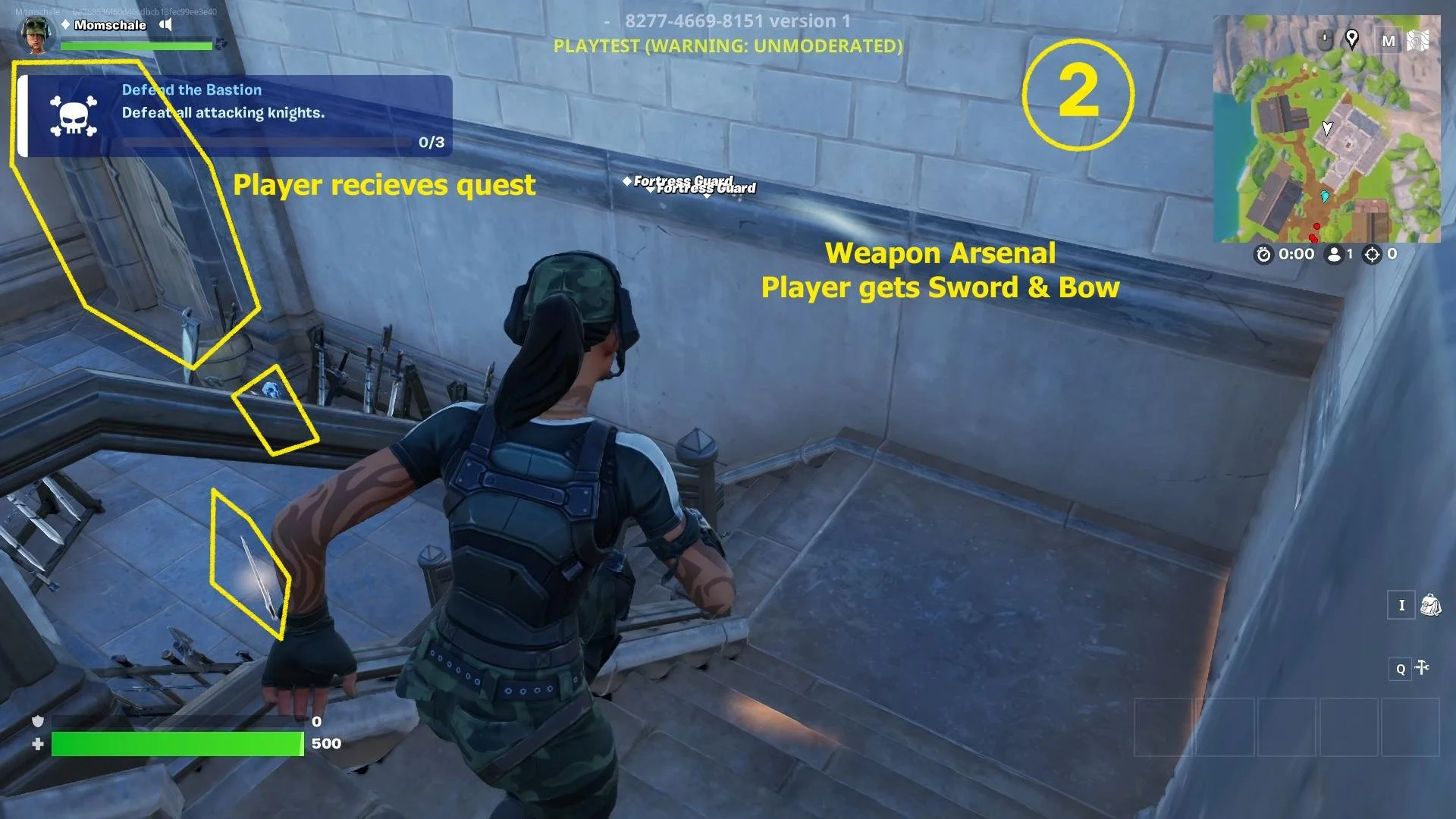
Player Spawn / Village Attack
Player enters the village, gains sword and bow, and is briefed by the village leader.Defend the Village
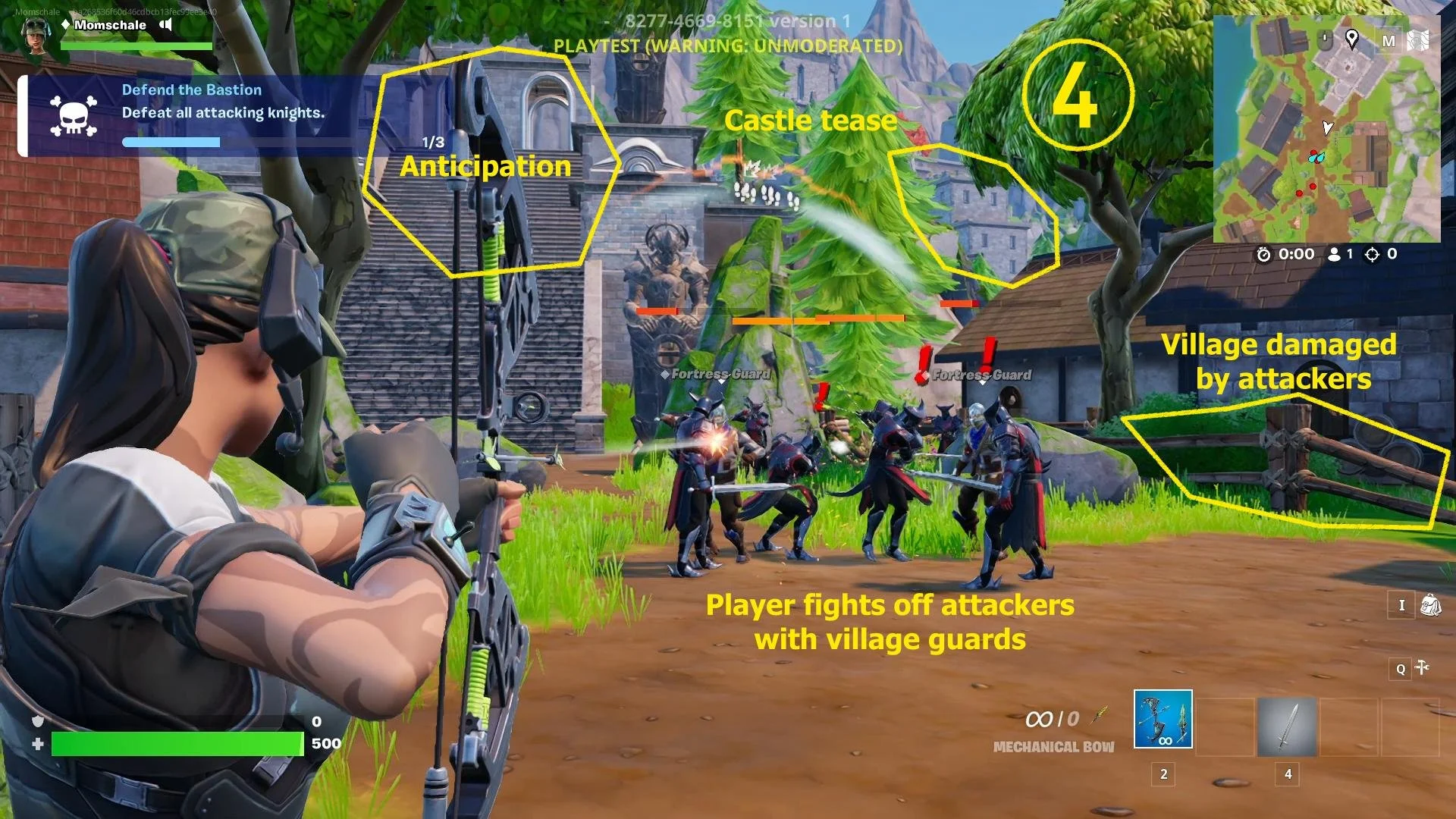
Fights enemies with village guards; villagers become friendly and provide healing items.Rebel Outpost
Guided to a hidden forest base by an elite rebel; learns about the legendary weapon.Old Castle
Battles undead knights and guards while ascending the mountain; claims the legendary sword.Forgotten King Trial / Guard Ruins
Faces demons in a test by the Forgotten King; navigates ruins and optional side areas for rewards and healing.Boss Castle / Final Encounter
Defeats minion demons, confronts corrupted king, dies.
Respawns empowered by the Forgotten King and defeats the corrupted king, ending the level.
Level Beats
Call to Action
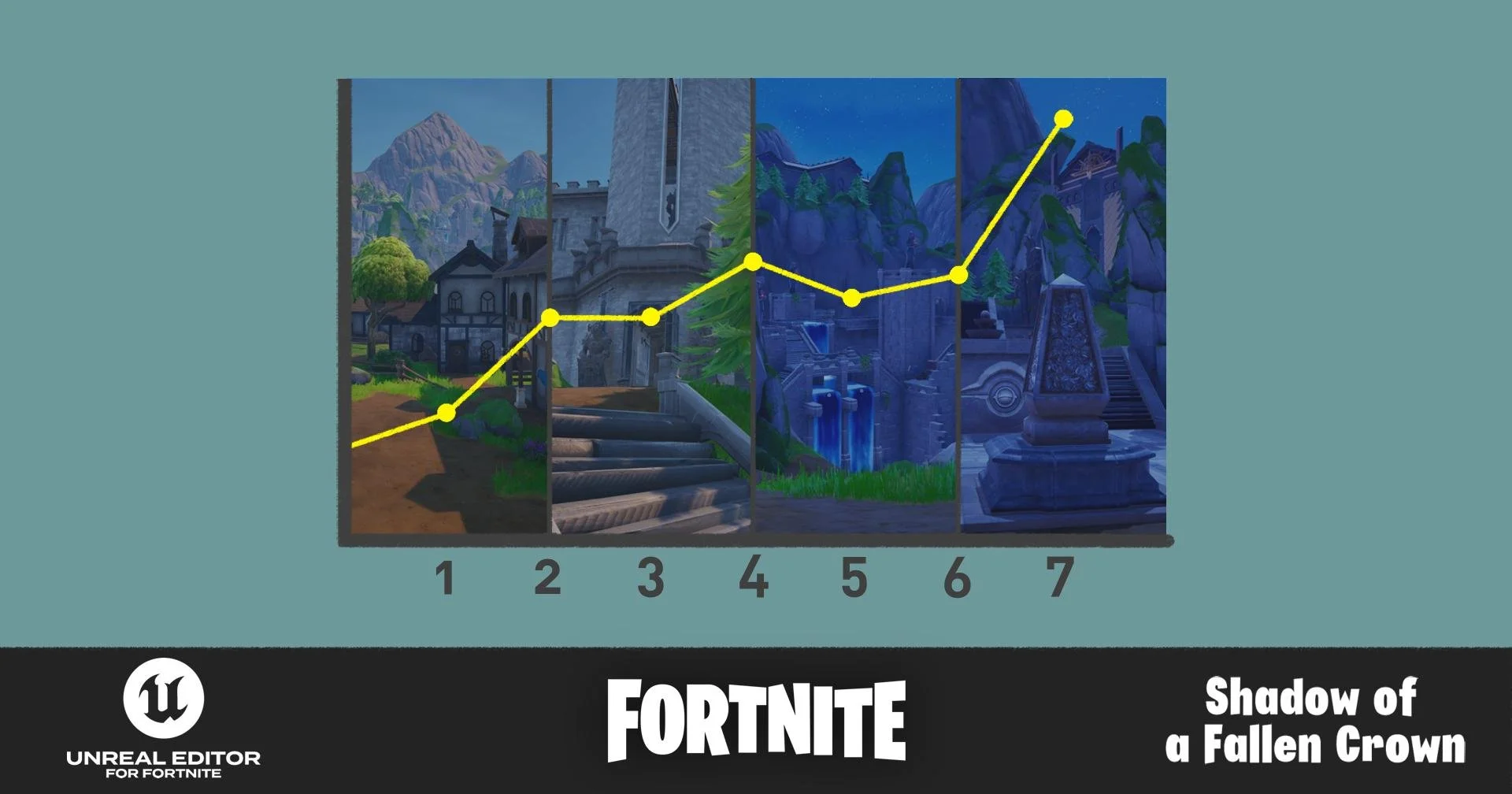
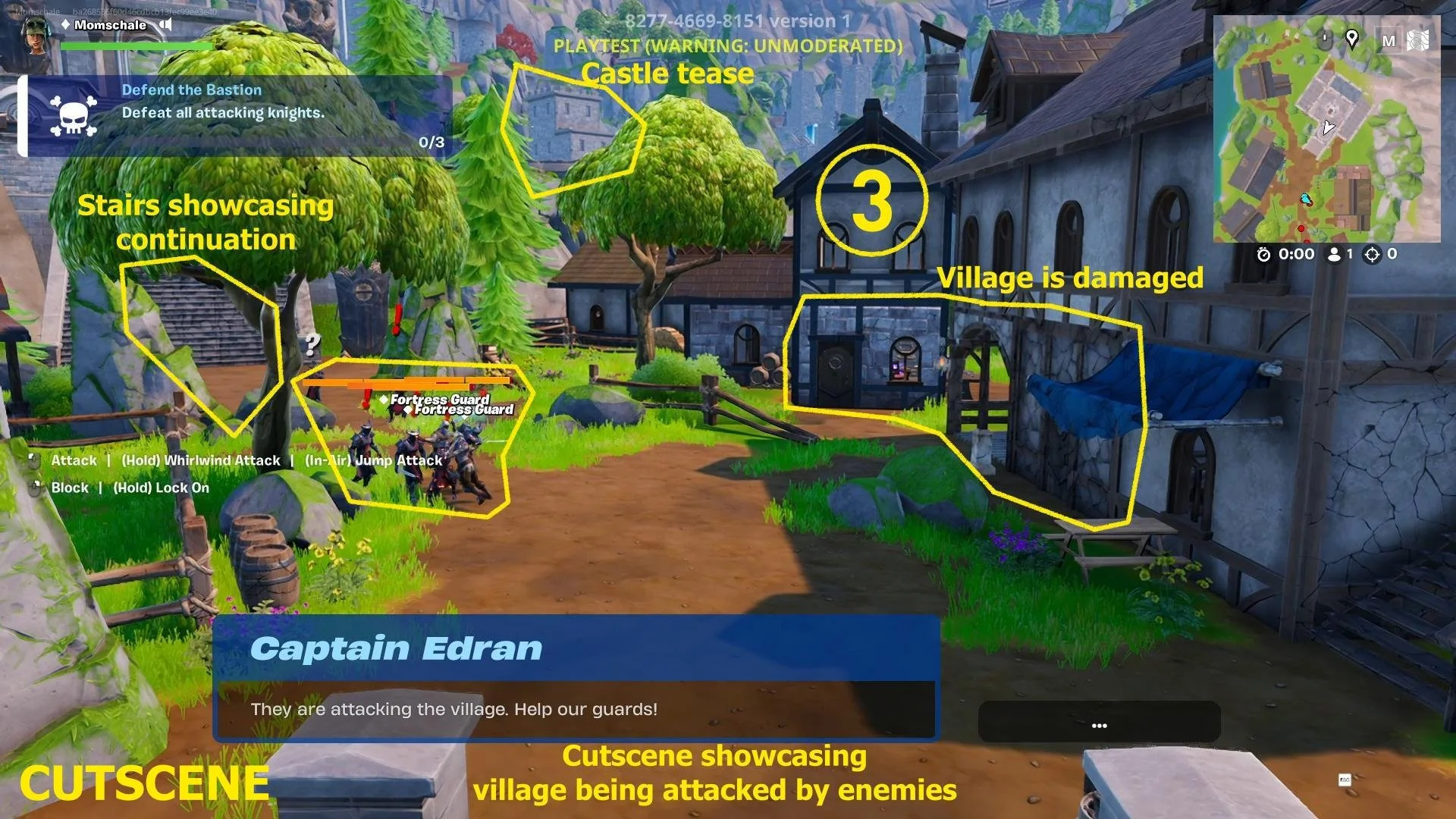
Player is briefed at a castle outpost about an ongoing village attack, creating urgency and pushing them quickly toward the conflict.Village Under Siege
Player arrives mid-attack. Fast combat and destruction drive high intensity and a strong savior fantasy.Aftermath & Revelation
With the village saved, pacing slows. Guided exploration leads to the rebel outpost, introducing the legend of the sword.Trial of Worth
Player reaches the old castle, claims the blade, and faces an unexpected high-intensity trial from the Forgotten King.Ruins & Reflection
Pacing drops as the player explores hidden ruins, choosing between stealth or combat.Gatekeeper Encounter
A single elite enemy blocks the final castle, sharpening skills and raising tension.Final Confrontation
The corrupted king overwhelms the player, leading to death, rebirth, and victory with the Forgotten King’s aid.
Concept
Player Spawn
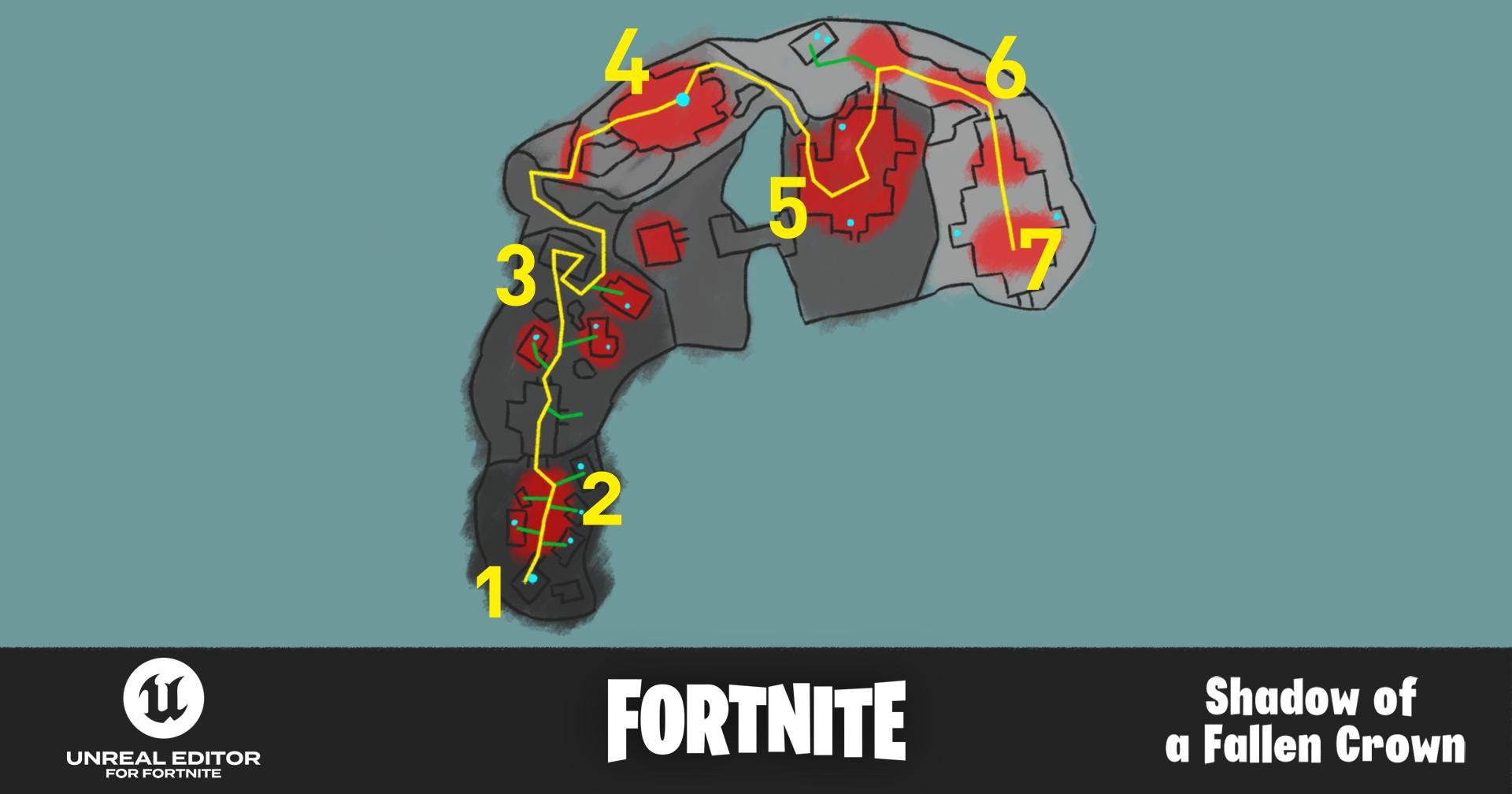
The player spawns as the village comes under attack, immediately gaining a sword and bow to establish urgency and basic combat capability.Defend the Village
The player fights incoming enemies alongside village guards. Once secured, villagers become friendly and provide support, reinforcing the player’s impact.Rebel Outpost
An elite rebel guides the player to a hidden outpost, where the player learns about a powerful, mystical weapon and the larger conflict.Old Castle
The player pushes through enemy guards and undead knights in an abandoned castle, culminating in the acquisition of a powerful legendary weapon.Guard Ruins
The player navigates through occupied ruins, choosing how to engage enemies while uncovering more about the corrupted forces.Elite Encounter
A personal elite guard confronts the player, acting as a focused skill check before the final area.Boss Castle
The player enters the corrupted king’s castle and faces the final boss, bringing the narrative and mechanical arc to its conclusion.
Early Blockout Stages
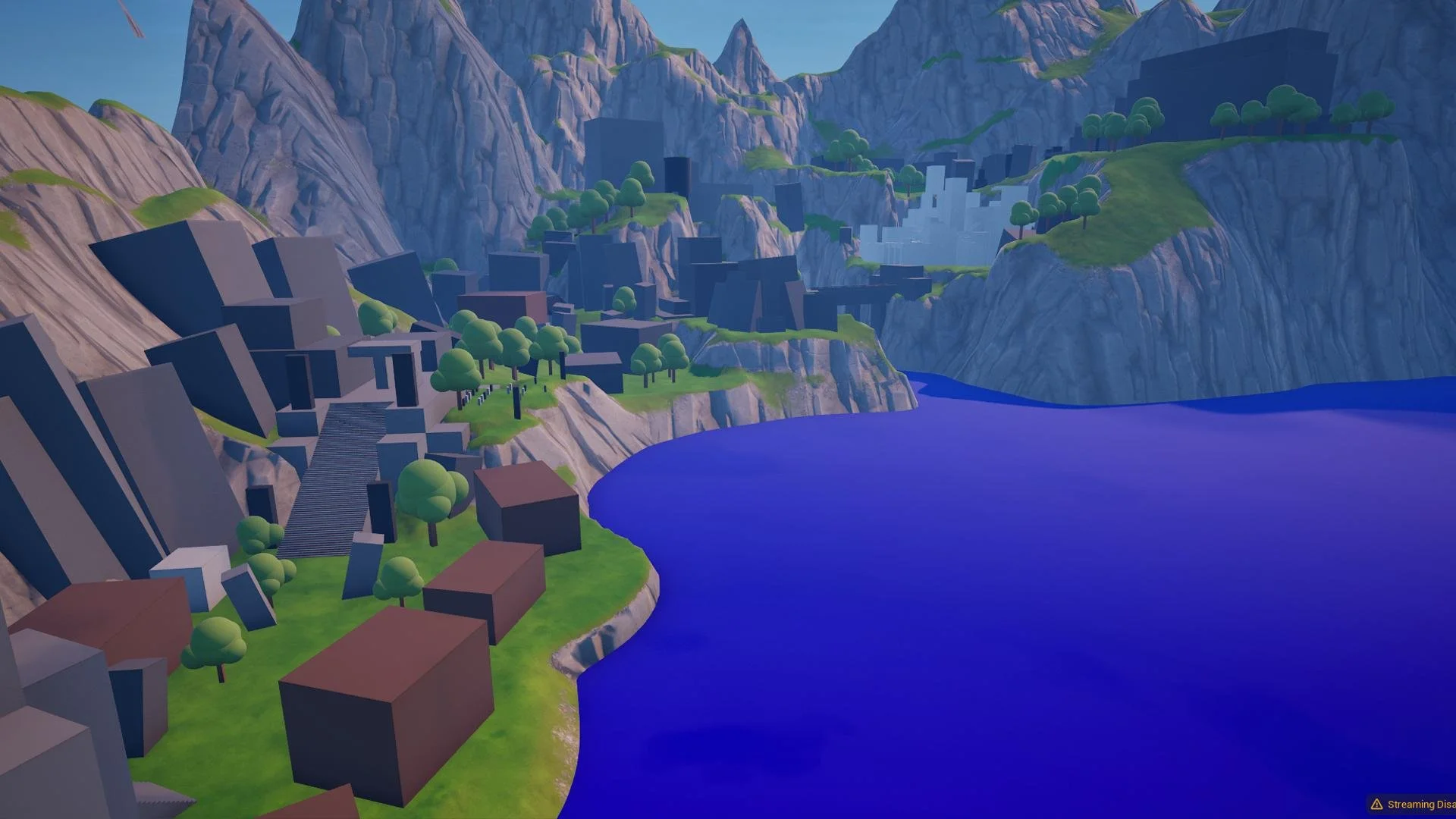
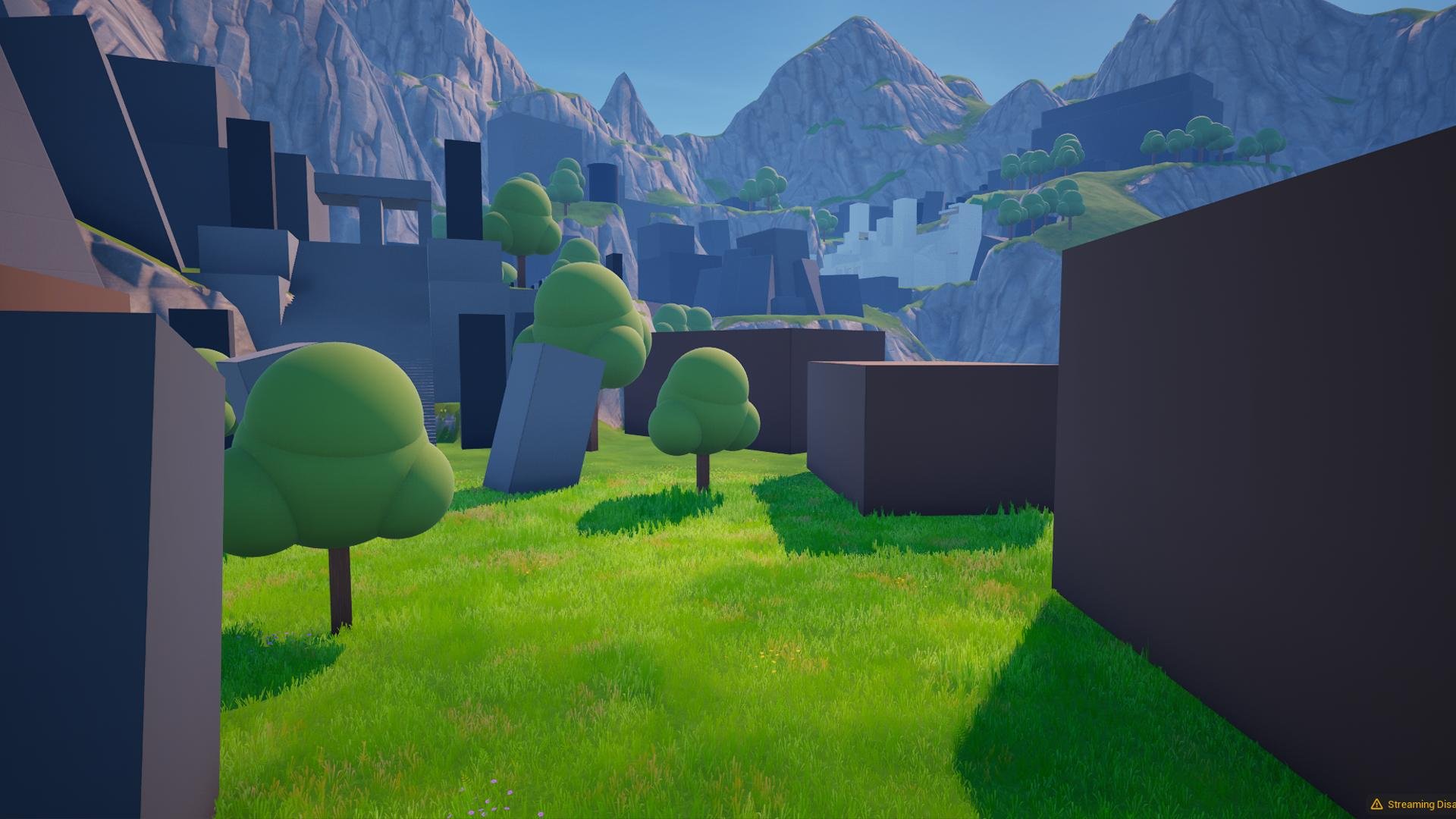
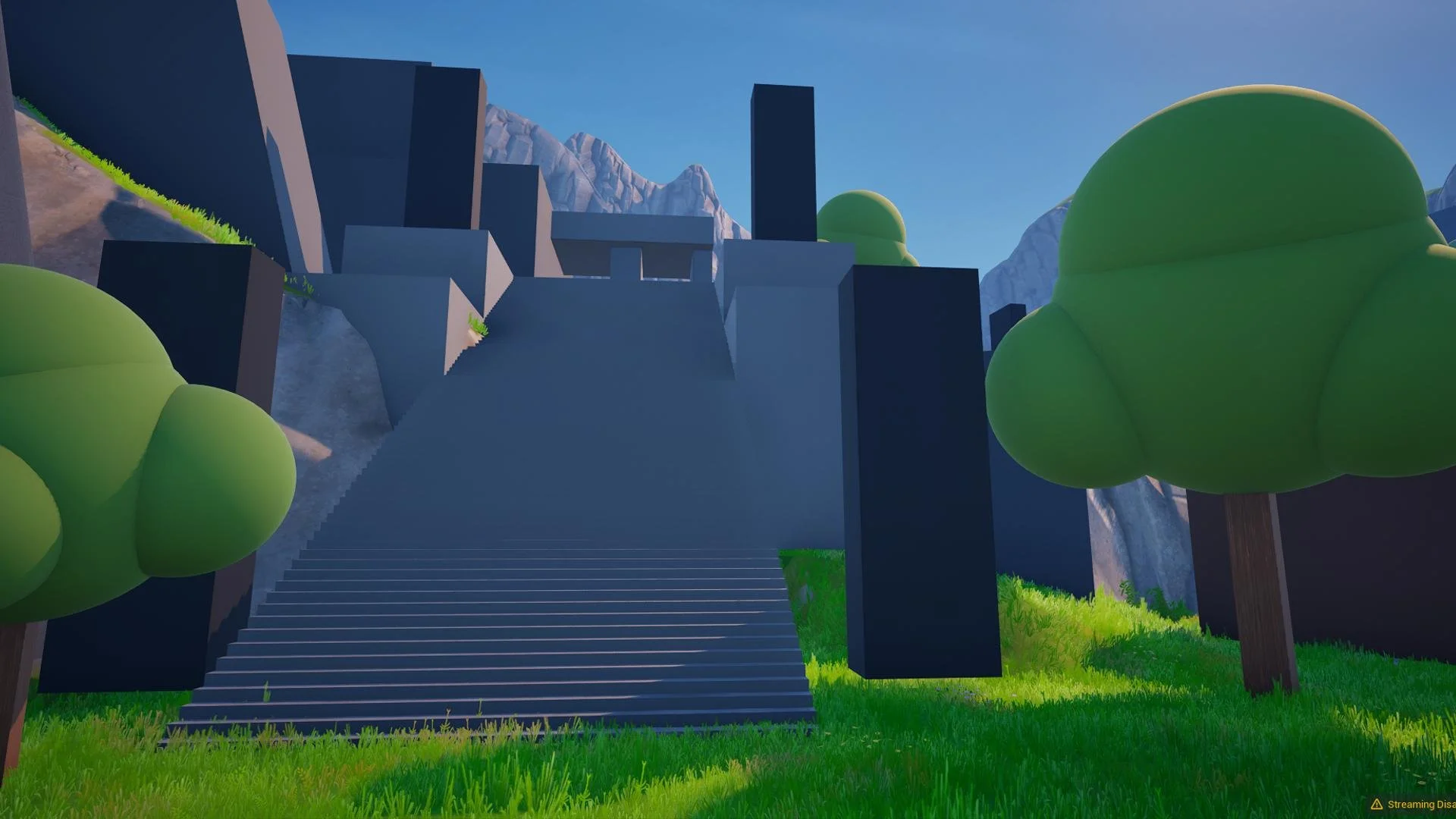
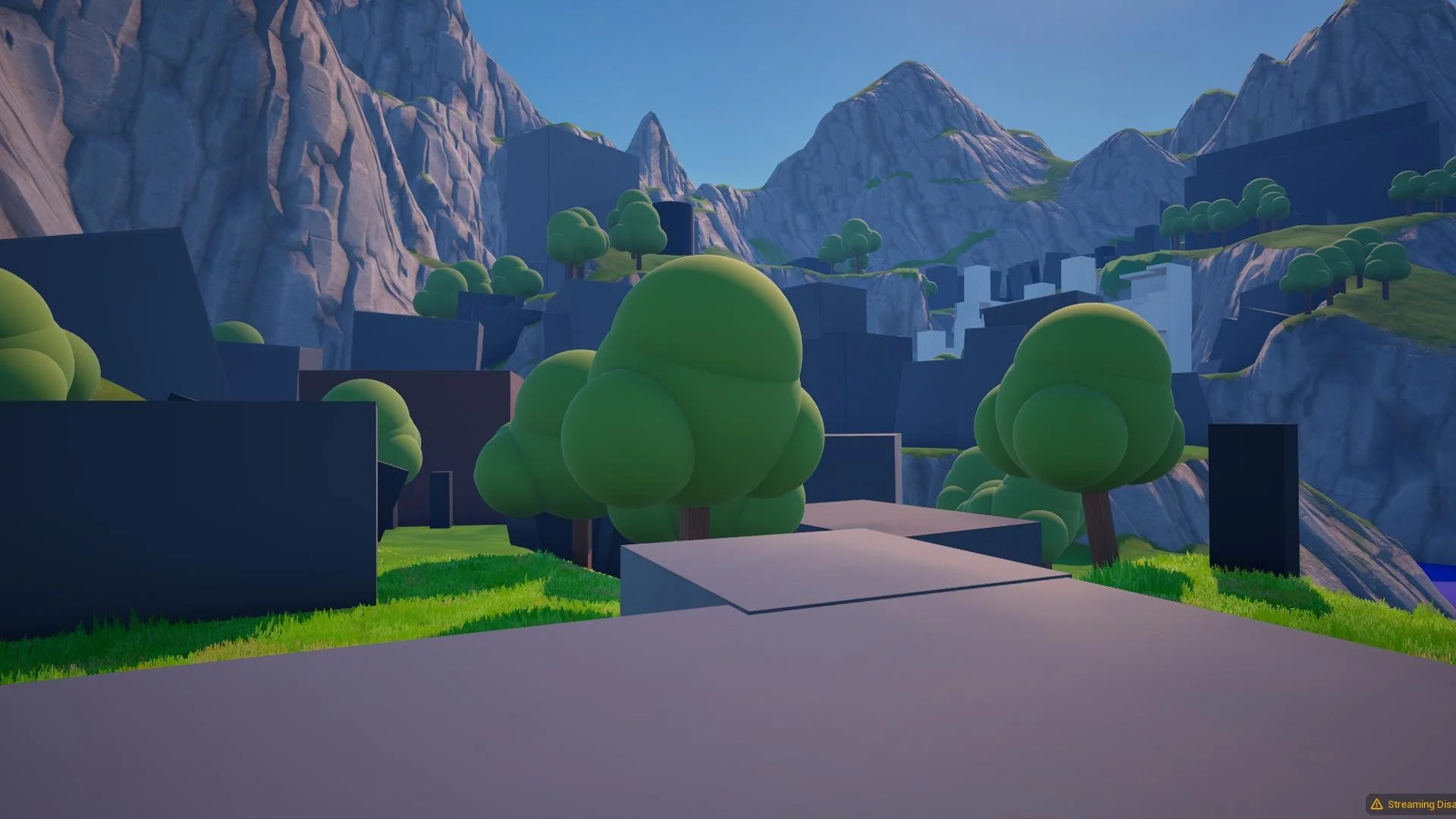
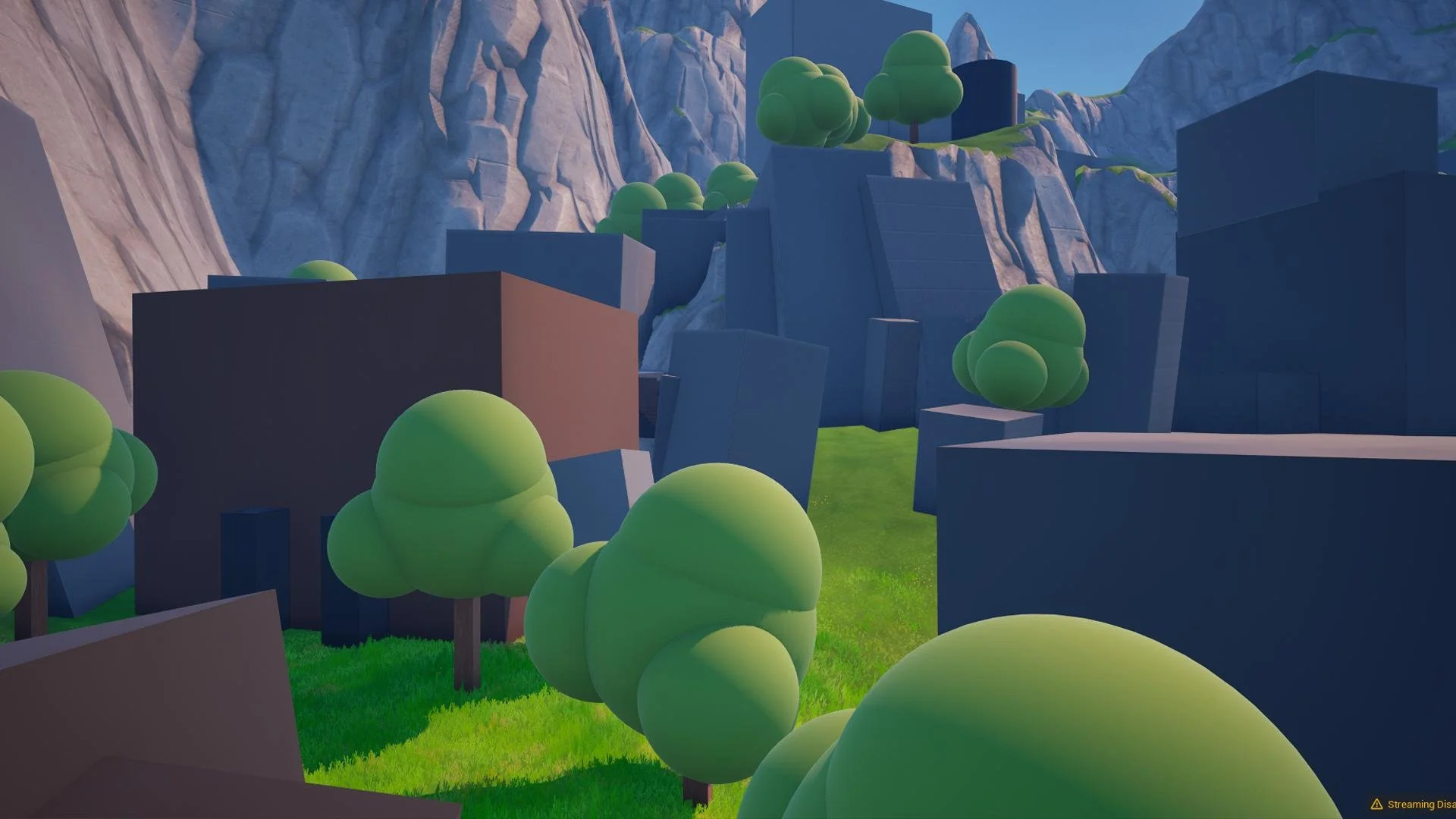
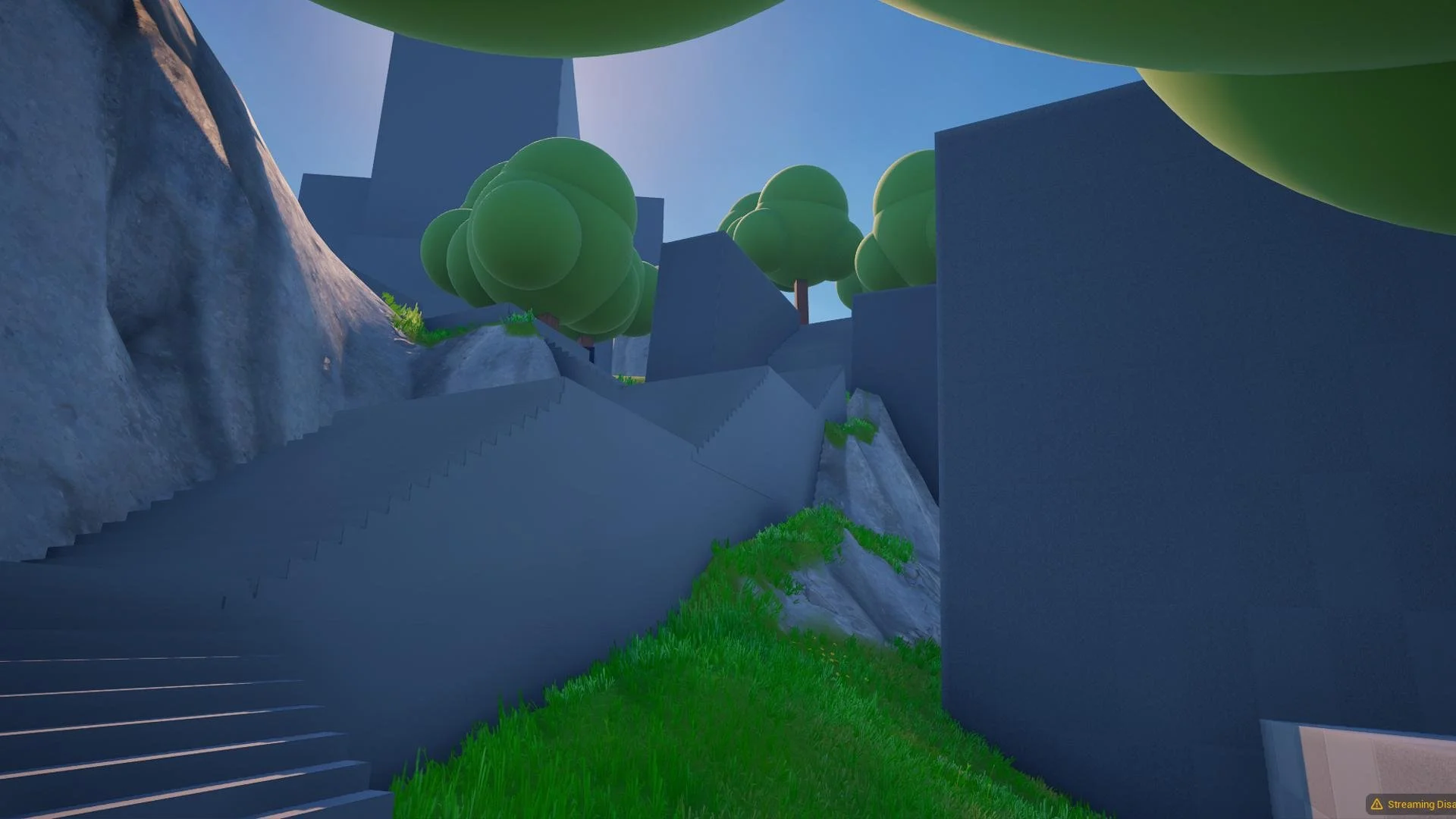
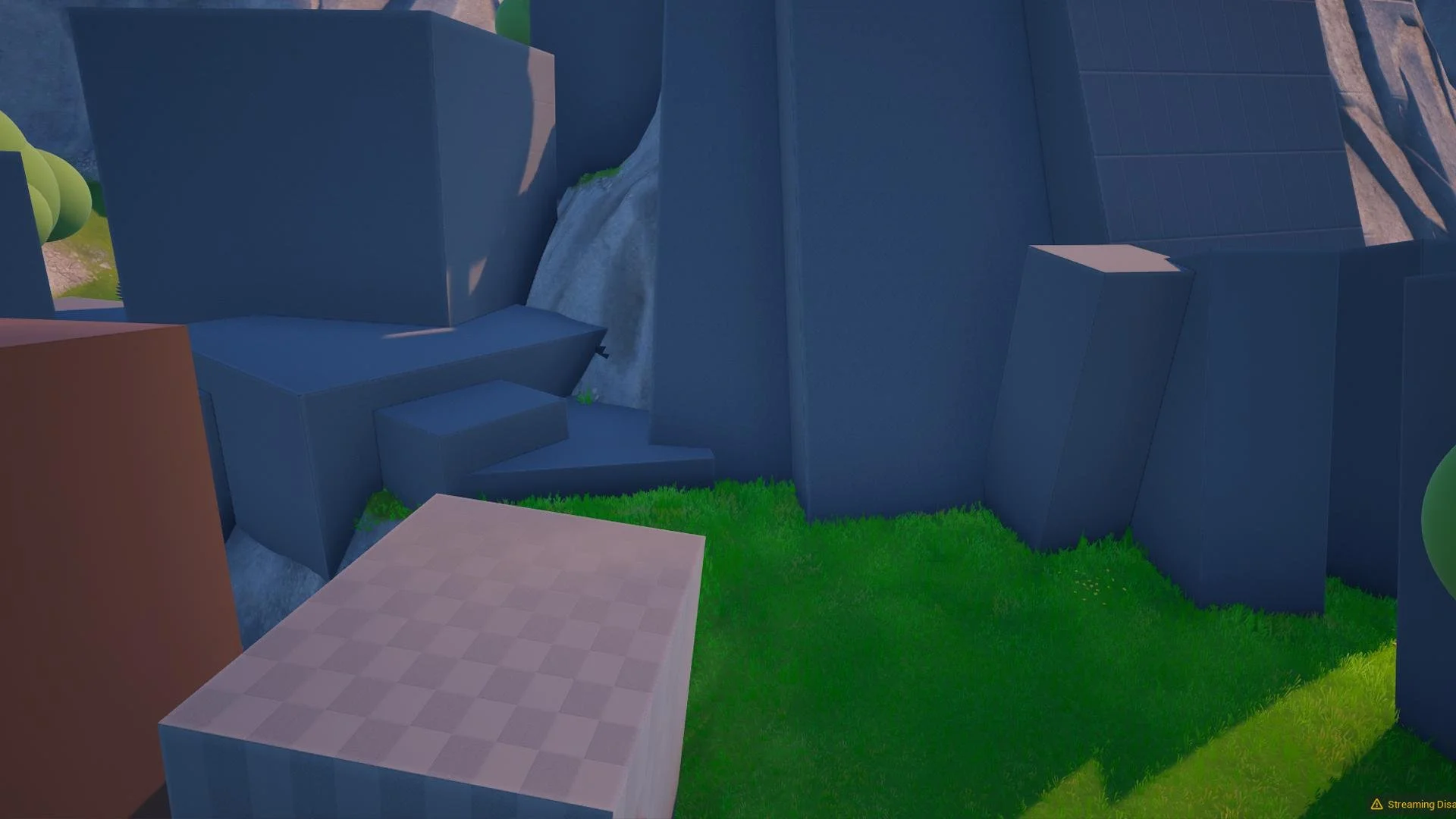
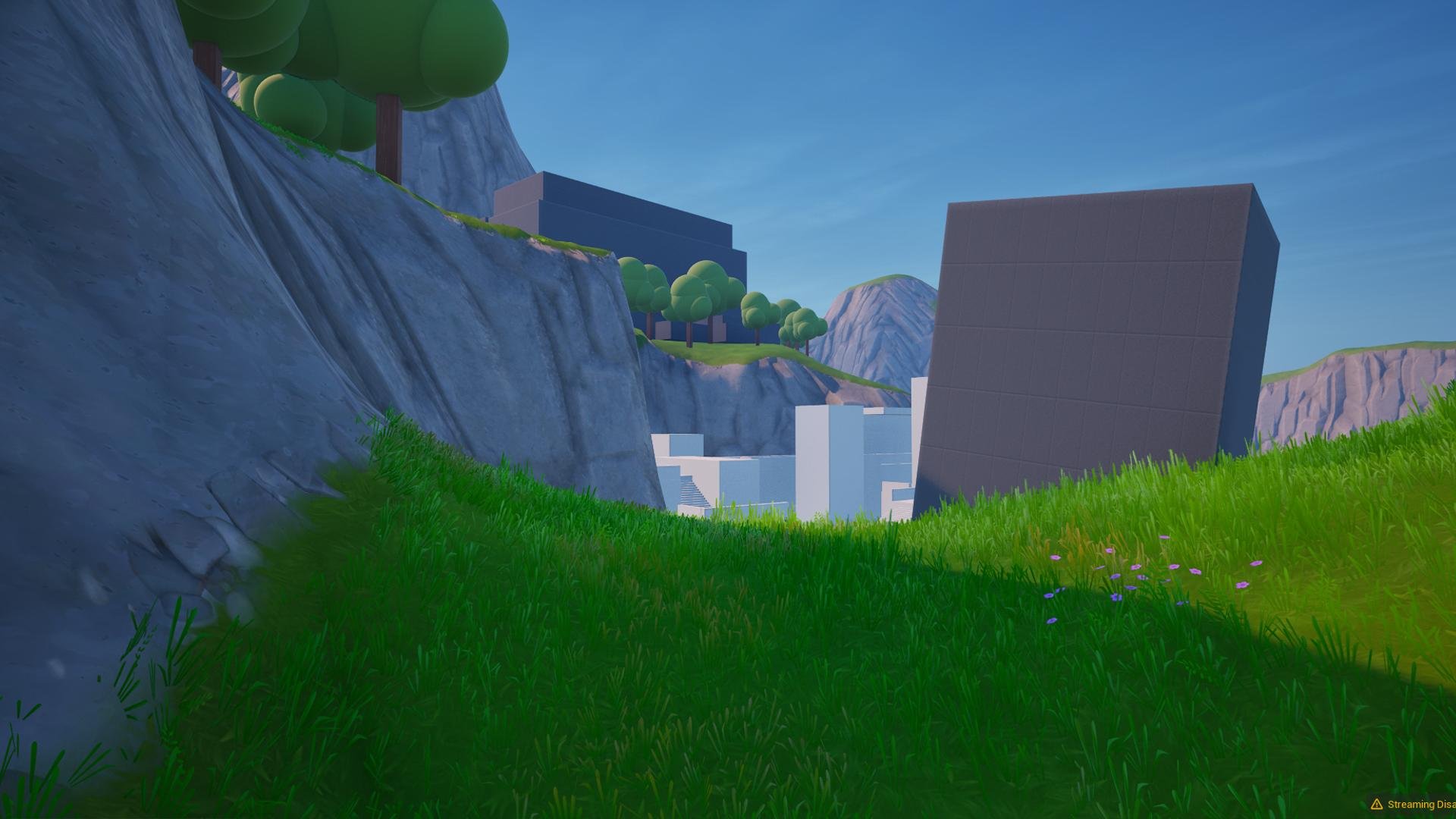
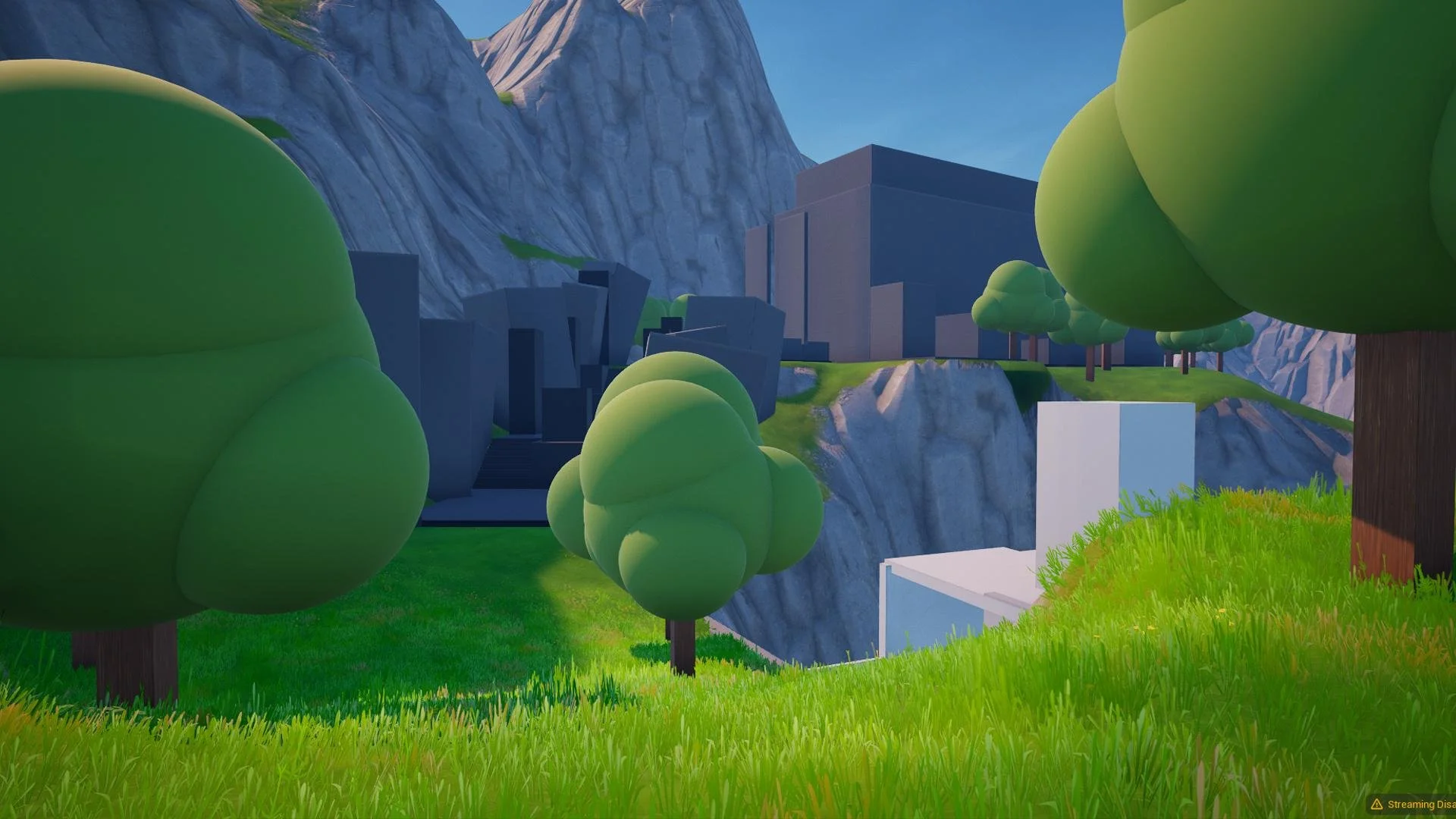
From Blockout to Set Dressed
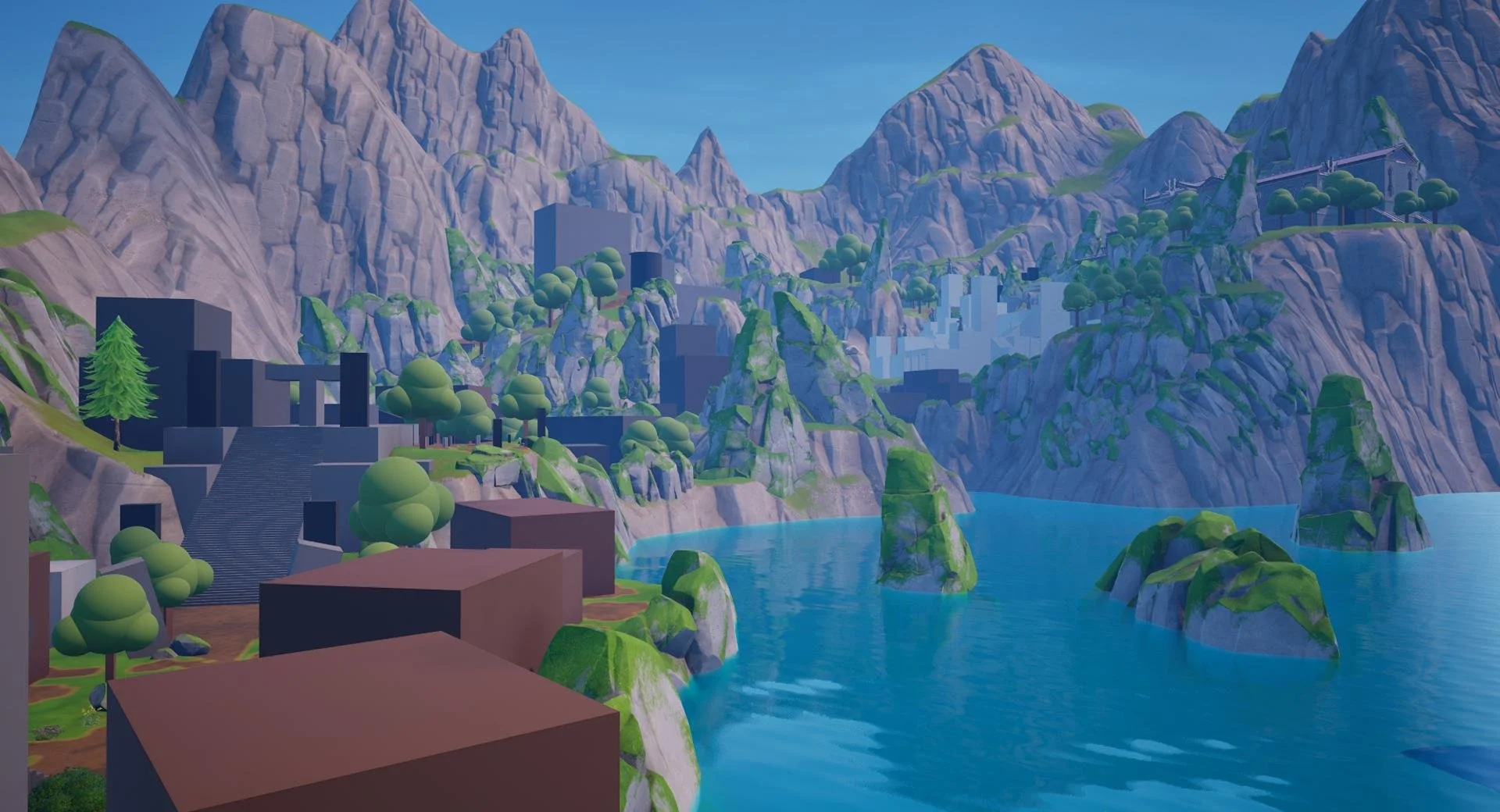
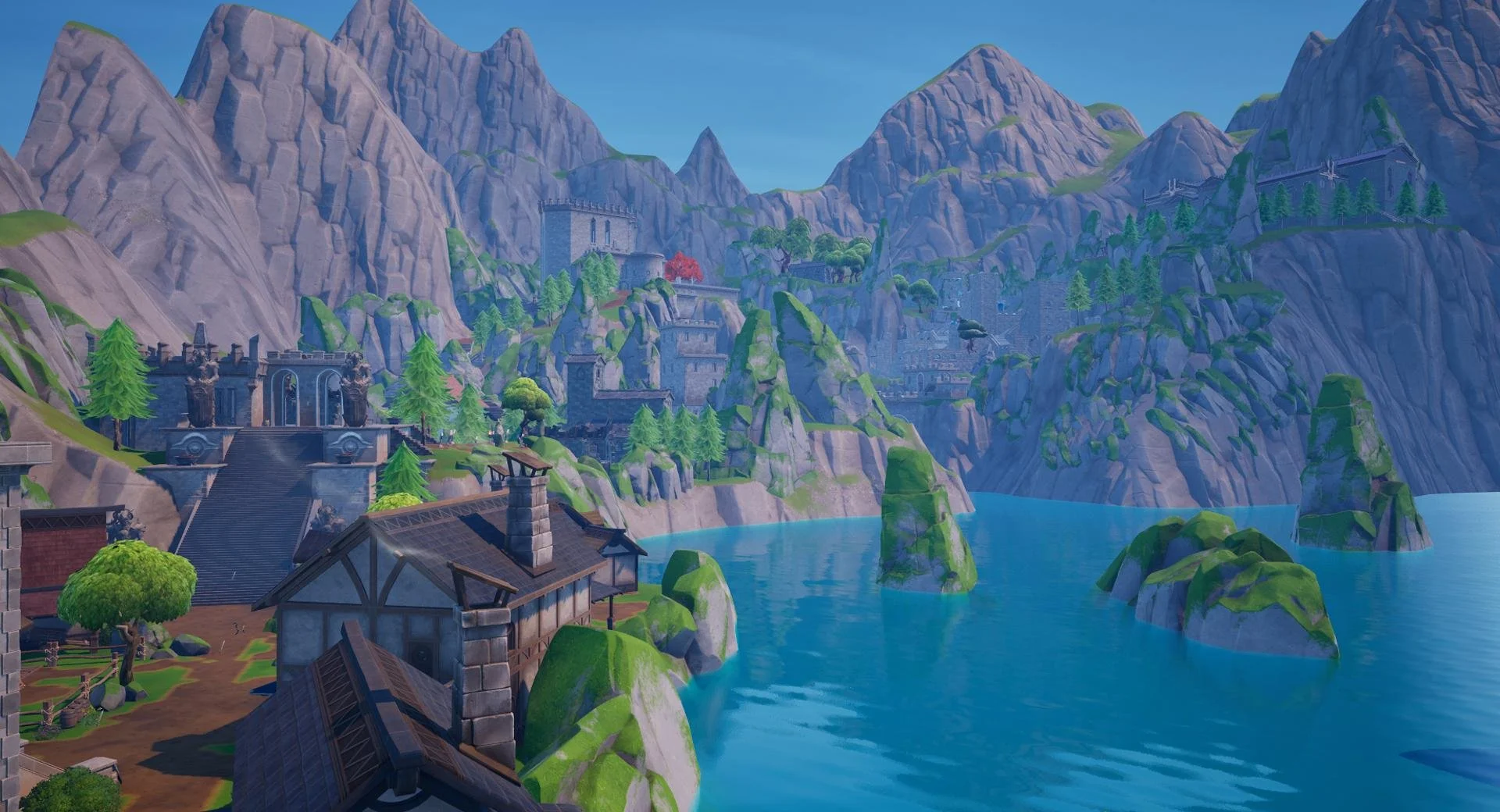
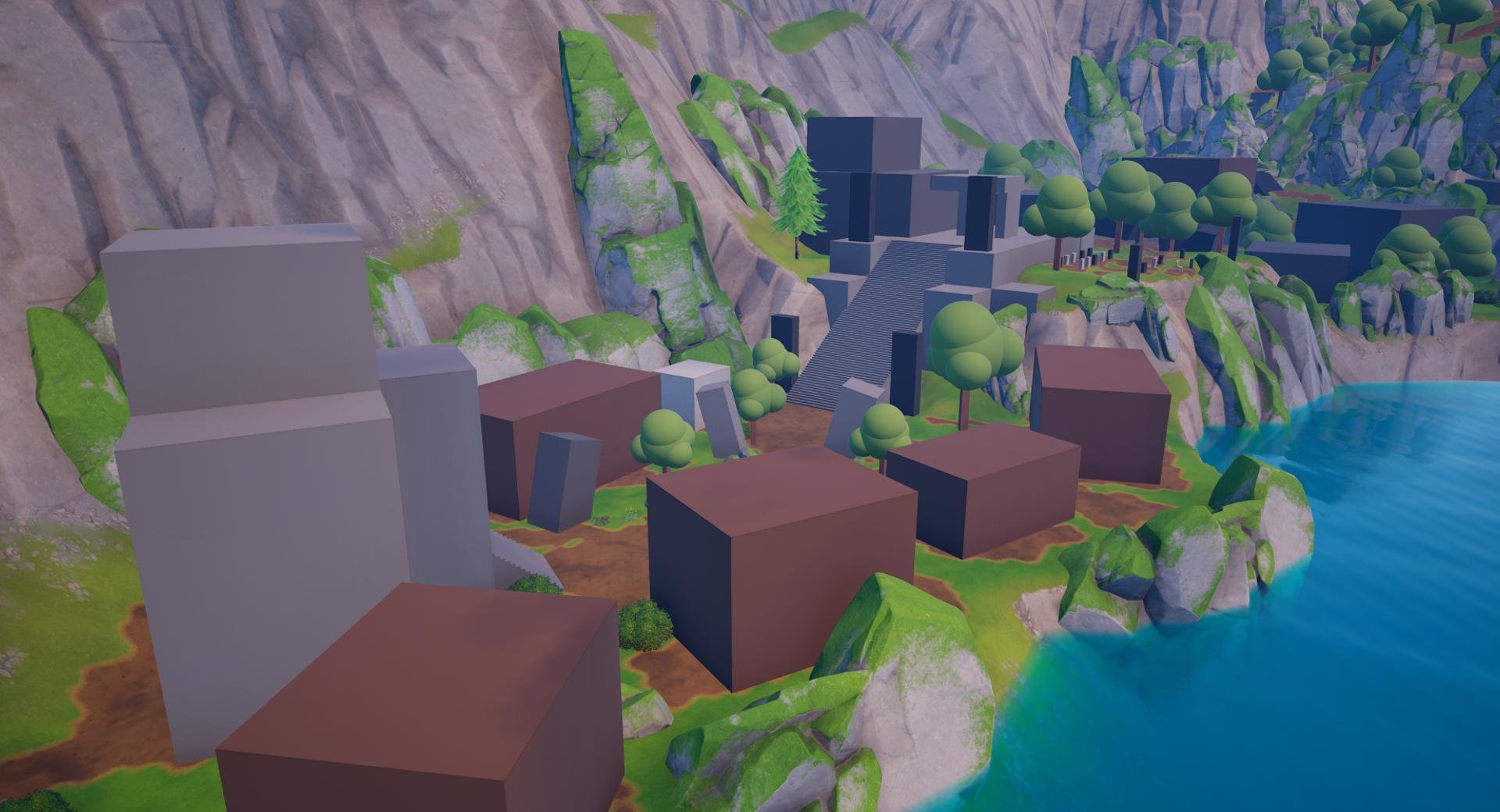
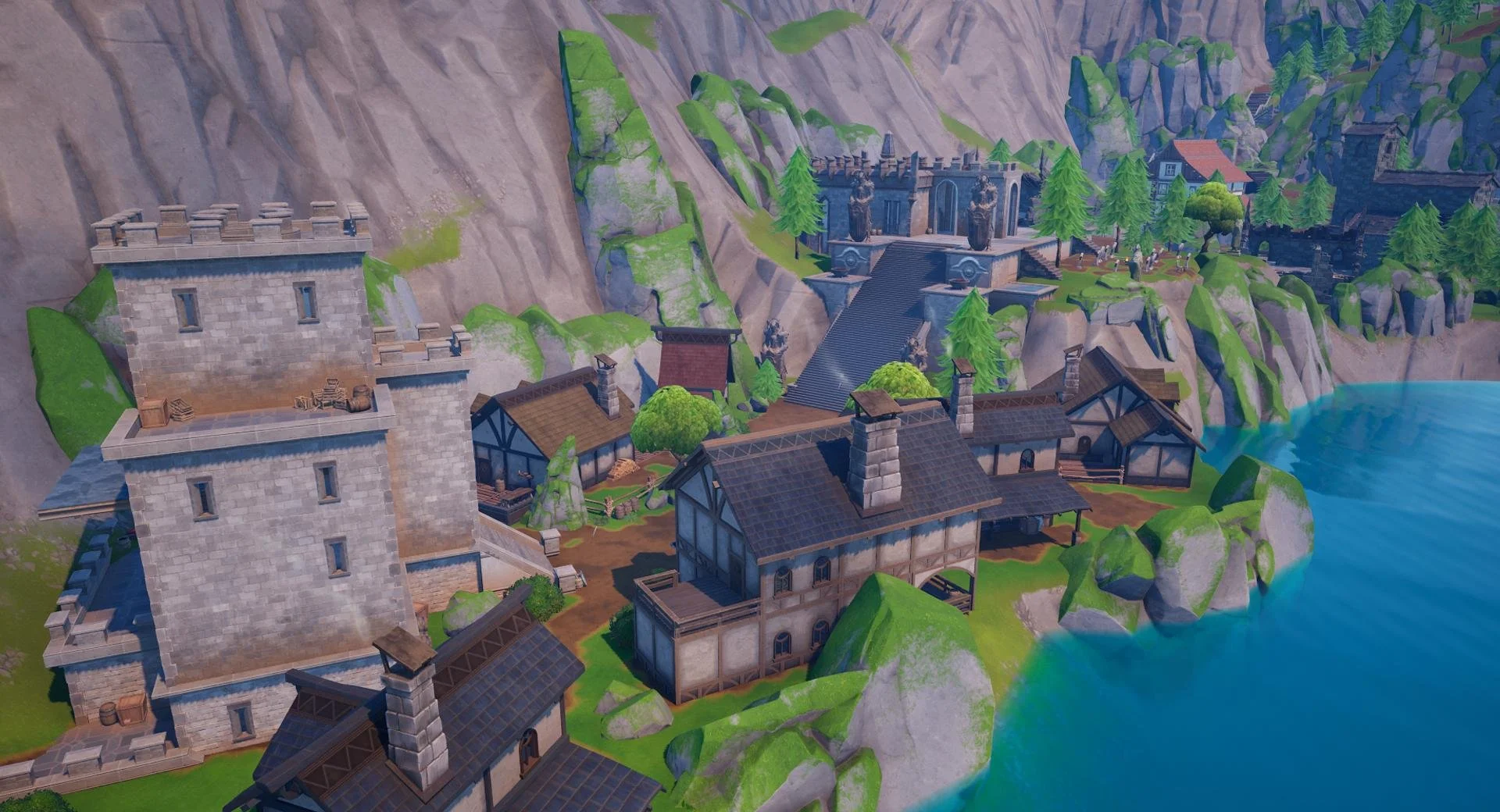
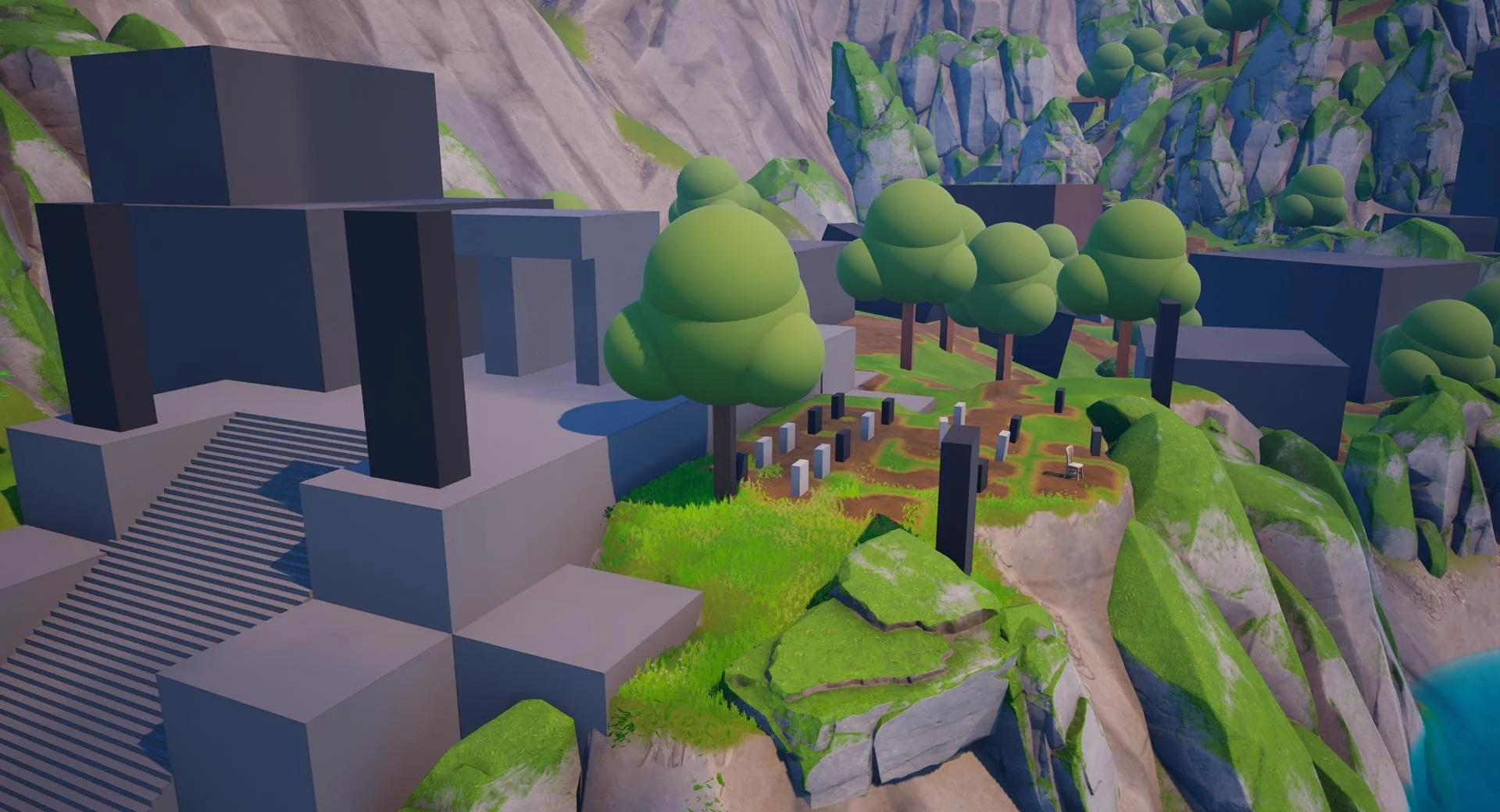
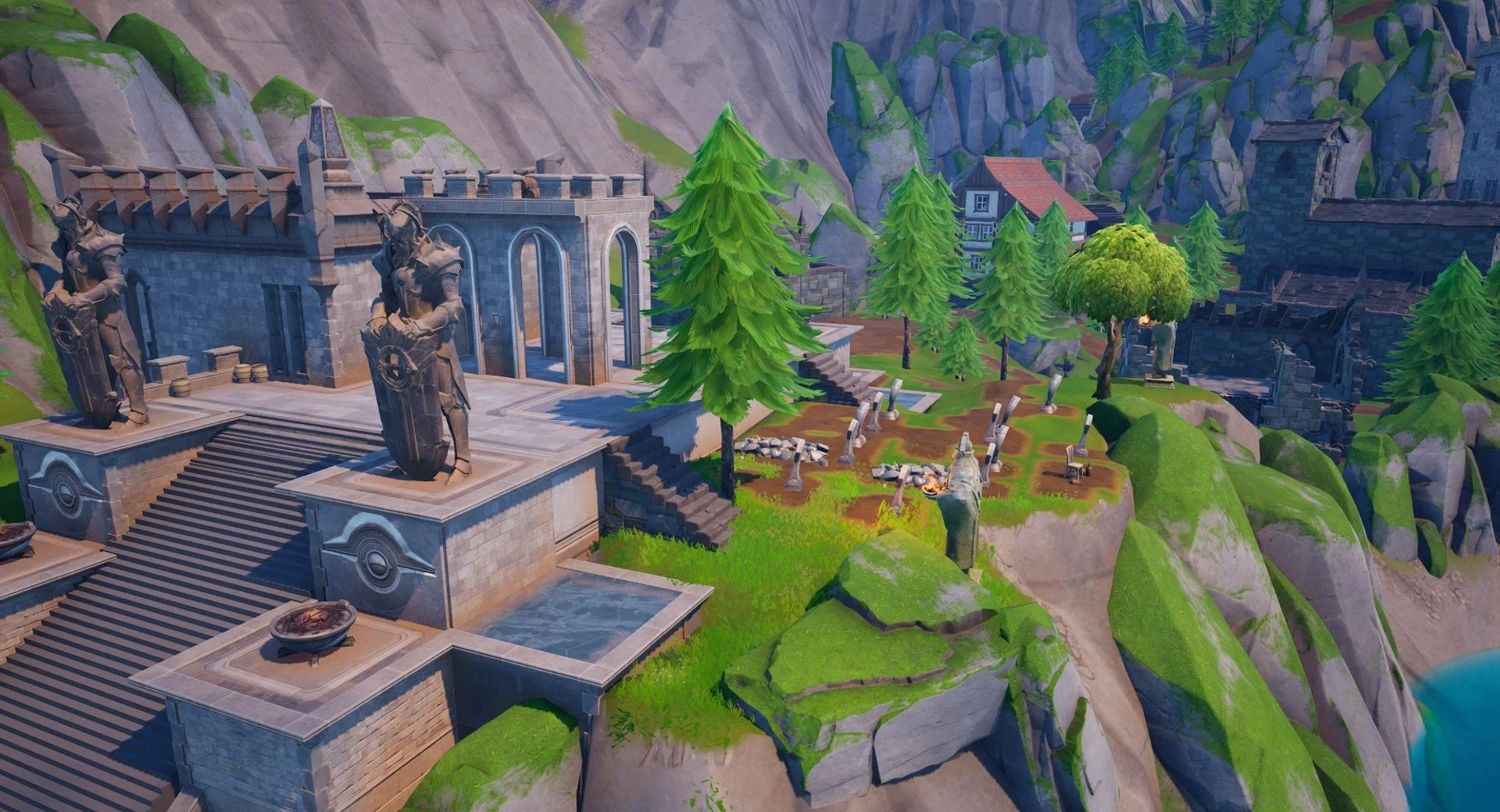
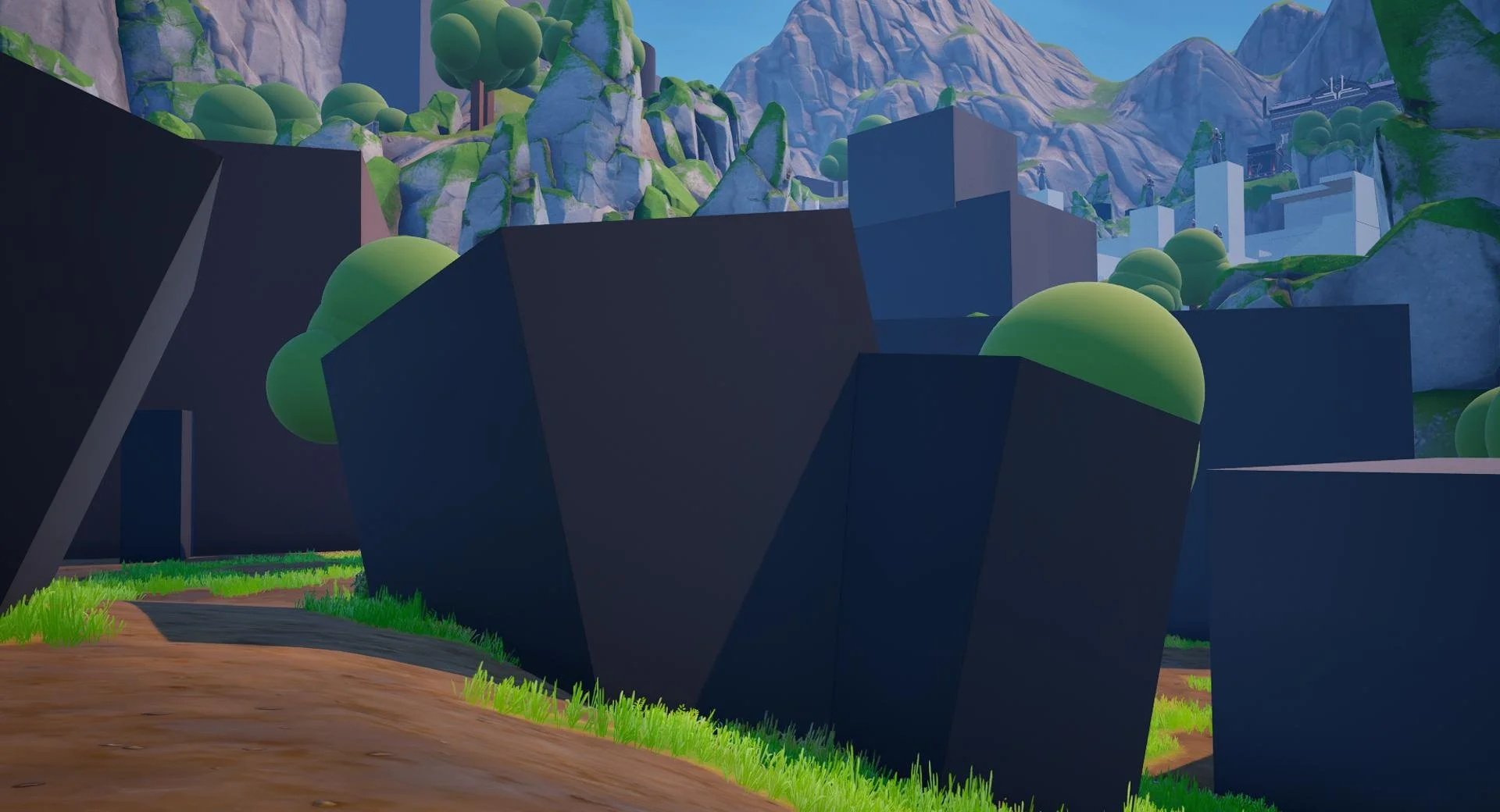
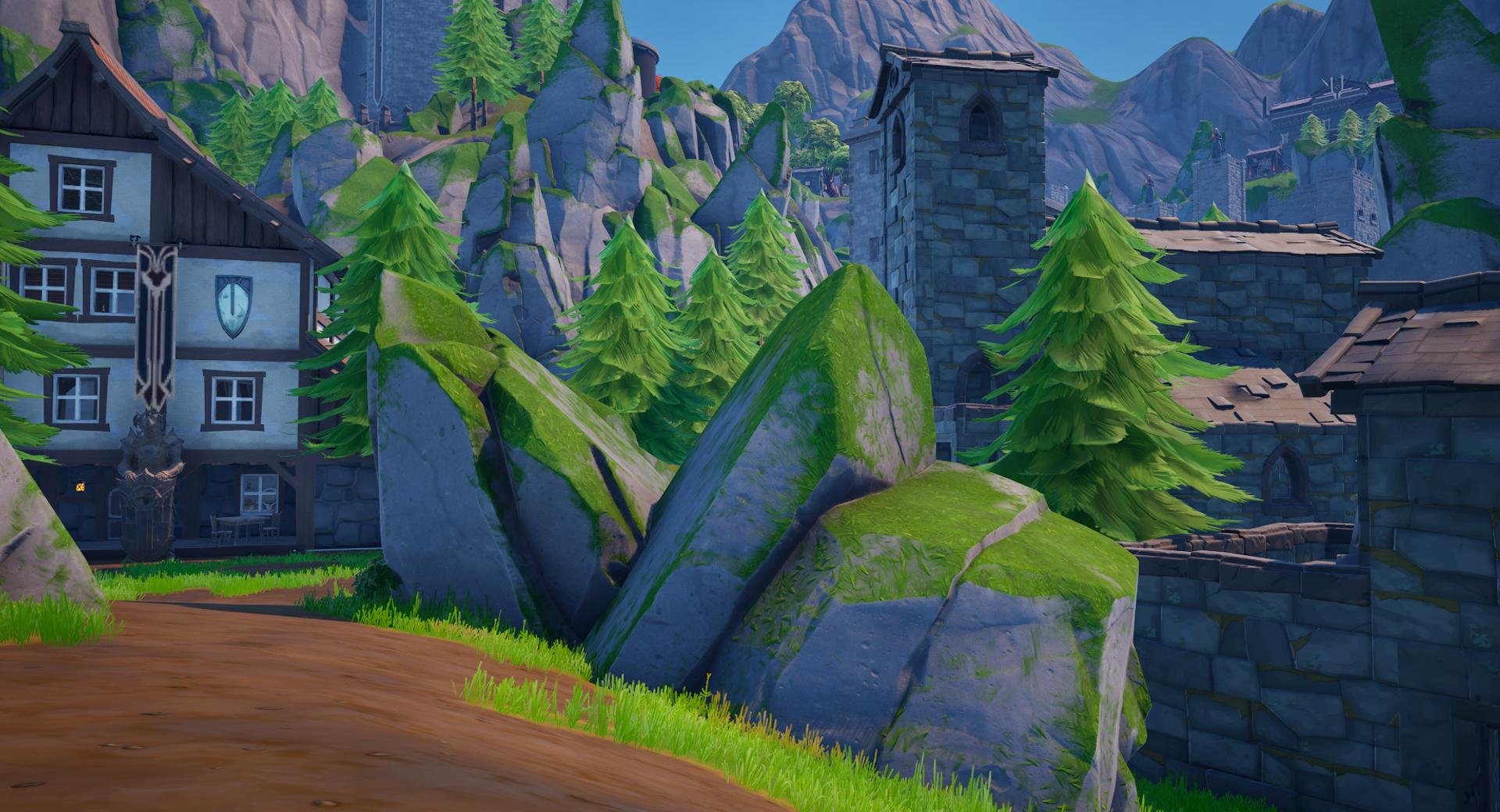
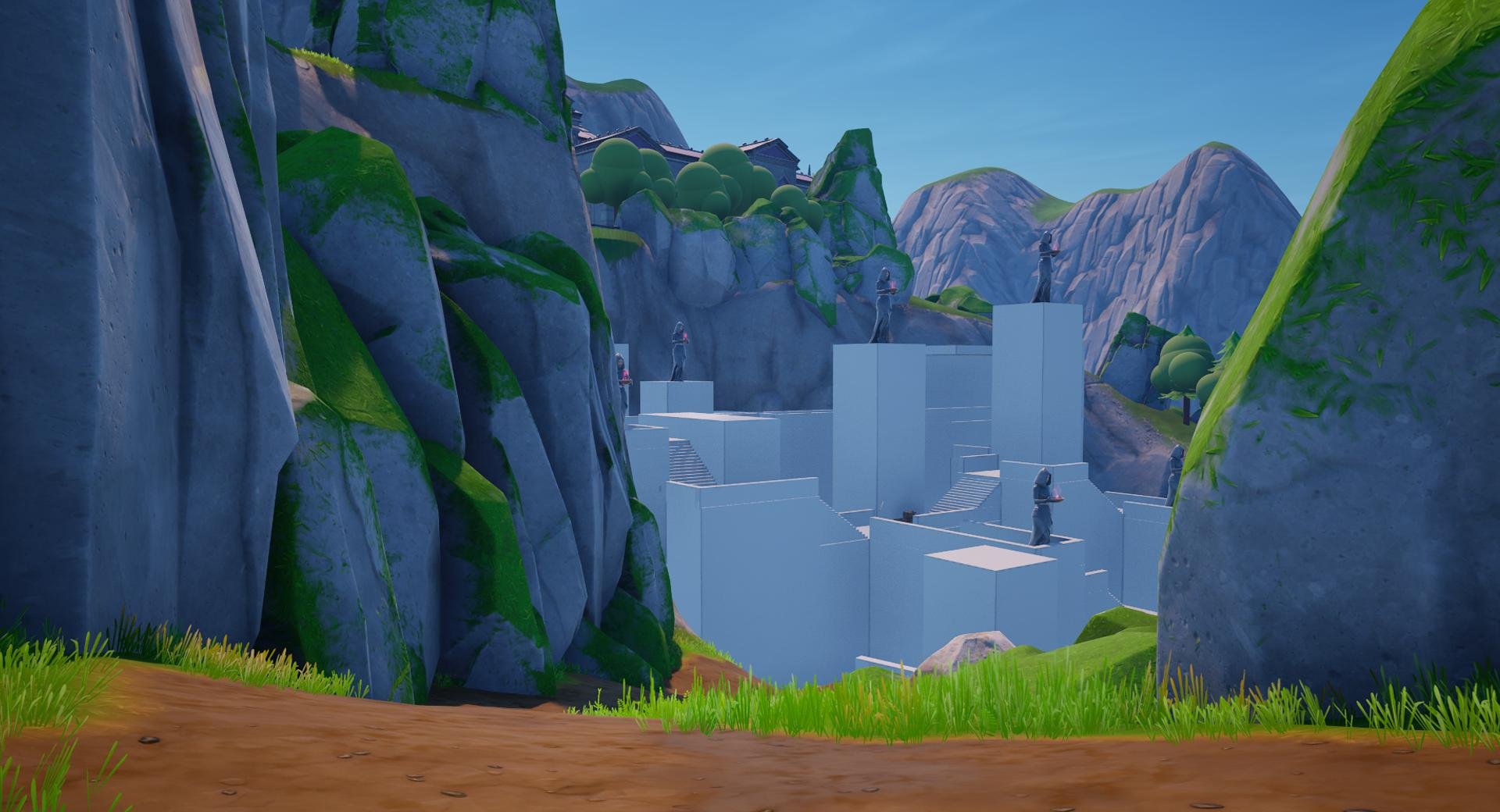
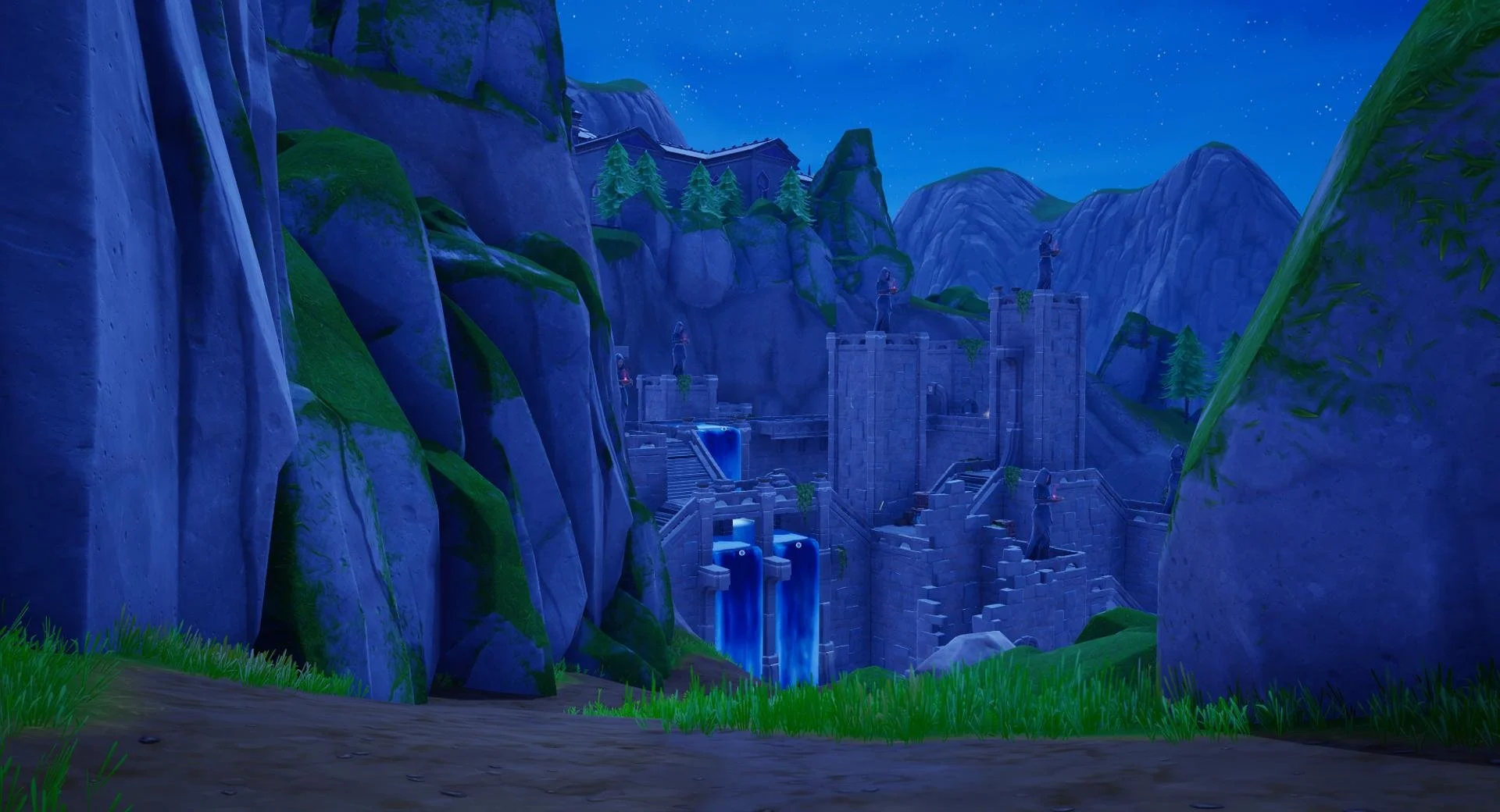
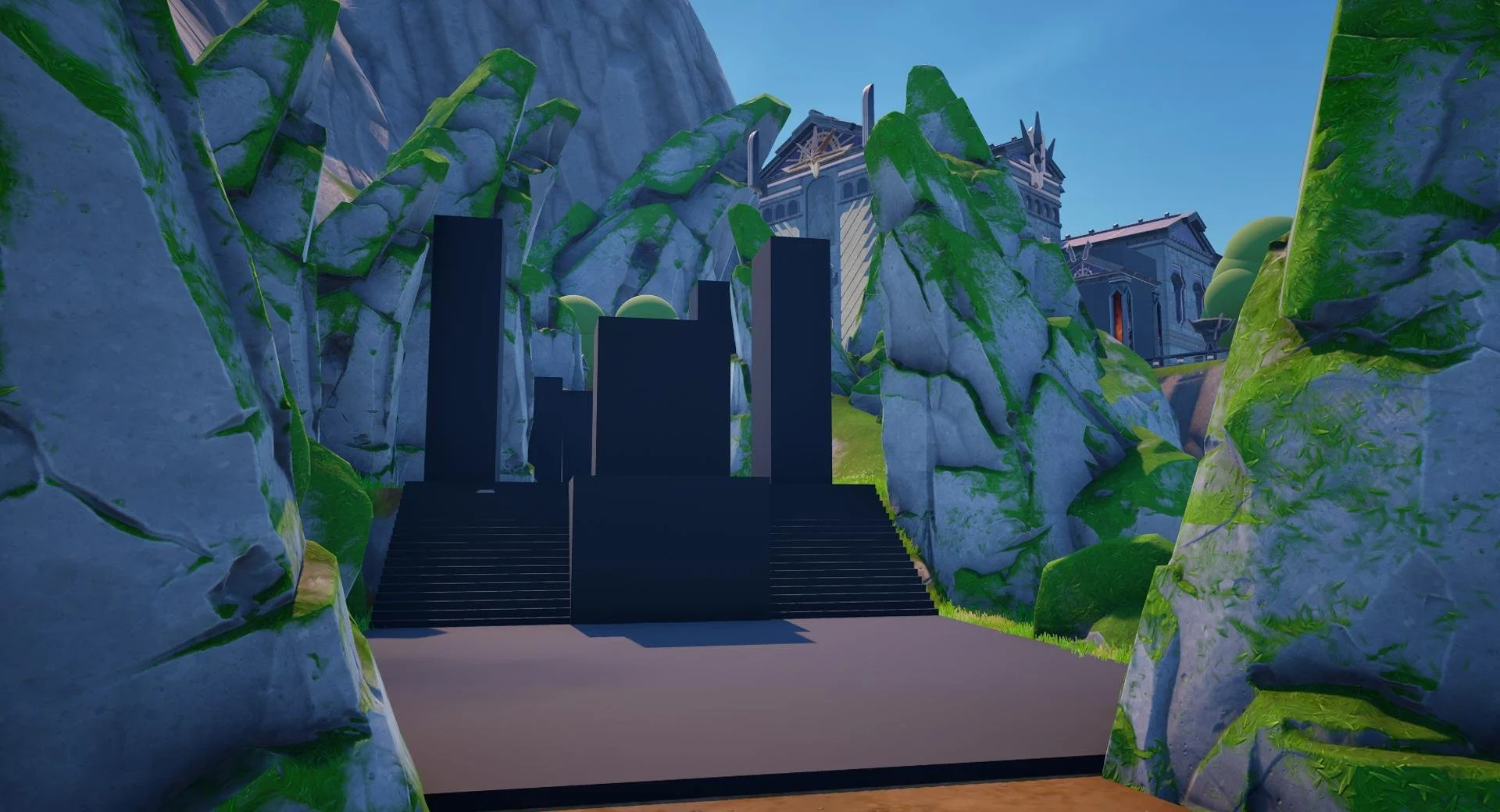
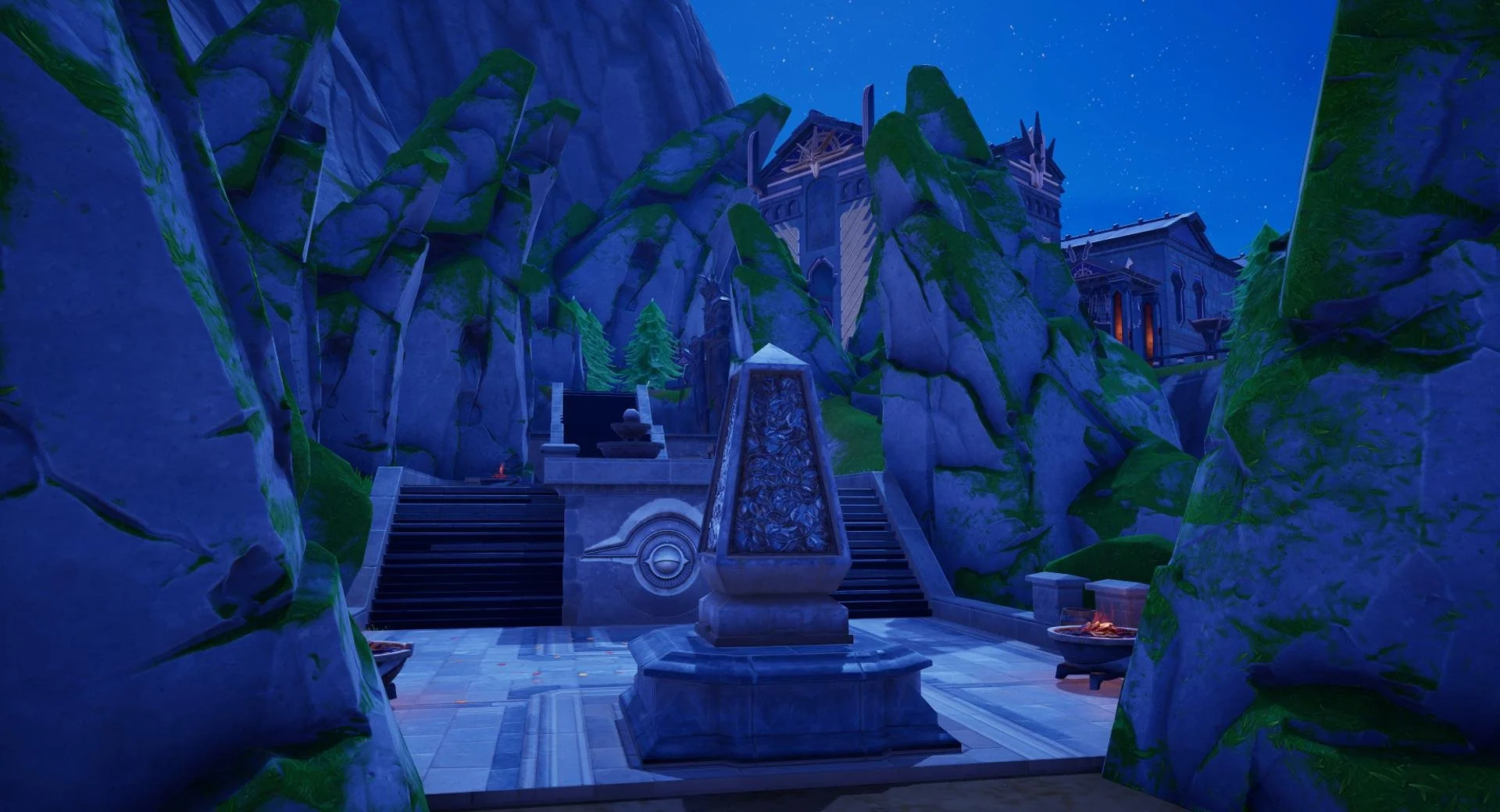
Detailed Level Breakdown
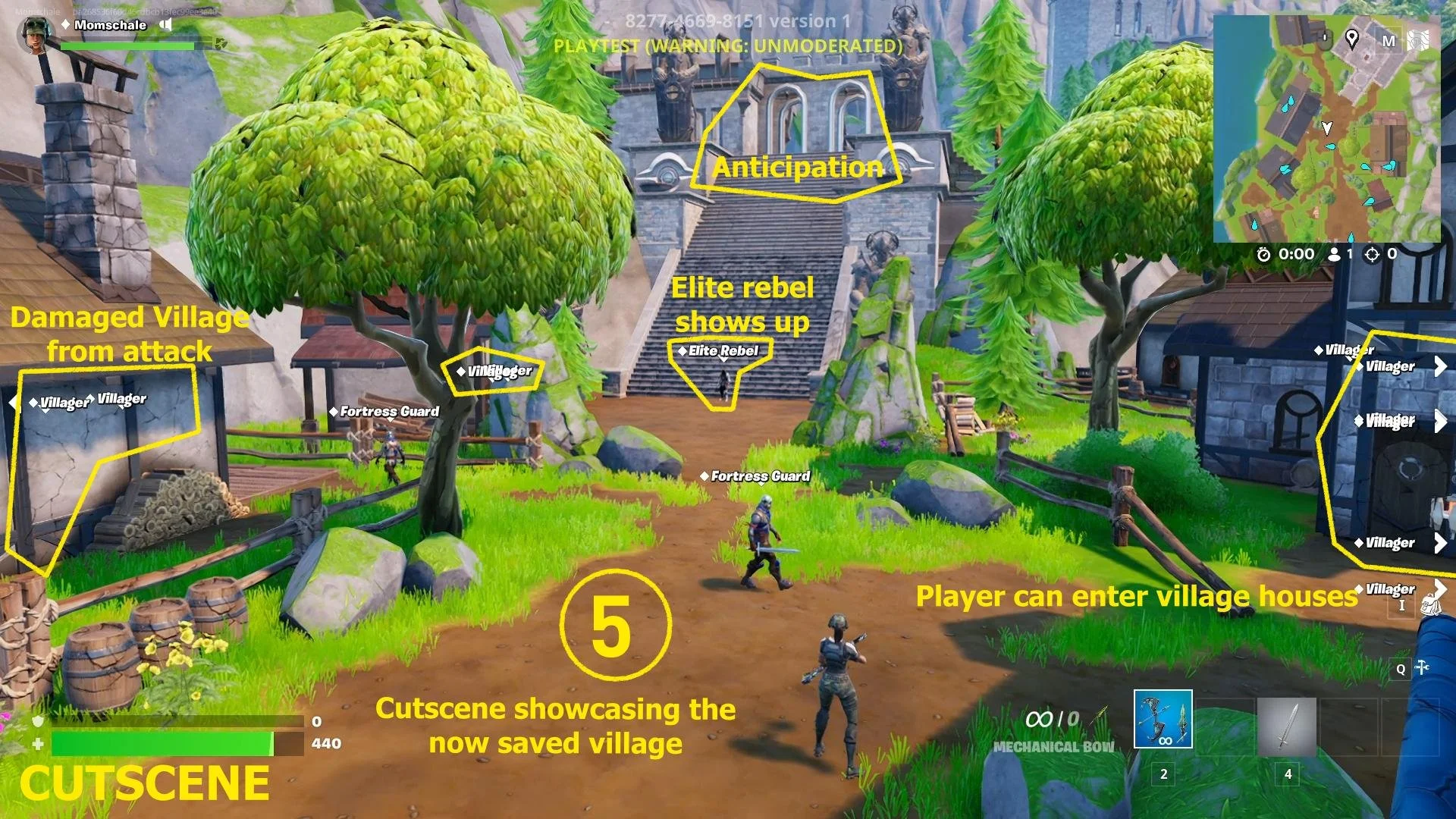
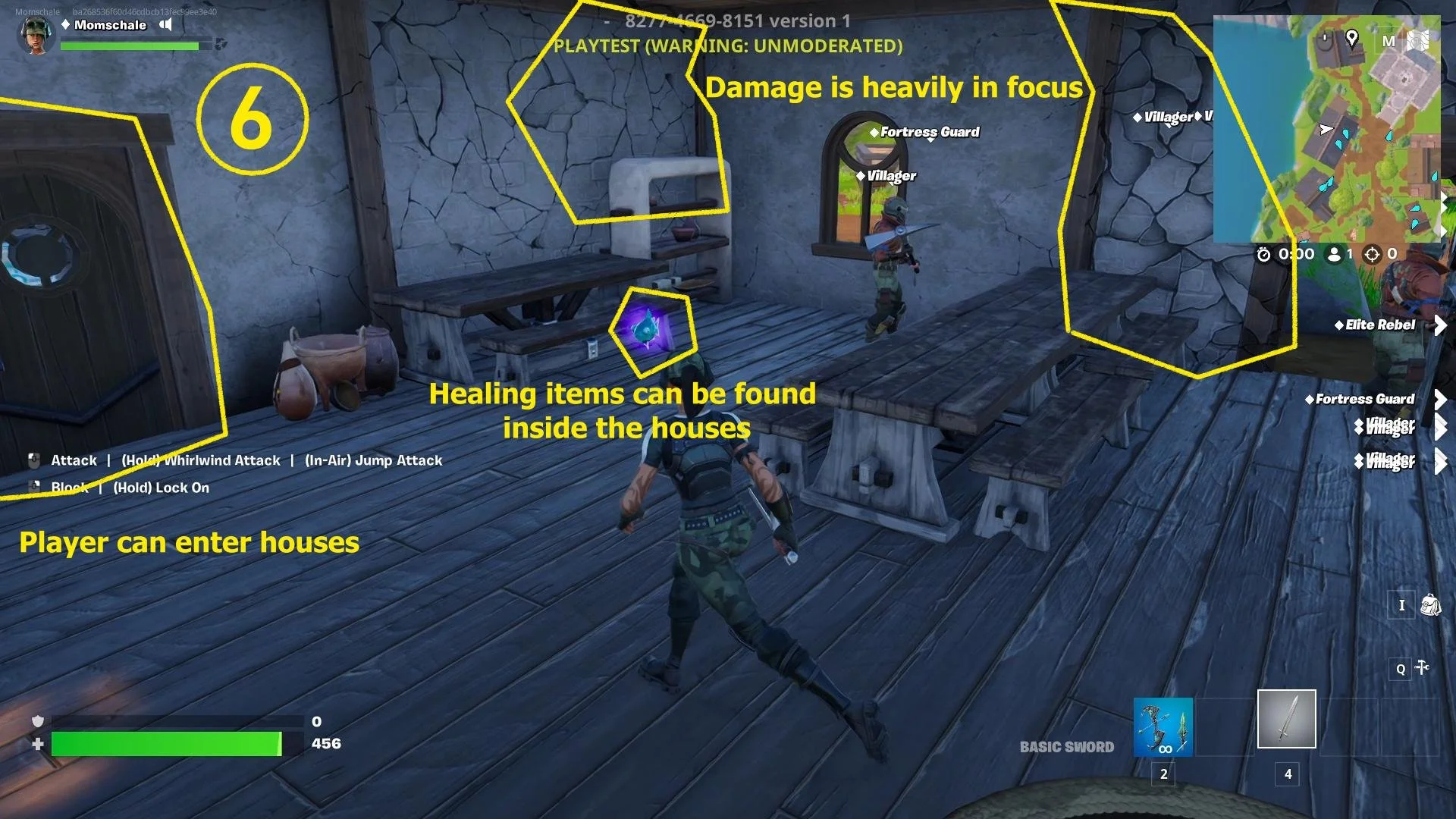
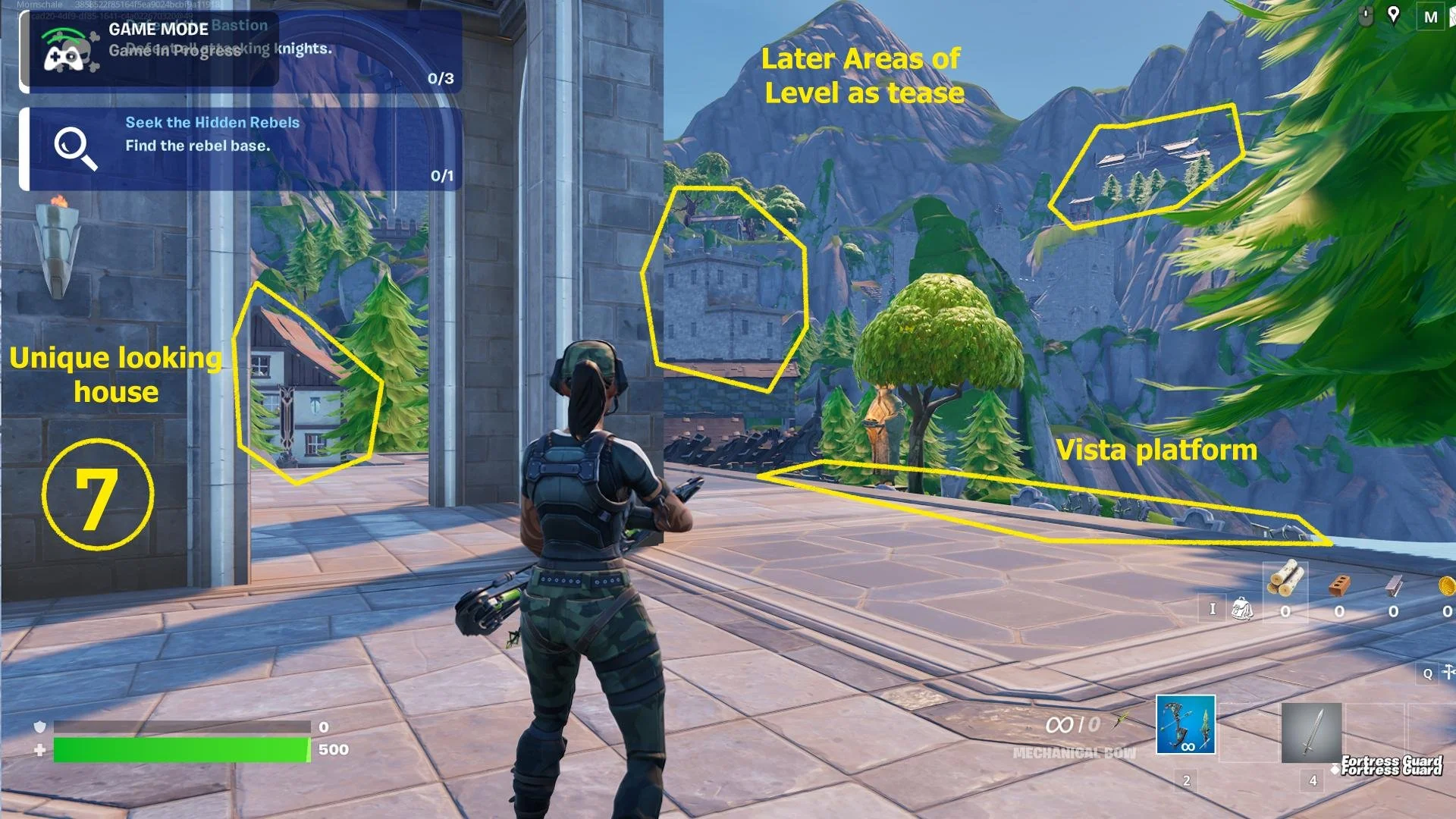
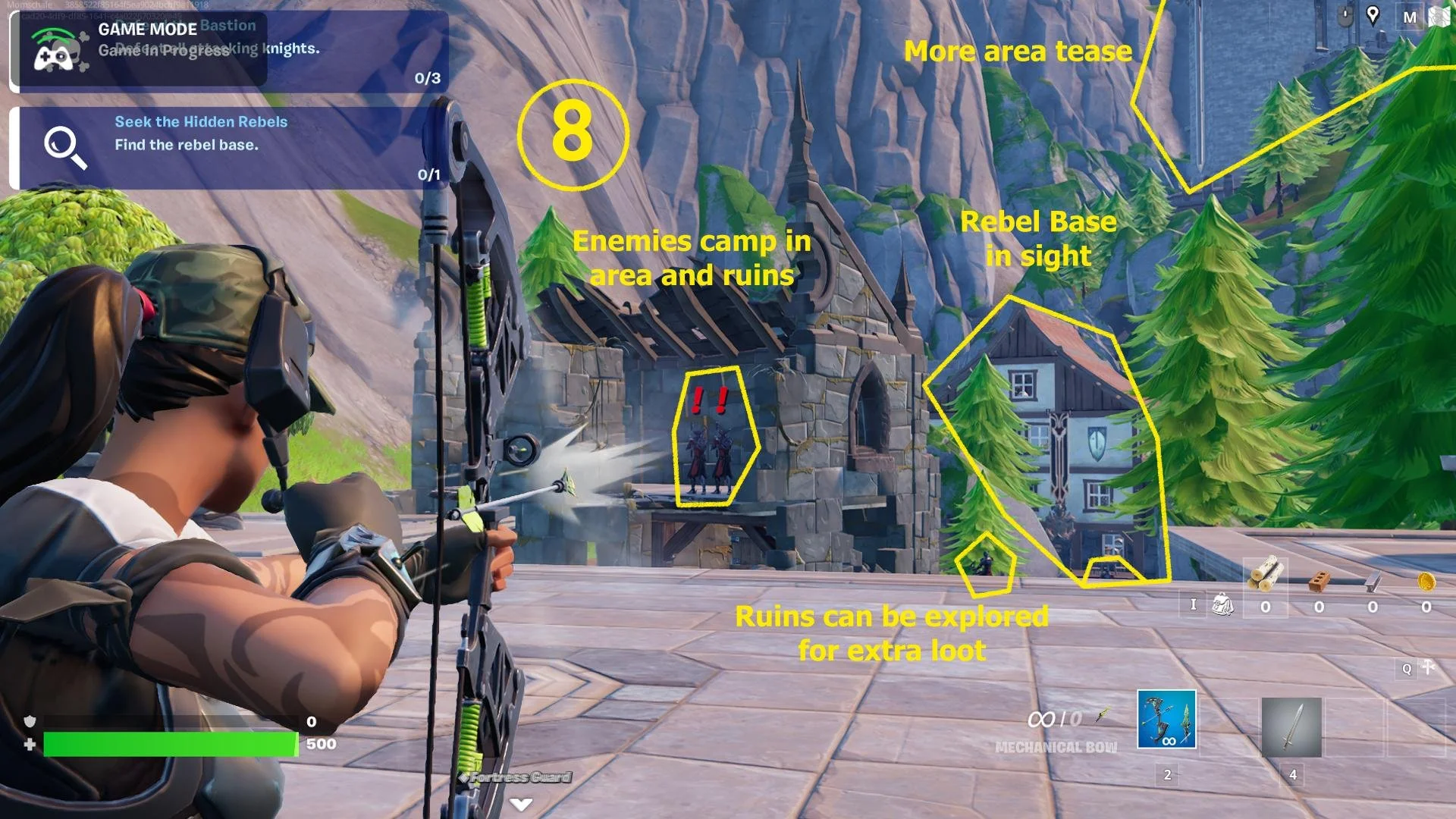
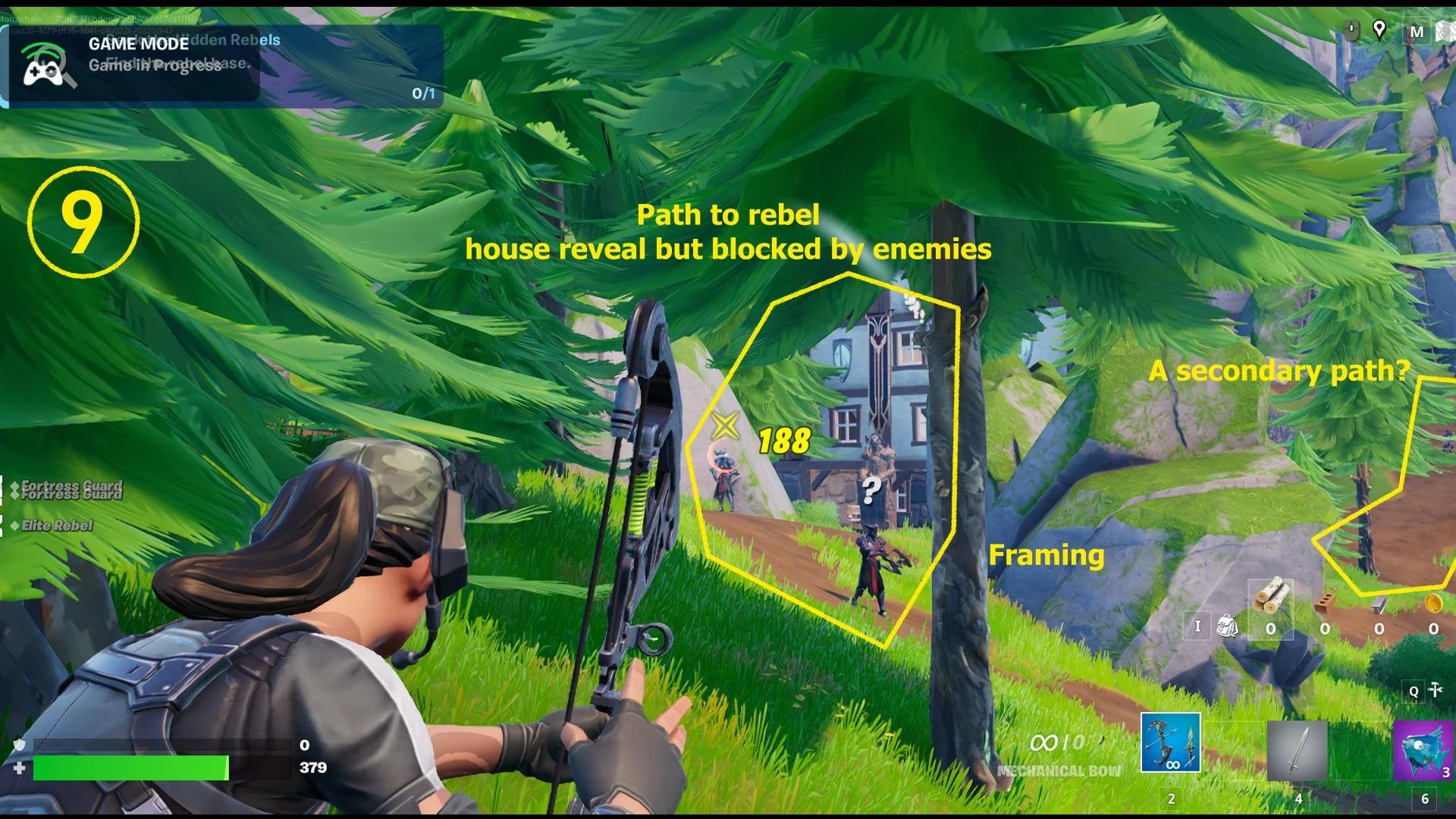
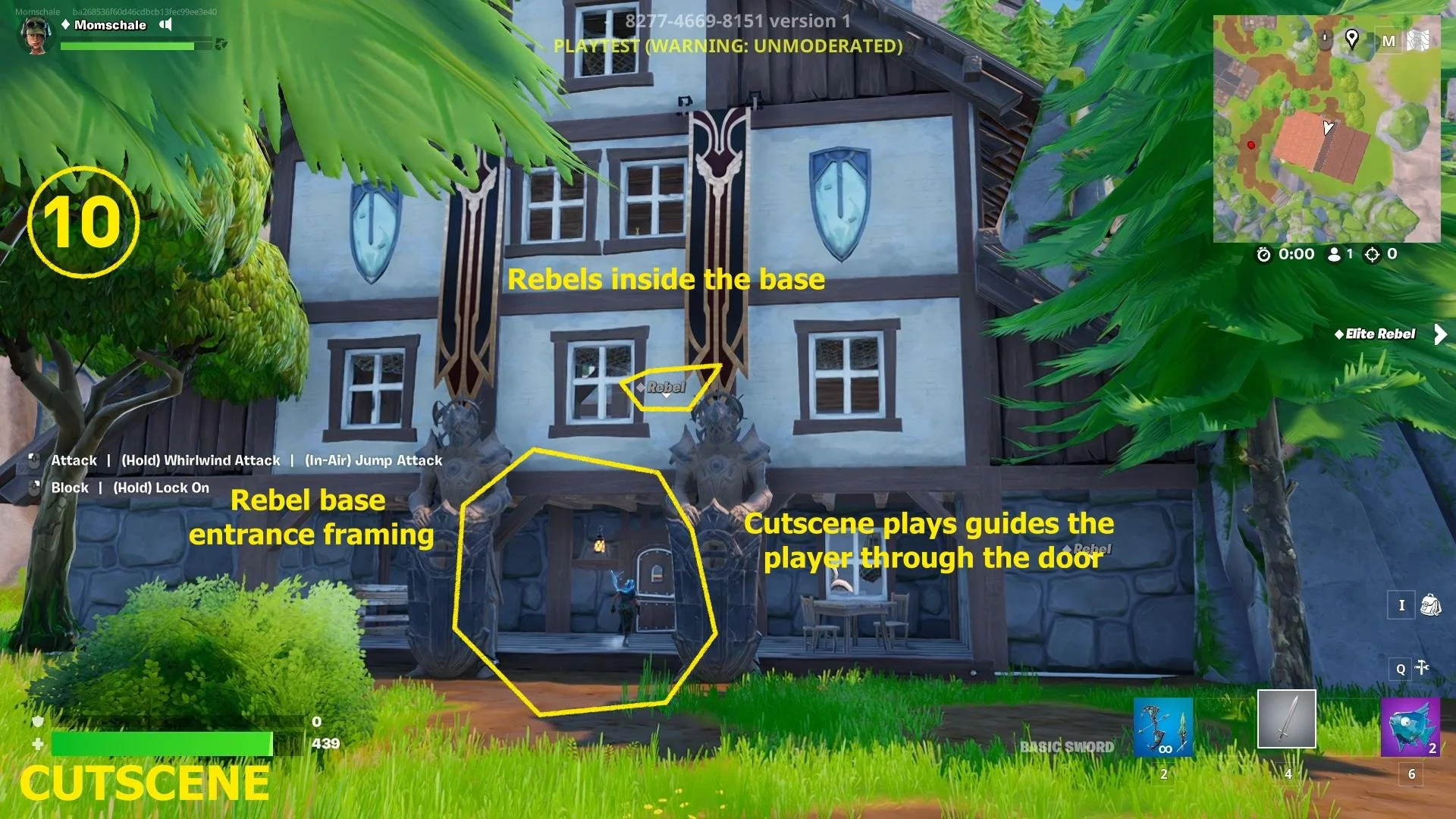
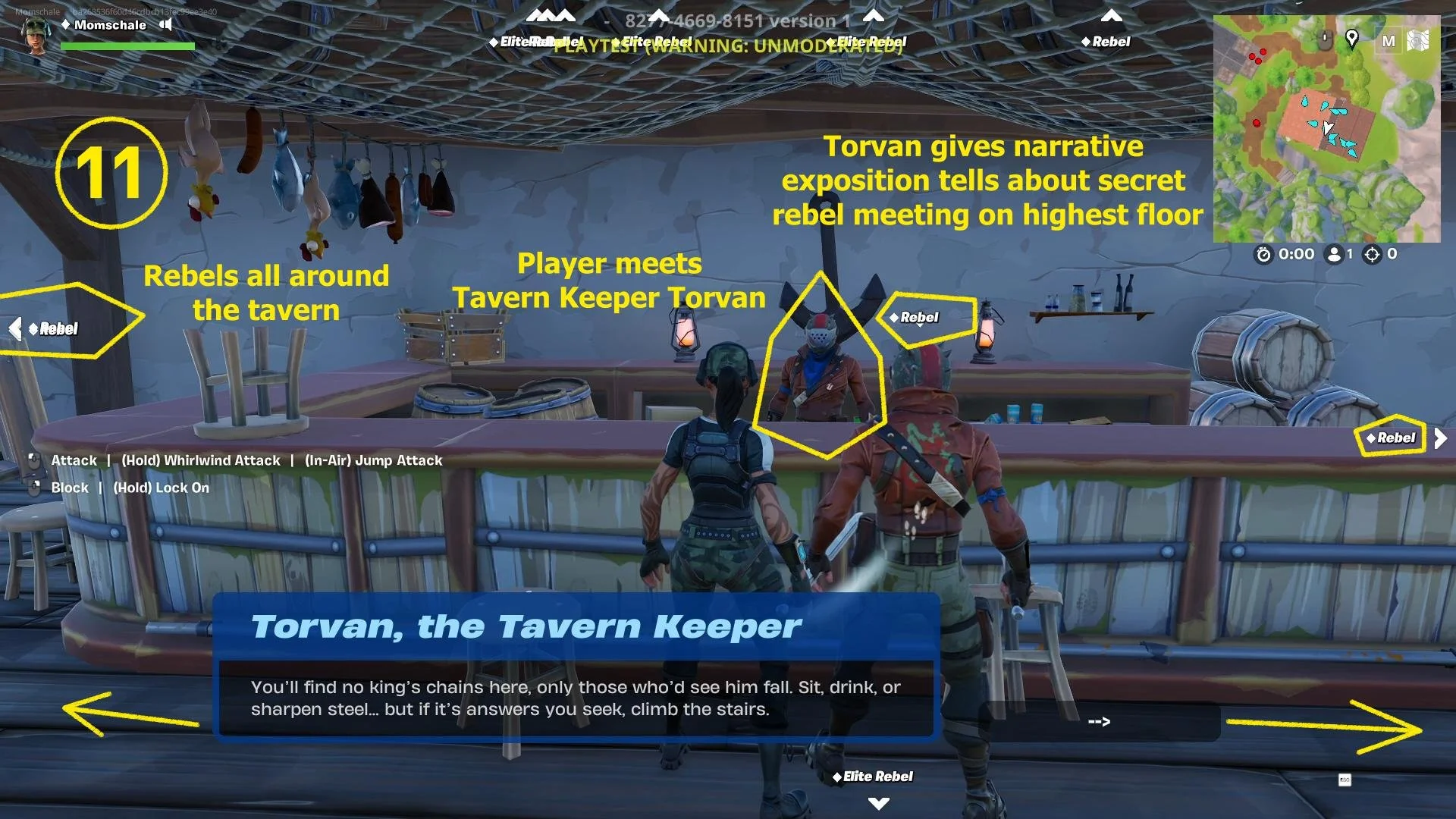
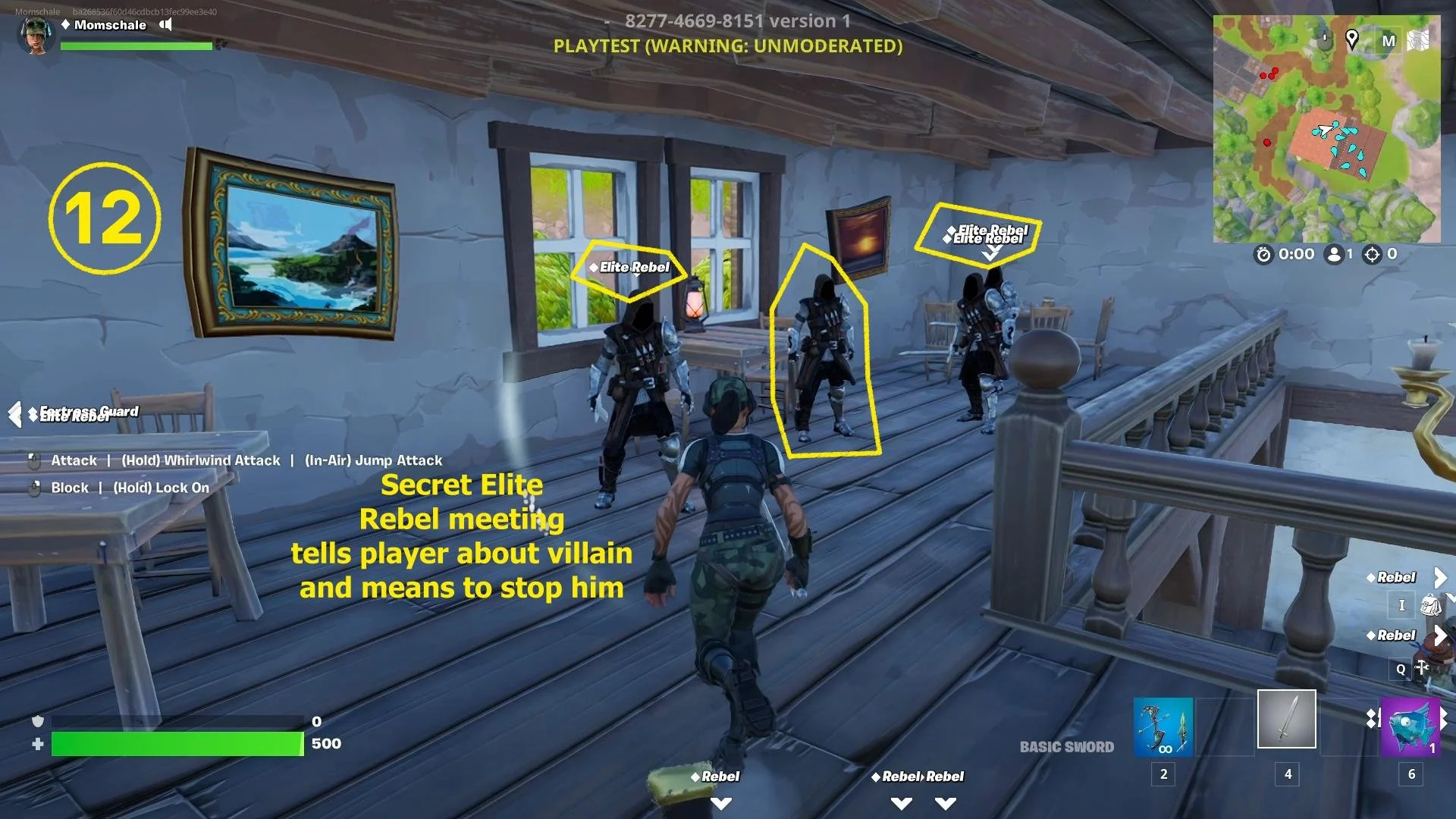
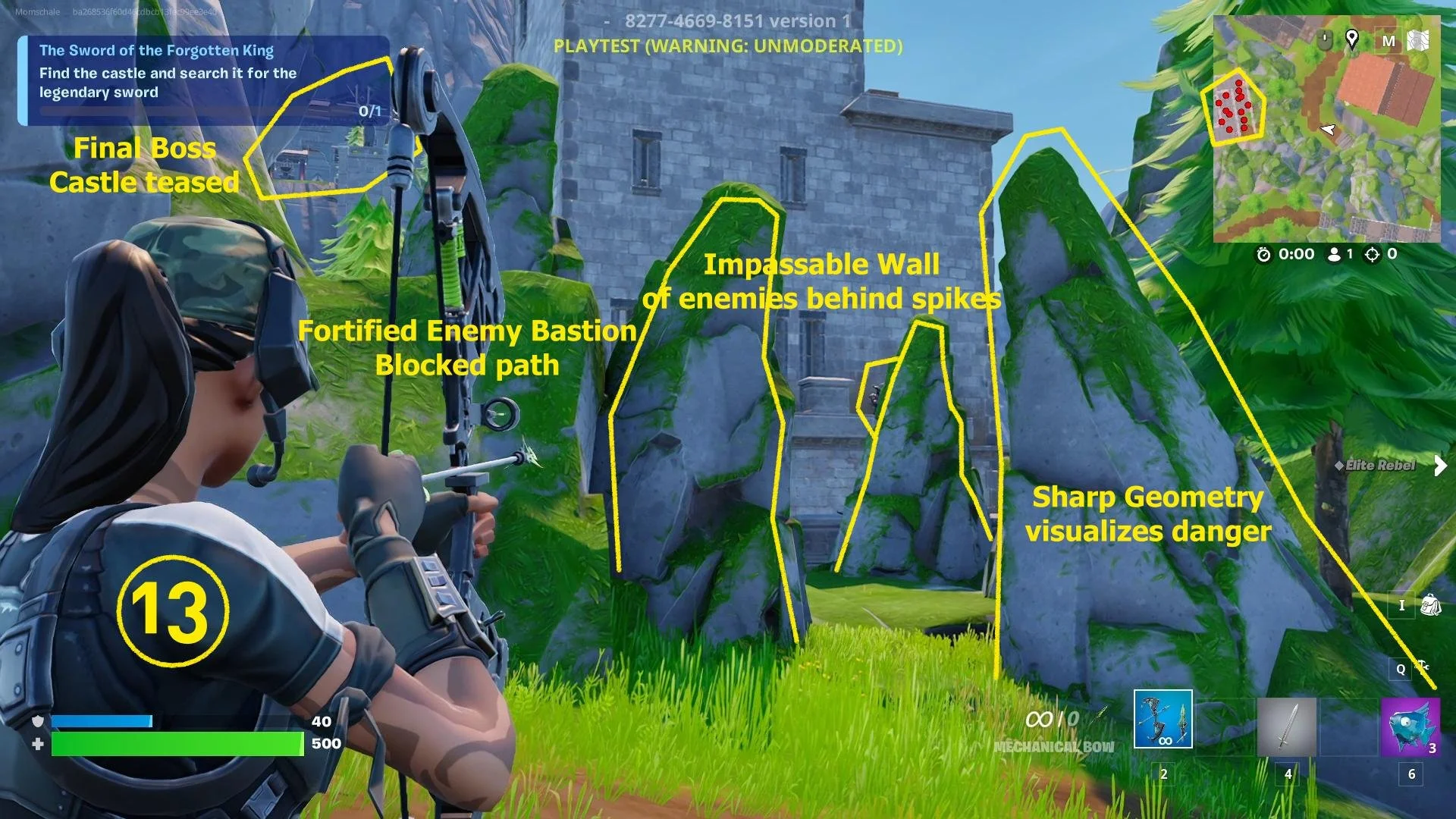
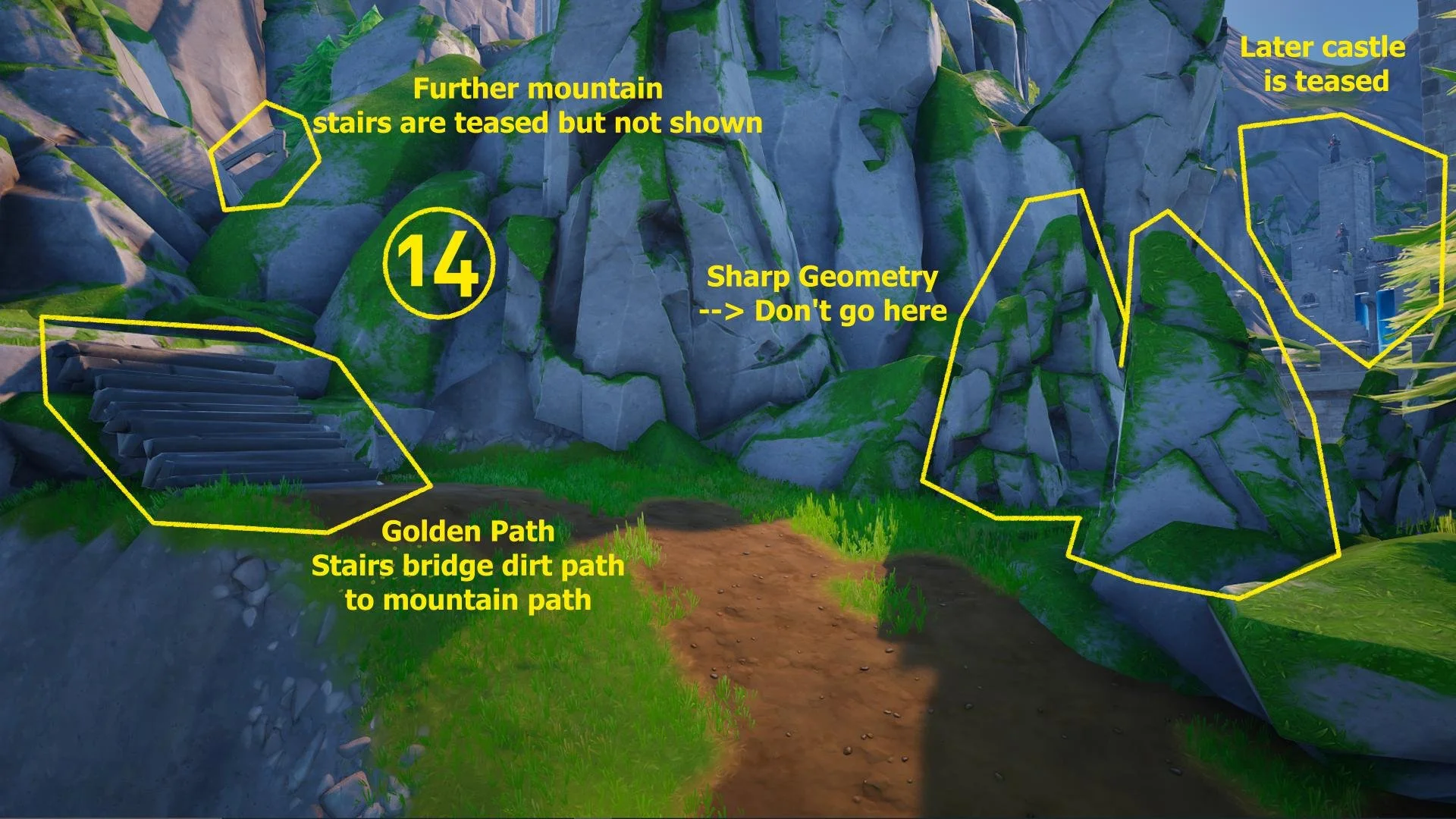
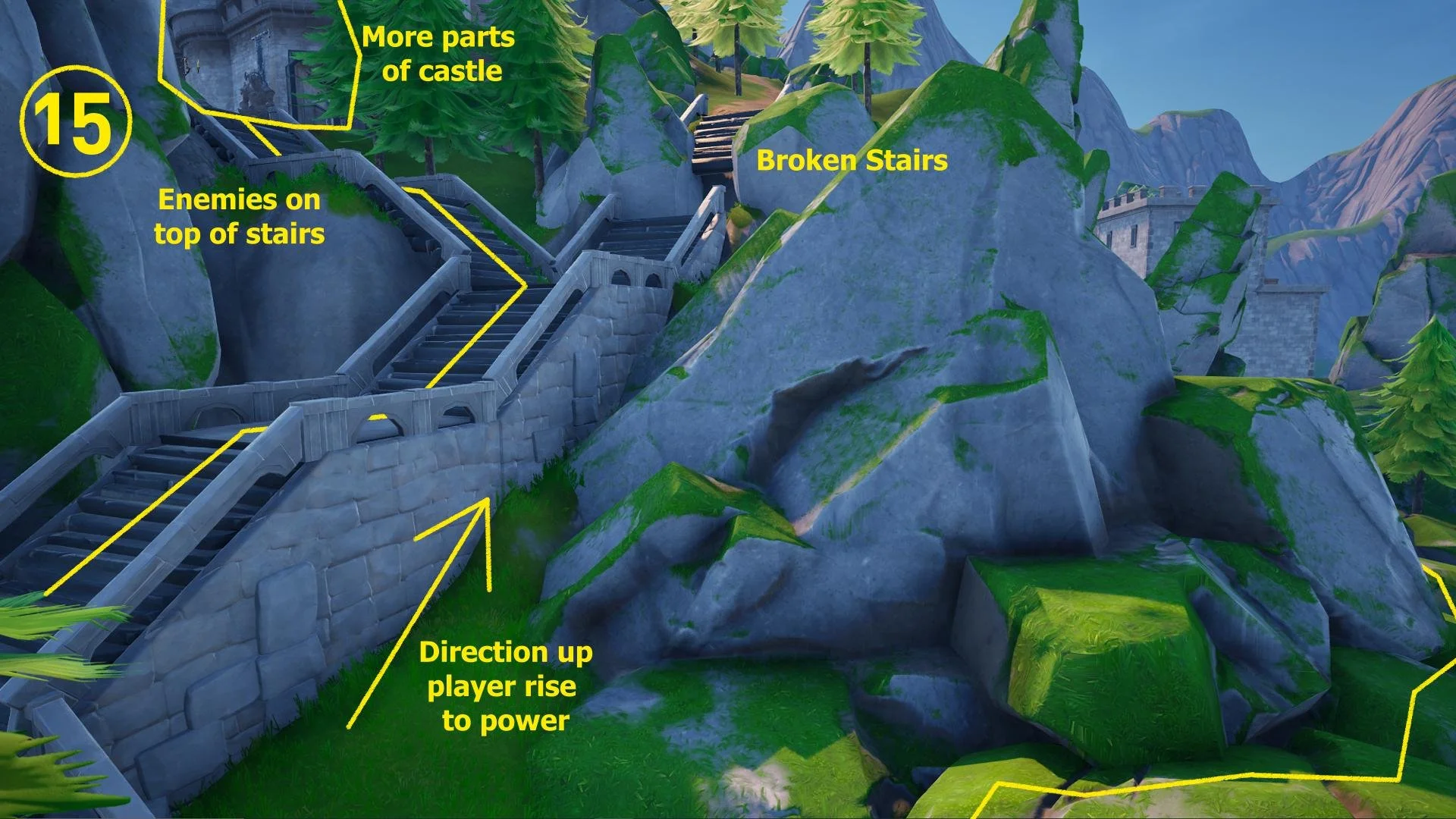
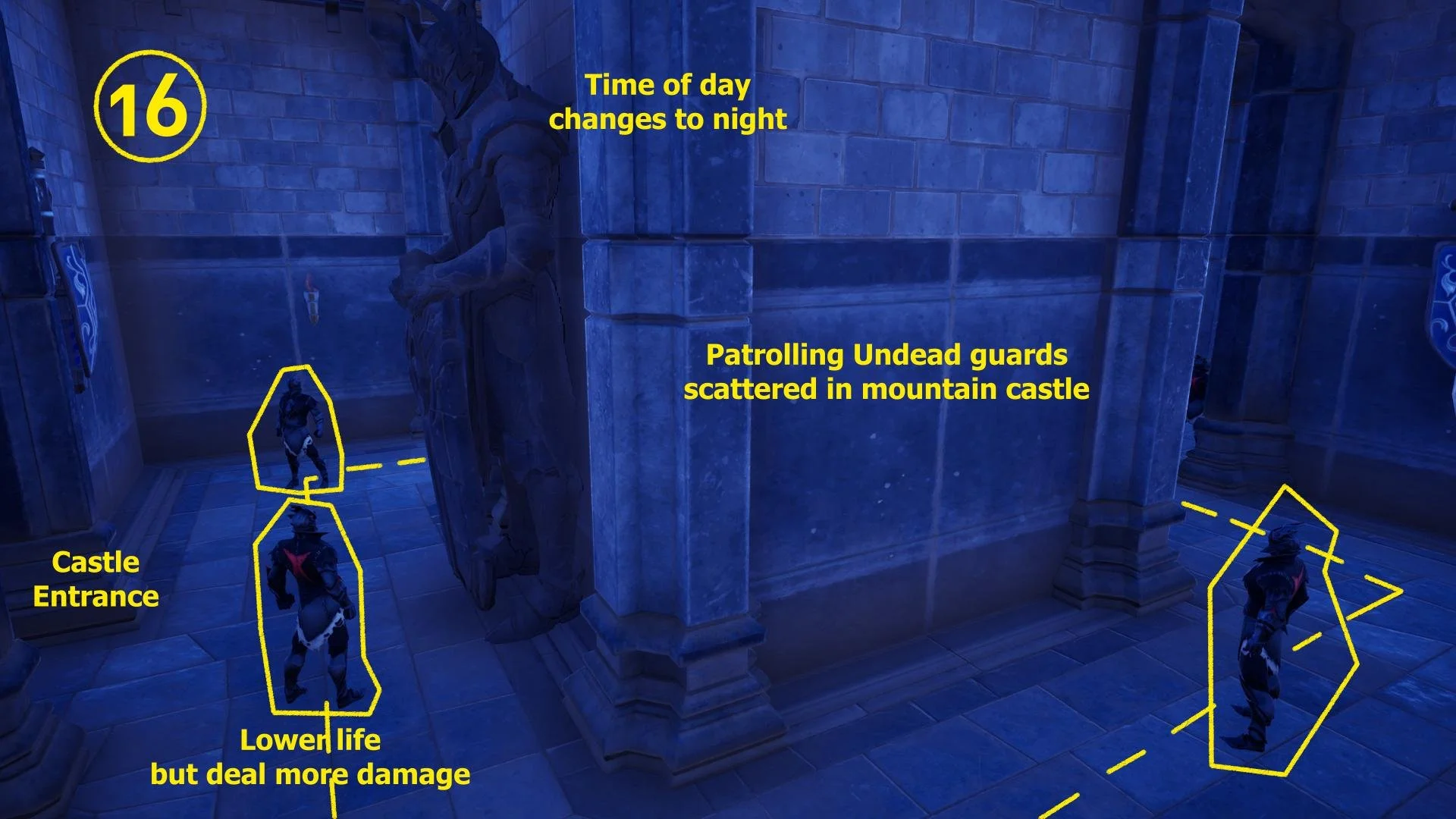
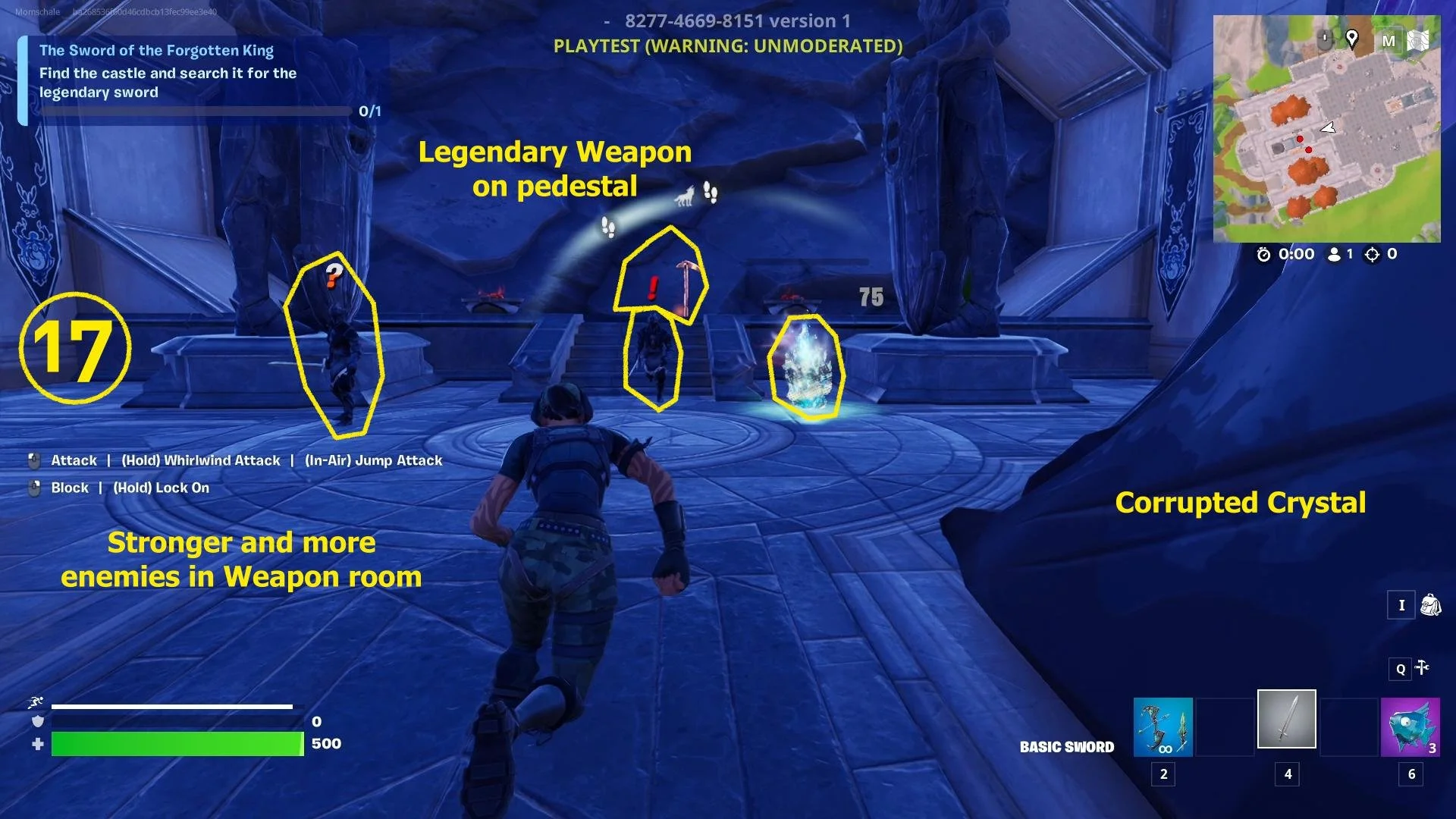
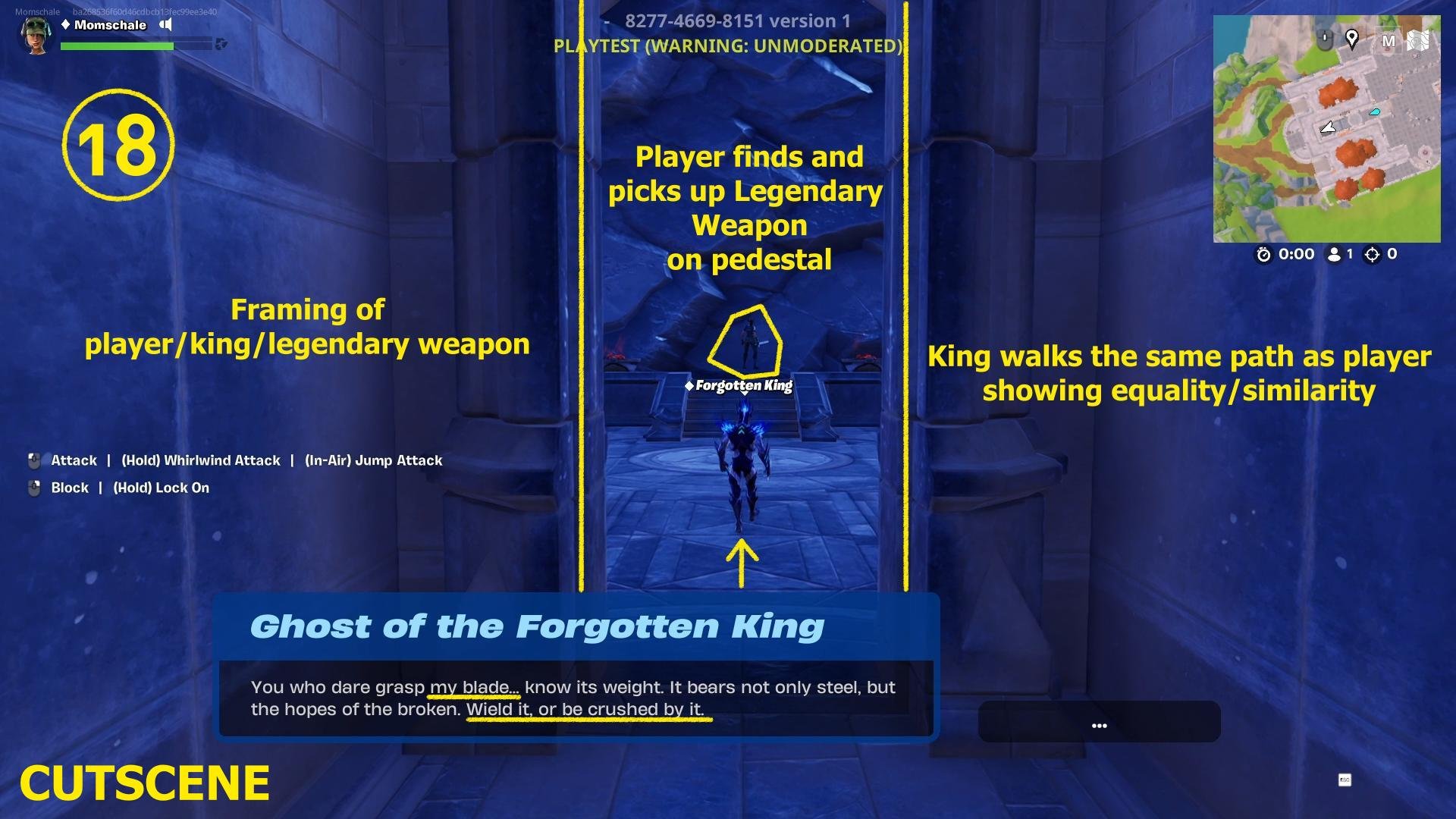
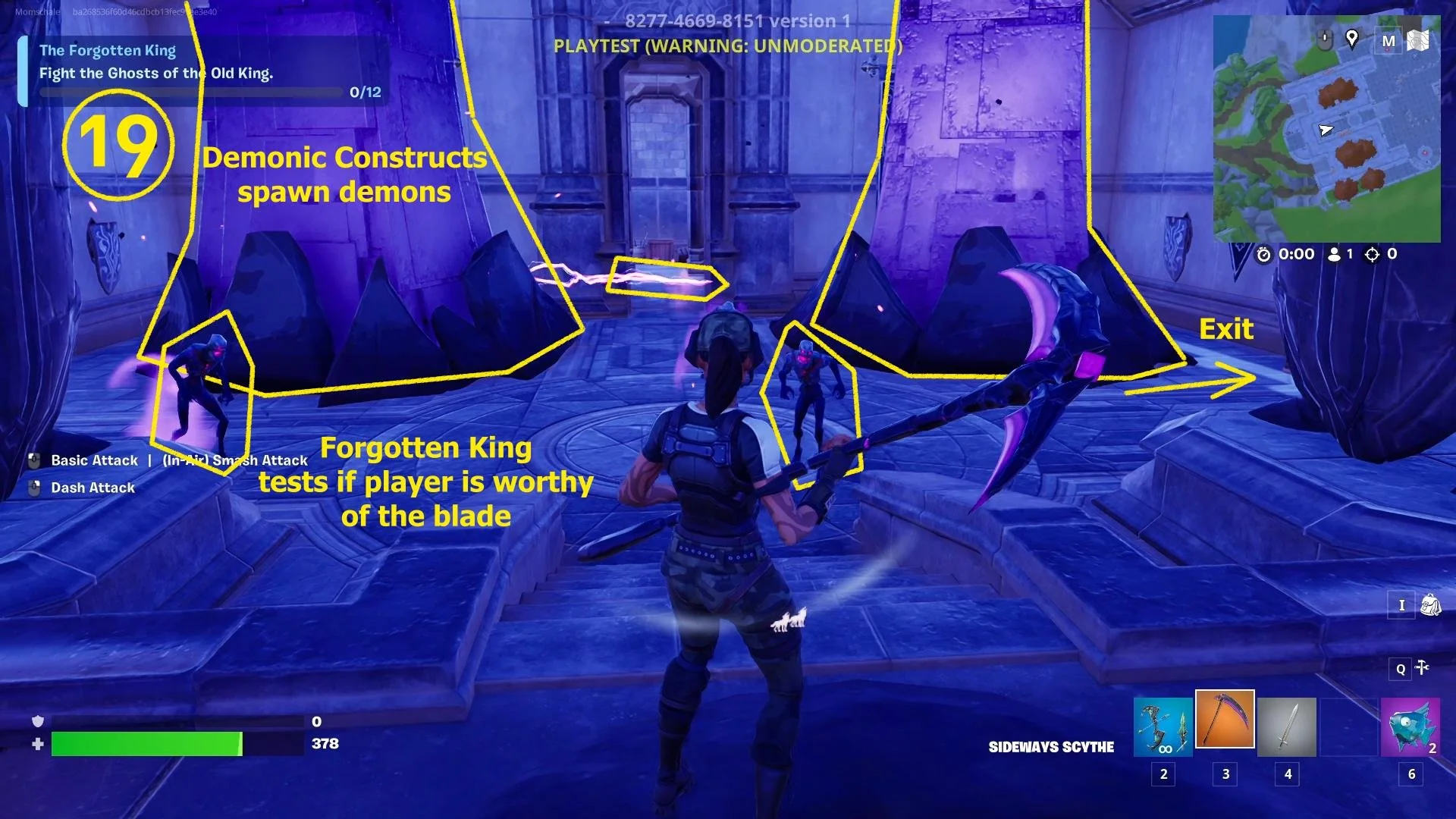
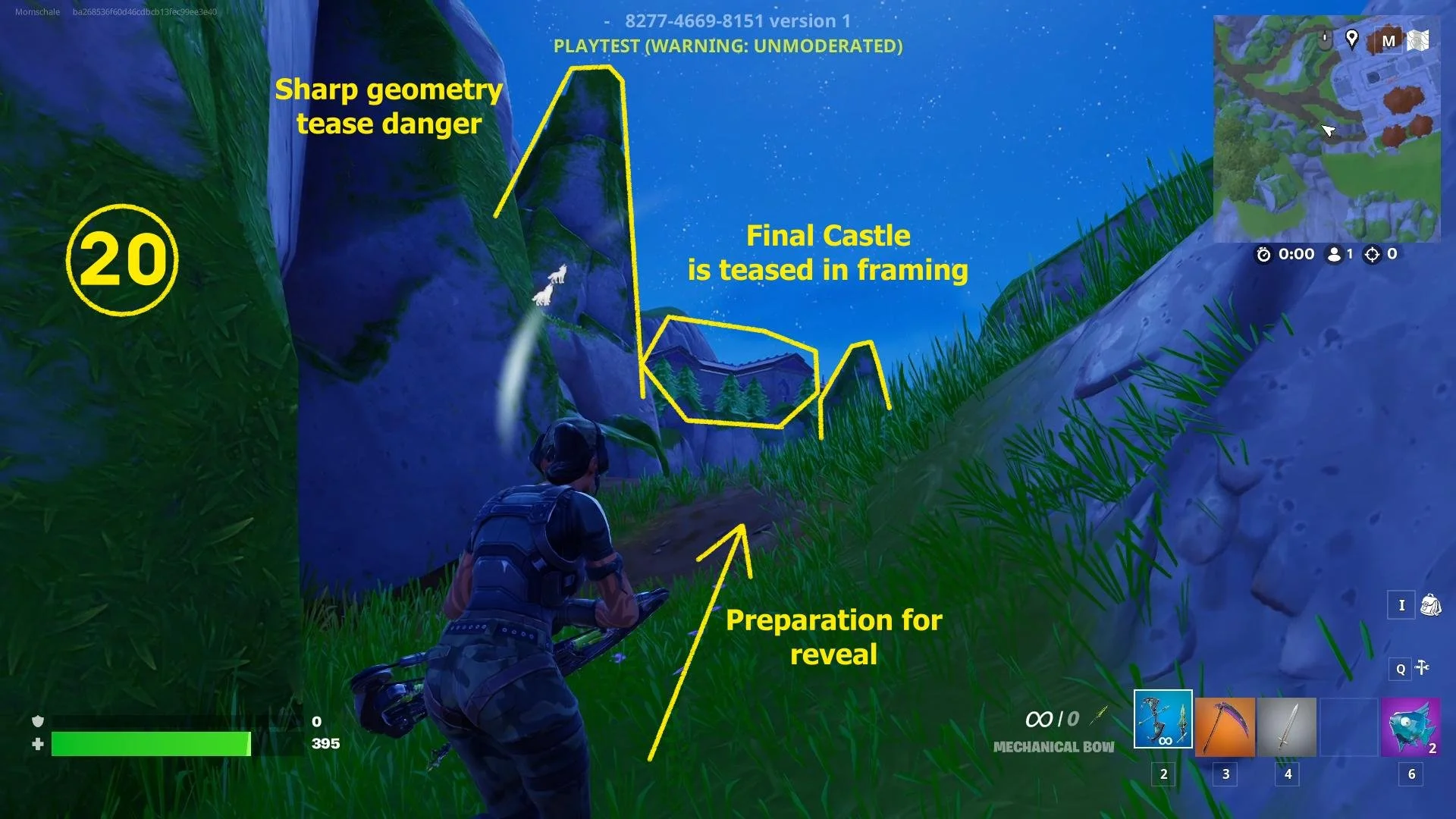
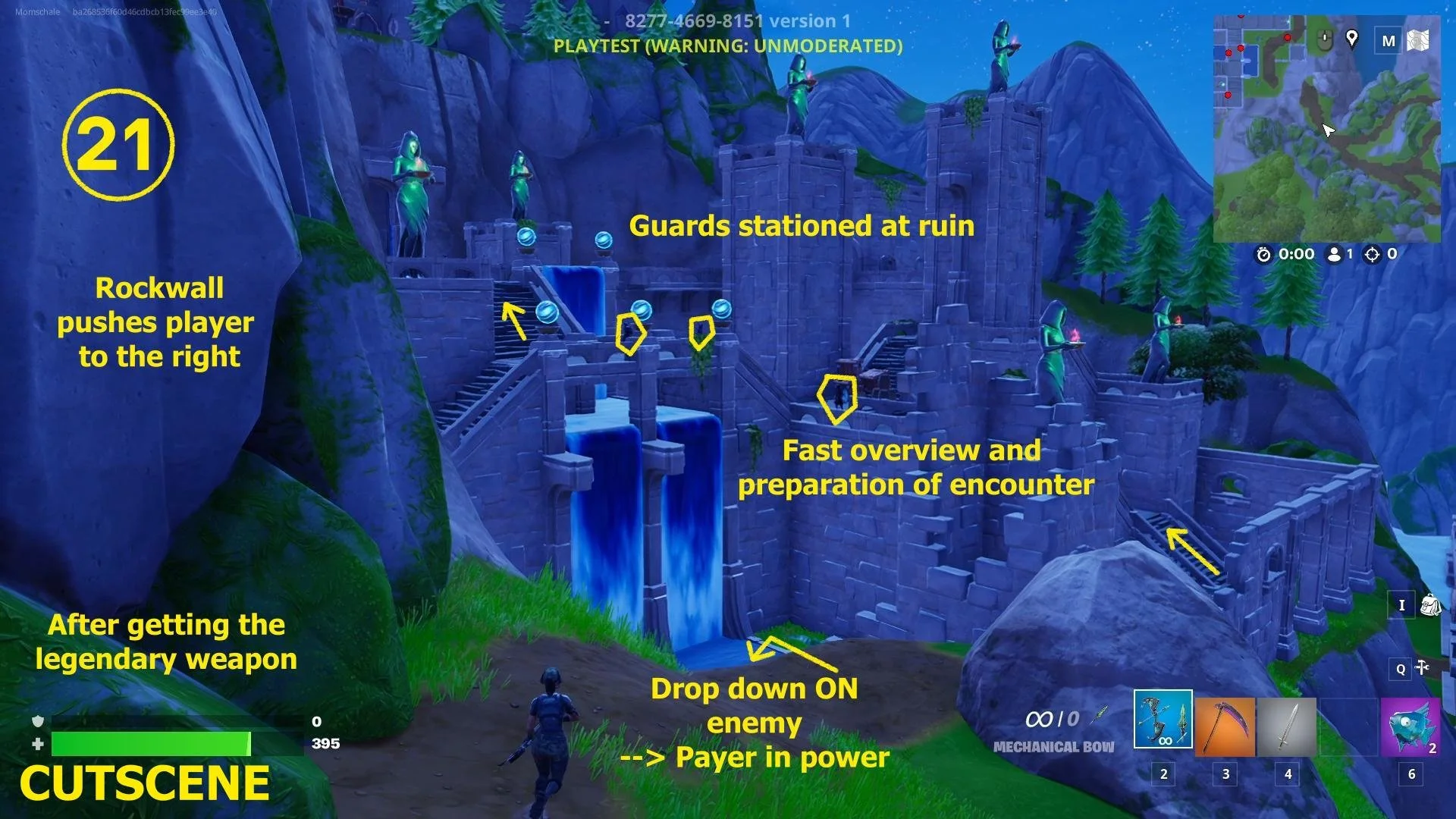
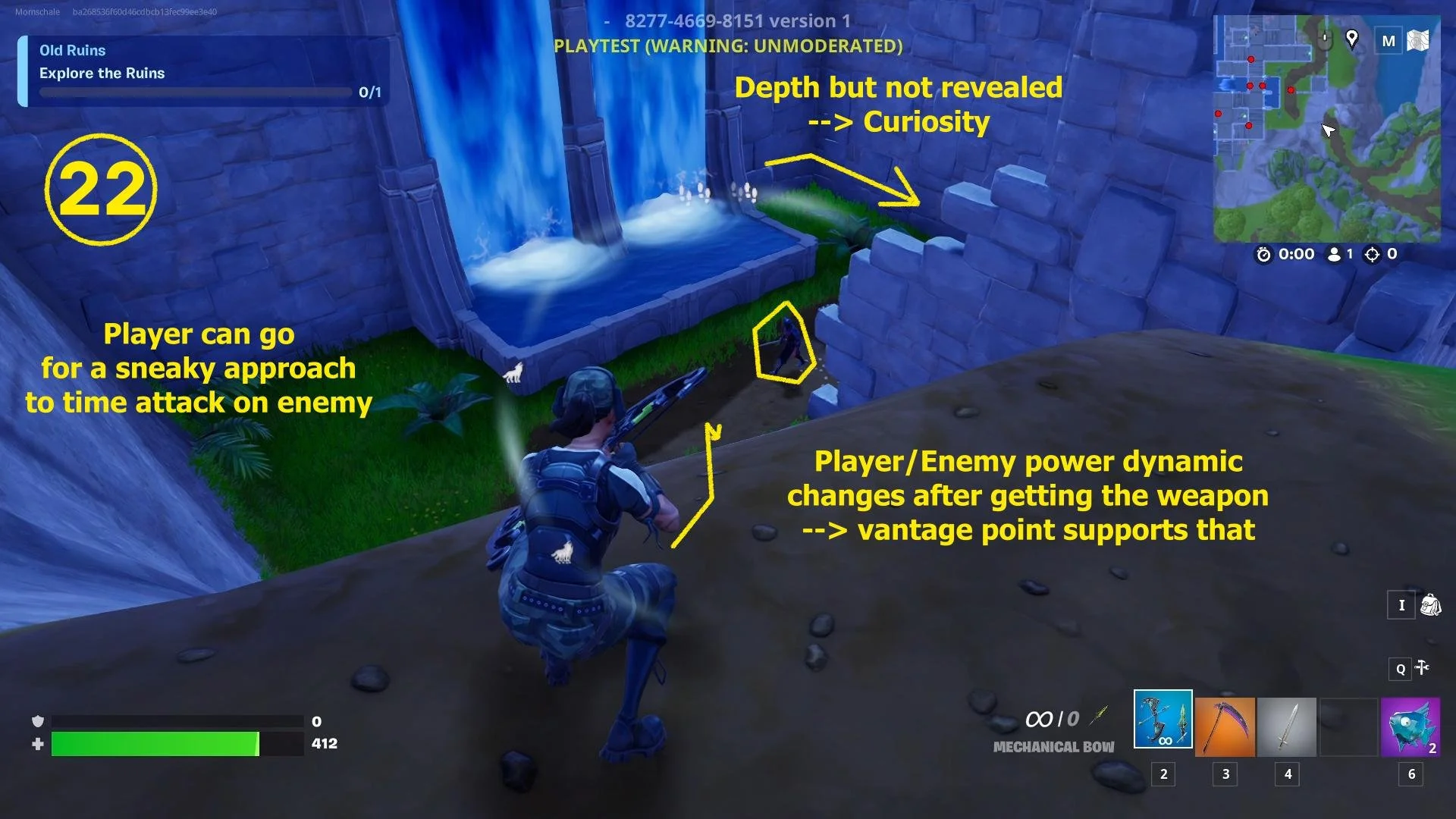
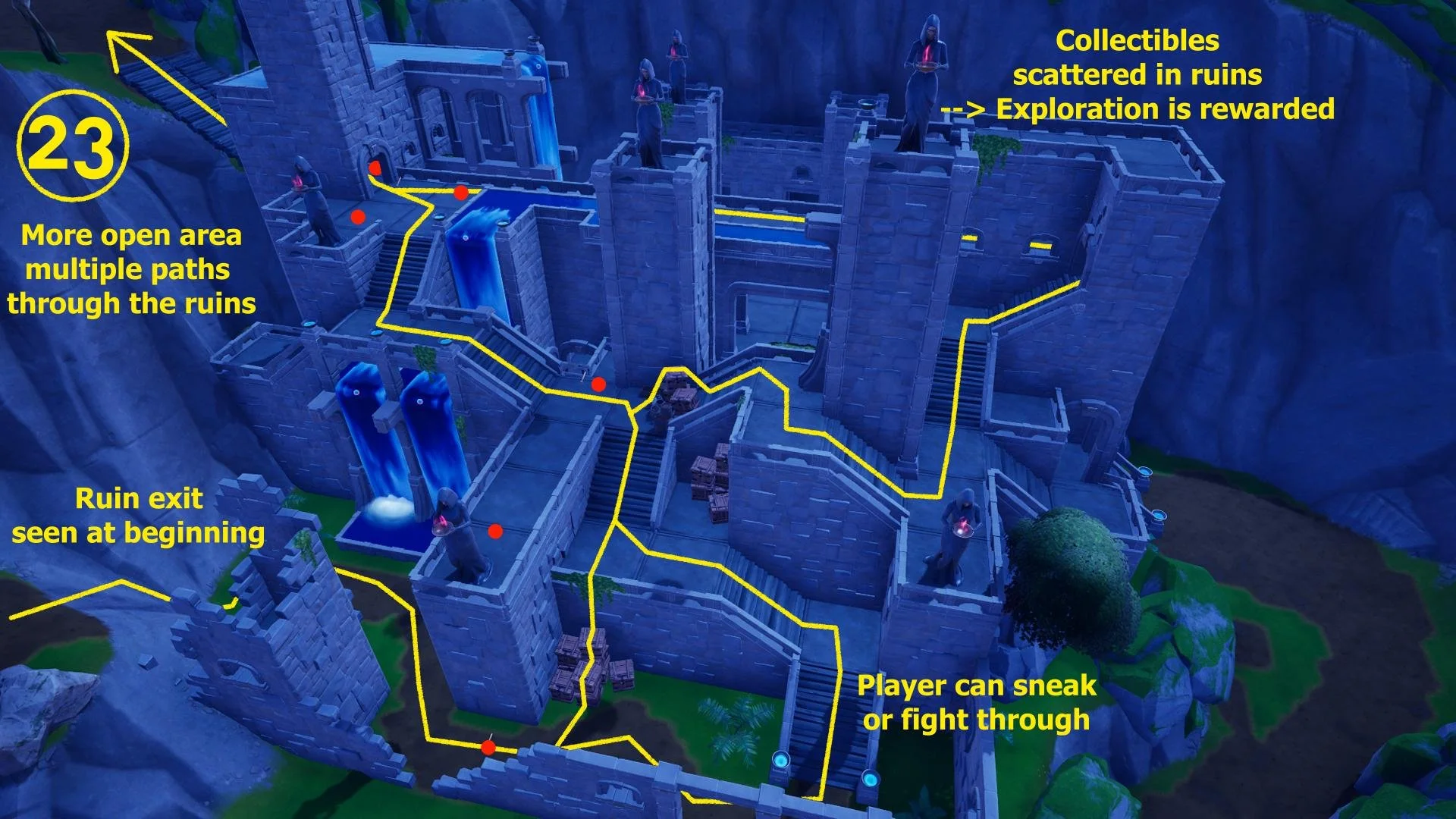
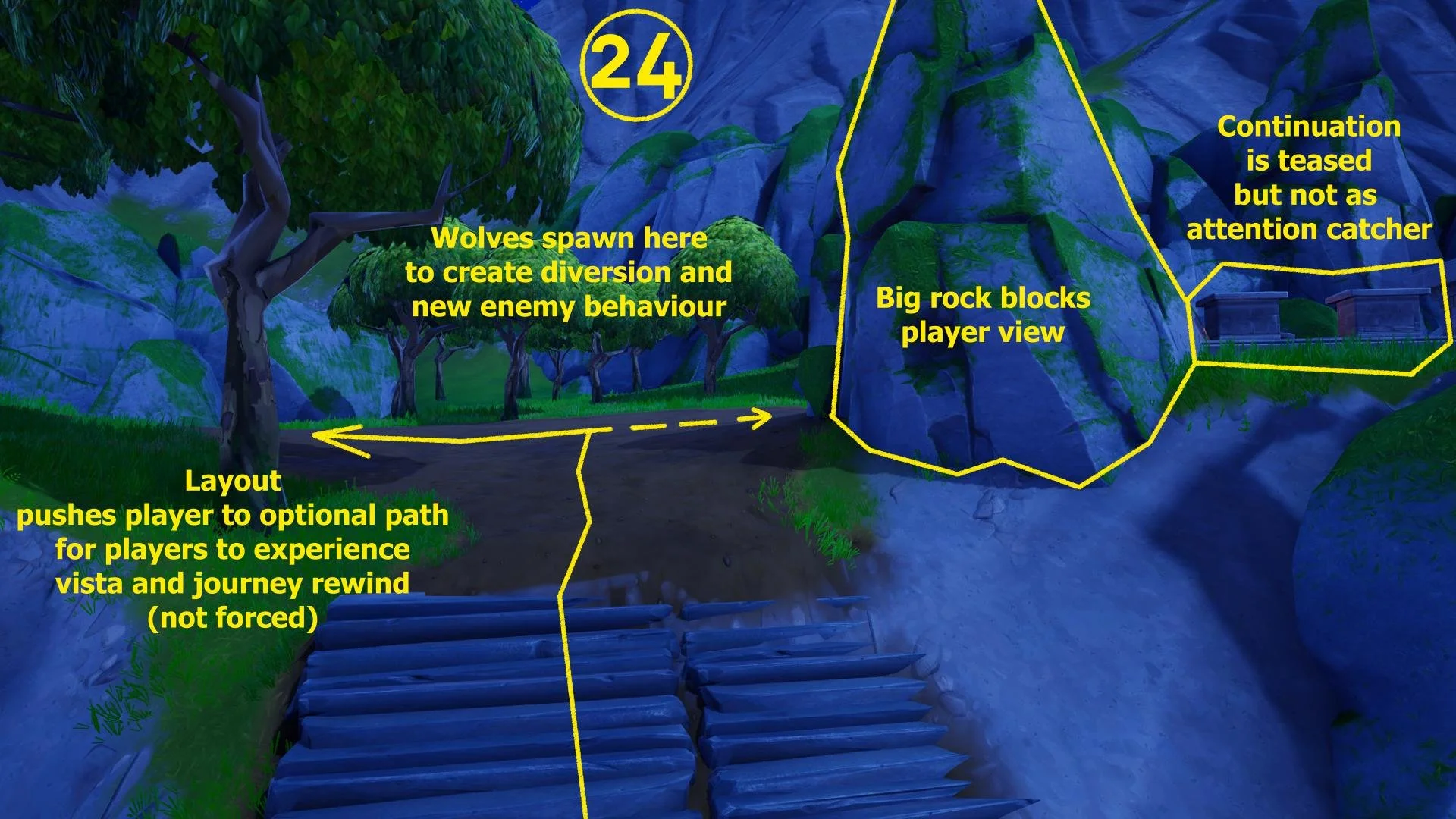
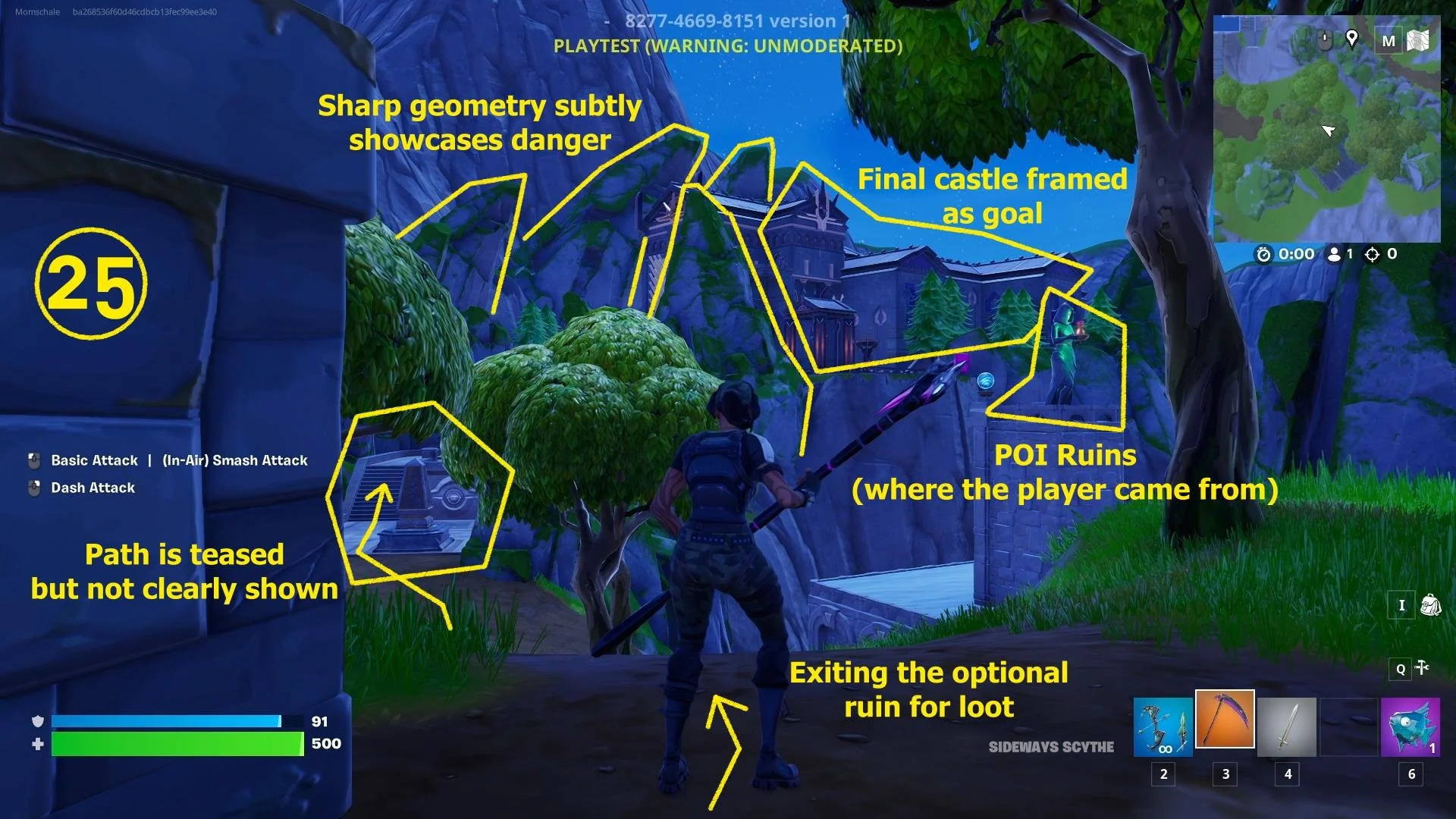
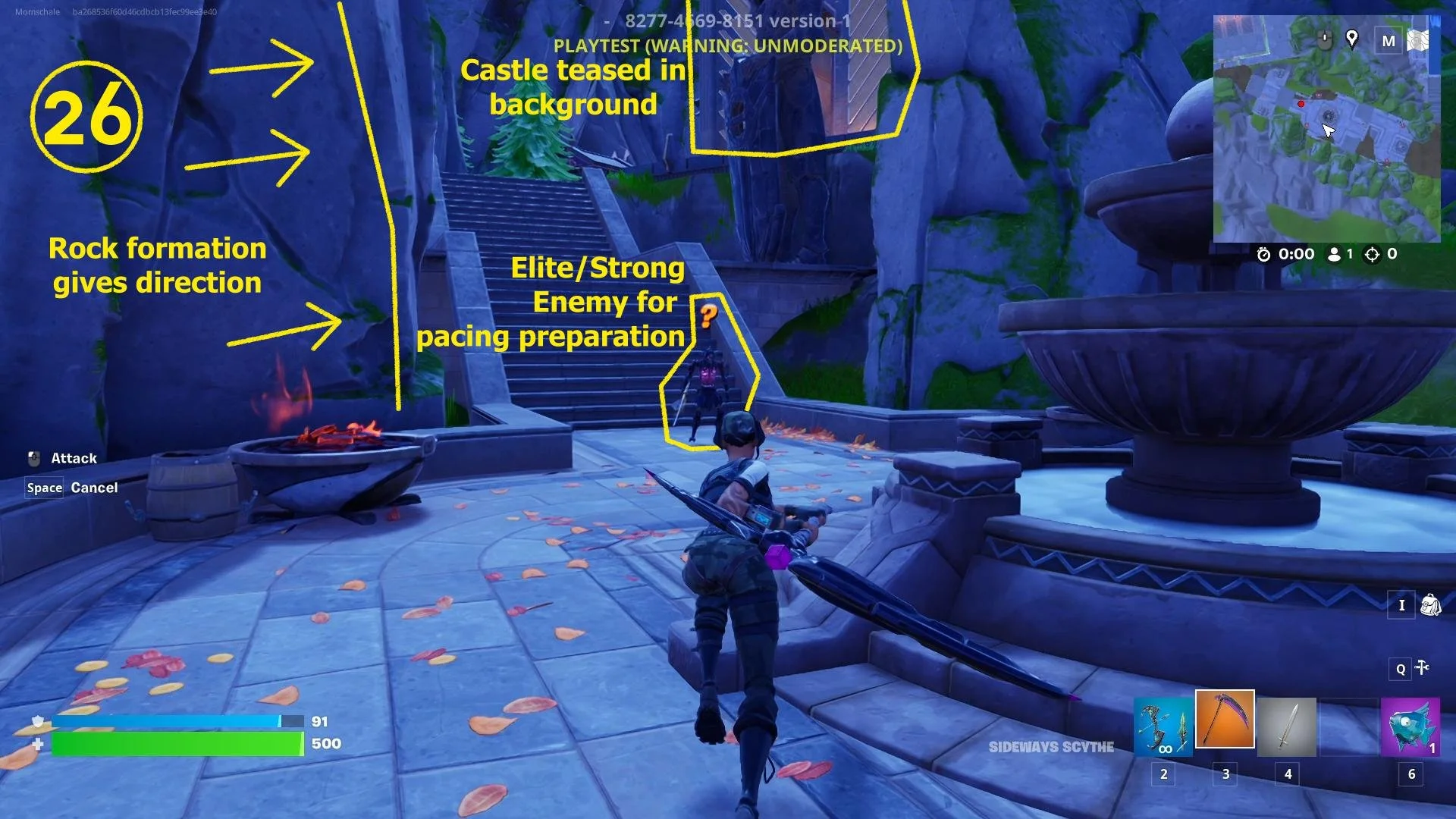
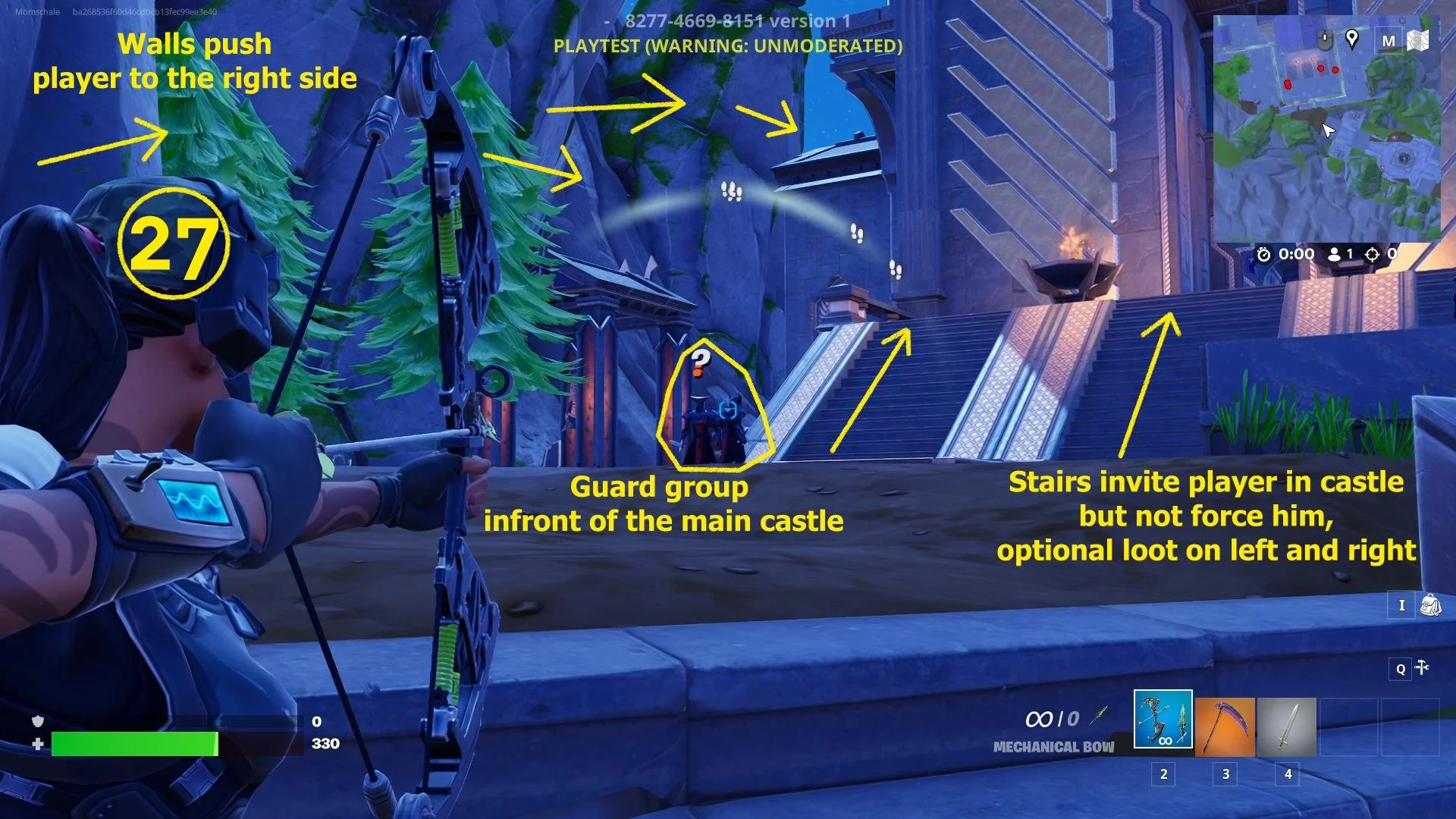
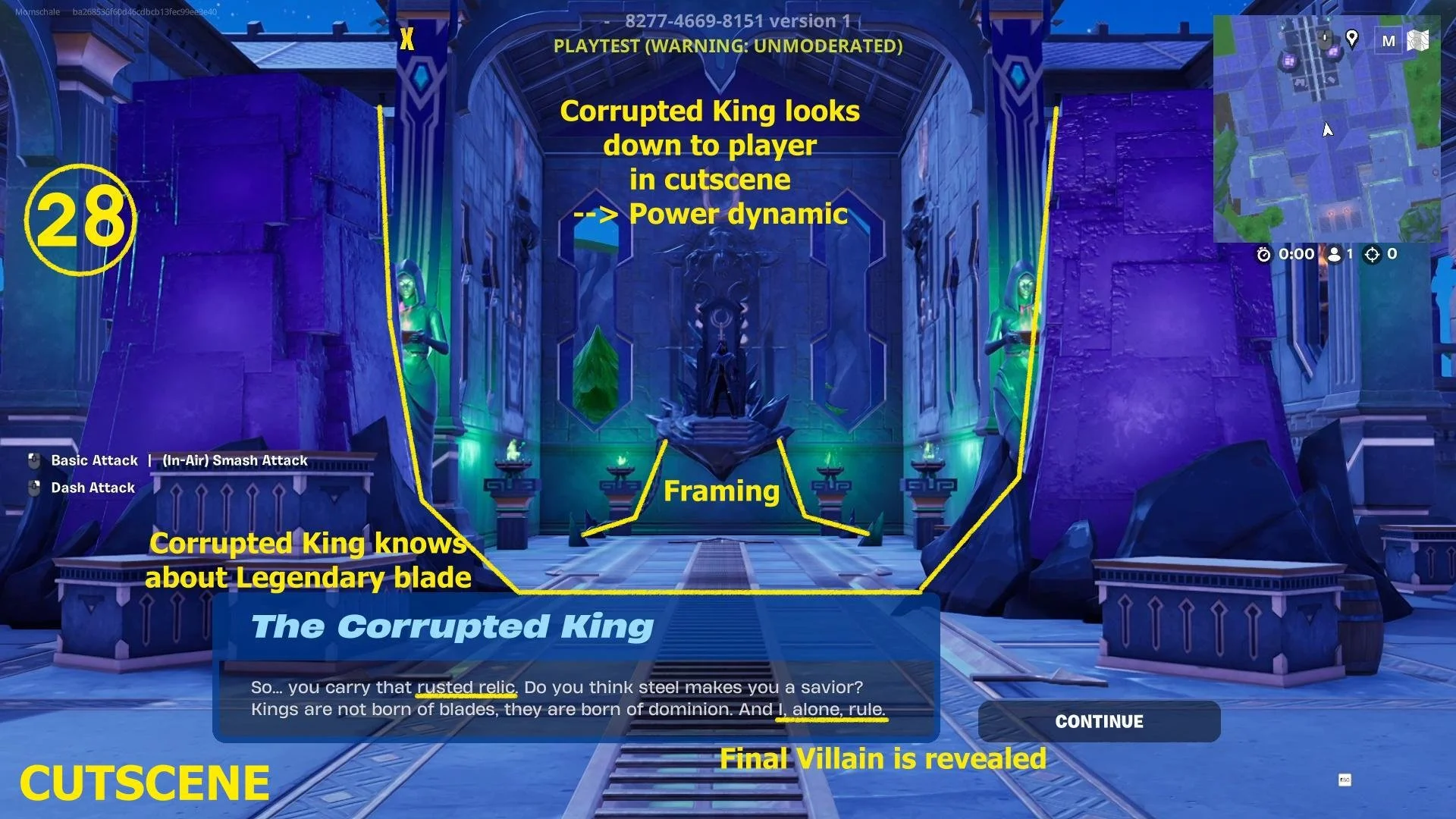
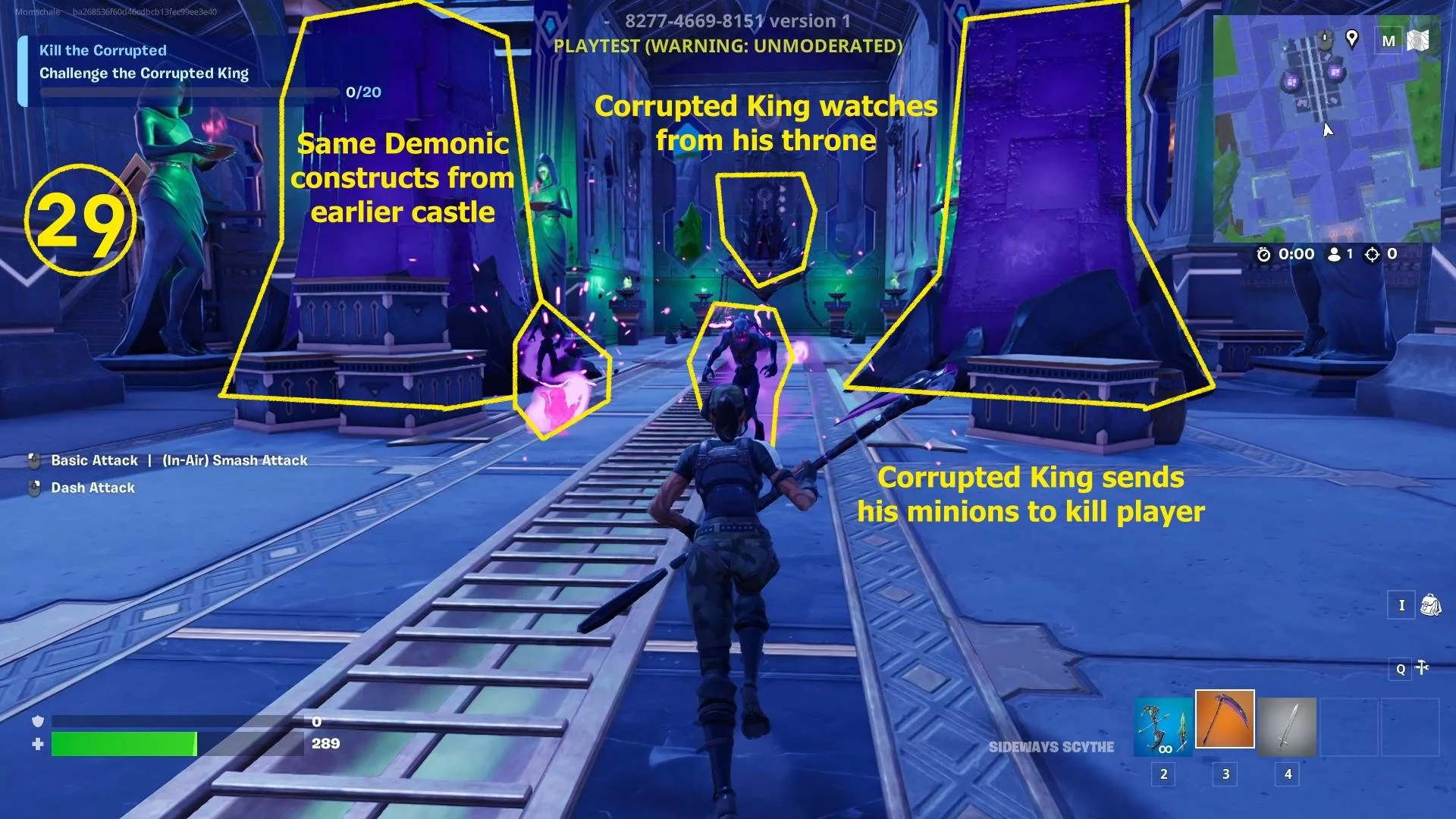
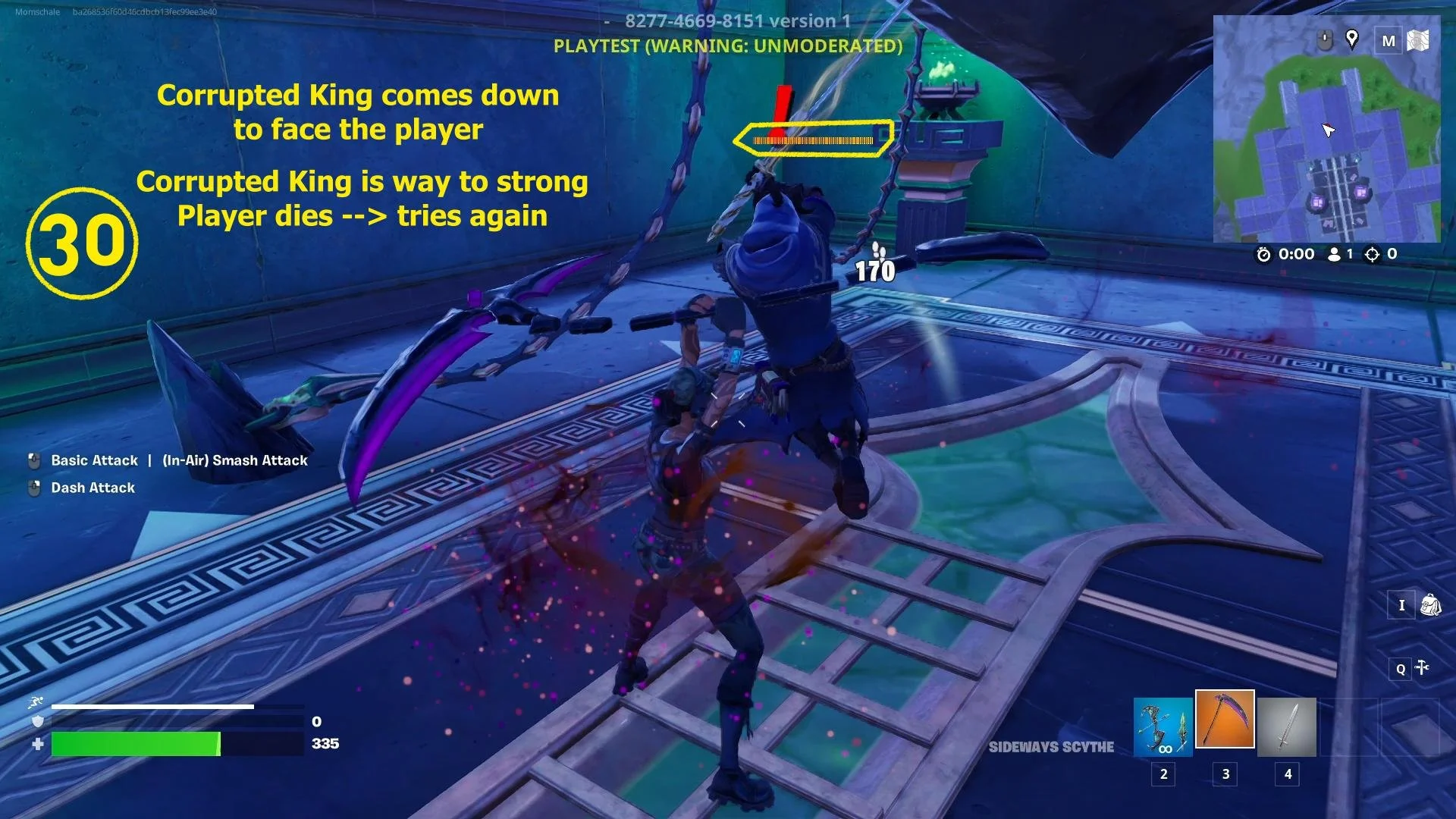
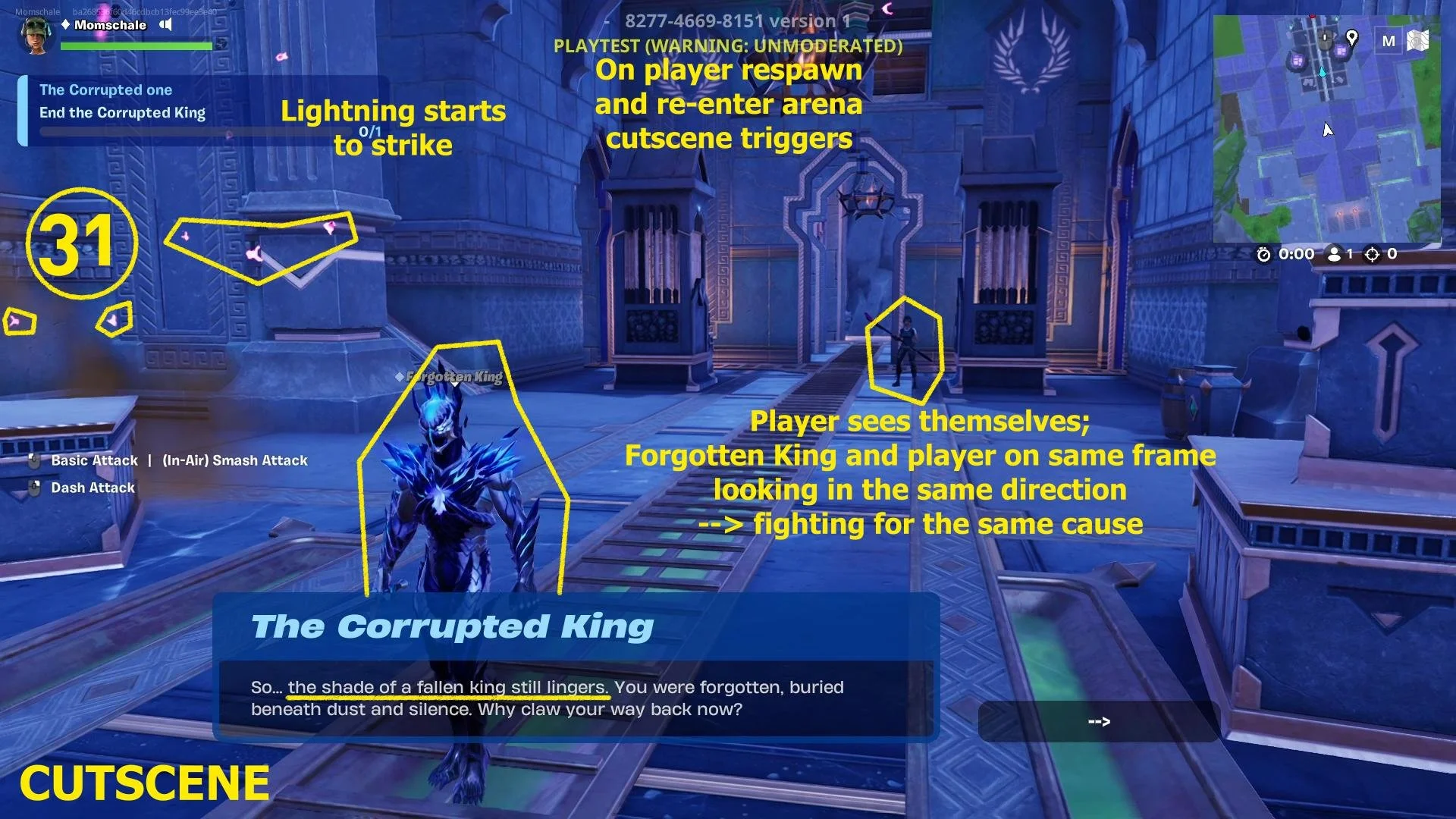
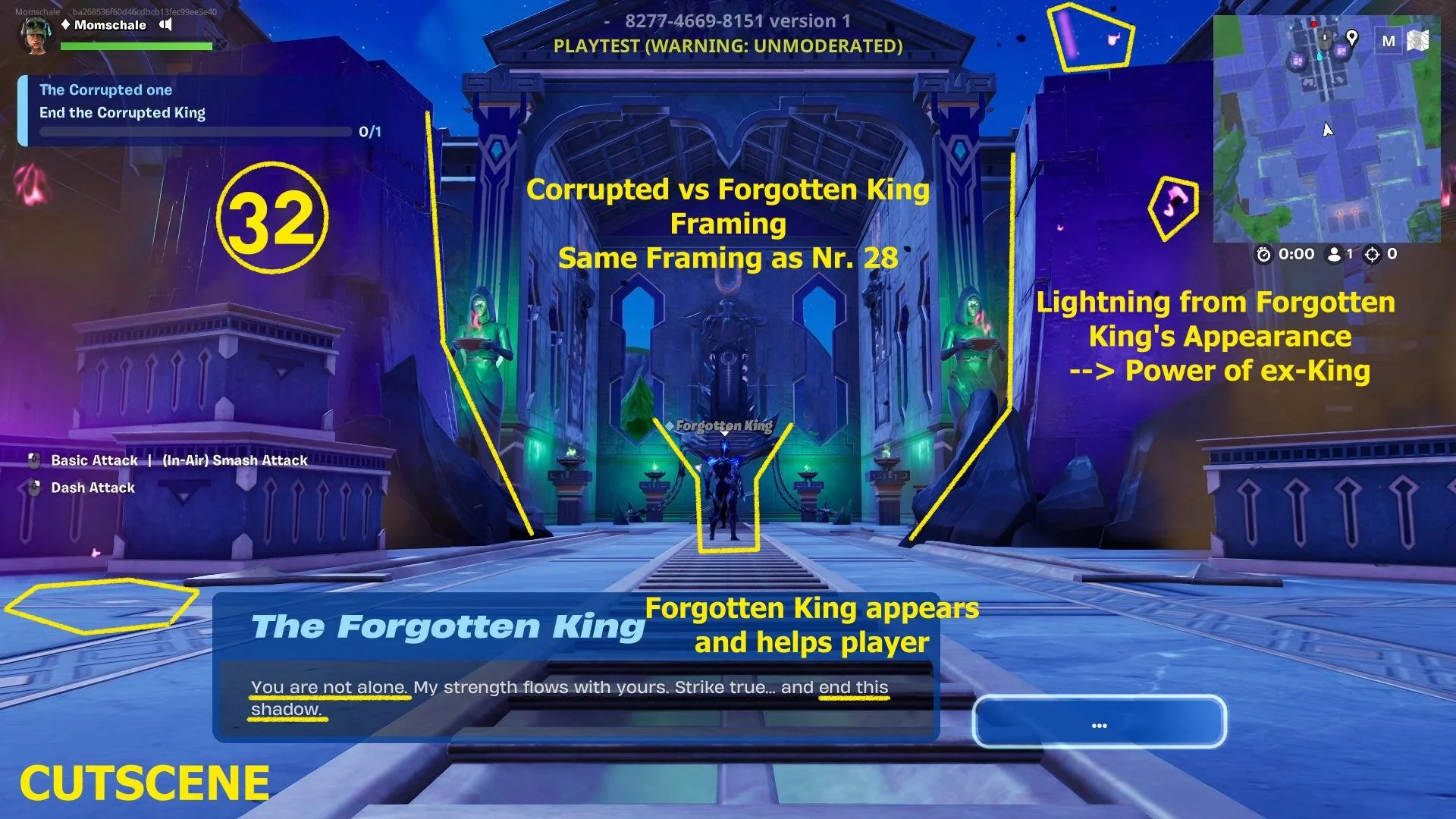
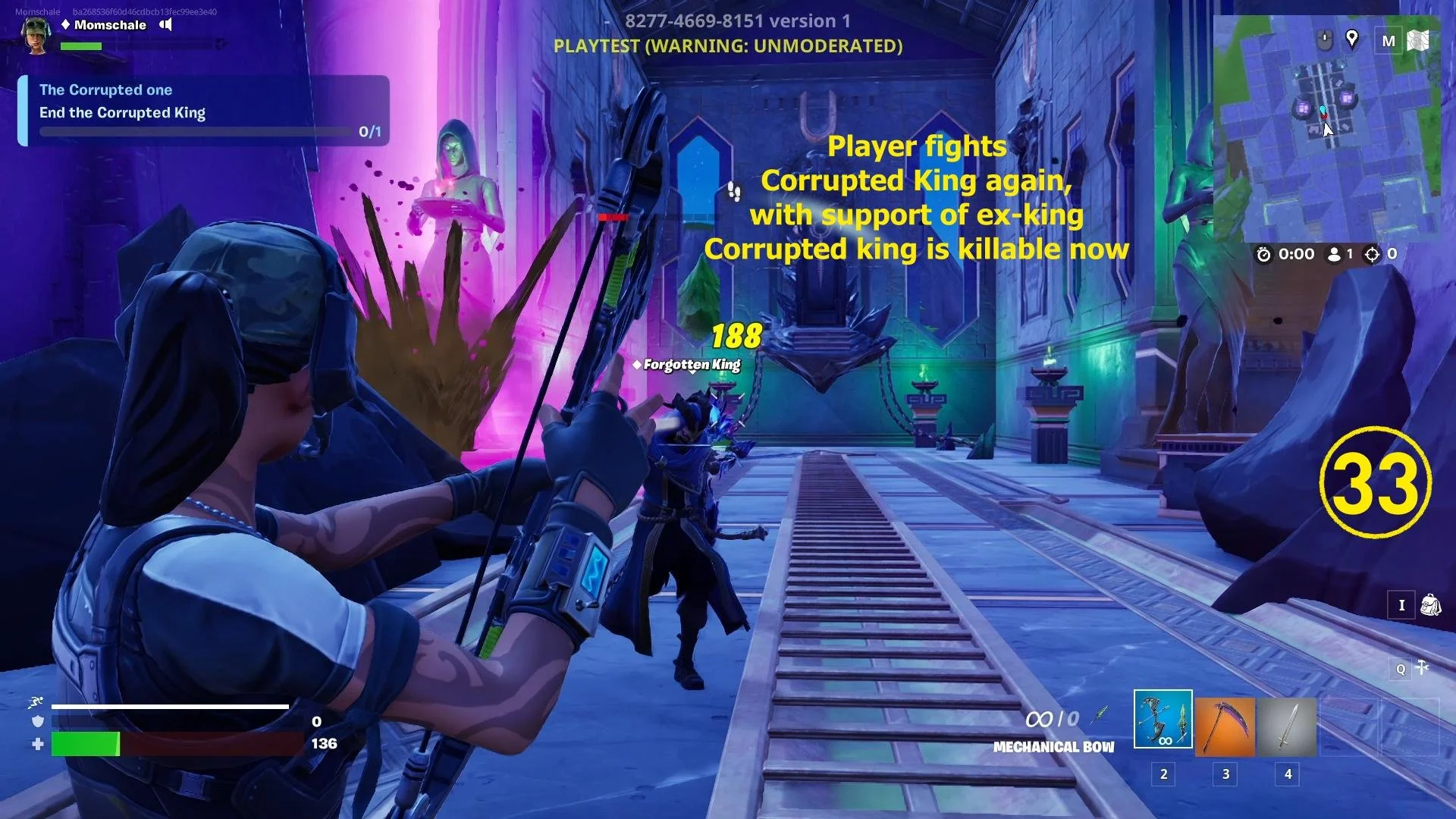
General Issues, Iterations and Learnings
Sample Issues
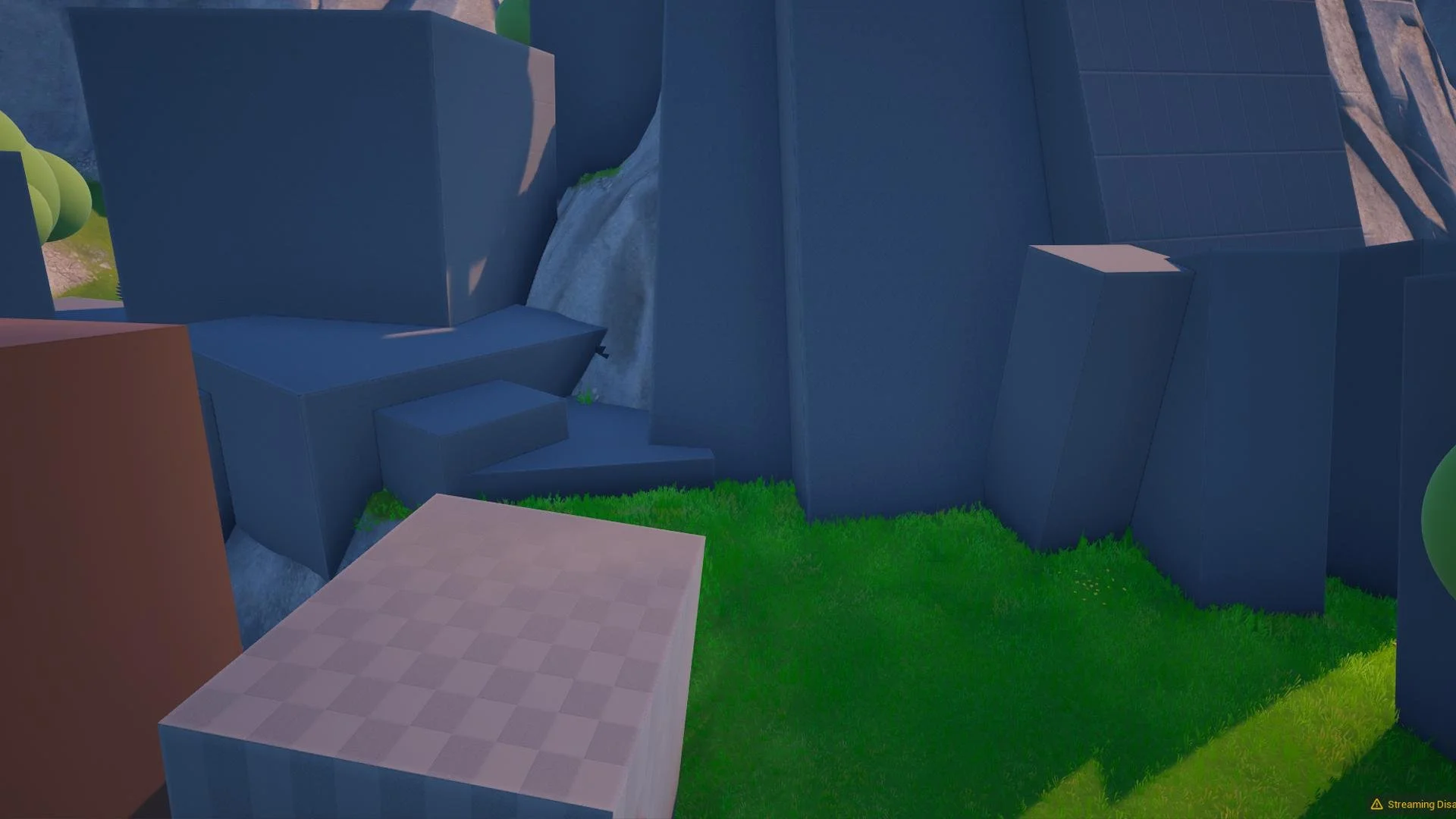
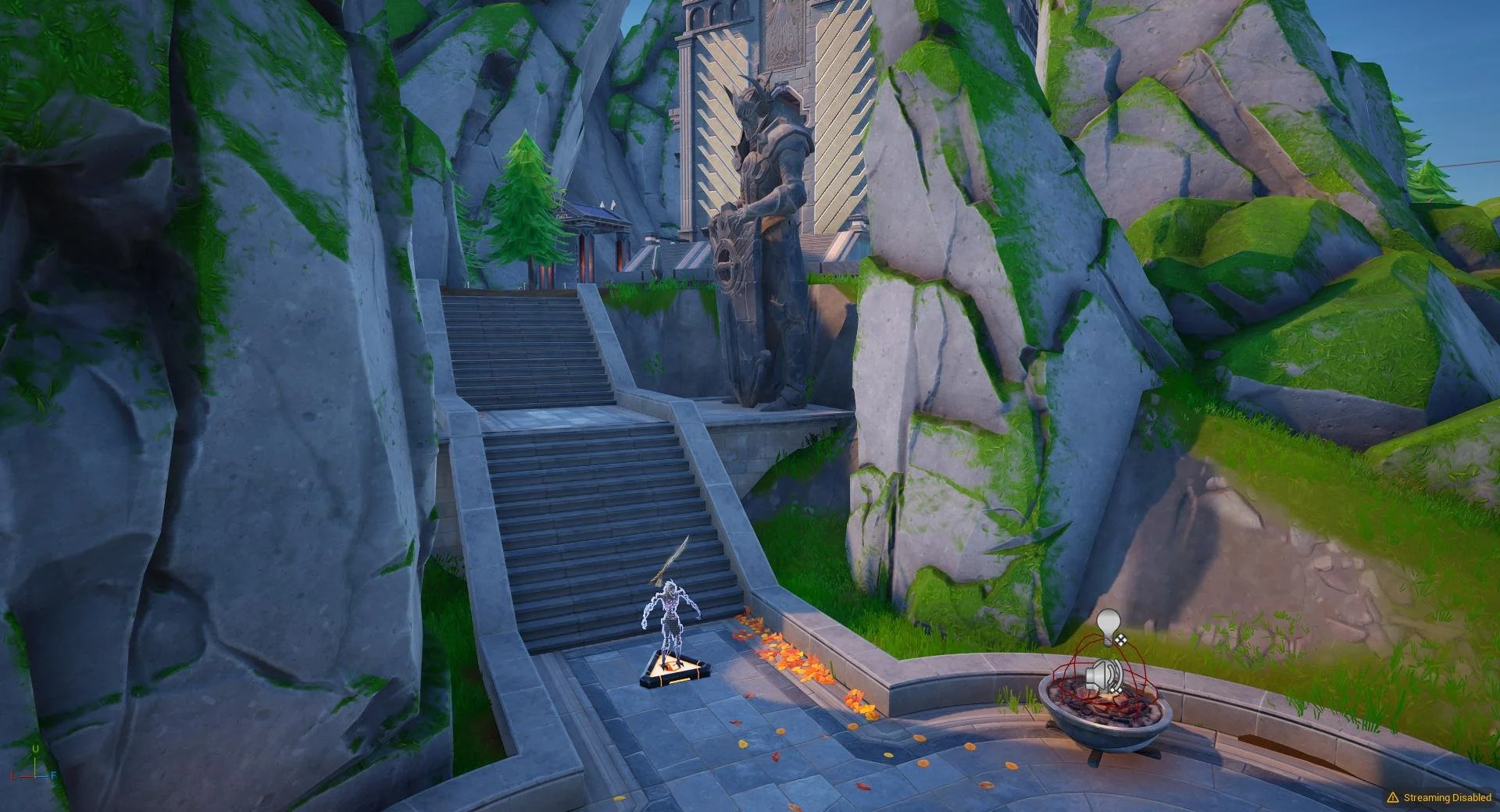
Players consistently moved right toward a visible enemy horde instead of the intended left path.
Strong combat cues and visual noise on the right overpowered the critical path and redirected player attention.
Placing a single elite enemy directly before a single-target
boss created back-to-back high-intensity encounters,
compressing pacing and causing fatigue.
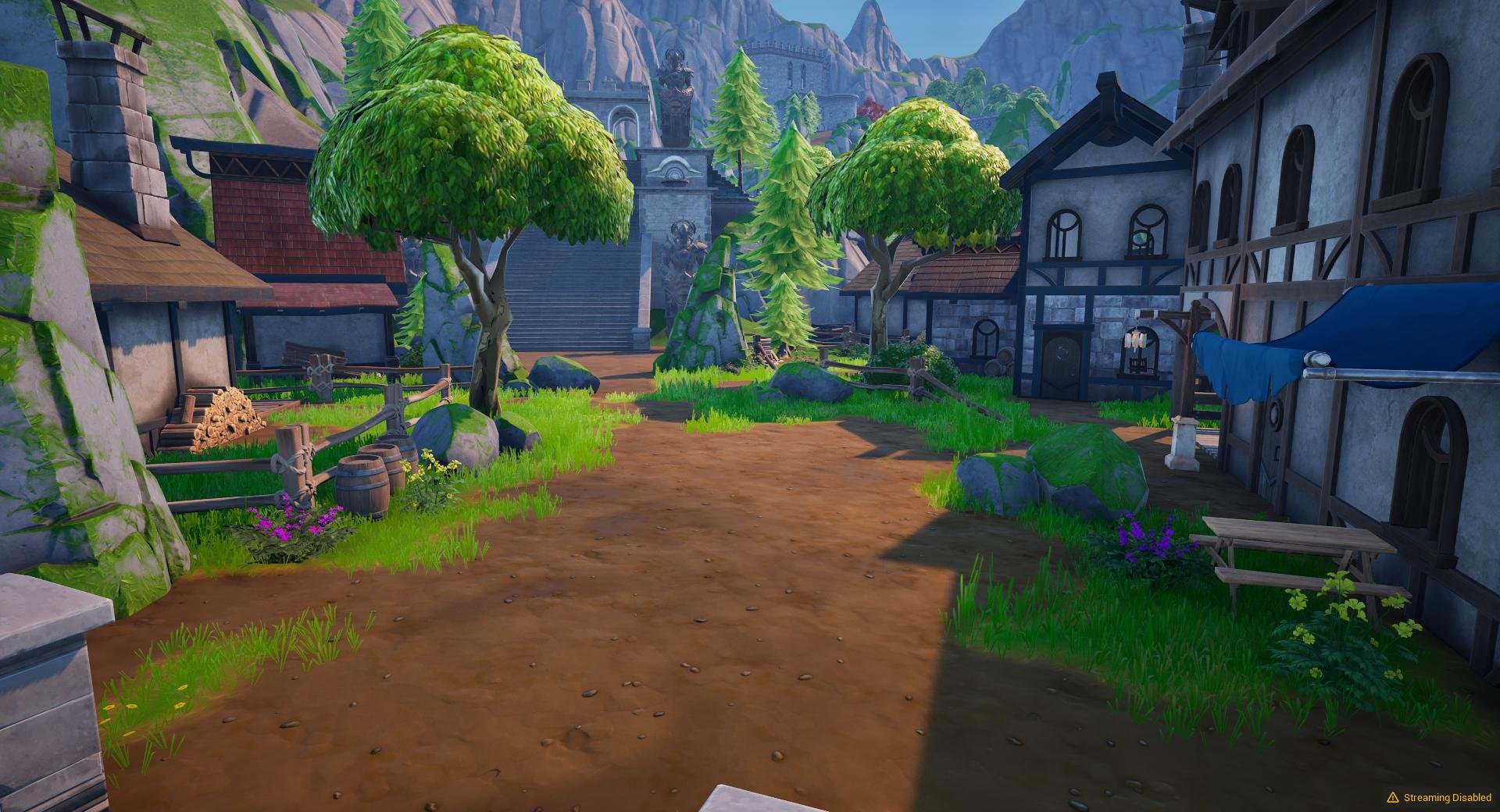
After saving the village, the space felt inactive.
The absence of NPCs reduced emotional payoff and weakened
the sense of player impact.
Sample Solutions
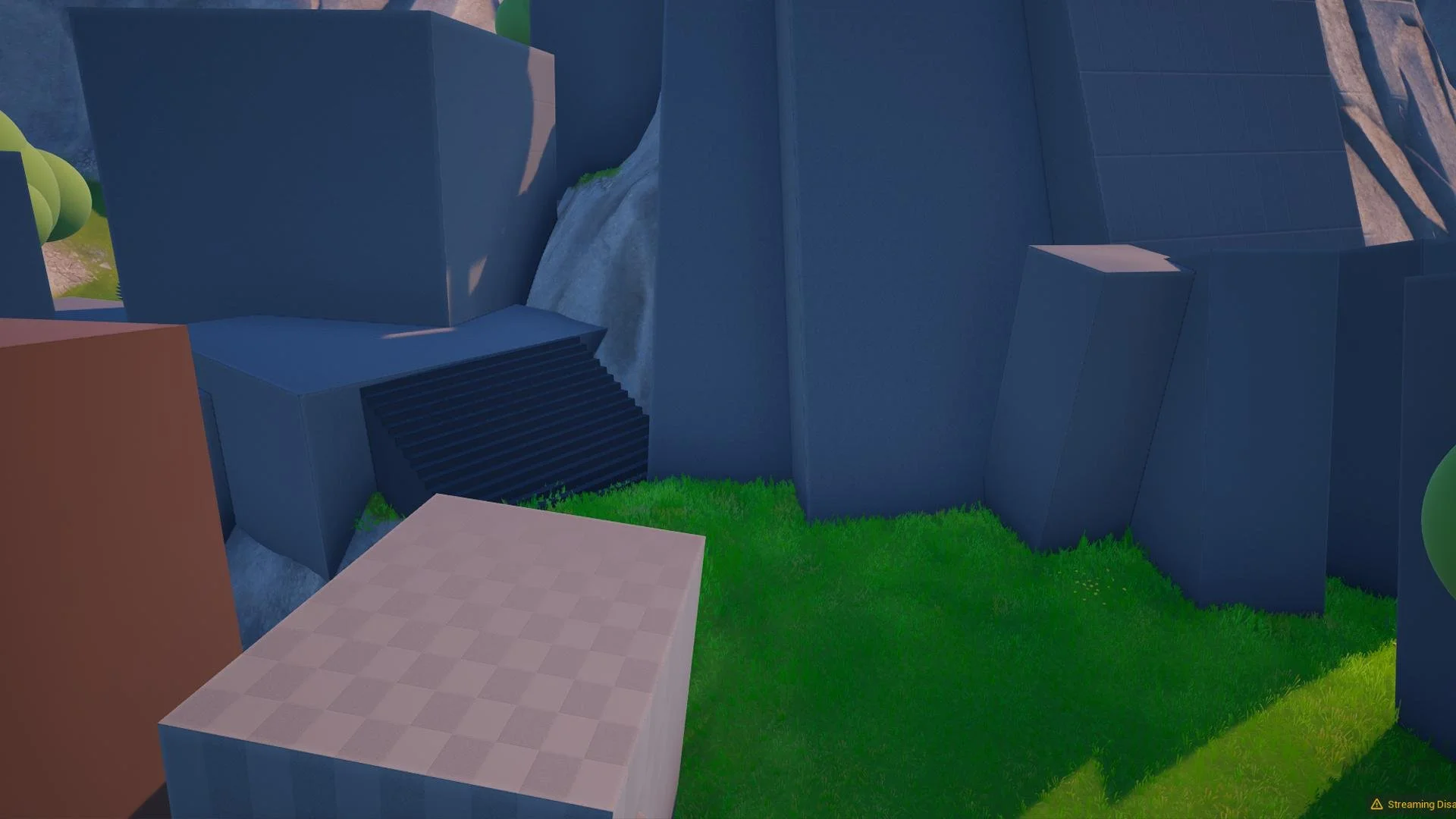
The left route was reinforced with clearer traversal language, stair indicators, stronger silhouettes, and cleaner visual flow.
This increased readability and aligned player perception with the intended path.
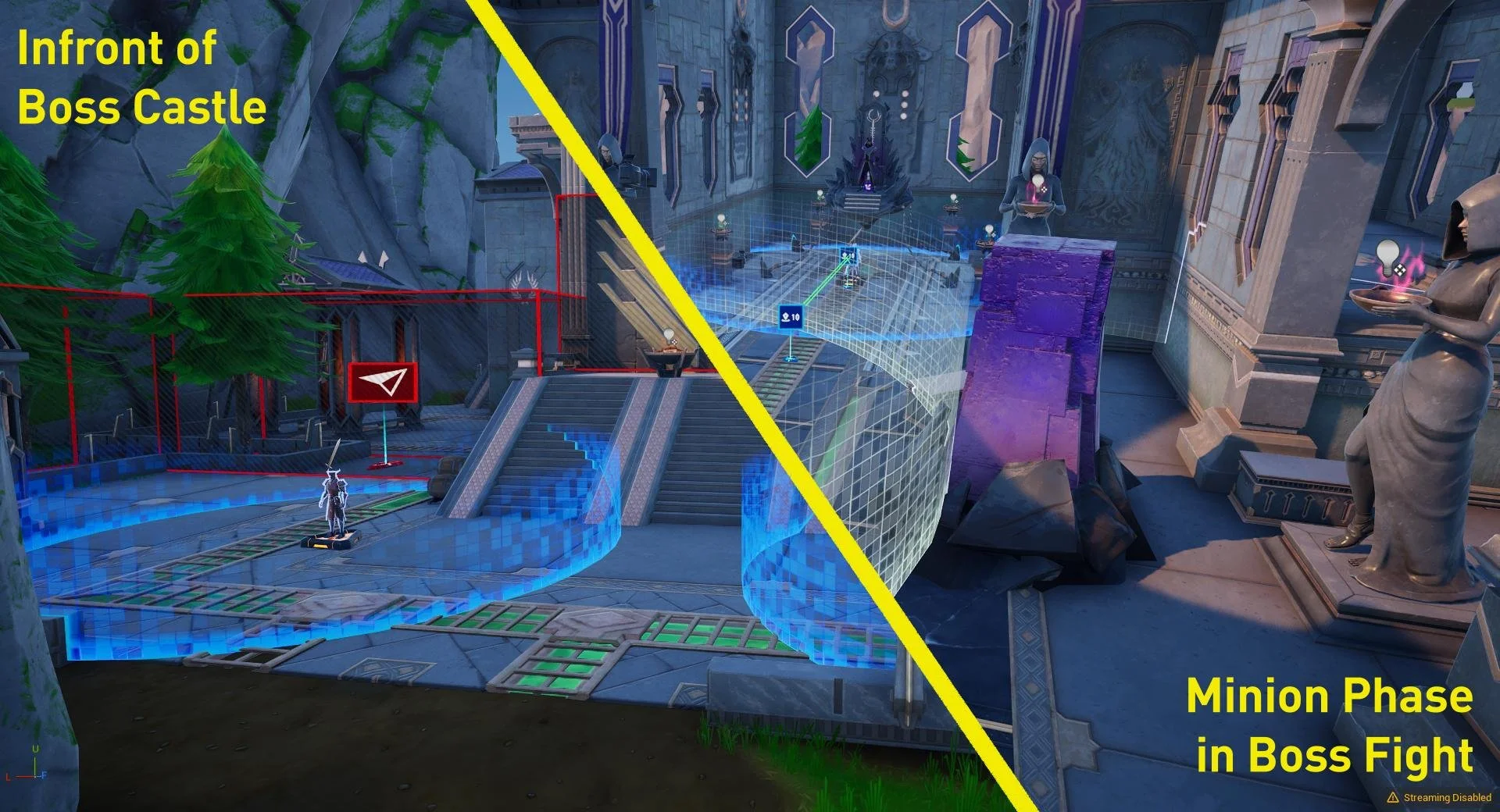
Encounter flow was restructured by adding guards and a
swarm-based pre-boss-phase. This shifted intensity from
singular combat to crowd combat, resetting player focus
before the final fight.
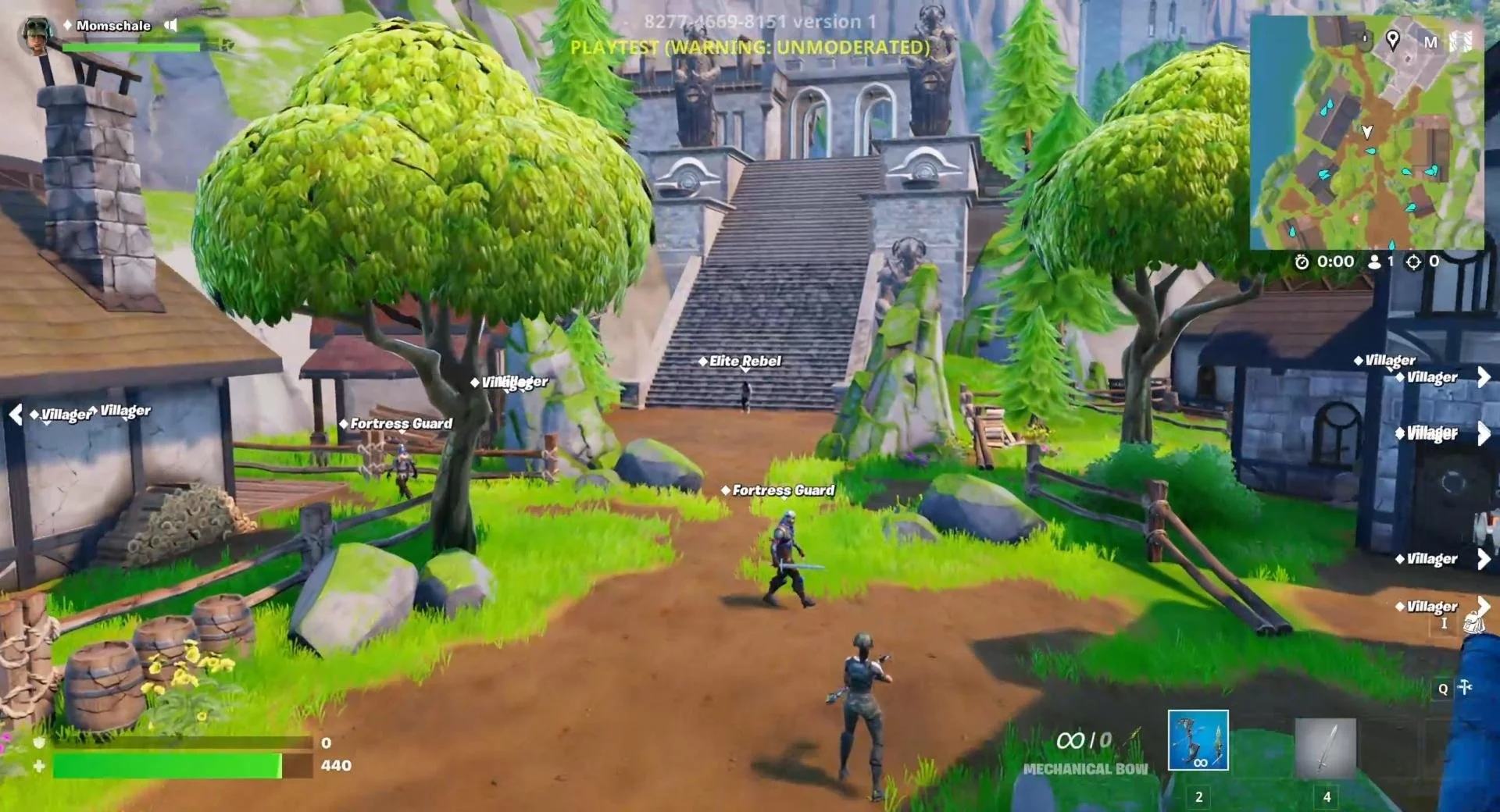
Villagers and fortress guards were reintroduced through
directed spawning and patrols. NPCs now occupy the space,
provide healing, and defend the village, restoring life and narrative feedback.
General Learnings
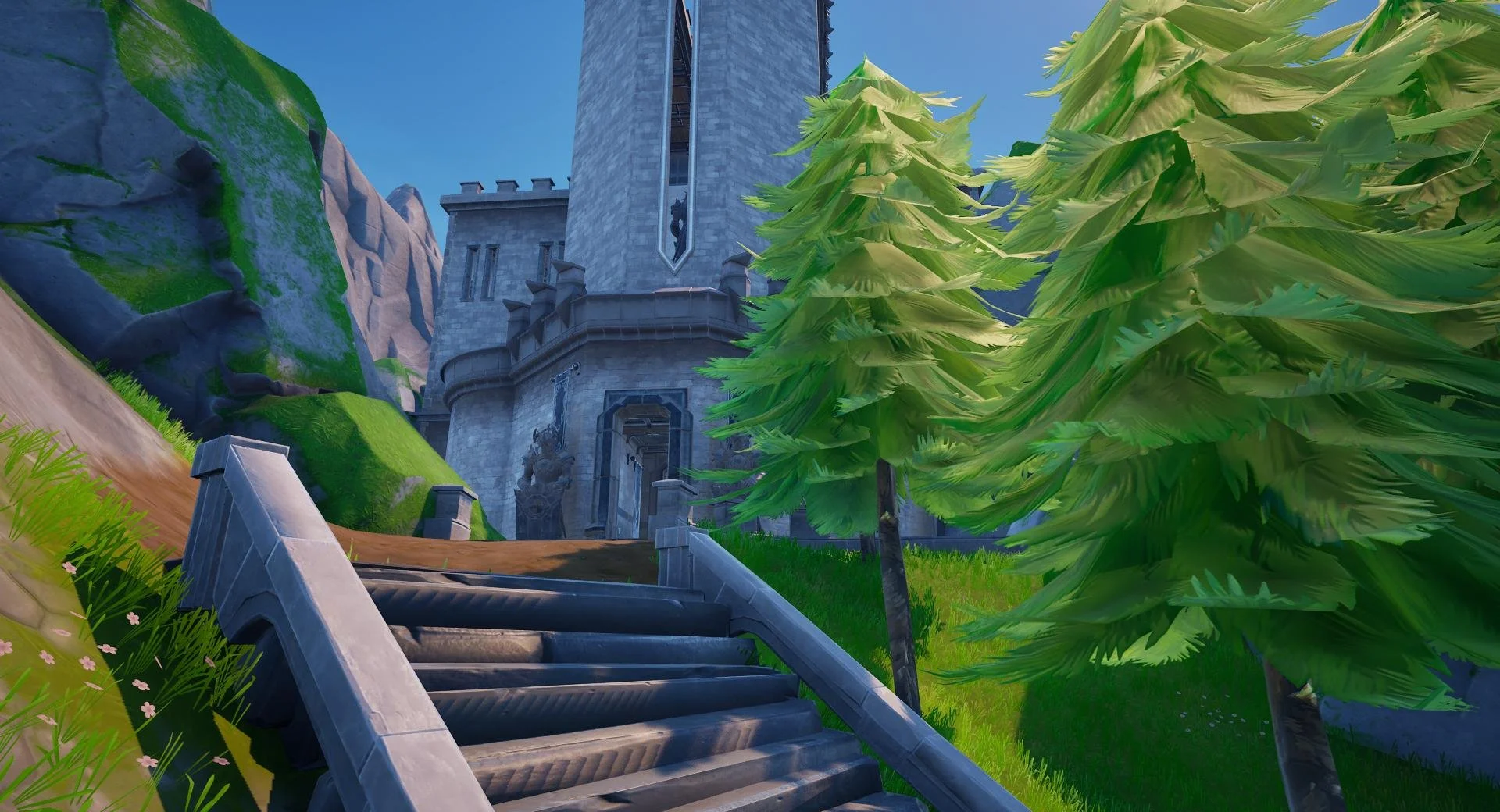
Pacing is defined by encounter density, not map size; fewer, intentional fights create stronger narrative rhythm than constant combat.
Player power must be felt spatially, with later spaces allowing more aggressive play to reflect progression.
Enemy placement tells story, communicating danger, control, and escalation without explicit narrative beats.
Singular elite encounters are more memorable than large enemy groups when used as skill checks.
Finishing and polishing matters more than scale, especially in UEFN, where clarity and readability define the experience.
General Design Psychology
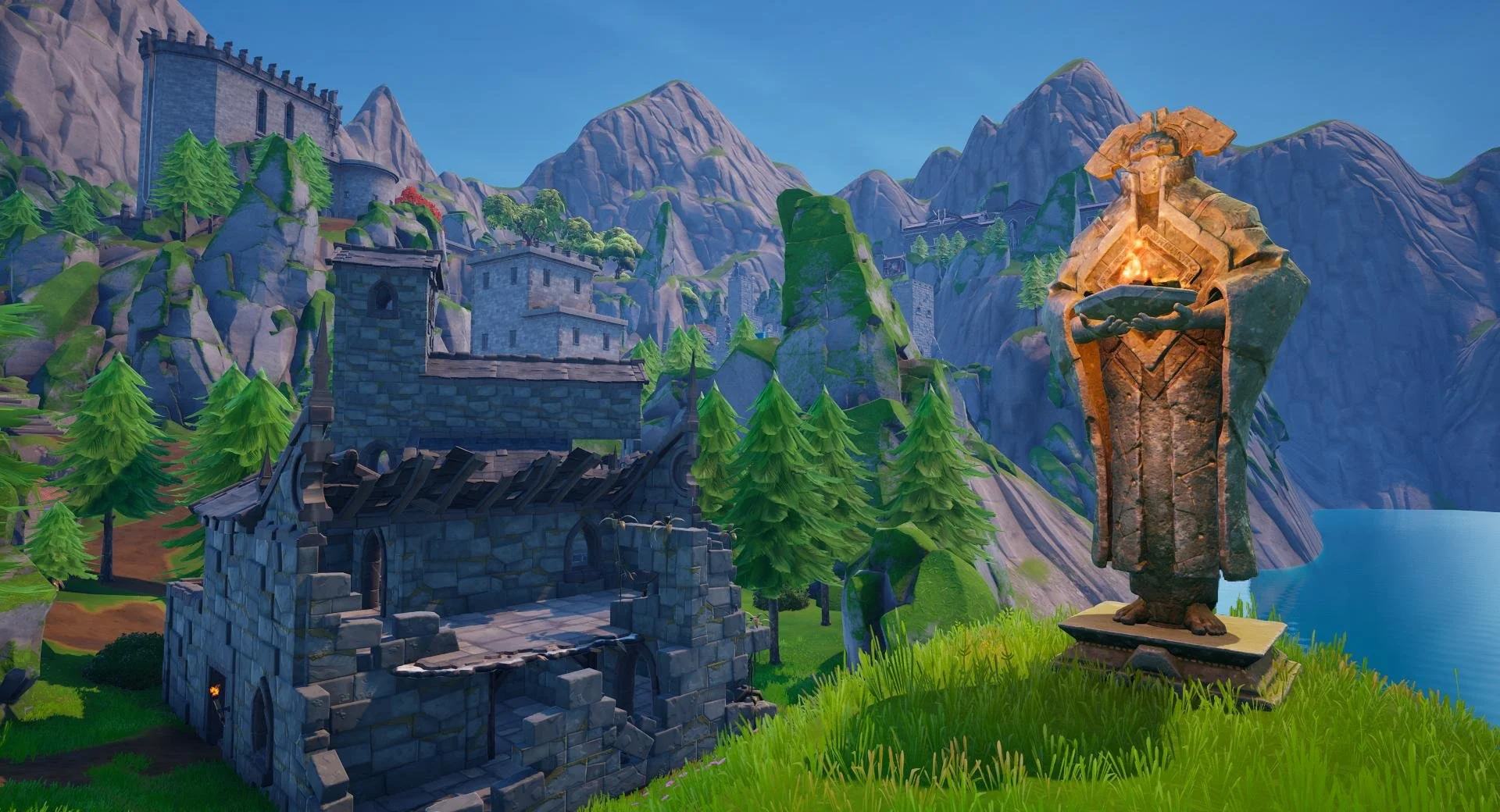
Framing as Primary Guidance
Player movement and focus are driven by composition rather than UI. Sightlines, lighting, elevation, and landmark placement are used to frame objectives, reveal threats, and naturally pull the player forward through the level.Encounters as Narrative Beats
Combat and Quests are treated as storytelling. Enemy type, count, and placement reflect the current narrative moment, chaos during the village attack, restraint during exploration, and focus during elite and boss encounters.Intentional Beat Pacing
The level alternates between high-intensity combat and slower traversal to control emotional rhythm. Quiet moments are deliberately placed to let players recover, reflect, and anticipate what comes next.Narrative-Driven Spatial Logic
Level layout is built around the story, not placed on top of it. Each space exists for a narrative reason, defense points feel defensible, ruins feel overtaken, and the final castle feels oppressive, ensuring gameplay and story reinforce each other.